
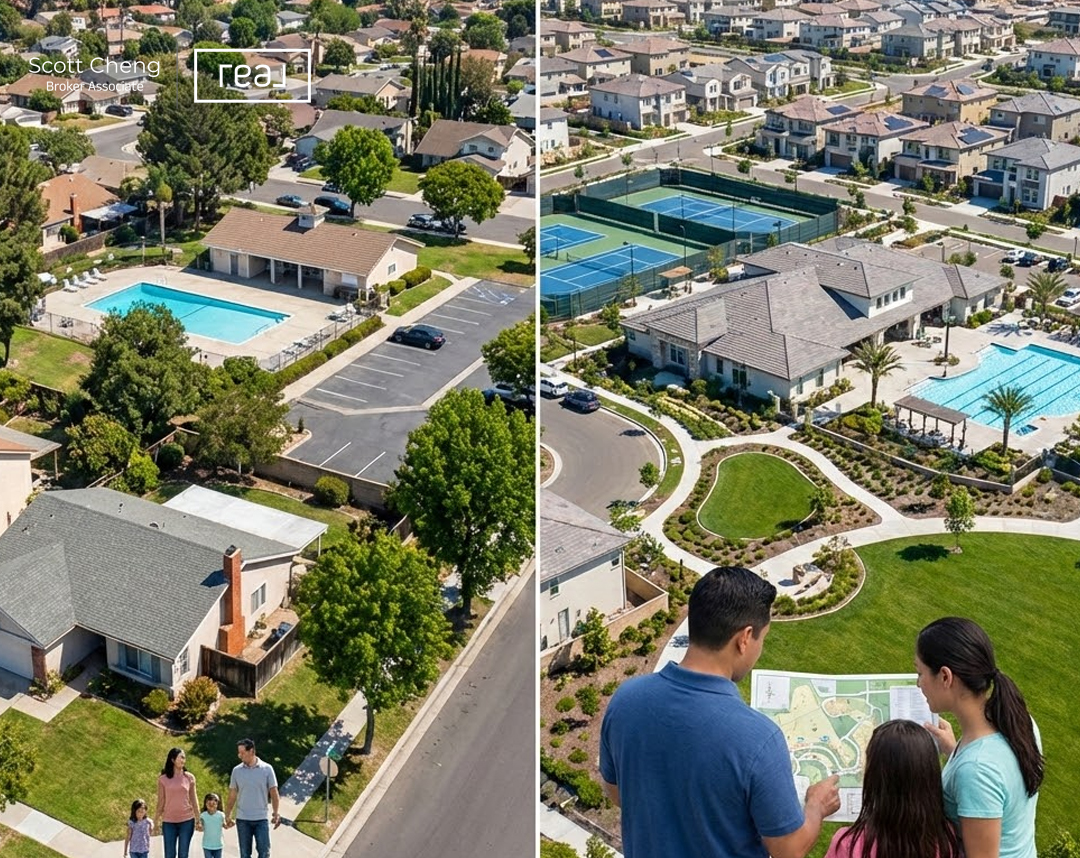
HOA Comparison for Move-Up Buyers: Mira Mesa vs Vista 2026 – Which Neighborhood Offers Lower Fees and Better Amenities for Your Upgrade
HOA Comparison for Move-Up Buyers: Mira Mesa vs Vista 2026 – Which neighborhood offers lower fees and better amenities for your upgrade?
Vista generally has lower HOAs around $300 with leaner amenities, while Mira Mesa averages about $350 but includes more features like pools and landscaping. Choose Vista for lower fees, Mira Mesa for better on-site amenities and access.
Why This Matters Right Now
You are stepping up to a bigger home in a tight market, so every monthly cost matters. With San Diego County running at roughly a 1.8 month supply in early 2026 and homes typically going under contract in under a month, you will feel pressure to decide quickly. HOA fees and amenities can swing your total cost of ownership and your lifestyle more than you expect. In Mira Mesa and Vista, the typical difference is about $50 per month, but coverage, reserves, and special assessment risk can make one option a clear winner for you. You will also compare commute and school fit alongside HOA scope, especially if you are eyeing nearby choices like Scripps Ranch and Rancho Bernardo around Mira Mesa, or San Marcos near Vista. Making a side by side HOA comparison now helps you avoid surprises later and positions you to act confidently when the right listing appears.
What You Need to Know Before You Compare HOAs
You should start by clarifying what you want from your upgrade. If you want a lock and leave lifestyle with community amenities and predictable exterior upkeep, a condo or townhome with a robust HOA may suit you. If you want a yard and control over upgrades, a single family home will likely have no HOA or a very small one, shifting maintenance back to you.
Key points for your 2026 comparison:
- Typical monthly fees: Mira Mesa averages about $350, Vista about $300. The $50 difference is a baseline, not a rule, because coverage varies widely by community type.
- Coverage matters more than the sticker price. Some HOAs include water, trash, exterior insurance, roof, and full landscaping. Others cover only common area landscaping and a pool.
- Condo vs townhome vs single family: Condos tend to have higher HOAs due to building insurance and exterior systems. Townhomes are mid range. Detached homes often have little or no HOA, or a small master association.
- Reserves and financial health: Smaller HOAs in Vista can mean leaner reserves, which may elevate special assessment risk. Larger, more established HOAs in Mira Mesa often carry fuller reserves, but you should verify in the documents.
- Commuting and convenience: Mira Mesa positions you near major job hubs and transit options along I 15 and SR 52. Vista offers a more suburban feel with the SR 78 corridor and Sprinter light rail. Your commute time and lifestyle may offset HOA differences.
As a move-up buyer with a larger budget, you should view the HOA as a service package and a risk profile, not just a fee.
How to Compare Your Options
You will find better value when you evaluate fees, coverage, reserves, and community stability together. Put each community through the same lens so your decision is consistent and quick when you find the right home.
Key factors to evaluate:
- Total monthly cost: Compare HOA fee plus what it replaces. If a $350 fee includes water, exterior insurance, and roof maintenance, you might save $150 to $250 per month versus paying those yourself.
- Reserve strength and assessments: Review the reserve study, current reserve balance, funding percentage, and any history of special assessments. Low reserves can turn a cheap fee into an expensive surprise.
- Amenities you will use: Consider pool, spa, gym, playgrounds, and greenbelts. If you will not use them, paying extra may not make sense. If you want resort style living without backyard upkeep, the premium can be worth it.
- Insurance and risk: Confirm the master insurance policy and what is covered. In condo buildings, this is critical to your out of pocket coverage for the structure versus your interior.
- Rules and flexibility: Pet rules, rental caps, EV charging policies, solar guidelines, and exterior modification limits all affect livability and resale.
- Maintenance responsibility: Know what is your responsibility versus the association. Siding, windows, roofs, fences, and balconies vary by CC&R and can change your long term cost.
- Market velocity: In sub two month supply neighborhoods, buyers often waive minor repair credits. A stronger HOA that handles exterior items can reduce your project risk post closing.
By standardizing these criteria, you will compare value rather than just price.
Your Step-by-Step Guide
Follow a consistent process so you do not miss key documents or deadlines.
1) Define your must haves and nice to haves
List the amenities you will actually use, your commute target, school preferences, and your tolerance for projects. This guides you toward the right HOA profile.
2) Build a short list
Target 3 to 5 communities in Mira Mesa and 3 to 5 in Vista that fit your price band and home type. Use local MLS data, public records, and association disclosures to assemble a starting profile for each.
3) Request full HOA disclosures early
Ask for CC&Rs, bylaws, rules, meeting minutes for the last 12 months, current budget, reserve study, master insurance summary, and any pending special assessment notices. Do this at offer stage or earlier if possible.
4) Run a true monthly cost analysis
Add the HOA fee and subtract any utilities or services it replaces. Include your insurance differential between condo and single family, estimated landscaping, and exterior maintenance if not covered.
5) Stress test reserves
Look at the reserve study timeline for roofs, paint, paving, and building systems. If reserves are under 70 percent funded against the study, factor potential assessments into your budget.
6) Review rules for deal breakers
Confirm pet limits, rental caps, exterior modification approvals, solar policies, and EV charging rules. If you plan upgrades, you need clear guidelines and practical timelines.
7) Align offer and contingencies
Use your inspection period to finalize HOA review. Where reserves are thin, consider stronger earnest money with a price reflecting the risk or negotiate a seller credit if assessments are clearly imminent.
8) Confirm insurability and lender comfort
Your lender will want a healthy HOA on condos and some townhomes. Get a condo questionnaire or HOA certification completed to avoid last minute financing issues.
By following these steps, you will choose a community that matches your lifestyle and protects your budget.
What This Looks Like in Mira Mesa and Vista
You will notice different patterns across the two markets. Mira Mesa tends to offer more amenity rich HOAs, often with pools, spa, and maintained greenbelts, which explains the roughly $350 average. Vista trends more toward smaller associations that keep fees lower, around $300, but may carry leaner reserves and simpler amenities.
Inventory remains tight in both areas, with Mira Mesa often moving slightly faster. Median prices as of late 2025 put single family homes near the mid to upper 800s in Mira Mesa and mid 700s in Vista. Condos and townhomes show wider variance, so your HOA comparison has real weight in your final choice.
Neighborhoods to consider in Mira Mesa, San Diego, Vista:
- Mira Mesa Townhome Clusters near Camino Ruiz: Often mid to upper 700s, typical HOAs include exterior maintenance, pool, and landscaping, a fit if you want convenience and quick Sorrento Valley access.
- Canyon Park Villas and nearby condo communities: Commonly mid 500s to mid 600s, HOAs can include water, trash, exterior insurance, and pool, helping you manage monthly cash flow.
- Vista Shadowridge area townhomes and condos: Often mid 500s to mid 700s, lower to mid range HOAs with golf course adjacent greenbelts and modest amenities, popular for buyers seeking lower recurring costs.
If you are comparing single family upgrades, you will find more non HOA or low HOA pockets in Vista. In Mira Mesa, some detached communities carry smaller master associations that keep shared areas tidy without heavy rules. Your decision comes down to how much you value shared amenities and how far you want to stretch on monthly costs.
Nearby Areas Worth Exploring
You might also consider adjacent neighborhoods that deliver similar value with different HOA profiles. Scripps Ranch offers lower density living, mature trees, and a mix of low HOA and non HOA options, a solid alternative if you want quieter streets close to I 15. Rancho Bernardo features master planned communities with recreation centers that bundle amenities efficiently, attractive if you want resort style facilities with strong reserves. San Marcos, just east of Vista, offers newer townhome communities and several planned single family tracts with modest HOAs, often trading a slightly longer commute for a newer build and efficient layouts.
- Scripps Ranch: Strong schools and a suburban feel, typically higher pricing than Vista but with many low HOA or non HOA options that can save monthly costs.
- Rancho Bernardo: Recreation center access, stable HOAs, and good freeway proximity, a fit if you want consistent amenities and curated common areas.
- San Marcos: Newer construction and a variety of townhome choices with moderate HOAs, often appealing if you want a balance between fee level and amenity quality.
What Most People Get Wrong
You might be tempted to chase the lowest monthly fee, but that can backfire if reserves are weak or insurance is under scoped. A $275 fee that excludes exterior insurance and roof can cost you more than a $350 fee that fully covers the building, especially when premiums and roofing costs rise. You should also avoid assuming that high fees automatically signal waste. In many Mira Mesa communities, a higher fee reflects inclusive coverage for water, trash, landscaping, pool, and structure insurance, which simplifies your budget and reduces surprise repair bills. Another common mistake is overlooking rule restrictions until after removing contingencies. If you plan to add EV charging, solar, or new windows, read the architectural guidelines before you fall in love with a listing. Lastly, do not forget commute and school fit. Paying $50 more in HOA can be a bargain if it saves 20 minutes each way and positions you in a top performing school area.
Frequently Asked Questions
Are Mira Mesa HOAs worth the premium if you rarely use amenities?
Yes if coverage is robust. Even if you skip the pool, a Mira Mesa HOA that includes water, trash, exterior insurance, and roof can justify the higher fee through reduced out of pocket costs and time saved on maintenance. If coverage is thin, consider Vista.
How big is the HOA fee difference between Mira Mesa and Vista in 2026?
You should expect an average gap of about $50 per month, with Mira Mesa around $350 and Vista around $300. The real difference depends on coverage and reserves. When you add what is included or excluded, the more expensive HOA can be the better value.
Does this HOA advice apply to nearby areas like Scripps Ranch and Rancho Bernardo too?
Yes. In Scripps Ranch you will find more low HOA or non HOA single family pockets, so long term maintenance planning matters more. In Rancho Bernardo master associations often deliver strong amenities and reserves, so you should focus on coverage, rules, and reserve funding.
Can you negotiate HOA fees or get the seller to cover assessments?
HOA fees are set by the association, so you do not negotiate the monthly amount. You can ask the seller to clear current assessments or provide credits for known upcoming projects uncovered in disclosures. Align your request with your inspection and HOA review timelines.
Should you choose a condo or a single family home if you want predictable costs?
Choose a condo if you want more predictable exterior costs through a comprehensive HOA. Choose a single family home if you prefer control and can handle variable exterior expenses. Townhomes often split the difference with mid range HOAs and partial exterior coverage.
The Bottom Line
You will generally pay lower monthly HOAs in Vista, which keeps recurring costs down, but you will often find fuller amenity packages and broader coverage in Mira Mesa that can streamline your lifestyle and lower surprise expenses. Your best choice depends on how you weigh monthly fee, coverage, reserve strength, commute, and school fit. If you also consider nearby Scripps Ranch, Rancho Bernardo, or San Marcos, apply the same framework so you compare true value rather than just sticker price. With a structured review of fees, coverage, reserves, and rules, you will make a confident move up that fits your budget and the way you live.
If you are ready to explore your options for HOA comparisons in Mira Mesa and Vista or nearby communities, Scott Cheng at Scott Cheng San Diego Realtor can walk you through the specifics for your situation.
📞 858-405-0002
DRE# 01509668
16516 Bernardo Center Dr. Ste. 300, San Diego, CA 92128
Leave a Reply