Natural Hazard Disclosures in Mira Mesa and Vista 2026: Earthquake, Wildfire, and Flood Risk Assessment Before You Commit
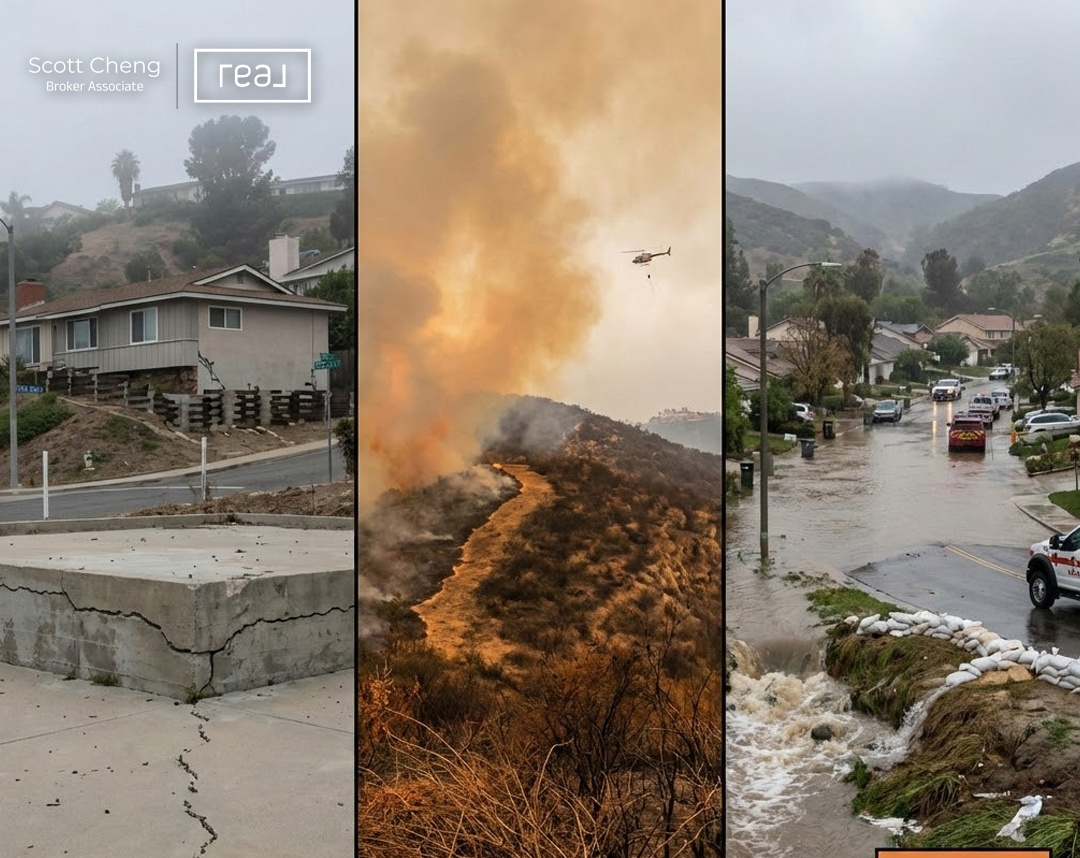
Natural Hazard Disclosures in Mira Mesa and Vista 2026: Earthquake, Wildfire, and Flood Risk Assessment Before You Commit
How should you assess earthquake, wildfire, and flood risk in Mira Mesa and Vista before you commit in 2026?
You should read the full California Natural Hazard Disclosure, verify it against FEMA, CAL FIRE, and state seismic maps, price the insurance and mitigation, and use that data to negotiate or pivot to safer, better value options.
Why does natural hazard disclosure matter when buying in Mira Mesa or Vista in 2026?
A single hazard detail can swing your total cost of ownership by thousands per year — making NHD review one of the most financially important steps in your purchase.
You’re buying at price points where this impact is significant. Median prices in Mira Mesa hover near the mid to high $900Ks, while Vista tracks in the mid $800Ks, with days on market stretching from the high 20s to 50s depending on the micro‑area and condition. Mortgage rates around the low 6% range keep payments sensitive to any added insurance or mitigation. You’re also competing in a low‑inventory county, so you can’t afford to misread risk, overpay for a high‑hazard parcel, or skip required disclosures. This same playbook helps if you’re also weighing nearby Scripps Ranch or San Marcos, where wildfire interfaces and floodplains can shift block by block. When you treat natural hazards like a financial line item, you’ll protect your budget, strengthen negotiations, and buy with confidence.
What do you need to know before you review hazard reports in California?
California is a disclosure state, meaning sellers must provide a Natural Hazard Disclosure (NHD) that flags key state and local zones — your job is to translate those flags into dollars, timelines, and decision rules.
Sellers must also provide a Fire Hardening and Defensible Space form if the home is in a Very High Fire Hazard Severity Zone.
Key points to lock in:
- Earthquake: Mira Mesa generally sits in a moderate shaking area with pockets of potential liquefaction near canyon edges. Vista maps in a higher shake‑severity band in portions of the foothills. Most parcels aren’t on an active fault trace, but shaking intensity and soil type still matter.
- Wildfire: Mira Mesa borders wildland areas like Los Peñasquitos Canyon, with VHFHSZ lines running along the interfaces. Vista’s hills and canyons create Local Responsibility Area wildfire exposure in select neighborhoods.
- Flood: FEMA Zones A follow creek corridors. Outside those, Zone X is minimal risk but not zero. Lenders require flood insurance in Zone A.
- Insurance and loans: High fire risk can push you into a FAIR Plan plus companion policy. Flood Zone A triggers mandatory flood insurance. Earthquake coverage is optional but common through CEA; deductibles are typically 10% to 25%.
- Timelines and rights: You typically have a short window after receiving the NHD to cancel without penalty. Plan your inspections and quotes to arrive before that window closes.
Use authoritative map layers from FEMA, CAL FIRE, and the California Geological Survey to validate every line in the NHD. Then quantify the cost to insure and to harden the home.
What Your NHD Should Clearly Answer
- Which hazard zones apply and where the lot sits relative to those boundaries.
- Whether defensible space or fire‑hardening requirements are triggered.
- Any seismic hazard overlays like liquefaction or landslide.
- Flood zone designation and base flood elevation if relevant.
- Local layers that may affect risk, such as canyon buffers or community plan overlays.
How do you compare homes with different natural hazard risk profiles?
Treat hazards like an underwriting exercise: price each risk category into your offer and total ownership plan before you submit.
Start with a side‑by‑side:
- Risk level and zone type: A home on the rim of a canyon might be in or near a VHFHSZ with stricter vegetation management, higher premiums, and potential ember exposure. A home near a creek with a Zone A rating requires flood insurance and possible elevation certifications.
- Insurance availability and cost: Get written homeowner’s, wildfire, flood, and earthquake quotes during your contingency period. Expect wildfire‑exposed homes to carry higher premiums and higher deductibles. FAIR Plan plus wrap coverage can materially increase annual costs.
- Mitigation scope and expense: Fire: Class A roof, ember‑resistant vents, 0–5 foot noncombustible zone, 100 feet of defensible space where required, dual‑pane tempered windows. Seismic: Foundation bolting, cripple‑wall bracing, water heater strapping, seismic gas shut‑off valve. Flood: Re‑grading for positive drainage, backflow valves, elevated mechanicals, French drains, sump pumps.
- Resale and lending resilience: Homes with documented mitigation and strong inspection files resell more smoothly. Properties deep in high‑hazard footprints can face tighter underwriting in shifting insurance markets.
- Price sensitivity: If two homes are similar but one carries $2,500 more per year in insurance and $15,000 in near‑term hardening, you’ll want a price or credit adjustment to keep your total cost aligned.
Key factors to evaluate:
- Zone verification: Confirm every zone line on authoritative map layers, not just vendor summaries.
- Insurance quotes: Lock quotes early so you’re not guessing at bindable premiums.
- Mitigation plan: Convert hazards into a written scope, timeline, and budget you can take to negotiation.
What is the step-by-step process for evaluating natural hazard disclosures before buying?
Follow this eight-step sequence so you don’t waste days or miss your out‑clause when reviewing a California NHD.
1) Read the NHD the day you receive it
- Flag any of the following: Special Flood Hazard Area, Very High Fire Hazard Severity Zone, State Responsibility Area, Seismic Hazard Zone, Earthquake Fault Zone.
- Note any local overlays and fire‑hardening or defensible space obligations.
2) Validate with official maps
- Cross‑check FEMA Flood Insurance Rate Maps for Zone A or AE.
- Use CAL FIRE’s severity maps for VHFHSZ and local wildfire overlays.
- Use California Geological Survey maps for liquefaction and landslide hazards.
3) Order targeted inspections
- Wildfire: roofing, vents, eaves, decks, and vegetation clearance.
- Seismic: foundation and cripple walls, chimney, water heater, gas shut‑off, bracing.
- Flood/drainage: grading, gutters, downspouts, site runoff, and any prior water intrusion.
4) Get insurance quotes in writing
- Homeowner’s, wildfire (including FAIR Plan if necessary), flood, and earthquake.
- Ask for options at different deductibles so you can calibrate premium versus cash reserve.
5) Build the mitigation budget
- Fire hardening: common packages range from a few thousand for vents and clearance to five figures for roofing or window upgrades.
- Seismic retrofits: from a few thousand for basic bolting to more for complex foundations.
- Flood work: minor drainage fixes can be modest; elevating systems or dry floodproofing costs more.
6) Run the total cost of ownership
- Add principal, interest, taxes, HOA, and now insurance plus planned mitigation and maintenance.
- Model high and low scenarios so you have a decision band.
7) Negotiate with data
- Use inspection findings and quotes to request credits, price adjustments up to 1% to 2% of price for typical issues, or seller‑paid escrow holdbacks for targeted repairs.
- If risk remains outside your tolerance, pivot to a safer parcel. There is no sunk cost in walking before contingencies expire.
8) Document for resale
- Keep receipts, permits, and photos of upgrades. You’ll make the case to future buyers and underwriters that the home is safer and insurable.
What does earthquake, wildfire, and flood risk actually look like in Mira Mesa and Vista?
Each city has a distinct hazard profile — understanding the specific risk patterns on the ground helps you target the right inspections and insurance quotes faster.
Mira Mesa
- Earthquake: You’ll see moderate shake severity on regional maps with isolated liquefaction potential near canyon margins. Most tracts are not in fault rupture zones. A seismic retrofit checklist is still smart.
- Wildfire: Parcels edging Los Peñasquitos Canyon and other open space may map into or near VHFHSZ. Expect ember‑resistant vent recommendations, noncombustible 0–5 foot zones, and brush management rules.
- Flood: Most of the mesa sits in Zone X, but low‑lying creek areas can show Zone A. Drainage inspections commonly spot simple grading or gutter fixes.
Vista
- Earthquake: Portions of the hilly terrain map to higher shake‑severity bands than coastal tracts. Foundation bolting and water heater strapping are entry‑level best practices.
- Wildfire: Canyons and foothills increase exposure. Some lots fall under local or state wildfire severity maps, which can affect insurance and defensible space obligations.
- Flood: FEMA Zone A follows creek corridors like Buena Vista Creek and San Marcos Creek. Many residential areas remain Zone X but validate any property near a drainage course.
Pricing and timing
- Mira Mesa homes often transact in the mid to high $900Ks with about a month or more to pending depending on condition and pricing.
- Vista’s medians tend to sit in the mid $800Ks with differing days on market by neighborhood and season.
- In both cities, your hazard posture can be the tie‑breaker in negotiation when homes linger.
Neighborhoods to consider in Mira Mesa, San Diego, Vista:
- Shadowridge (Vista): South Vista master‑planned area with golf and parks, typically lower wildfire exposure than foothill pockets, with recent sales ranging from the high $700Ks to low $1Ms depending on size and condition.
- Calle Cristobal corridor (Mira Mesa west): Townhomes and single‑family near open space; verify wildfire interface and plan for ember‑resistant upgrades. Prices often land in the high $800Ks to low $1Ms.
- Guajome area (Vista north): Near parks and wetlands; confirm flood zones along creek segments and price in flood coverage if Zone A applies. Values vary from the mid $700Ks upward based on lot and updates.
Nearby Areas Worth Exploring
- Scripps Ranch: Similar suburban feel to Mira Mesa with strong schools and more WUI adjacency. You’ll compare wildfire hardening requirements and insurance premiums closely. Prices often trend slightly higher for updated homes, with comparable commute patterns.
- Rancho Bernardo: Master‑planned communities with varied HOA coverage for landscaping and exterior maintenance. Wildfire history means many homes already have Class A roofs and defensible space plans, which can help insurance stability.
- San Marcos: A popular alternative to Vista, especially in areas around Lake San Marcos and eastward. Floodplains follow creeks, and wildfire exposure increases near the foothills. You’ll compare school options, commute to job centers, and hazard trade‑offs.
What common mistakes do buyers make when reading natural hazard disclosures?
Most buyers misread one or more hazard signals — and those misreads translate directly into budget surprises after closing.
- Thinking “not on a fault” equals “no earthquake risk.” You face shaking risk regionally, so focus on bolting, bracing, and securing utilities rather than chasing zero risk.
- Assuming a map line sets insurance cost. Two homes a block apart can underwrite differently based on roof class, vents, clearance, and fire‑resistant materials. Your quotes should reflect the actual house, not just the zone.
- Ignoring drainage because it’s “only Zone X.” Localized ponding ruins interiors and yards. Basic grading, gutters, and downspouts are low‑cost fixes that prevent high‑cost damage.
- Treating wildfire hardening as optional. In parts of Mira Mesa and Vista, requirements are enforceable and can affect resale and closing timelines.
- Overlooking HOA and resale effects. Some HOAs restrict vegetation choices or enforce brush management. Buyers increasingly ask for insurance history and mitigation records. You’ll want documentation ready to protect value.
Frequently Asked Questions
Do you have to buy a home in a low-risk zone to get good insurance rates?
No. You can often secure competitive coverage in moderate or higher‑risk areas if the home is hardened. A Class A roof, ember‑resistant vents, defensible space, and fire‑resistant materials can improve underwriting. Always get bindable quotes during contingencies.
How much does earthquake insurance typically cost in San Diego County?
Premiums vary widely by construction, year built, and coverage. Many first‑time buyers see ranges from the low four figures annually, with deductibles of 10% to 25%. You should quote multiple deductible scenarios to balance premium with your cash reserves.
Does this hazard advice apply to Scripps Ranch or San Marcos too?
Yes. In Scripps Ranch you’ll focus more on wildfire interface hardening and insurance availability. In San Marcos you’ll validate creek‑adjacent flood zones and foothill wildfire exposure. The same NHD, map validation, inspection, and quoting sequence works in both.
Can you negotiate price or credits based on hazard findings?
Yes. You can request credits for mitigation, ask for seller‑paid escrow holdbacks to complete targeted work, or negotiate price adjustments. Anchoring to written bids and insurance quotes strengthens your case and keeps your total cost of ownership in range.
What are the fastest wins to reduce wildfire risk before your first summer?
Start with ember‑resistant vents, a noncombustible 0–5 foot zone around the home, gutter guards and cleanouts, fine‑mesh screening under decks, and sealing gaps at eaves. If budget allows, upgrade to a Class A roof and tempered, dual‑pane windows.
The Bottom Line
You’ll make a smarter offer when you treat hazards like a financial model, not a mystery. Read the NHD, validate with FEMA, CAL FIRE, and state seismic maps, and convert risks into insurance quotes and a clear mitigation plan. Use that data to negotiate credits or pivot to a safer parcel. Whether you target Mira Mesa and Vista or explore nearby Scripps Ranch and San Marcos, the same decision sequence protects your budget and your future resale. With disciplined evaluation, you can land a home in one of the best neighborhoods in San Diego that balances lifestyle, price, and long‑term risk.
If you’re ready to explore your options for natural hazard disclosures and risk assessment in Mira Mesa, San Diego, Vista, or nearby communities, Scott Cheng at Scott Cheng San Diego Realtor can walk you through the specifics for your situation.
📞 858-405-0002
DRE# 01509668
Have Questions About San Diego Real Estate?
Scott Cheng provides free, no-obligation consultations for buyers, sellers, and investors.
Schedule a Consultation