

Should You Sell Your Kensington San Diego Home Now or Wait Until Late 2026?
Is now a good time to sell a home in Kensington, San Diego in 2026, or will buyer demand slow down even more before the end of the year?
For most Kensington homeowners with well-maintained, properly priced detached homes, selling now still makes sense. Buyer demand has cooled from mid-year highs, but inventory remains tight and prices are historically elevated.
Why This Matters Right Now for Kensington Sellers
If you own a home in Kensington, you’ve probably been watching the market shift and wondering whether the window is closing. I get this question almost daily.
Here’s the reality: the data tells two different stories depending on what you own and how you present it. During Q2 2026, Kensington’s median sales price hit $1.89M, a 36 percent increase over Q2 2025, with closed sales up 24 percent, according to MLS data. But by September 2026, the median detached home in the 92116 zip code had pulled back to $1,337,000, an 8.4 percent decline from a year earlier, per MLS records through September 2026.
So which number matters more to you? That depends on your home’s condition, your pricing strategy, and how long you’re willing to wait. A cloudy mind can’t make decisions, so let me walk you through the factors that actually matter.
Kensington’s Detached Home Market Still Favors Sellers in Key Ways
Let’s start with the good news. If you own a detached home in Kensington, you’re sitting in one of the tighter inventory pockets in central San Diego.
Through early 2026, Kensington’s detached market had just 1.8 months of supply, according to SDAR data through February 2026. That’s well below what most real estate professionals consider a balanced market (typically four to six months). Pending sales were up 15 percent year over year, and homes were selling at 95.4 percent of original list price in an average of 46 days.
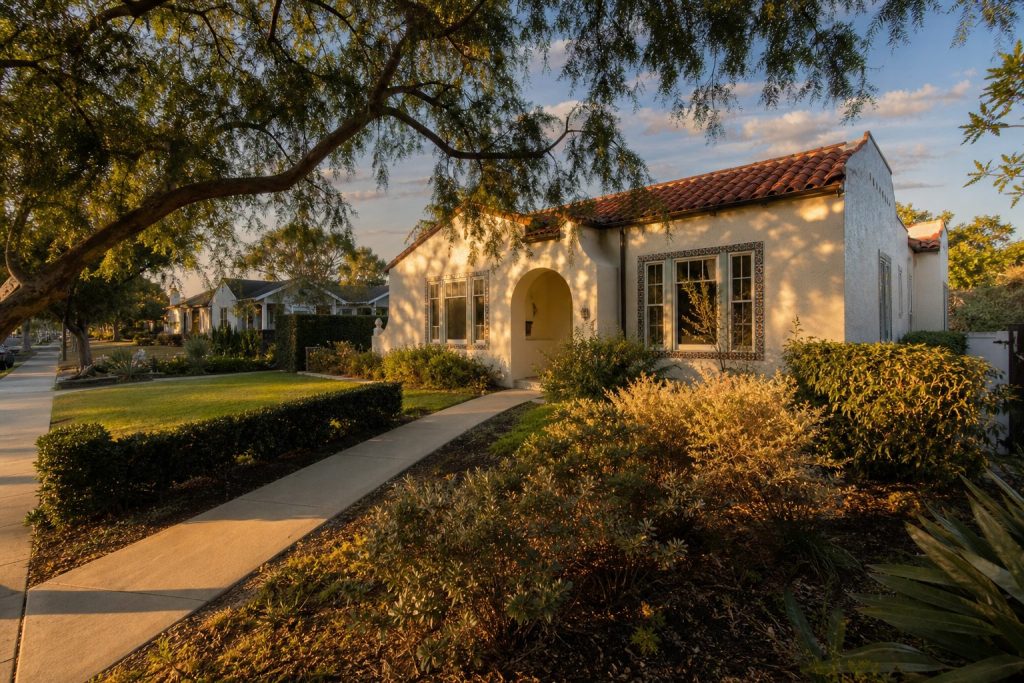
What does that actually mean for you? It means serious buyers are still actively shopping in Kensington. They’re drawn to the Spanish Revival architecture, the walkable village feel along Adams Avenue, and the kind of established neighborhood character that simply can’t be replicated in newer communities.
Having closed over 275 transactions across San Diego County, I can tell you that neighborhoods with this kind of emotional pull tend to hold value even when the broader market softens. Buyers purchasing in Kensington aren’t just buying a house. They’re buying a lifestyle, and that creates a pricing floor that more commodity-style neighborhoods don’t enjoy.
The Fall Slowdown Is Real, but Context Matters
Now for the other side of the story. San Diego County closed sales declined 23.1 percent year over year in October 2026, according to the Greater San Diego Association of REALTORS. The average 30-year fixed mortgage rate hit 7.32 percent on October 22, 2026, per Freddie Mac, up from 6.19 percent a year earlier.
That rate jump has real consequences. To afford San Diego’s median home price in mid-2026, buyers needed roughly $221,900 to $275,000 in annual household income depending on down payment size, according to local affordability analyses. At current rates, that threshold has only climbed.
So yes, the buyer pool has narrowed. But here’s what I tell my clients: a narrower pool doesn’t mean an empty pool. What I’ve consistently seen across 18 years in San Diego real estate is that rate-sensitive demand doesn’t disappear. It pauses. When rates briefly dipped below 6 percent in early February 2026, San Diego sales volume jumped 22.2 percent almost overnight. That pent-up demand is still out there, waiting.
The question isn’t whether buyers exist for your Kensington home. It’s whether your home is positioned to attract the buyers who are actively looking right now.
What’s Selling Well in Kensington Right Now (and What Isn’t)
This is where pricing strategy and presentation separate successful sellers from frustrated ones.
Kensington in late 2026 is what I’d call a separation market. Turnkey, well-presented homes on calm streets still command strong interest because buyers at this price point are paying for certainty. They want disclosures that make sense, fewer deferred maintenance surprises, and updates that improve daily function.
What gets rewarded:
- Natural light and functional floor plans that feel right the moment you walk in
- Clear parking situations, which matter enormously on Kensington’s narrower residential streets
- Honest, transparent disclosures that build buyer confidence
- Homes priced to reflect current conditions, not Q2 peaks
What gets punished:
- Overpricing a home with compromises like busy-street exposure, awkward additions, or tired mechanical systems
- Deferred maintenance that signals risk to cost-conscious buyers
- Stale listings that sit past 30 days without a price adjustment
Recent closed sales illustrate this dynamic well. A property at 5157 Hastings Road, a 3-bedroom, 2-bath home of 1,774 square feet, sold for $2,280,000 on October 2, 2026, per MLS records. Meanwhile, the broader zip code median tells a different story. The gap between top-performing homes and struggling listings has widened significantly.
Will Buyer Demand Slow Down Even More Before Year End?
This is the core question, and I want to give you a straight answer.
Seasonal slowdowns are normal. Every year, buyer activity dips in November and December as holidays take priority. That pattern hasn’t changed in 2026. Countywide inventory stood at 5,717 homes with 3.1 months of supply in October 2026, according to SDAR data, up slightly from 3.0 months. This is a gradual shift, not a cliff.
Here’s what the data suggests about waiting:
- Mortgage rates show no clear sign of declining before year end. The Federal Reserve’s posture hasn’t signaled the kind of cuts that would meaningfully drop rates in the next six to eight weeks.
- Most analysts predict San Diego prices will appreciate modestly at 2 to 5 percent annually going forward, according to multiple market forecasts. Dramatic price increases aren’t on the horizon.
- Year-to-date sales through September 2026 are only 1 percent higher than 2025, per MLS data. Volume has been essentially flat since 2024.
What this tells me: if you’re waiting for a hotter market to sell into, the evidence doesn’t support that strategy. Waiting through winter typically means competing with more listings when spring inventory surges. And if rates stay elevated, the buyer pool won’t expand meaningfully by January.
The Cost of Waiting as a Kensington Seller
Something I always encourage my clients to calculate is the carrying cost of holding a property while waiting for “better” conditions.
For a home valued around Kensington’s current median range, monthly carrying costs typically include:
- Mortgage payments: $5,500 to $6,500 or more
- Property taxes: approximately $850 to $1,000 monthly
- Homeowners insurance: $150 to $300 monthly
- Maintenance, landscaping, and utilities: variable but meaningful
Every month you hold adds those costs to your bottom line. If the market appreciates at 2 to 5 percent annually, that’s roughly 0.2 to 0.4 percent per month in theoretical value growth, often less than your monthly carrying costs.
Rated 5 out of 5 stars across 275 client reviews, I’ve guided sellers through exactly this kind of cost-benefit analysis hundreds of times. The math doesn’t always support waiting, especially when you factor in the risk that rates could rise further or that economic uncertainty could weigh on buyer confidence heading into 2027.
Frequently Asked Questions
Is Kensington still a seller’s market in late 2026?
For detached homes, yes. With 1.8 months of supply through early 2026 (per SDAR data), Kensington’s single-family market remains seller-leaning. However, it’s not the multiple-offer frenzy of previous years. Homes are selling in an average of 46 days, and sellers are receiving about 95.4 percent of their original list price, so pricing accurately from day one is essential.
How much are homes selling for in Kensington right now?
Through September 2026, the median detached home in the 92116 zip code sold for $1,337,000, per MLS data. For the most recent three-month window ending September 2026, the median sale price was $1,438,097. Individual results vary significantly based on condition, location within the neighborhood, and lot characteristics.
Should I wait until spring 2027 to list my Kensington home?
Spring typically brings more buyers, but it also brings more competition from other sellers. With current mortgage rates at 7.32 percent as of October 2026 (per Freddie Mac) and no clear rate-cut signal for the near term, there’s no guarantee spring conditions will be meaningfully stronger. Your carrying costs during those months can offset any seasonal price bump.
How long are homes taking to sell in Kensington?
The timeline varies by season and property type. Through early 2026, the average was 46 days on market for detached homes (per SDAR data). During Q2 2026, that dropped to 19 days. As of September 2026, MLS data shows a median of 25 days for the most recent three-month period. Well-priced homes in strong condition sell faster.
What mortgage rate would bring more buyers into the Kensington market?
San Diego saw a 22.2 percent jump in sales volume when rates briefly dipped below 6 percent in early February 2026. That suggests meaningful demand activates around the mid-5 percent range. At 7.32 percent as of late October 2026, the pool remains constrained but not absent.
How does Kensington compare to nearby neighborhoods like North Park?
North Park has a $1,140,000 detached median, according to early 2026 SDAR data. Kensington commands a premium reflecting its architectural character, established landscaping, and quieter residential streets. Buyers typically choose Kensington specifically for those qualities.
Will Kensington home prices drop further before year end?
The 92116 zip code median declined 8.4 percent year over year through September 2026 (per MLS data), but this partly reflects the mix of homes that sold rather than pure depreciation. Most market forecasts project modest appreciation of 2 to 5 percent annually for San Diego overall. Dramatic drops are unlikely given tight detached inventory.
What’s the biggest mistake Kensington sellers make in this market?
Overpricing based on peak-season comparables. The gap between Q2 2026 and fall 2026 data is significant. Sellers who anchor to the $1.89M Q2 median without accounting for seasonal shifts and rate impacts risk sitting on the market, which creates its own pricing pressure.
Do I need to renovate before selling in Kensington?
Not necessarily, but presentation matters more than ever in a separation market. Buyers in this price range pay up for homes that feel move-in ready and low-risk. Focus on deferred maintenance, curb appeal, and functional updates rather than major renovations. As someone who’s worked on flips and remodels alongside investors, I can help you identify where to invest and where to skip.
How do I know if my Kensington home will attract today’s buyers?
Start with an honest assessment of your home’s strengths and trade-offs. Homes with natural light, functional layouts, good parking, and transparent disclosures still attract motivated buyers even in a cooling market. I offer a complimentary attorney review of contracts and disclosures with every transaction, which gives both sides added confidence.
The Bottom Line for Kensington Home Sellers in 2026
Kensington remains one of San Diego’s most desirable neighborhoods, and the detached home market is still tilted in your favor, though not as dramatically as it was six months ago. Buyer demand has softened from mid-year highs, mortgage rates are restricting the pool, and the seasonal slowdown is underway.
But waiting for dramatically better conditions isn’t supported by the current data. Carrying costs add up, spring brings more competition, and there’s no clear catalyst for a rate-driven demand surge before 2027.
If your home is well-maintained and you price it honestly for current conditions, the market still has buyers for you. For more insights on how to price your San Diego home correctly, I’m happy to help you see the picture clearly. You can reach me, Scott Cheng, Broker Associate with REAL Brokerage (DRE# 01509668), at 858-405-0002.