

Zoning and Grading Requirements for Otay Ranch Vacant Lots in 2026
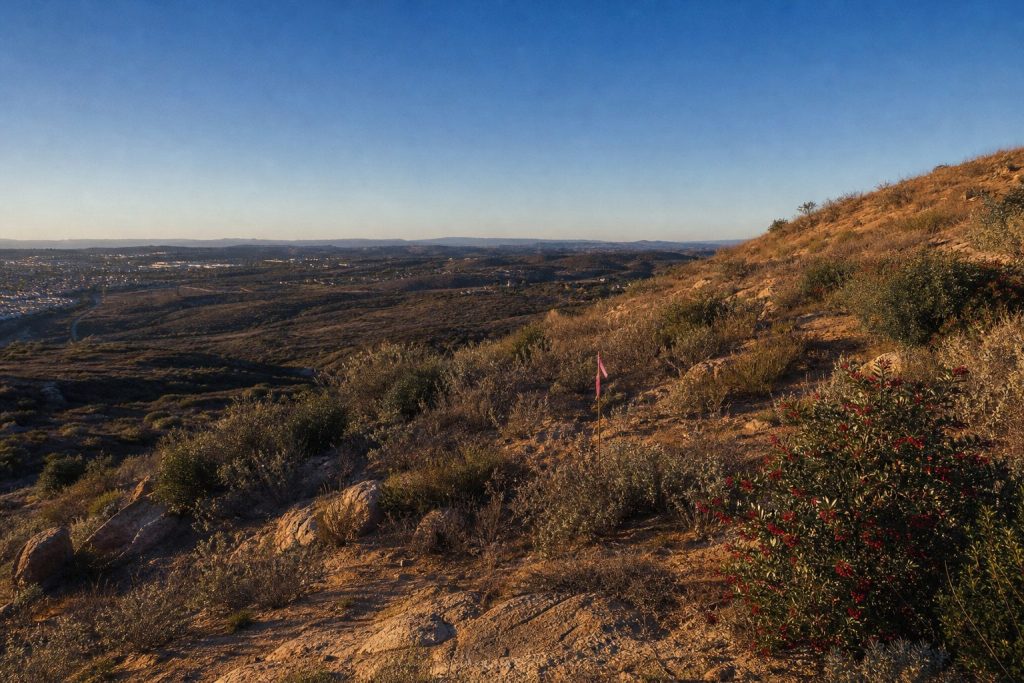
What are the real zoning and grading requirements you need to verify before buying a vacant lot in Otay Ranch, San Diego, in 2026 to make sure you can actually build on it?
You need to verify the Sectional Planning Area (SPA) plan for your specific Otay Ranch village, confirm the Planned Community zoning designation permits your intended build, obtain a grading feasibility assessment, and clear environmental overlays before committing to any purchase.
Why This Matters Right Now in Otay Ranch
Otay Ranch is one of San Diego’s most active development zones in 2026. The Chula Vista City Council recently approved up to $80 million in tax-exempt bonds for a 270-unit affordable housing development here. Côta Vera, a nearly 900-acre residential development, is debuting its first phase. Village 13 reached a settlement that increases planned homes to 2,750 with a wider variety of housing types.
All of this activity means vacant lots in Otay Ranch are attracting serious buyer attention. But here is the thing that trips people up: not every vacant lot is automatically buildable. Otay Ranch sits on over 25,900 acres of master-planned land with an 11,000-acre open-space preserve, multiple environmental overlays, and village-by-village zoning rules that differ significantly from one parcel to the next.
A cloudy mind can’t make decisions, and buying land with unclear buildability is one of the cloudiest situations you can walk into. Let me walk you through exactly what to verify so you move forward with confidence.
Understanding Otay Ranch’s Layered Zoning Framework in Chula Vista
Here is something many buyers don’t realize: Otay Ranch is governed by the City of Chula Vista, not the City of San Diego or unincorporated San Diego County. That distinction matters because your permits, inspections, and zoning appeals all run through Chula Vista‘s Development Services Department.
The zoning framework has four distinct layers, and you need to understand how they stack:
- Chula Vista General Plan sets broad land use categories and density ranges across the entire city
- Otay Ranch General Development Plan (GDP) establishes village boundaries, open space preserve limits, and infrastructure phasing for the full 23,000+ acre community
- Sectional Planning Area (SPA) Plans are village-specific documents that dictate permitted uses, minimum lot sizes, setback requirements, maximum building height, floor area ratios, lot coverage limits, and architectural design standards
- Planned Community (PC) District Regulations under Chula Vista Municipal Code Title 19 defer to the applicable SPA plan for development standards
What does this actually mean for you as a buyer? The SPA plan for your specific village is the single most important document you need to get your hands on. It tells you exactly what you can and cannot build on your parcel.
What I tell my clients is to request the SPA plan from the City of Chula Vista Development Services Department before making an offer. Confirm your parcel’s zoning designation (SF-3, SF-4, RM, or another category), verify permitted uses, and review any conditions of approval or development agreements attached to the land.
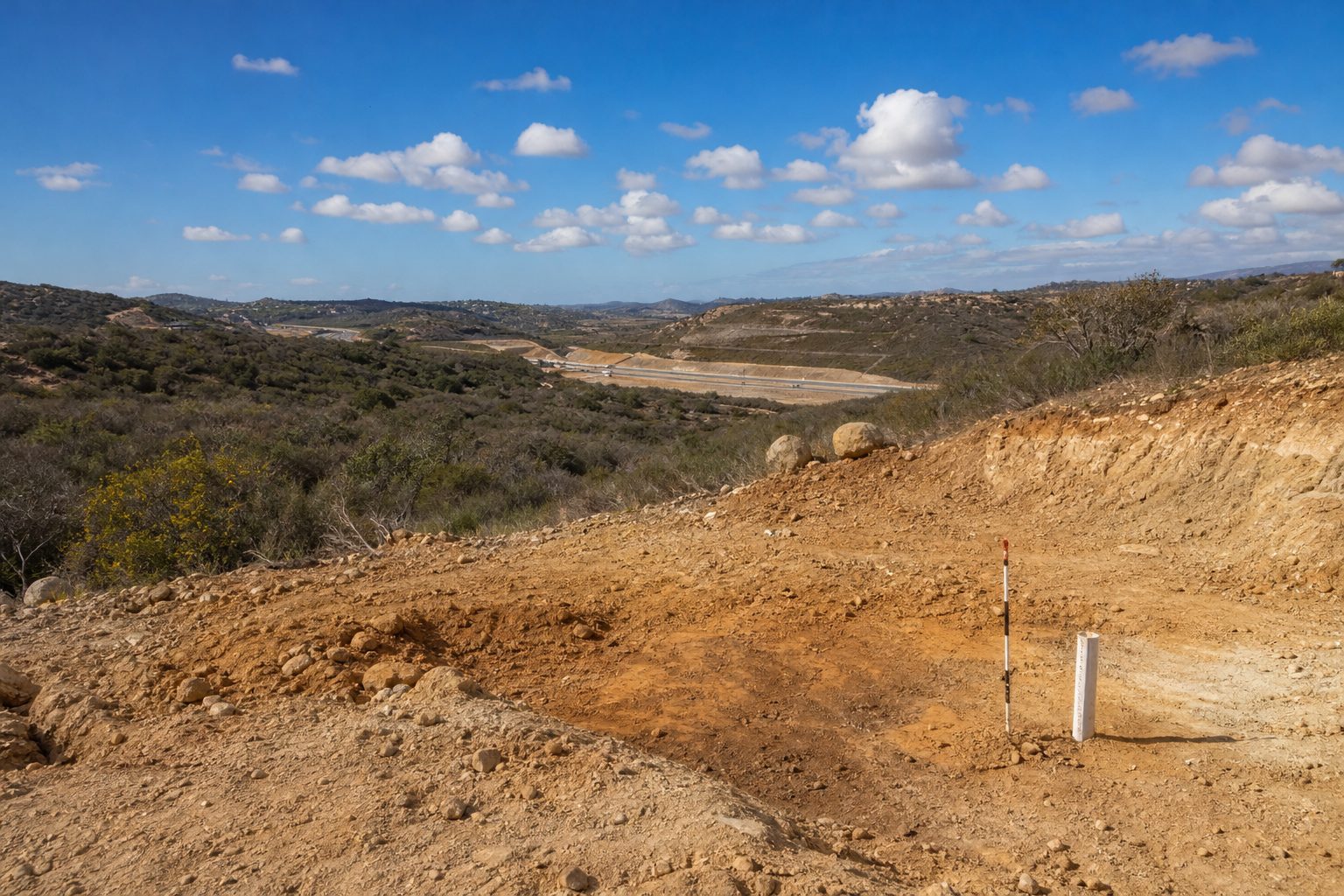
Grading Requirements You Cannot Afford to Skip in Otay Ranch
Much of Otay Ranch’s undeveloped land sits on hilly terrain, and that is where grading requirements become your make-or-break issue.
Under Chula Vista’s Grading Ordinance (Chapter 15.04 of the Municipal Code), any grading involving more than 50 cubic yards of cut or fill requires a grading permit. Your grading plans must be prepared by a licensed civil engineer, and a soils/geotechnical report from a licensed geotechnical engineer is mandatory.
Here are the key hillside development standards to verify:
- Slopes exceeding 25% grade may have restricted buildable area on your parcel
- Manufactured slopes typically cannot exceed a 2:1 (horizontal to vertical) ratio
- Retaining walls are generally limited to 6 feet in height without special approval
- Drainage and erosion control plans are required for every grading permit
Grading costs in San Diego County can range from roughly $15,000 to over $100,000 depending on the slope and soil conditions. That is a wide range, and the only way to narrow it is through a geotechnical investigation before you close on the lot.
Having closed over 275 transactions in San Diego County over 18 years, I can tell you that the grading assessment is where many land deals either come together or fall apart. Getting this report during your due diligence period, not after closing, is essential.
Environmental and Habitat Overlays Unique to Otay Ranch
This is the layer that catches even experienced buyers off guard. Otay Ranch’s development historically required permits from the U.S. Army Corps of Engineers, the California Department of Fish and Wildlife, and the California Regional Water Quality Control Board. The community also falls under the Multiple Species Conservation Plan (MSCP) and a Resource Management Plan (RMP) that addresses San Diego County’s Resource Protection Ordinance.
What you need to verify for your specific parcel:
- Preserve proximity: The 11,000-acre open-space preserve is the largest of its kind in San Diego County. If your parcel borders or overlaps with the preserve boundary, you may face mitigation requirements that limit your buildable footprint or add significant cost
- Wetlands and vernal pools: The original Otay Ranch approvals required a Conceptual Wetlands Mitigation Plan and a Vernal Pool Mitigation Plan. Individual parcels near these features may carry similar obligations
- CEQA coverage: If your lot is part of a previously approved SPA plan with a certified Environmental Impact Report (EIR), your individual development may be covered under existing CEQA clearance. However, if conditions have changed or your project deviates from the approved plan, supplemental CEQA review could be triggered
- Stormwater compliance: All grading must comply with the City’s Municipal Stormwater Permit under the San Diego Regional Water Quality Control Board. Sites disturbing one or more acres require a Storm Water Pollution Prevention Plan (SWPPP)
So how do you find out where your parcel stands? Contact the City of Chula Vista’s planning division and request the environmental overlay maps for your specific lot. This is not optional, and it is not something you want to discover after escrow closes.
Fire Hazard Zones and Building Code Requirements in Otay Ranch
The Village 13 settlement includes widening Otay Lakes Road from two to a minimum of four lanes specifically to facilitate wildfire evacuations. That should tell you something about how seriously fire risk is taken in this part of San Diego County.
CAL FIRE designates fire hazard severity zones throughout the region. If your Otay Ranch parcel falls within a Very High Fire Hazard Severity Zone (VHFHSZ), you will need to comply with Chapter 7A of the California Building Code, which mandates fire-resistant construction materials. You will also need to meet California PRC 4291 defensible space requirements.
Additionally, verify whether your parcel falls within a FEMA-designated flood zone, particularly if it is near the Otay River or its tributaries. San Diego County has also mapped geologic hazard areas including landslide-prone zones and fault lines. A geotechnical investigation covers both slope stability and seismic risk.
Infrastructure, Mello-Roos, and Hidden Costs for Otay Ranch Lots
Even after you confirm zoning and grading feasibility, you need to verify infrastructure access. Not all vacant lots in Otay Ranch have utilities stubbed to the property line.
Check for availability and connection costs on:
- Water and sewer service (connection fees in newly developing villages can be substantial)
- Electricity and gas (verify proximity of existing lines)
- Road access (confirm legal ingress and egress)
Then there is the financial layer most buyers underestimate. Otay Ranch parcels are typically subject to Community Facilities District (CFD) and Mello-Roos vs no Mello-Roos properties special taxes that fund infrastructure. These can add thousands annually on top of standard property taxes.
Your total build budget beyond the land price should account for:
- Grading and site preparation: Roughly $15,000 to $100,000+ depending on slope
- Utility connections: Roughly $10,000 to $50,000+
- Permit and impact fees: Roughly $30,000 to $80,000+ in Chula Vista
- Architectural and engineering plans: Roughly $10,000 to $30,000
With 275 five-star reviews from past clients, one thing I hear consistently is that the upfront homework on costs prevented expensive surprises later. Rated 5 out of 5 stars by past clients, I bring the same clarity-first approach to land purchases that I bring to every transaction.
Frequently Asked Questions About Buying Vacant Land in Otay Ranch
Do I need a grading permit for any earthwork on my Otay Ranch lot?
Yes. Under Chula Vista’s Grading Ordinance (Chapter 15.04), any grading involving more than 50 cubic yards of cut or fill requires a grading permit. You will also need grading plans prepared by a licensed civil engineer and a geotechnical report. Even smaller projects may need review if they are near environmental overlays or steep slopes.
How do I find the SPA plan for my specific Otay Ranch village?
Contact the City of Chula Vista Development Services Department and request the Sectional Planning Area plan for your parcel’s village. This document contains the permitted uses, setbacks, height limits, lot coverage, and design standards specific to your lot. It is the most critical document in your due diligence.
What is the Planned Community (PC) zoning designation in Chula Vista?
The PC designation under Chula Vista Municipal Code Title 19 is a flexible zoning category that defers to the applicable SPA plan for specific development standards. Your parcel’s SPA plan will specify whether your lot allows single-family, multi-family, or mixed-use development and under what conditions.
Are there environmental restrictions on Otay Ranch vacant lots?
Potentially, yes. Otay Ranch includes an 11,000-acre open-space preserve and is subject to the Multiple Species Conservation Plan (MSCP) and a Resource Management Plan (RMP). Parcels near the preserve boundary, wetlands, or vernal pool areas may face mitigation requirements that limit buildable area or add costs.
What is CEQA and does it apply to my individual lot purchase?
CEQA (California Environmental Quality Act) requires environmental review for development projects. If your lot falls within an approved SPA plan with a certified Environmental Impact Report, your individual build may already be covered. If your project deviates from the approved plan, supplemental review may be required.
How much are Mello-Roos taxes on Otay Ranch parcels?
Mello-Roos special taxes on Otay Ranch parcels fund community infrastructure. These vary by village and parcel but can add significantly to your annual tax burden on top of standard property taxes. Request the CFD disclosure from the City of Chula Vista for your specific parcel before making an offer.
What slope limitations apply to building in Otay Ranch?
Slopes exceeding 25% grade may have restricted buildable area under Chula Vista’s hillside development standards. Manufactured slopes typically cannot exceed a 2:1 horizontal-to-vertical ratio, and retaining walls are generally limited to 6 feet without special approval.
Do I need a stormwater plan for my Otay Ranch lot?
Yes. All grading must comply with the City’s Municipal Stormwater Permit. Sites disturbing one or more acres require a Storm Water Pollution Prevention Plan (SWPPP). Post-construction Best Management Practices must also be incorporated into your site design per the San Diego Regional Water Quality Control Board.
What fire hazard requirements might apply to my Otay Ranch parcel?
If your parcel falls within a Very High Fire Hazard Severity Zone designated by CAL FIRE, you must comply with Chapter 7A of the California Building Code for fire-resistant construction and meet defensible space requirements under California PRC 4291.
Should I hire a geotechnical engineer before buying a vacant lot?
Absolutely. A geotechnical investigation is required for the grading permit anyway, but getting a preliminary assessment during your due diligence period can reveal deal-breaking issues like unstable soils, landslide risk, or seismic concerns before you are committed to the purchase.
The Bottom Line on Buying a Vacant Lot in Otay Ranch
Buying a condo in Otay Ranch Chula Vista can be a smart move, and buying a vacant lot here requires the same level of due diligence. That means pulling the SPA plan for your specific village, commissioning a geotechnical report, checking environmental overlays, confirming utility access, and understanding your full cost picture including Mello-Roos taxes and permit fees.
With 18 years of experience in San Diego County real estate and a specialization in land and lots, I help buyers navigate exactly these complexities. I also provide a complimentary attorney review of contracts and disclosures, covered by me even if escrow cancels.
If you are considering a vacant lot in Otay Ranch and want clear guidance on what you need before buying a home in San Diego in 2026, reach out. I am Scott Cheng, Broker Associate with REAL Brokerage, and you can call me at 858-405-0002 or visit my office at 16516 Bernardo Center Dr. Ste. 300. Let’s make sure you are building on solid ground, literally and figuratively.