

Cap Rate Benchmarks for Retail Strip Centers in Kearny Mesa San Diego
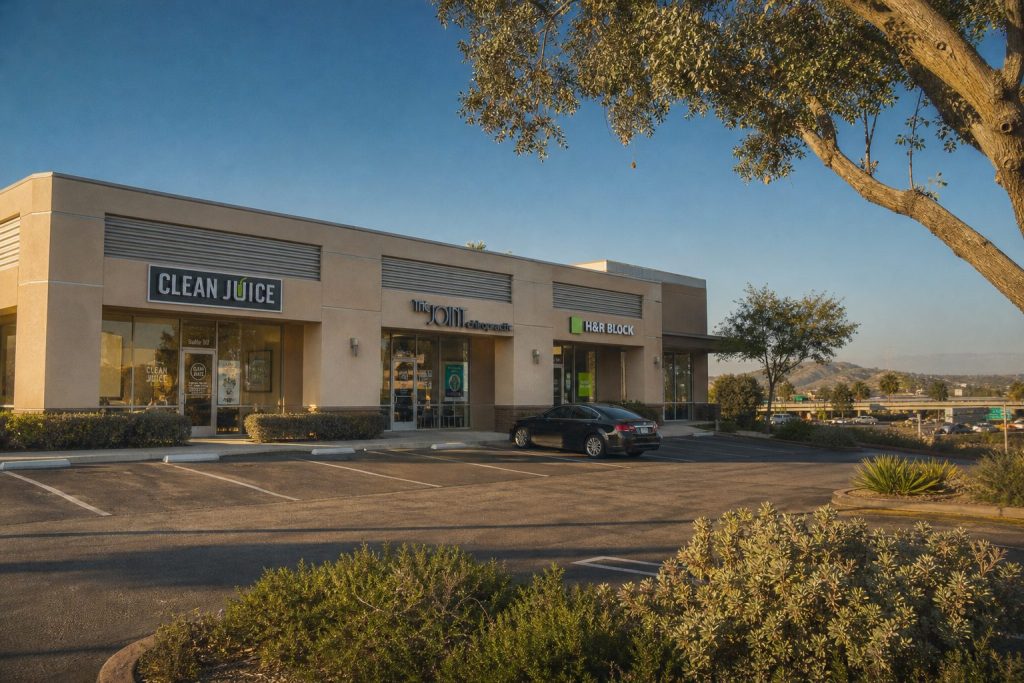
What are the real cap rate benchmarks and NOI expectations you need to hit before buying a retail strip center in Kearny Mesa, San Diego, in 2026?
For a stabilized multi-tenant strip center in Kearny Mesa, you should underwrite to a 5.50% to 6.50% cap rate on verified NOI, per 2026 market data compiled from commercial brokerage research. Anything below that range demands serious justification.
Why Cap Rate Clarity in Kearny Mesa Matters Right Now
A cloudy mind can’t make decisions, and that’s especially true when you’re staring at a seven-figure retail acquisition in one of San Diego’s most active commercial corridors.
Here’s the reality. San Diego’s retail vacancy sat at just 4.3% in Q3 2026, according to commercial real estate metro market reports. Retail construction is down 55.93% year over year as of the same period, per Kidder Mathews research using CoStar data. That means supply is tightening while demand holds. For Kearny Mesa specifically, with its freeway access at the intersection of Interstate 805 and Highway 52, its proximity to Interstate 15, and the ongoing draw of the Convoy Street dining and retail corridor, investor demand has kept pricing firm.
But firm pricing does not mean every deal pencils. With commercial mortgage rates starting as low as 5.33% as of May 2026, according to market lending data, your spread between cap rate and borrowing cost may be razor-thin, or even negative. That’s the conversation I want to walk you through today.
Understanding Kearny Mesa’s Real Cap Rate Tiers in San Diego
Not all strip centers in Kearny Mesa trade at the same yield. You need to know which tier your target property falls into, because the range is wide.
Single-Tenant NNN (Credit Tenant, Long Lease): 4.50% to 5.25%. These are the tightest caps in the submarket. You’re buying a bond-like income stream, and the market prices it accordingly.
Multi-Tenant Neighborhood Strip Center (Local Tenants, Shorter Leases): 5.50% to 6.50%. This is where most Kearny Mesa strip center deals land. You’re taking on more management responsibility and lease-up risk, so the yield compensates for that.
Value-Add Retail (Vacancy or Below-Market Rents): 6.50% to 8.00% or higher on current income. If you’re buying on a 7.5% cap, you need to understand exactly what is driving that yield higher. Is it vacancy? Deferred maintenance? A tenant about to leave?
For broader context, the San Diego market-wide average retail cap rate was 5.5% in Q3 2026, according to Kidder Mathews research sourced from CoStar. And San Diego cap rates consistently run 50 to 150 basis points below national averages for comparable property types, per commercial brokerage market compilations. So if you’re comparing Kearny Mesa yields to what you’d find in Phoenix or Dallas, recalibrate your expectations.
What does that actually look like for your deal? If someone pitches you a multi-tenant Kearny Mesa strip center at a 4.8% cap, that should raise an eyebrow. That’s single-tenant NNN territory, and you’d want to understand what justifies the premium pricing on a more management-intensive asset.
How to Build a Realistic NOI for a Kearny Mesa Strip Center
This is where I see investors get tripped up. The NOI on the offering memorandum is a starting point, not a finish line.
Here’s how you should reconstruct NOI for a representative 10,000 square foot multi-tenant strip center in Kearny Mesa using current market rents.
- Gross Potential Rent: 10,000 SF at $2.38/SF per month comes to approximately $285,600 annually (using the Q3 2026 San Diego average asking rent of $2.37/SF/month reported by Kidder Mathews, rounded to reflect Kearny Mesa’s positioning)
- Vacancy and Credit Loss at 5%: Subtract approximately $14,280
- Effective Gross Income: Approximately $271,320
- CAM and NNN Recoveries: Add approximately $30,000
- Total Effective Income: Approximately $301,320
- Operating Expenses at 30% to 35% of EGI: Subtract $90,000 to $105,000
- Estimated NOI: Approximately $196,000 to $211,000
At a 6.0% cap rate, that NOI range implies a justified property value of approximately $3.27 million to $3.52 million, or roughly $327 to $352 per square foot. At a 5.5% cap, the implied value climbs to approximately $3.56 million to $3.84 million.
For comparison, the San Diego retail average sale price reached $392 per square foot in Q3 2026, according to Kidder Mathews. So Kearny Mesa strip center pricing at $327 to $384 per square foot aligns with current market conditions when the NOI is properly verified.
Why You Must Verify Every Line of the Seller’s NOI in San Diego
Having closed over 275 transactions and worked alongside investors on properties that range from residential flips to commercial acquisitions, I can tell you that seller-presented financials deserve skepticism. Not cynicism, but disciplined verification.
What I tell my clients is straightforward: pull the actual lease agreements, cross-reference stated rents against bank deposit statements, and obtain real property tax bills and current insurance premiums independently. The research for this market highlights a telling scenario: an investor evaluating a strip center along one of Kearny Mesa’s main commercial corridors found that the seller’s offering memorandum showed a 6.2% cap rate. When the NOI was reconstructed line by line using verified data, the true cap rate was closer to 5.1%. That’s more than 100 basis points of difference, and it fundamentally changes the investment thesis.
Here’s your verification checklist:
- Start with gross potential rent from actual signed leases
- Subtract vacancy and credit loss (5% is reasonable in Kearny Mesa’s tight market)
- Add CAM or NNN recoveries, verified against actual collections
- Subtract operating expenses with real invoices, not pro forma estimates
- Compare your reconstructed NOI to the seller’s number
If there’s a gap, that’s your negotiating leverage.
The Negative Leverage Trap That Catches San Diego Investors
So, can you actually make money buying a Kearny Mesa strip center in 2026? The answer depends entirely on your debt structure.
If your all-in borrowing cost is 6.5% and you’re buying at a 5.5% cap rate, you have negative leverage on Day 1. Every dollar you borrow actually dilutes your return. The Federal Reserve has held interest rates steady since the start of 2026, per its public guidance, and with San Diego commercial mortgage rates starting as low as 5.33% as of May 2026, you need to model your actual loan terms carefully.
Here’s the decision framework I walk investors through. You should stress-test three scenarios:
- Best case: Your negotiated rate at 5.50%, buying at a 6.25% cap. Positive leverage from day one.
- Base case: Your rate at 6.00%, buying at a 5.75% cap. Slightly negative leverage, offset by rent growth.
- Worst case: Your rate at 6.75%, buying at a 5.50% cap. Negative leverage that requires significant rent bumps to overcome.
Average asking rents for San Diego retail were $2.37 per square foot per month in Q3 2026, up 1.43% year over year from $2.33 in Q3 2025, per Kidder Mathews. That growth trajectory matters when you’re underwriting year-two and year-three cash flow.
Tenant Mix and Concentration Risk in Kearny Mesa Retail
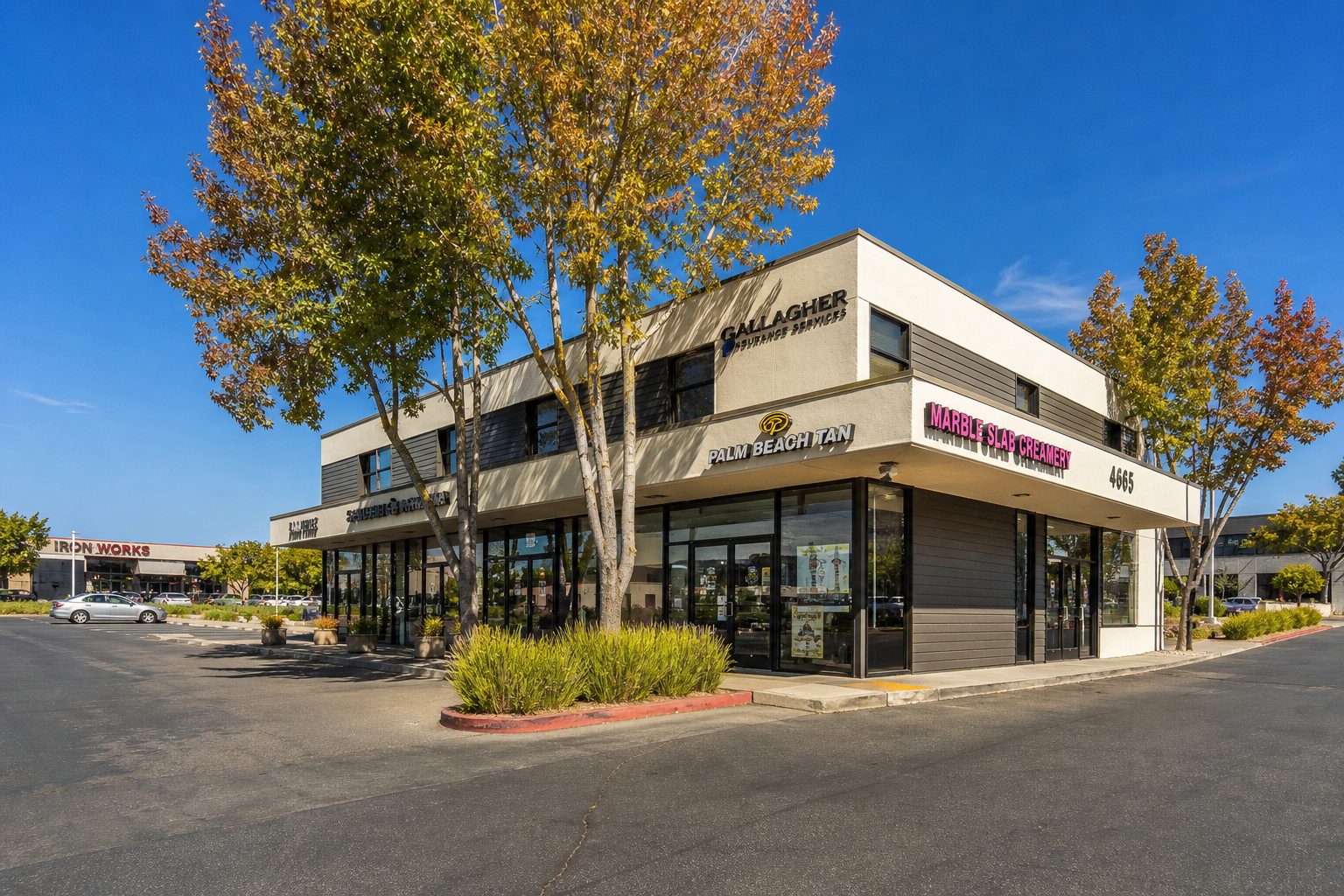
Kearny Mesa’s commercial identity is a strength, but it also demands you pay attention to tenant concentration. If one tenant represents 40% or more of gross income and their lease expires soon, the risk profile is very different from a diversified rent roll.
Kearny Mesa benefits from a daytime workforce population driven by corporate offices, healthcare facilities, technology companies, and automotive dealerships, all of which fuel foot traffic to nearby strip centers. The Convoy Street corridor’s restaurant and specialty market scene adds consumer-driven demand that goes beyond the 9-to-5 cycle.
When evaluating tenant mix, ask yourself:
- Does any single tenant represent more than 30% of gross rental income?
- What’s the weighted average remaining lease term across all tenants?
- Are tenants local operators or regional/national credits?
- How many leases renew in the next 24 months?
Regulatory Shifts Every San Diego Strip Center Buyer Needs to Know
Two recent California legislative changes should be on your radar, according to top 10 issues to watch in commercial real estate in 2026.
As of July 2026, SB 79 allows for increased transit-oriented development. This can fundamentally change a property’s value depending on its proximity to transit. And Assembly Bill 507, also effective July 2026, streamlines conversion of underutilized office and retail properties into residential housing.
Additionally, new FinCEN reporting rules for all-cash entity transactions began March 1, 2026. If you’re acquiring through an LLC or trust, your compliance obligations have changed.
With 18 years of experience in San Diego real estate and a track record backed by 275 five-star reviews from past clients, I stay current on these shifts so my clients don’t get caught off guard.
Frequently Asked Questions
What is a good cap rate for a Kearny Mesa strip center in 2026?
For a stabilized multi-tenant strip center, target the 5.50% to 6.50% range, per 2026 market data compiled from commercial brokerage research. Single-tenant NNN properties with credit tenants trade tighter at 4.50% to 5.25%. Value-add deals with vacancy may trade at 6.50% to 8.00% or higher on current income.
What is the average retail vacancy rate in San Diego right now?
San Diego retail vacancy stood at 4.3% in Q3 2026, according to Pacific Coast Commercial’s quarterly market report. Kidder Mathews reported 4.59% for Q2 2026. This tight vacancy environment supports landlord pricing power.
How much does retail space rent for in San Diego in 2026?
Average asking rents for San Diego retail were $2.37 per square foot per month in Q3 2026, up 1.43% year over year from $2.33 in Q3 2025, per Kidder Mathews research sourced from CoStar data. Kearny Mesa rents may vary by location and tenant profile.
What NOI should I expect from a 10,000 SF Kearny Mesa strip center?
Using current market rents and standard expense ratios, a 10,000 square foot multi-tenant strip center in Kearny Mesa can generate an estimated NOI of approximately $196,000 to $211,000 annually, based on reconstructed income models using Q3 2026 market data.
What is negative leverage and why does it matter?
Negative leverage occurs when your borrowing cost exceeds your cap rate. If your loan rate is 6.5% and you buy at a 5.5% cap, debt reduces your return. With San Diego commercial mortgage rates starting as low as 5.33% as of May 2026, careful modeling is essential.
How do San Diego retail cap rates compare to national averages?
San Diego cap rates consistently run 50 to 150 basis points below national averages for comparable property types, per commercial brokerage market compilations. This reflects San Diego’s supply-constrained coastal market fundamentals and durable multi-sector demand.
What recent retail sales have occurred in San Diego?
Notable Q3 2026 sales include Plaza Bonita in Chula Vista at $196.9 million ($331.40 per SF) and Terra Nova Plaza at $30.4 million ($316.29 per SF), per Kidder Mathews. A Kearny Mesa retail-flex building near Convoy Street and Balboa Avenue previously sold for $3,745,000 ($535 per SF).
What tenant concentration risk should I watch for?
If one tenant represents 40% or more of gross income and their lease expires within the near term, your risk profile changes dramatically. Diversified rent rolls with staggered lease expirations provide more stable cash flow.
Are there new regulations affecting strip center purchases in 2026?
Yes. New FinCEN reporting rules for all-cash entity transactions began March 1, 2026. SB 79 (effective July 2026) expands transit-oriented development rights, and AB 507 (effective July 2026) streamlines retail-to-residential conversions. Both can impact property value.
Why is retail construction declining in San Diego?
Retail construction in San Diego is down 55.93% year over year as of Q3 2026, from 359,641 SF under construction a year earlier, per Kidder Mathews data sourced from CoStar. Limited new supply supports occupancy and rent growth in existing properties like Kearny Mesa strip centers.
The Bottom Line
Buying a retail strip center in Kearny Mesa in 2026 can be a sound investment, but only if you underwrite with discipline. Target the 5.50% to 6.50% cap rate range for multi-tenant properties, reconstruct the NOI from verified lease data, and stress-test your debt scenarios before you commit. Kearny Mesa’s central location, freeway connectivity, and the commercial energy around Convoy Street provide durable demand drivers that many San Diego submarkets can’t match.
If you’re evaluating a Kearny Mesa strip center acquisition and want a second set of eyes on the numbers, I’m happy to walk through it with you. I’m Scott Cheng, Broker Associate with REAL Brokerage, DRE 01509668. You can reach me at 858-405-0002 or through my office at 16516 Bernardo Center Dr. Ste. 300 in San Diego.