

Coronado vs Mission Bay Waterfront: Total Cost of Ownership in San Diego
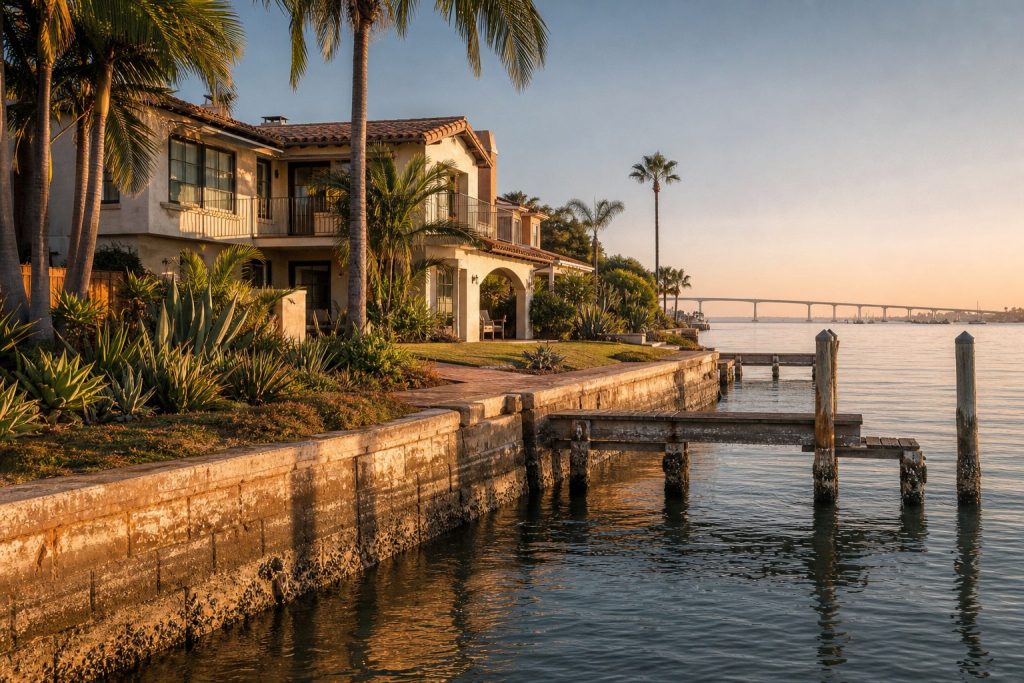
What are the real total cost of ownership differences between buying a waterfront home in Coronado versus Mission Bay in San Diego, including HOA fees, flood insurance, and seawall maintenance?
The gap goes well beyond sticker price. Between higher property taxes, flood insurance requirements, seawall liability, and dramatically different HOA structures, Coronado and Mission Bay waterfront homes can diverge by tens of thousands of dollars annually in recurring ownership costs.
Why This Matters Right Now in San Diego’s Waterfront Market
If you’re shopping for waterfront property in San Diego, the purchase price is just the opening chapter. The real story, the one that shapes your monthly budget for years, lives in the carrying costs that most buyers don’t fully map out until they’re deep into escrow.
Both Coronado and Mission Bay are appreciating at a strong clip. Coronado’s traditional rolling-12-month median sits at $2,730,000 (up 12.7% year over year, as of October 2026, per SDAR MLS data), while Mission Bay-area detached homes carry a year-to-date median of $2,330,000 (up 13.7% year over year, as of October 2026, per SDAR MLS data). Those numbers look similar on the surface. But once you layer in property taxes, insurance premiums, HOA obligations, and seawall maintenance, the ownership experience in these two communities starts to look very different.
What I tell my clients is this: a cloudy mind can’t make decisions. So let me help you clear the fog by walking through every major cost category, side by side.
Purchase Price and Property Tax Differences Between Coronado and Mission Bay
Your purchase price sets the baseline for nearly every other carrying cost, and the spread here matters more than you might expect.
Coronado’s rolling-12-month median of $2,730,000 versus Mission Bay’s detached year-to-date median of $2,330,000 creates a roughly $400,000 gap right at the starting line, per SDAR MLS data as of October 2026. That gap compounds immediately through your property tax bill.
Using California’s effective base rate of approximately 1.1% of assessed value, here’s what that looks like annually:
- Coronado at $2,730,000: approximately $30,030 per year in base property tax
- Mission Bay at $2,330,000: approximately $25,630 per year in base property tax
That’s roughly a $4,400 annual difference before you even factor in Mello-Roos or special assessment districts, which can vary block by block in both communities.
What does this actually mean for your monthly budget? You’re looking at roughly $370 more per month in property taxes alone if you choose Coronado over Mission Bay, all else being equal. And all else is rarely equal, which brings us to the next layer.
HOA Fees in Coronado vs Mission Bay: Two Completely Different Structures
This is where the ownership models diverge most sharply, and it’s one of the things I consistently see buyers overlook.
Coronado’s Detached Waterfront
Most of Coronado’s bayfront and beachfront properties are freestanding residences on fee-simple lots. That means you’re predominantly looking at non-HOA or minimal-HOA situations. You own the land, you own the structure, and you’re responsible for your own maintenance. There’s freedom in that arrangement, but also full financial accountability for everything from landscaping to structural repairs.
Mission Bay’s Attached and Condo Waterfront
Mission Bay gives you a choice that Coronado largely does not. The attached/condo segment in ZIP 92109 carries a year-to-date median of $1,002,500 (as of October 2026, per SDAR MLS data), which is a dramatically lower entry point. But that lower purchase price comes with ongoing HOA dues.
Waterfront complexes around Mission Bay that include docks, shared seawalls, and common areas can carry substantial monthly HOA fees. The key question you need answered before making an offer: does the HOA maintain the seawall and dock infrastructure, or is that your individual responsibility? This single detail can shift your annual costs by thousands of dollars in either direction.
HOA fees vary significantly by complex, and I always recommend reviewing the HOA budget, reserve study, and recent special assessment history as part of your due diligence. These documents tell you what’s coming, not just what’s being charged today.
Flood Insurance Requirements for San Diego Waterfront Buyers
Here’s where both Coronado and Mission Bay buyers face a shared reality: if you’re buying waterfront, you’re almost certainly in a FEMA Special Flood Hazard Area (Zone AE or VE), and flood insurance is required for any federally backed mortgage.
Under FEMA’s Risk Rating 2.0 methodology, which is in effect for 2026, premiums are no longer based on flat zone rates. Instead, your premium is calculated on a property-specific basis using:
- Replacement cost of the structure
- First-floor elevation relative to base flood elevation
- Distance to the water source
- Type of flooding risk (coastal surge vs. tidal vs. riverine)
So what does this mean practically? Two homes on the same street can have meaningfully different flood insurance premiums based on their elevation certificates and construction details.
What I recommend to every waterfront buyer I work with: obtain an Elevation Certificate and a flood insurance quote from a licensed flood insurance agent before you make an offer, not after. You should also know that private flood insurance alternatives to the National Flood Insurance Program exist and may price differently for high-value homes. This is one of those costs that can surprise you late in escrow if you haven’t done the homework early.
Seawall Maintenance: The Hidden Six-Figure Variable in San Diego Waterfront Ownership
If flood insurance is the cost buyers underestimate, seawall maintenance is the cost they often don’t even know exists. And it can be the single largest variable expense unique to waterfront ownership.
Who Is Responsible?
In California, the responsibility for seawall maintenance typically falls to the adjacent private landowner, not the city or port authority, unless the structure sits within a port district easement. This applies in both Coronado and Mission Bay, though the specifics differ.
Coronado Bayfront
Coronado’s bayfront seawalls tend to be older masonry or concrete structures. Age means they may require more frequent inspection and repair. If you’re buying a Coronado bayfront property, the condition of the seawall should be near the top of your due-diligence list.
Mission Bay Interior Shoreline
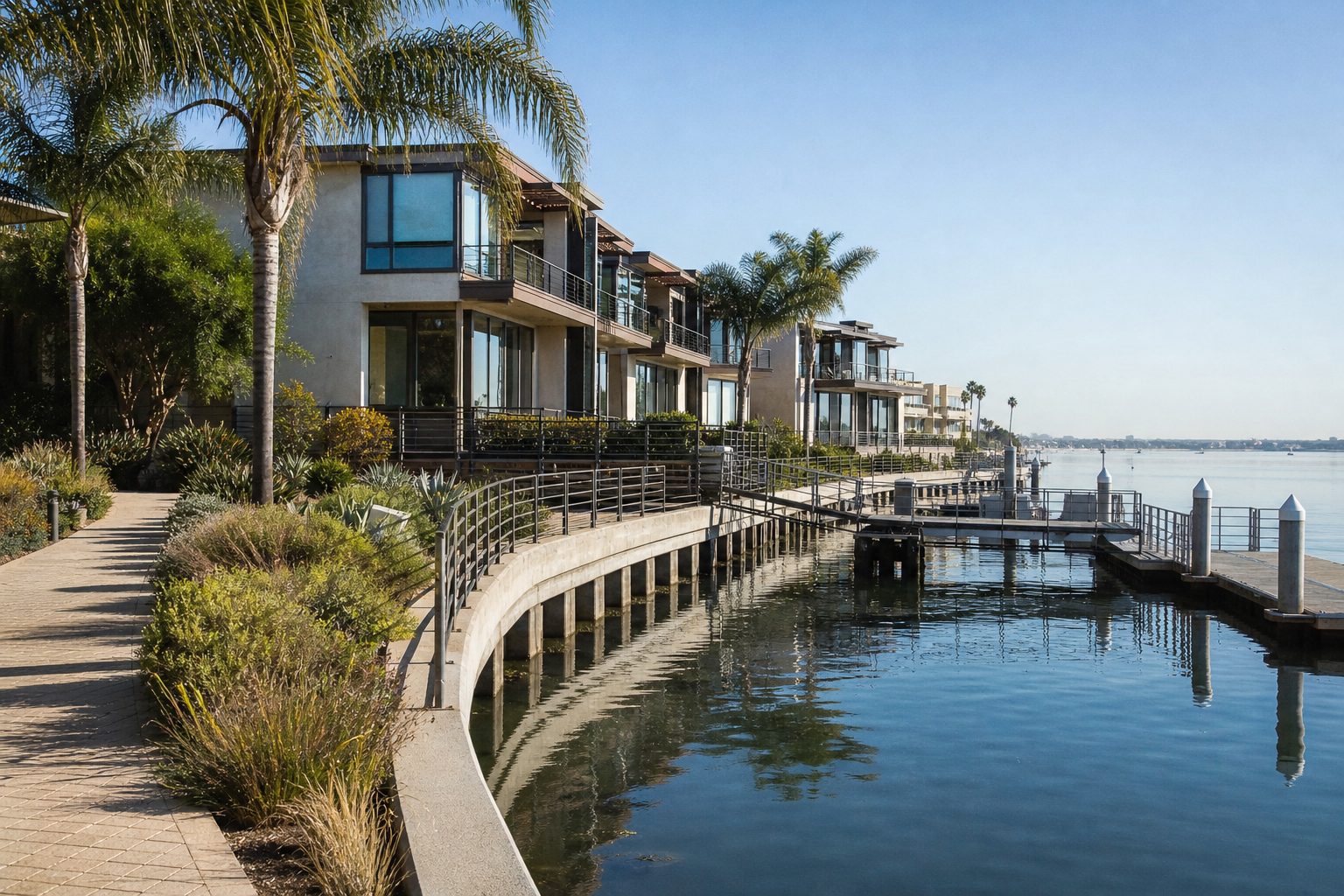
Mission Bay’s situation is more nuanced. The interior shoreline includes a mix of city-maintained and privately maintained bulkheads, depending on the specific parcel’s lease or ownership arrangement with the City of San Diego. Some Mission Bay properties sit on land leased from the city, which changes the maintenance obligation equation entirely.
What Replacement Can Cost
Residential seawall replacement costs can reach six figures depending on linear footage and material. A pre-purchase marine or structural inspection is not optional for waterfront property; it’s essential. This is a cost that, if deferred by a previous owner, becomes your problem the moment you close escrow.
In the attached or condo context around Mission Bay, seawall costs may be absorbed into the HOA budget. That’s a real advantage of the condo model, but only if the HOA’s reserve study shows adequate funding for the work.
Hazard Insurance and Coastal Exposure in Coronado and Mission Bay
Beyond flood insurance, your standard homeowner’s hazard policy will also reflect your coastal location, and California’s admitted insurance market has contracted significantly in coastal zones.
Coronado’s ocean-facing properties face direct Pacific wind and wave exposure, which can push premiums higher. Mission Bay’s interior-facing properties are more sheltered from direct ocean forces, which may help on the hazard insurance side.
In both areas, you should anticipate the possibility of surplus-lines (non-admitted) policies or the California FAIR Plan as a last resort. Both carry higher premiums than standard admitted-market policies. I always recommend that my clients obtain insurance quotes before removing contingencies, so there are no surprises at the closing table.
Market Dynamics: How Speed and Inventory Affect Your Negotiating Position
The total cost of ownership also includes what you pay at acquisition, and market conditions shape that number.
Detached homes in ZIP 92109 (Mission Bay area) are selling in just 23 days on market as of October 2026, per SDAR MLS data. That kind of velocity leaves you little room to negotiate seller concessions toward closing costs or deferred maintenance items like seawall repairs.
Coronado presents a different picture. With 103 total active listings as of October 2026 (per SDAR MLS data) and a lender-mediated share of 10.3% of closed sales (compared to just 2.9% in 92109, per SDAR MLS data), there may be selective opportunities to acquire distressed inventory at a discount. Those transactions carry their own complexity and due-diligence costs, but they can meaningfully change your acquisition basis and, by extension, your property tax basis for years to come.
Frequently Asked Questions
Is it cheaper overall to buy waterfront in Mission Bay than in Coronado?
The entry point is lower. Mission Bay’s detached year-to-date median of $2,330,000 sits roughly $400,000 below Coronado’s $2,730,000 rolling-12-month median, as of October 2026 per SDAR MLS data. That lower basis reduces your property taxes, insurance costs, and financing charges. But if you’re buying attached or condo product around Mission Bay, your HOA fees become an ongoing expense that Coronado’s detached waterfront typically avoids.
Do all waterfront homes in Coronado and Mission Bay require flood insurance?
If your property sits in a FEMA Special Flood Hazard Area and you have a federally backed mortgage, yes. Both Coronado bayfront and Mission Bay shoreline parcels are commonly mapped in high-risk flood zones. Cash buyers are not legally required to carry flood insurance but should strongly consider it given the exposure.
How much do HOA fees run for waterfront condos around Mission Bay?
HOA fees vary by complex and depend on what amenities and infrastructure the association maintains. Waterfront complexes with docks, seawalls, and common areas can carry substantial monthly fees. I always recommend reviewing the HOA’s budget, reserve study, and special assessment history before writing an offer.
Who pays for seawall repairs on a Coronado bayfront property?
In most cases, the adjacent private landowner bears the cost of seawall maintenance and repair in California, unless the structure falls within a port district easement. A pre-purchase marine inspection is essential to understand the current condition and your potential financial exposure.
Are Mission Bay seawalls maintained by the City of San Diego?
It depends on the specific parcel. Mission Bay’s interior shoreline includes both city-maintained and privately maintained bulkheads. The distinction hinges on whether the property is on leased city land or privately owned fee-simple land. This is something you need to verify parcel by parcel.
How does FEMA’s Risk Rating 2.0 affect my flood insurance premium?
Risk Rating 2.0 calculates premiums on a property-specific basis rather than a flat zone rate. Your replacement cost, first-floor elevation, distance to water, and flood type all factor into your individual premium. Two neighboring homes can have meaningfully different premiums.
Is it harder to get homeowner’s insurance in Coronado or Mission Bay?
Both areas face a challenging admitted insurance market in California’s coastal zones. Coronado’s direct ocean exposure may result in higher hazard premiums. You may need to explore surplus-lines carriers or the California FAIR Plan in either location.
What is the inventory situation for waterfront homes in both areas?
As of October 2026, Coronado (ZIP 92118) has 103 total active listings across all property types, while ZIP 92109 has 42 detached and 61 attached listings, per SDAR MLS data. Both markets are competitive, but Mission Bay detached product is moving faster at 23 days on market.
Can buying a lender-mediated property in Coronado save me money?
Potentially. With 10.3% of Coronado’s closed sales being lender-mediated (as of October 2026, per SDAR MLS data), there are selective opportunities. However, these transactions involve additional complexity, longer timelines, and higher due-diligence costs. The savings on acquisition price need to outweigh those factors.
Should I get a seawall inspection before making an offer on waterfront property?
Absolutely. A marine or structural inspection of the seawall, bulkhead, or revetment should happen before you finalize your offer. Replacement costs for a residential seawall can reach six figures. Knowing the condition upfront lets you factor repair costs into your total ownership budget or negotiate accordingly.
The Bottom Line
The real cost gap between Coronado and Mission Bay waterfront goes far beyond the sticker price. Property taxes, flood insurance, seawall liability, HOA structures, and even hazard insurance all layer differently depending on which community and product type you choose. Neither option is inherently better. The right choice depends on your budget, your tolerance for HOA governance versus individual maintenance responsibility, and how you value island living versus bay-edge convenience.
If you’re weighing these two markets and want help mapping out the full ownership cost picture for a specific property, I’d welcome that conversation. I’m Scott Cheng, Broker Associate with REAL Brokerage (DRE #01509668), and waterfront property is one of my specialties. With 18 years in San Diego real estate and over 275 closed transactions, I offer every client a complimentary attorney contract review, covered by me even if escrow cancels. You can reach me at 619-846-5843.