
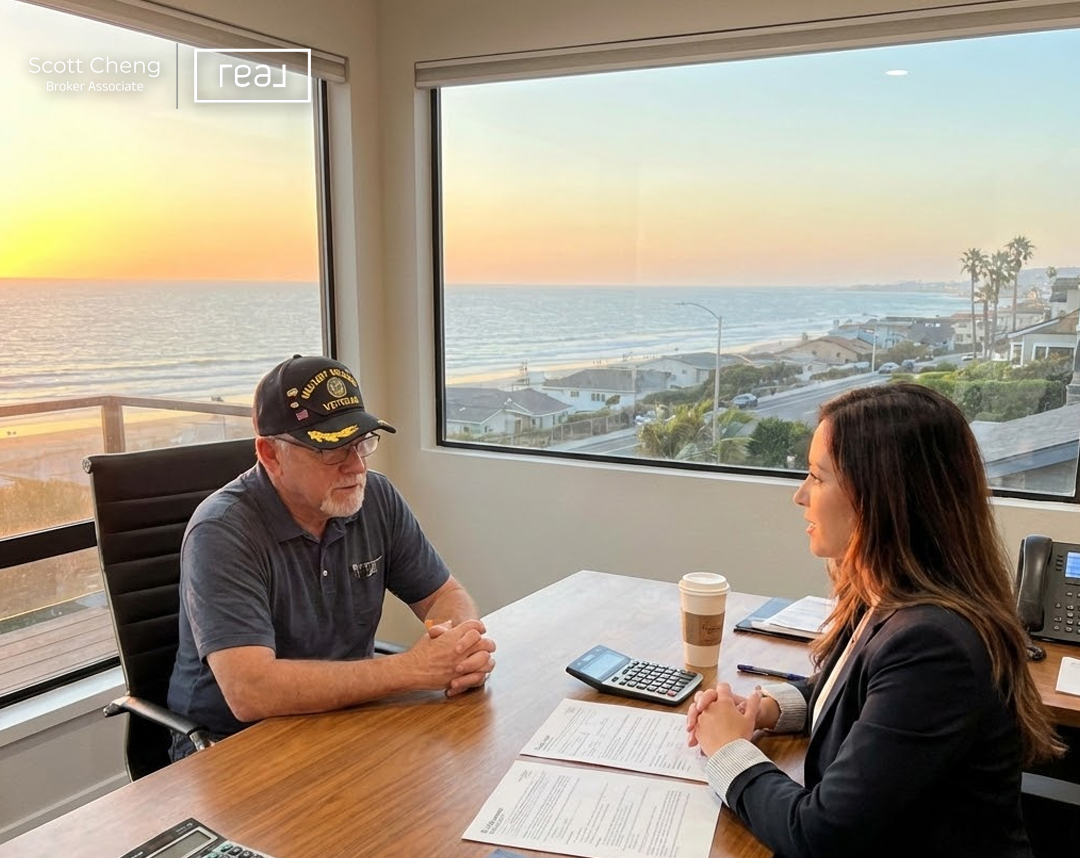
San Diego Seller Closing Costs Breakdown 2026: How Veterans Minimize Fees and Negotiate Concessions Before Accepting Offers
San Diego Seller Closing Costs Breakdown 2026: How do you minimize fees and negotiate concessions before accepting offers, especially as a veteran seller?
Expect about 1.5–2.5% of the sale price in seller closing costs in 2026, plus commissions. As a veteran, you can reduce fees by shopping escrow and title, using VA-preferred pricing, and trading targeted concessions within the VA 4% cap.
Why This Matters Right Now
You are entering a strong seller’s market, but the winning move is not just getting the highest price. It is controlling your cost stack and negotiating terms that maximize your net. Inventory sits at 1.8 months, median days on market is 18, and prices climbed modestly in 2025, with the January 2026 county median at about 880,000. Buyers are active as mortgage rates eased to about 6.3% from 7.1% last year, which means more financed offers and more requests for credits, rate buydowns, and repairs. That is where closing cost strategy matters. The same dynamics affect nearby areas like Chula Vista and Poway, where demand is solid and timelines are fast. If you prepare your disclosures early, price with precision, and use veteran-specific levers, you can drive multiple offers while keeping your fees under control.
What You Need to Know Before You Review Offers
You should start with a clear net sheet that itemizes your likely fees. In San Diego, typical seller closing costs average 1.5–2.5% of the sale price, excluding agent commissions. Your final net often lands near 90–92% of sale price after commissions, closing costs, and typical concessions.
Core line items to expect:
- Escrow fee: tiered, often low four figures on median-priced homes
- Title insurance and related title services: typically four figures
- County transfer tax and recording: modest but nontrivial
- Natural Hazard Disclosure report: usually low hundreds
- HOA transfer, demand, and document fees if applicable: often 250–500 for transfer, plus doc costs
- Termite and Section 1 repairs if negotiated
- Home warranty for buyer if offered: often 500–700
- Courier, notary, and miscellaneous admin fees: usually under a few hundred total
You should also know how concessions interact with your net. In 2026, common seller credits range from 5,000 to 15,000 in exchange for a stronger price or faster close. Veterans can use VA-preferred escrow and title pricing to reduce fees and can structure credits smartly, including rate buydowns within the VA concession cap.
If you are selling a home with an existing VA loan, you can promote assumable financing to increase demand. You should also coordinate VA appraisal timing and the appraisal addendum within five business days of acceptance to avoid delays.
VA-specific notes that affect your costs
- VA appraisal addendum timing: deliver within five business days of contract acceptance to keep the file on track.
- Property condition: VA prerequisites like Form 26-0590 Condition of Property and VA §10-10 Inspection can trigger repair requests. You should pre-inspect and pre-budget for high-probability items to control surprises.
- Concession limit for VA buyers: 4% of purchase price. Within that, you can help with buyer closing costs, rate buydowns, and the VA funding fee when allowed by the lender.
How to Compare Your Options
When you evaluate offers, you should compare net proceeds, risk, and time. Your highest price is not necessarily your best outcome if it requires heavy concessions or exposes you to appraisal risk.
Compare offers across these dimensions:
- Price versus credits balance: A 10,000 credit might justify a higher price and still raise your net if it helps the buyer clear underwriting. Run side-by-side nets.
- Financing type and lender strength: Conventional, VA, and FHA each have distinct appraisal and property condition standards. Strong local lenders with fast turn times reduce fallout risk and carrying costs.
- Appraisal protection: Offers with appraisal gap coverage or higher down payments can protect your contract price. In a fast market with 18 median days on market, minimizing re-list risk is key.
- Contingencies and timelines: Short inspection periods, tight loan contingencies, and a 21–30 day escrow can save you weeks of holding costs. VA files move smoothly when the appraisal addendum is on time and the lender is prepared.
- Repairs versus credits: Credits allow you to control schedule and avoid rework risks. If you are a veteran seller, you can keep repairs inside the scope likely to pass a VA appraisal while offering a targeted credit.
Key factors to evaluate:
- Certainty of close: proof of funds, lender reputation, contingencies
- True net sheet math: contract price minus credits, fees, and expected repairs
- Time value: faster close and rent-back terms that reduce moving stress and costs
Your Step-by-Step Guide
1) Price preparation
You should analyze the last 90 days of comparable sales, then price within 1–2% of value to create early urgency. In San Diego’s 1.8 months of inventory environment, this can generate multiple offers in the first week.
2) Pre-listing inspection and repair triage
You should complete a general inspection and termite check. Fix safety, moisture, and roof items first. For VA-sensitive items, clear peeling paint, missing handrails, and broken windows.
3) Disclosures and HOA docs
You should order the Natural Hazard Disclosure report early and request HOA demand, budget, and rules immediately to avoid delays and rush fees.
4) Staging and media
You should allocate 3–8 per square foot for staging depending on location. In Point Loma, staging can add 6–10% to your sale price. In Clairemont, expect a 4–7% uplift. Professional photography and 3D tours can lift showings by about 30%.
5) Escrow and title shopping
You should request written quotes from at least two providers. As a veteran, ask for VA-preferred or partner rate sheets and fee waivers for e-recording or courier where possible.
6) Offer window strategy
You should set a tight offer window with clear instructions. Require proof of funds, lender contact info, and acknowledgement of all disclosures.
7) Compare offers with a net sheet
You should compute side-by-side nets for each offer, including commissions, closing costs, credits, and expected repair items.
8) Negotiate targeted concessions
You should consider rate buydowns, capped repair credits, or a closing cost credit that keeps you within the VA 4% limit for VA buyers. Ask the lender to confirm application of credits before acceptance.
9) Lock timelines and appraisal plan
You should confirm the appraisal is ordered within 48 hours of acceptance and that the VA appraisal addendum is delivered within five business days.
10) Final walk and settlement prep
You should keep your payoff statement, solar or PACE payoff if any, and HOA clearance ready. Confirm the recording appointment and how funds will be delivered.
What This Looks Like in San Diego
At a county median of about 880,000, your non-commission closing costs typically land in the mid to high four figures, sometimes low five figures when HOA and transfer items apply. Detached homes average about 1,050,000 and attached about 720,000. With 18 median days on market and tight 1.8 months of supply, you can use price precision to draw multiple offers in the first week, then trade small credits to protect a strong net. Your most cost-effective credit in this rate environment is often a targeted buydown or a capped repair credit, not a broad price cut.
Neighborhood dynamics matter. In La Jolla and Pacific Beach, coastal premiums and walkability support aggressive pricing, but buyers still expect polished presentation. In North Park and South Park, trend-focused buyers often respond to turnkey staging and fast timelines. In Chula Vista and National City, entry-level price points pull strong demand where small credits can help first-time buyers without hurting your net.
Neighborhoods to consider in San Diego:
- La Jolla: Best beach neighborhood feel with luxury pricing often 1.5 million and above, strong walkability and school access
- North Park: Hip, central location near craft breweries, typical pricing around 800,000 to 950,000 for many homes
- Clairemont: Convenient central location and solid value, attached homes often near 720,000 median, strong for fast sales
Nearby Areas Worth Exploring
- Poway: A best family neighborhood candidate with top-rated schools and larger lots. If you want suburban calm with good commuting routes to Rancho Bernardo and Scripps Ranch, Poway offers strong demand and stable pricing.
- Chula Vista: Popular for entry-level and move-up buyers, including Eastlake and Otay Ranch. You will see active competition and quick timelines similar to San Diego, with slightly lower price points that make credits go farther.
- Carlsbad: A coastal North County hub with beaches, good schools, and varied price ranges. If you compare the best neighborhoods in the area, Carlsbad competes with San Diego coastal spots while offering broader suburban options.
What Most People Get Wrong
You might assume your highest price offer is always best, but a high price with a weak lender or long contingencies can cost you weeks and put your deal at risk. Another common mistake is ignoring how concessions change your net. A 10,000 credit for a VA buyer might increase your net if it reduces loan friction and keeps you inside the 4% VA cap. Many sellers also skip pre-listing inspections and later concede large repair credits under pressure. You should control the narrative with early inspections and clear, capped credits. Do not wait for summer to list because inventory often rises in Q2 and Q3, creating more competition. Finally, do not forget to shop escrow and title. Even a modest fee reduction can save hundreds to thousands, especially at higher price points, and it compounds when you add short timelines and fewer delays.
Frequently Asked Questions
What are typical seller closing costs in San Diego in 2026?
Plan for about 1.5–2.5% of the sale price, excluding agent commissions. That usually covers escrow, title, transfer, recording, HOA transfer, and the Natural Hazard Disclosure report. Your final net often ends near 90–92% of the sale price once commissions and any credits are applied.
How can you reduce escrow and title fees as a veteran?
Ask for VA-preferred pricing from escrow and title, request written fee quotes from at least two providers, and negotiate waivers for courier or e-recording where offered. You should bundle services where possible and avoid rush fees by ordering HOA and disclosure items early.
Does this advice apply to Chula Vista and Poway too?
Yes. Chula Vista and Poway share the same fee categories and fast timelines. With active buyer pools in both areas, you should use the same strategy: pre-inspect, price precisely, shop escrow and title, and offer targeted credits that respect the VA 4% cap when selling to VA buyers.
What counts toward the VA 4% concession cap?
Concessions can include buyer closing costs, some prepaid items, funding fee help when allowed by the lender, and rate buydowns. You should confirm with the buyer’s lender which items apply and structure the credit to stay within the 4% cap while maximizing your net.
Should you offer a rate buydown or a price reduction?
In a market with steady demand and moderate rates, a targeted buydown often improves buyer affordability more than a broad price cut of the same dollar amount. You should model both options on your net sheet and confirm with the lender how the credit will be applied.
The Bottom Line
You can keep more of your proceeds by controlling closing costs and negotiating smart concessions. Expect 1.5–2.5% in seller closing costs in San Diego, with final nets near 90–92% of sale price after commissions and credits. As a veteran seller, you can reduce fees with VA-preferred escrow and title pricing, preempt repair surprises with inspections, and use targeted credits like rate buydowns inside the VA 4% cap to protect your net. Whether you are focused on San Diego or also considering nearby Chula Vista and Poway, the same playbook applies in 2026.
If you’re ready to explore your options for minimizing closing costs and negotiating offers in San Diego or nearby communities, Scott Cheng at Scott Cheng San Diego Realtor can walk you through the specifics for your situation.
📞 858-405-0002
DRE# 01509668
16516 Bernardo Center Dr. Ste. 300
Leave a Reply