
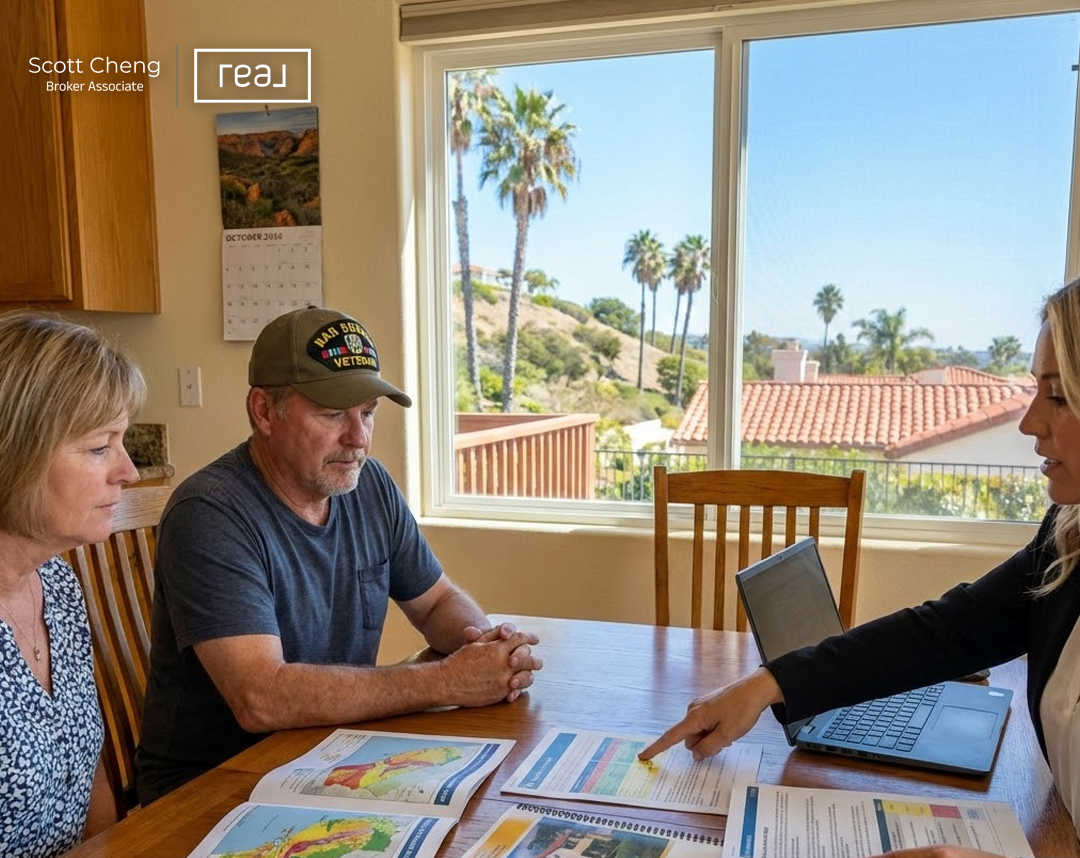
Natural Hazard Disclosures for San Diego Home Sellers 2026: Top Providers and How Veterans Choose to Avoid Buyer Objections Before Closing
Natural Hazard Disclosures for San Diego Home Sellers 2026: Top Providers and How Veterans Choose to Avoid Buyer Objections Before Closing
The best way to avoid last‑minute buyer objections is to order a complete Natural Hazard Disclosure early, pair it with fire hardening and insurance documentation, and choose a provider that covers wildfire, flood, seismic, and local overlays.
Why This Matters Right Now
You are selling into a fast San Diego market where inventory remains tight and buyers act quickly. With months of supply near 1.8 and median days on market around 18, your timing and documentation can mean the difference between multiple offers and a stalled escrow. Price growth has moderated to about 3 to 4 percent, which makes clean, compliant files even more important because buyers compare carefully and lean on risk flags to negotiate. When your disclosures are complete and proactive, you protect your price and keep momentum. This is especially true near coastal and canyonside neighborhoods where flood, bluff, or wildfire overlays are common. You will see similar buyer scrutiny in nearby areas like Poway and Carlsbad, where wildfire and flood mapping can affect insurance availability and closing timelines. As a veteran seller, you also want to align your Natural Hazard Disclosure strategy with VA appraisal timing and Minimum Property Requirements so you do not lose days or credits to avoidable objections.
What You Need to Know Before You Order Your Natural Hazard Report
You are required under California Civil Code to deliver a Natural Hazard Disclosure that identifies whether your property lies in specific state or federal hazard zones. In 2026, the statutory items include special flood hazard areas, dam inundation zones, Very High Fire Hazard Severity Zones, State Responsibility Areas for wildland fire, Earthquake Fault Zones, and Seismic Hazard Zones for liquefaction or landslide. Most reputable reports also add tsunami, coastal bluff, and local overlays used by buyers, insurers, and appraisers in San Diego County.
You should align your Natural Hazard Disclosure with your Transfer Disclosure Statement, Seller Property Questionnaire, and, if applicable, home hardening and defensible space disclosures for wildfire risk. If your home lies in a mapped wildfire zone, you are expected to provide defensible space documentation and disclose fire hardening features such as ember‑resistant vents and Class A roofing. In San Diego’s canyons and backcountry, buyers often ask for current brush management records and insurance quotes.
As a veteran seller, you will want to ensure your hazard packet supports a clean VA appraisal. VA appraisers review safety and soundness. If your report shows wildfire or flood exposure, you can reduce objections by giving a binder‑ready insurance quote, proof of clearance, and any mitigation receipts. VA lender appraisal addenda are time sensitive, so you should have your hazard report ready within five business days of acceptance.
The Required California Disclosures in 2026
- Natural Hazard Disclosure Statement identifying the six statutory zones
- Home hardening and defensible space disclosure if the property is in a mapped wildfire area
- Megan’s Law database notice
- Lead‑based paint disclosure for pre‑1978 homes
- Local fire, slope, and coastal information when material to the property
- HOA document package in common‑interest communities, including budgets and reserve studies that address hazard‑related obligations
How to Compare Your Options: Top Providers and What to Look For
You have several solid Natural Hazard Disclosure providers in San Diego. Leading names used by top real estate brokers in San Diego include First American, LCI, and Title Resource. Each offers statewide statutory coverage, but the differences that matter most at closing are depth of local overlays, wildfire modeling quality, customer support responsiveness, and how clearly the report explains lender and insurance implications. For a veteran seller, turnaround time, clarity for VA appraisers, and access to support staff who can field buyer questions are worth real money.
You should ask for sample reports and confirm that tsunami, coastal bluff retreat, and parcel‑specific wildfire severity indicators are included. You should also check whether the provider offers phone support that will speak directly with escrow or a buyer’s agent to help interpret a flagged map layer. Some providers coordinate defensible space forms and home hardening checklists. Many brokerages negotiate bulk pricing or veteran discounts, which can offset costs.
Key factors to evaluate:
- Wildfire depth: Does the report break out Very High Fire Hazard Severity Zone vs State Responsibility Area and include local fire history and ember exposure notes
- Flood clarity: Are FEMA zones, base flood elevation notes, and map panels easy to read for buyers and lenders
- Coastal overlays: Does it include tsunami and bluff setback references common in La Jolla, Point Loma, and Del Mar
- Seismic detail: Are liquefaction and landslide hazards clearly called out with parcel‑level mapping
- Support and speed: Can you get same‑day delivery and live help during inspection contingency
- E&O coverage: Does the provider carry strong errors and omissions coverage and indemnify you and your real estate agent San Diego
Your Step‑by‑Step Guide to Disclosures that Close Smoothly
1) Pre‑list risk scan
You should sit down with your San Diego broker to pre‑screen your parcel for wildfire, flood, coastal, or seismic layers. A five‑minute review helps you anticipate insurance and lender questions before photos go live.
2) Order your NHD early
You should order a full Natural Hazard Disclosure the same week you sign listing paperwork. Early ordering lets you attach it to the disclosure packet on day one, which shortens buyer review periods and lowers re‑trade risks.
3) Pair with hardening and defensible space docs
If you are in a mapped wildfire area, you should gather brush management clearances, any inspections, and receipts for ember‑resistant vents or roofing. This helps you keep inspectors and appraisers on track.
4) Add insurance proof
You should request a current homeowners insurance quote or binder illustrating availability and price. For flood zones, add any elevation certificate. For condos, include the HOA master policy summary.
5) Close the seismic loop
You should document seismic strap installation for water heaters and note any seismic gas shutoff valve. If your NHD flags liquefaction or landslide, consider a brief letter from a local contractor about visible drainage or slope maintenance.
6) Synchronize VA requirements
As a veteran, you should align the NHD delivery with the VA appraisal calendar. Your lender’s appraisal addendum typically needs to be out within five business days of acceptance. Early hazard documentation prevents valuation delays.
7) Publish a clean disclosure packet
You should deliver TDS, SPQ, NHD, home hardening and defensible space docs, and HOA package together. Buyers respond faster to complete files, and top producing real estate agents in San Diego prioritize your listing when it is turnkey.
8) Preempt buyer objections
You should include a one‑page summary highlighting why flagged items are mitigated, such as completed brush clearance, a clean termite report, or a transferable flood policy. This frames the risk in your favor.
What This Looks Like in San Diego
You sell across a county with diverse hazards, so you should tailor your packet to the local profile. Coastal neighborhoods like Point Loma and La Jolla may involve tsunami overlays, coastal bluff considerations, and older drainage infrastructure. Central areas like North Park or University Heights typically focus on seismic and older-home maintenance. Backcountry and canyonside communities like Scripps Ranch and Rancho Bernardo often center on wildfire, embers, and defensible space planning. In South Bay areas like Chula Vista and Otay Ranch, newer building standards help with fire resilience, but flood and drainage around new development still merit attention.
Median prices in January 2026 sit around 880,000 countywide, with detached homes near 1,050,000 and attached near 720,000. In a market moving within 18 days on average, the fastest closings happen when you provide a thorough, readable NHD plus proof of mitigation. You can also reference SDAR and CoreLogic market snapshots in your listing materials to anchor buyer confidence and support pricing strategy.
Neighborhoods to consider in San Diego:
- La Jolla: Best beach neighborhoods in San Diego with premium pricing often 1,500,000 and higher, coastal views, bluff considerations, and luxury buyers who expect complete disclosures
- Rancho Bernardo: Best neighborhoods in San Diego for families with strong schools, canyon edges, wildfire awareness, and pricing that often ranges from 1,000,000 to 1,200,000
- Chula Vista: Popular neighborhoods in San Diego with newer construction, balanced prices from about 650,000 to 900,000, and planned communities where HOA docs align with hazard compliance
Nearby Areas Worth Exploring
- Poway: Family‑focused suburb with large lots, award‑winning schools, and WUI wildfire edges that reward proactive defensible space documentation. Buyers comparing Rancho Bernardo often cross‑shop here for similar commute and lifestyle.
- Carlsbad: Coastal and inland mix with lagoons, beach access, and master‑planned communities. Flood and coastal overlays near the shore, wildfire at inland edges. Many top San Diego neighborhoods to live are mirrored here at comparable prices.
- Del Mar: Luxury coastal enclave with bluff and coastal overlays where you should highlight drainage, slope stability, and insurance availability. This appeals to buyers also touring La Jolla and Solana Beach.
What Most People Get Wrong
You may think a basic statutory NHD is enough. In practice, buyers, insurers, and lenders look well beyond the six boxes. You can lose leverage if your report misses tsunami, coastal bluff, local flood channels, or ember exposure that insurers actually price. Another mistake is ordering the NHD after you open escrow. Late delivery gives buyers more time to question hazards and ask for credits. You should also avoid assuming wildfire issues only affect backcountry. In San Diego, canyon fingers reach into many central neighborhoods, and embers matter even outside mapped Very High Fire Hazard Severity Zones.
As a veteran seller, you might expect the VA appraisal to catch everything automatically. The VA focuses on safety, soundness, and sanitation, but it will not collect your defensible space paperwork for you. If your hazard packet, termite clearance, and insurance proof are not ready in the first week, you invite appraisal conditions and closing delays. The best real estate agent San Diego will help you front‑load this work so you keep days on market low and your net high.
Frequently Asked Questions
Which natural hazards must you disclose in San Diego in 2026?
You must disclose if your home lies in a special flood hazard area, dam inundation zone, Very High Fire Hazard Severity Zone, State Responsibility Area for wildland fire, Earthquake Fault Zone, or Seismic Hazard Zone. Most providers also add tsunami and local coastal overlays.
When should you order the Natural Hazard Disclosure and how long is it valid?
You should order it before you go live, then include it in the initial disclosure packet. Reports rely on current mapping, so order fresh at listing. If you relist months later after a mapping update, you should refresh the report to avoid conflicts.
Does this advice apply to Poway or Carlsbad too?
Yes. In Poway, canyon proximity makes defensible space and insurance proof critical. In Carlsbad, coastal and lagoon areas bring flood and tsunami overlays while inland tracts watch wildfire edges. Early NHD delivery plus mitigation documents speeds escrow in both markets.
How do VA rules change what you disclose as a veteran seller?
Your legal disclosures are the same, but timing and completeness matter more. VA appraisals review safety and soundness. Pair your NHD with termite clearance, insurance quotes, and defensible space proof in the first five days to avoid conditions or delays.
What if your home is in a Very High Fire Hazard Severity Zone?
You should provide the statutory home hardening and defensible space disclosure, brush clearance records, and insurance quotes that reflect current mitigation. Many buyers accept mapped wildfire risk when you show compliance, recent maintenance, and available coverage.
The Bottom Line
You avoid buyer objections in San Diego by delivering a complete, early Natural Hazard Disclosure package that covers wildfire, flood, seismic, and coastal risks, plus proof of mitigation and insurance. That strategy aligns with fast market conditions, keeps your days on market low, and protects your net. Whether you are listing near La Jolla’s coast or exploring nearby Poway and Carlsbad, the same playbook applies. Order the right report from a top provider, pair it with fire hardening, termite, and insurance documents, and sync with VA timing if you are a veteran seller. You will remove the most common reasons buyers ask for credits or extensions.
If you are ready to explore your options for Natural Hazard Disclosures in San Diego or nearby communities, Scott Cheng at Scott Cheng San Diego Realtor can walk you through the specifics for your situation.
📞 858-405-0002
DRE# 01509668
16516 Bernardo Center Dr. Ste. 300
Leave a Reply