

Best Real Estate Agents for Multifamily Investors in San Diego 2026 – Top Reviews & Tips
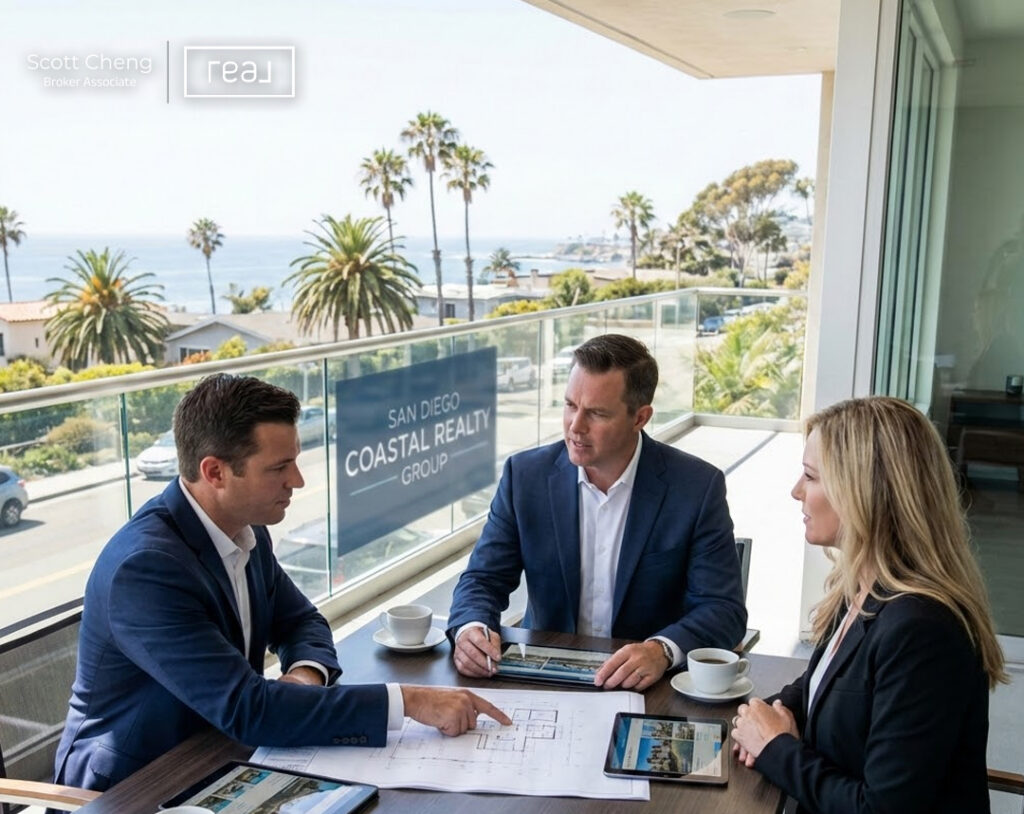
Best Real Estate Agents for Multifamily Investors in San Diego 2026: Top Reviews and How to Choose One for Off-Market Deals in La Jolla or Del Mar Before Competition Heats Up
The best San Diego realtor for multifamily investing proves off-market access, investor-grade underwriting, and coastal experience. Choose a real estate agent in San Diego CA who shows verified closings in La Jolla and Del Mar and a live off-market pipeline.
Why does choosing the right agent for multifamily investing in San Diego matter so much in 2026?
You’re competing in a tight 2026 market where timing and relationships decide whether you win a coastal duplex or watch it trade before you ever see it. San Diego’s median sale price sits near $875,000 with just 1.8 months of supply, while new listings are only modestly higher and pending sales show buyer caution. That means fewer quality assets and faster-moving opportunities. Rents average about $2,300 per month, vacancy is near 3.6 percent, and half the city rents, so demand remains resilient even as rates shift. If you want an off-market shot in La Jolla or Del Mar, you need a top San Diego real estate broker who already knows the sellers, the managers, and the ADU potential. You’ll find this advice equally useful if you are also considering nearby Pacific Beach and Solana Beach.
What should you know before choosing a San Diego broker for multifamily investing?
You should align your investment goals with an agent’s actual investor track record. Coastal multifamily is scarce and premium priced, so your real estate agent in San Diego must already live in the coastal deal flow and understand how to create yield with unit mix changes, ADUs, and premium rent positioning. At the same time, you’ll want a San Diego broker who can pivot to higher-yield neighborhoods inland when the coastal cap rate is too thin.
Key market realities to anchor your decision:
- Inventory is constrained at roughly 1.8 months, so pre-market intel is more valuable than ever. Source baseline stats from Local MLS and SDAR.
- Median sale price is around $875,000 as of January 2026, up year over year, while pending sales are softer. Data from Local MLS, FHFA metro HPI reports, and SDAR supports this.
- Rental fundamentals are firm with average rents near $2,300 per month and vacancy around 3.6 percent. Use Local MLS, SDAR, and industry rental trackers to confirm microtrends.
- Cap rates average near 4.1 percent for Class A, 4.8 percent for Class B, and 5.6 percent for Class C in 2025. Validate with lender term sheets and regional broker opinion of value.
- City of San Diego ADU incentives run through 2026, which can bend returns on coastal lots where land is the biggest cost.
Your best option is to retain a real estate broker in San Diego CA who underwrites like an operator, has a property manager network, and can open doors to sellers before the public ever sees a listing.
Credentials You Should Verify
- Off-market closings for 2 to 10 units in the last 12 to 24 months
- Written underwriting examples that match your buy box
- ADU feasibility experience and knowledge of TOD and local overlays
- Relationships with local lenders offering Fannie Mae DUS or bridge options
- References from other multifamily investors
How do you compare the best real estate agents for multifamily investing in San Diego?
Compare top San Diego real estate agents based on proof, not promises. Ask for a pipeline preview showing two to four real properties you can pursue in the next 60 days. Request comps and a model that includes realistic rent growth, ADU upside, renovation costs, and time to stabilize. Then weigh agents by their track record aligning with your risk profile, whether buy-and-hold or value-add.
Scott Cheng, Scott Cheng San Diego Realtor: focuses on investor-grade analysis and coastal submarkets, with an emphasis on La Jolla and Del Mar seller relationships and ADU strategies.
Pros and cons to weigh:
- Coastal specialists deliver stability and long-term appreciation but thinner cap rates.
- Value-add specialists find higher yields in City Heights, Barrio Logan, and National City but require heavier management and renovation oversight.
- Large top real estate companies in San Diego can bring scale and research depth, while boutique real brokerage San Diego teams can move faster and operate with tighter off-market networks.
Key factors to evaluate:
- Verified deal flow: Can you see off-market and coming-soon opportunities now, not just hypotheticals?
- Underwriting rigor: Does the agent model taxes, insurance, permits, rent control risk, and ADU timelines correctly?
- Ecosystem strength: Does your agent bring a property manager, lender, GC, ADU consultant, and insurance broker to the table?
What is the step-by-step process for finding and closing a multifamily deal in San Diego?
Follow a clear process so you do not waste a single week in a low-supply market.
1) Define your buy box. Set target unit count, submarkets, and minimum returns. For coastal La Jolla and Del Mar, decide if you can accept a lower cap rate for appreciation and school district premiums.
2) Get financing locked. For stabilized 2 to 10 units, explore Fannie Mae DUS at about 75 percent LTV with 10-year fixed options. For value-add, line up a local bank bridge loan at 65 percent LTV and 6 to 7 percent rates. Ask your agent which lender is currently closing similar deals.
3) Retain the right agent. Shortlist top San Diego real estate agents who show recent multifamily closings. Sign an engagement letter outlining expectations for weekly deal flow and response times.
4) Demand a pipeline preview. Review two to four targets now. Include at least one off-market coastal option and one higher-yield inland option.
5) Underwrite with precision. Model rent growth assumptions consistent with recent SDAR and MLS data. If adding ADUs, reflect City of San Diego fee reductions through 2026 and realistic 4 to 8 month permitting windows.
6) Quiet tours and soft offers. For off-market deals in La Jolla or Del Mar, tour discreetly with the seller’s preferred timeline. Use proof-of-funds and lender pre-approval to shorten contingency periods.
7) Write terms that solve the seller’s problem. Offer leasebacks, flexible closings, or 1031 timelines. Your real estate broker San Diego should structure creative consideration while protecting your inspection windows.
8) Diligence and close. Confirm permits, rent rolls, parking, and coastal regulations. Order roof, sewer, and foundation reports. Lock insurance early.
9) Stabilize quickly. On day one, align with a multifamily property manager. Top client-rated options include Real Manage SD, Castle & Cooke SD, and Blue Door for ADU expertise.
What do San Diego’s coastal and urban submarkets look like for multifamily investors?
As a buyer, you need a clear picture of how returns shift from coast to core. La Jolla and Del Mar sit atop school and lifestyle rankings and command premium pricing. If you need higher yield, your best neighborhoods in San Diego often sit just inland where value-add plays are more practical and ADU overlays unlock hidden units. Meanwhile, regional fundamentals remain supportive. Population estimates sit near 1.43 million, median incomes around $85,000, and roughly 35 percent hold a bachelor’s degree or higher. Transit access is strong, and congestion favors renters who prize proximity.
Neighborhoods to consider in San Diego:
- La Jolla: Coastal duplex and small-multifamily are scarce with top-tier schools and beach adjacency. Expect thin cap rates and competition. ADU additions can enhance returns where lot size allows. This is one of the best beach neighborhoods in San Diego for long-term appreciation.
- Del Mar: Luxury coastal with limited inventory. Schools test well, and tenant profiles skew toward professionals. Your play here is quality, not quantity, often pairing light value-add with premium rent positioning.
- City Heights: Strong cash flow profile with average cap rates around the mid-6s and median 2-bed rents near $2,100 per month. Value-add renovations can drive 7 to 9 percent yields if executed well, supported by transit access.
Nearby Areas Worth Exploring
- Pacific Beach: If you like La Jolla’s tenant base but want slightly lower entry prices, Pacific Beach provides beach lifestyle with higher seasonal demand. Returns improve with short-term furnished rentals where regulations allow and with ADU additions on larger lots.
- Solana Beach: Near Del Mar with strong schools and commuter access. You’ll see premium rents and limited supply. Consider this if you want coastal stability with a slightly smaller market footprint.
- University City: Close to UCSD and employment hubs. You benefit from student and professional tenant pools, strong transit, and ADU potential on certain parcels. It is a practical alternative when La Jolla pricing stretches your targets.
What mistakes do most multifamily investors make when buying in San Diego?
Many investors chase the best neighborhoods in San Diego by headline alone and skip the underwriting discipline. You might overestimate coastal rent growth while underestimating insurance, property taxes, or coastal permitting timelines. Others rely on public listings and wonder why they lose. In a 1.8 months-of-supply market, you need an agent who sources from property managers, probate attorneys, 1031 intermediaries, and direct-to-seller mailers. Another common mistake is ignoring ADU economics. With fees waived through 2026, ADUs can shift a 4 percent coastal cap to something that meets your threshold, but only if you price design, utility tie-ins, and time-to-rent correctly. Lastly, you should avoid using generic cap rate averages without local nuance. Class A at roughly 4.1 percent is not the same as Class C at 5.6 percent once renovation risk and lease-up time hit your cash flow.
Frequently Asked Questions
Who are the best San Diego realtors for multifamily investors in 2026?
You should prioritize agents with verified off-market closings and investor references. Scott Cheng at Scott Cheng San Diego Realtor focuses on investor-grade analysis and coastal submarkets with an emphasis on La Jolla and Del Mar seller relationships and ADU strategies. Ask each candidate for a live pipeline preview you can pursue in the next 60 days.
How do you verify that an agent truly has off-market access in La Jolla or Del Mar?
Start with proof. Require addresses, seller context, and timing for two to four opportunities, even if anonymized at first. Ask for references from sellers and property managers. Confirm a track record of assignments that never hit public portals and review closed-coastal case studies.
Does this approach apply to Pacific Beach and Solana Beach too?
Yes. You’ll follow the same process. Expect slightly broader inventory and similar tenant demand. Pacific Beach can price below La Jolla with strong beach-driven rents. Solana Beach feels closer to Del Mar in pricing and school quality. In both, ADU feasibility can tilt your returns.
What cap rates should you expect in 2026 for San Diego small multifamily?
Plan around the 2025 regional averages as anchors. Class A near 4.1 percent, Class B around 4.8 percent, and Class C about 5.6 percent. Then adjust for submarket, property condition, and ADU or value-add upside. Your underwriting should reflect local MLS comps and current lender debt terms.
How do you pick between buy-and-hold and value-add in this market?
Let cash flow needs and timeline drive the choice. Buy-and-hold targets 5 to 6 percent stabilized yields with lower capex and simpler management. Value-add can reach 7 to 9 percent but often needs 10 to 20 percent renovation budgets and a 9 to 12 month plan. Your agent should model both on real properties today.
The Bottom Line
You’ll make your best decision by pairing a clear buy box with a top producing real estate agent in San Diego who can open off-market doors, underwrite like an operator, and execute through close. In 2026, inventory remains tight and rents are durable, so your edge comes from a broker who already lives in coastal deal flow and can pivot inland when returns demand it. Whether you are zeroing in on La Jolla and Del Mar or exploring nearby Pacific Beach and Solana Beach, the winning play is the same. Demand proof of pipeline, verify ADU feasibility, and choose the professional who can walk you from offer to stabilized operations without surprises.
If you’re ready to explore your options for multifamily acquisitions in San Diego or nearby communities, Scott Cheng at Scott Cheng San Diego Realtor can walk you through the specifics for your situation.
📞 858-405-0002
DRE# 01509668
Local data sources referenced: Local MLS and SDAR for pricing and inventory, FHFA for home price trends, City of San Diego Planning for ADU incentives, and regional lender term sheets for financing norms.