

NNN Retail vs. Multi-Tenant Office in Kearny Mesa: Key Differences for Investors
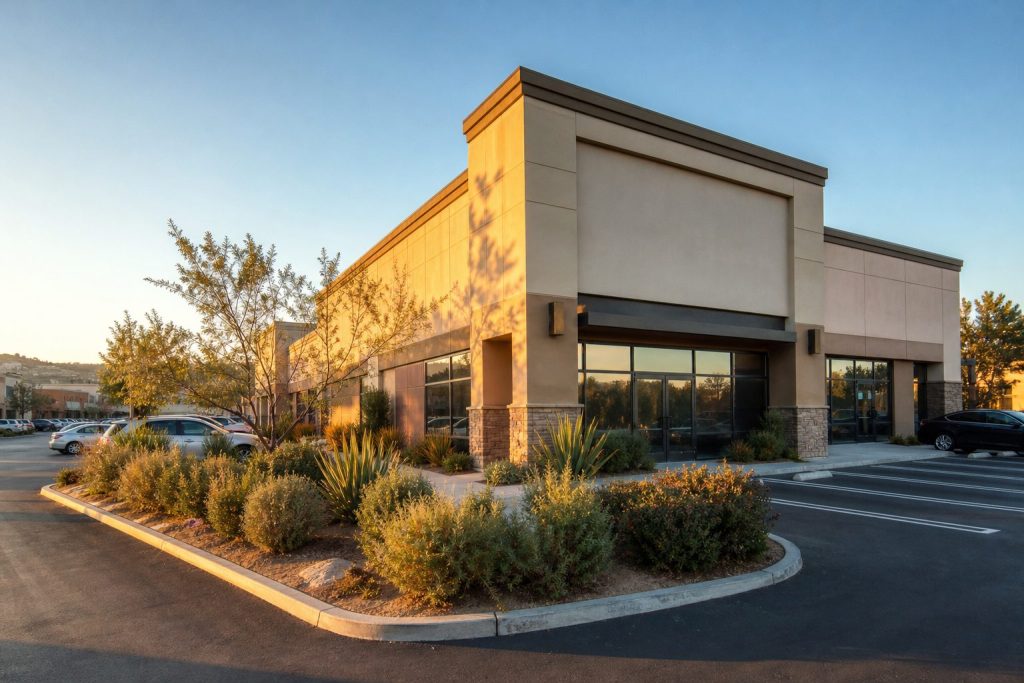
What are the real differences between buying a NNN retail property vs. a multi-tenant office building in Kearny Mesa, San Diego, in 2026 when evaluating long-term income stability and exit strategy?
NNN retail in Kearny Mesa delivers more predictable cash flow with lower management burden, while multi-tenant office offers discounted entry pricing but carries higher vacancy risk and a much narrower exit path in 2026.
Why This Matters Right Now in San Diego
If you’re evaluating commercial property in Kearny Mesa this year, you’re walking into two very different market realities depending on the asset class you choose.
San Diego’s retail vacancy sat at 4.59% in Q2 2026, according to tax-smart strategies for real estate investors in 2026. Meanwhile, the office sector tells a starkly different story: metro-wide office vacancy reached 14.3% in Q1 2026, per Cushman and Wakefield, with total availability stretching to 19.5%. Analysts predict that office softness could persist for three to five years.
That gap between the two asset classes isn’t small. It fundamentally shapes your income stability, your management workload, and how easily you can exit when the time comes. With 18 years of experience guiding San Diego buyers and sellers through exactly these kinds of decisions, I want to walk you through what I see on the ground and what the data actually tells us.
A cloudy mind can’t make decisions. So let’s bring clarity to this comparison.
Income Stability: NNN Retail Properties in Kearny Mesa
The biggest draw of a NNN retail property is structural simplicity. Your tenant pays the taxes, insurance, and maintenance. Your net income is your net income, month after month.
In Kearny Mesa specifically, multi-tenant retail strip centers are trading at cap rates between 5.50% and 6.50% in 2026. Single-tenant NNN properties with credit tenants and long leases trade tighter, at 4.50% to 5.25%, according to current market data. What I tell investors is that the lower cap rate on credit-tenant deals reflects the premium you pay for predictability, and that predictability has real value.
Here’s what makes this relevant to your decision:
- Net income predictability: Operating expense volatility shifts to the tenant, not you
- County-wide retail vacancy of just 4.59% in Q2 2026 (per October 2026 commercial real estate market insights) creates a favorable demand environment
- Positive retail net absorption of 93,856 square feet in Q2 2026 after negative absorption the prior quarter shows renewed leasing momentum
The risk to watch? Tenant concentration. If a single tenant represents 40% or more of your gross income in a multi-tenant strip center, you’re exposed to a single-point failure. I always recommend evaluating tenant credit quality and remaining lease term before looking at the cap rate.
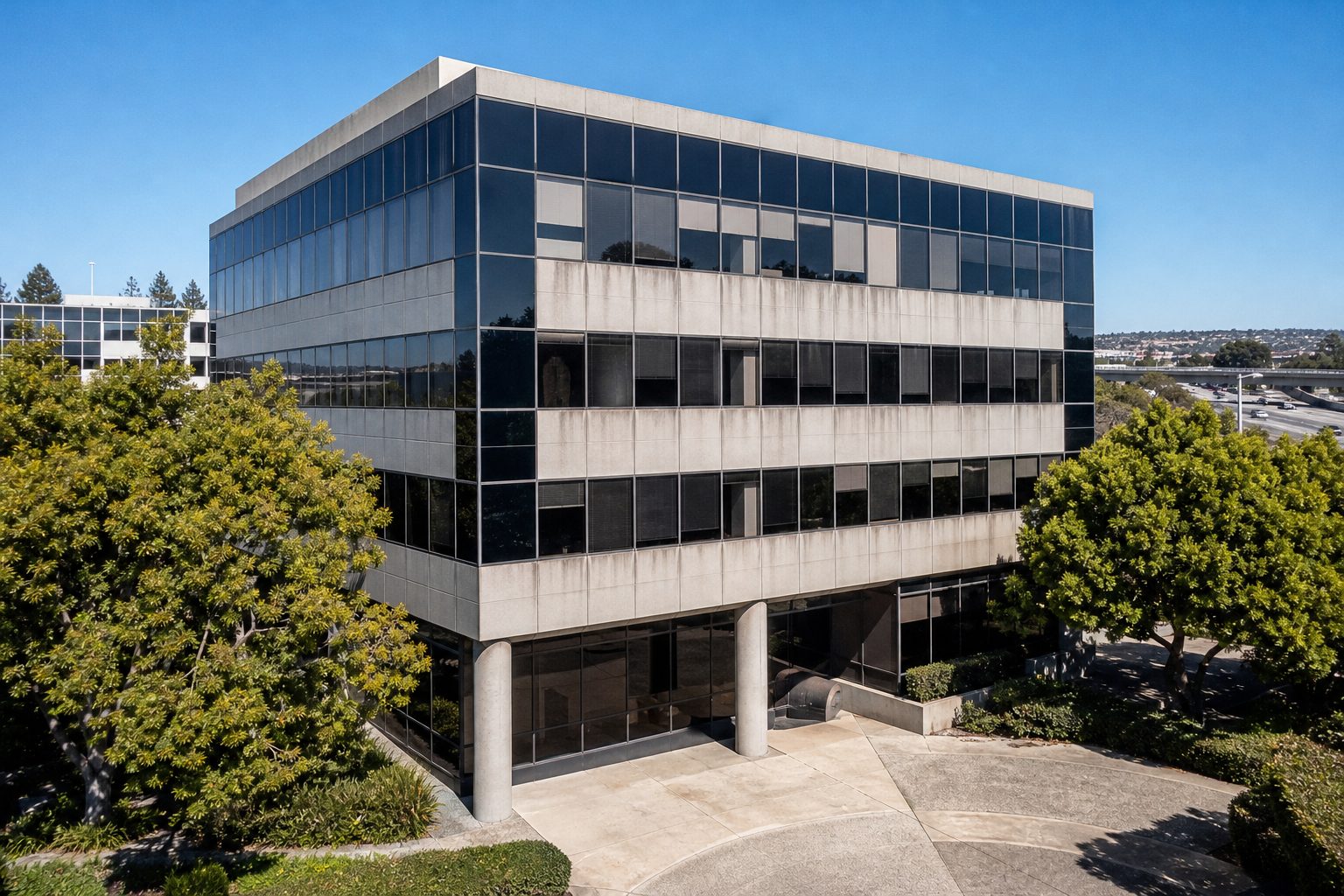
Income Stability: Multi-Tenant Office Buildings in Kearny Mesa
Now let’s look at the other side. Kearny Mesa has traditionally been a strong office market, but older Class B and C buildings near Convoy Street are struggling to compete with newer developments, per Cushman and Wakefield’s Q3 2026 reporting.
The metro-wide office picture is challenging. New leasing totaled 696,000 square feet in Q3 2026, down 18% quarter over quarter and 7% year over year, falling below the quarterly average of 790,000 square feet since 2022, according to Cushman and Wakefield.
What does that mean for your monthly income? Multi-tenant office buildings require constant leasing activity, tenant improvement expenditures, and hands-on management. All of that erodes your NOI predictability. Landlords across San Diego are offering up to 12 months of free rent on eight-year leases and fully funded tenant improvement allowances, which props up advertised rates while actual effective rents decline.
Here’s the contrast in practical terms:
- Vacancy risk is structural, not cyclical. Companies need 30% to 40% less office space than pre-pandemic levels
- Management intensity is dramatically higher than NNN retail
- Capital expenditure requirements for tenant improvements eat into returns every time you turn a suite
Having closed over 275 transactions in San Diego, I’ve seen how management-heavy assets can quietly erode investor returns, even when the headline numbers look acceptable on paper.
Exit Strategy Comparison: Where Kearny Mesa Investors Have Options
This is where the divergence between the two asset classes gets most pronounced in 2026.
NNN Retail Exit Paths
Credit-tenant NNN properties with remaining lease term are among the most liquid assets in the 1031 exchange market. Buyers actively seek them for passive income, which means your buyer pool is large and motivated. The average retail sale price in San Diego reached $446 per square foot in Q2 2026, up 12.81% year over year from $395 per square foot in Q2 2025, according to Kidder Mathews.
Additionally, Assembly Bill 507 took effect in July 2026, streamlining conversion of underutilized retail properties into residential housing. For Kearny Mesa, where the community plan update already encourages mixed-use development, this creates an alternative exit for value-add retail investors who want to sell to a developer.
Multi-Tenant Office Exit Challenges
The exit picture for office is more constrained. Properties with high vacancy or deferred maintenance may take 12 to 18 months to sell, or fail to sell entirely, in the current market. Downtown San Diego has been hit particularly hard, with approximately 11 high-rise office buildings going through foreclosure or forced sale.
Some cash buyers view the 2026 office crisis as a generational buying opportunity, but that means your exit buyer is typically a deep-discount opportunist, not someone paying you a premium.
Kearny Mesa’s Unique Submarket Advantages in 2026
Kearny Mesa sits at the intersection of Interstate 805, Highway 52, and close proximity to Interstate 15, making it one of San Diego’s most connected commercial corridors. That connectivity drives demand across asset classes.
The industrial side of Kearny Mesa underscores the submarket’s strength. Kearny Mesa specifically reported a direct industrial vacancy rate of just 4.1% in Q2 2026, with positive net absorption of 93,000 square feet, per market reporting. Industrial rents in Kearny Mesa run at $2.03 per square foot, a 38% premium over county-wide averages.
Why does industrial data matter when you’re comparing retail and office? Because institutional capital flowing into Kearny Mesa validates the submarket. H.G. Fenton purchased Kearny Mesa West, a 210,871 square foot, 16-building industrial complex, from CIM Group in March 2026, according to REBusinessOnline. Rexford Industrial launched construction on a new 177,551 square foot Class A industrial building at Balboa Avenue, per CBRE.
What I find significant is the zoning opportunity here. You can still acquire properties zoned IL-2-1, IP-1-1, or IP-2-1 at industrial pricing, even though the Kearny Mesa Community Plan has designated them for higher-intensity mixed-use or employment center uses. That zoning delta can represent meaningful upside for investors thinking two or three moves ahead.
Key Regulatory Changes Every San Diego Investor Should Know
Two pieces of legislation are reshaping exit strategies for commercial investors right now:
- Assembly Bill 507 (effective July 2026): Streamlines conversion of underutilized office and retail properties into residential housing
- SB 79 (effective July 1, 2026): Allows for increased transit-oriented development, which can fundamentally change a property’s value based on proximity to transit
Additionally, new FinCEN reporting rules for all-cash entity transactions began March 1, 2026. If you’re buying through an LLC or trust, your compliance obligations have changed.
With 275 five-star reviews across online platforms, rated 5 out of 5 by past clients, I bring a level of scrutiny to these transactions that protects your interests. I also provide a complimentary attorney contract review with every transaction, covered by me even if escrow cancels, because the details in commercial deals are where problems hide.
Frequently Asked Questions
What cap rates should I expect for NNN retail in Kearny Mesa in 2026?
Single-tenant NNN properties with credit tenants and long leases trade at 4.50% to 5.25%. Multi-tenant neighborhood strip centers with shorter leases and local tenants trade at 5.50% to 6.50%. The San Diego market-wide average retail cap rate was 5.4% in Q2 2026, up 70 basis points from a year earlier, according to Kidder Mathews.
How long could Kearny Mesa office vacancies stay elevated?
Hughes Marino predicts office market softness could persist for three to five years. David Marino, Senior Executive Managing Director at Hughes Marino, stated this is the worst commercial real estate market he has witnessed in more than 30 years.
Is now a good time to buy distressed office in Kearny Mesa?
Cash buyers view the 2026 office crisis as a generational buying opportunity. Properties purchased at significant discounts to replacement cost can be repositioned for residential conversion, medical office, or specialized flex space. However, you need a clear repositioning plan and patient capital.
What is Assembly Bill 507 and how does it affect Kearny Mesa properties?
AB 507 took effect in July 2026 and streamlines the conversion of underutilized office and retail properties into residential housing. For Kearny Mesa, where the community plan update already encourages mixed-use development, this creates additional exit strategy flexibility.
How does retail vacancy compare to office vacancy in San Diego County?
San Diego County retail vacancy was 4.59% in Q2 2026, per first tuesday journal. Office vacancy reached 14.3% in Q1 2026, per Cushman and Wakefield. That gap, nearly 10 percentage points, illustrates the income stability difference between the two asset classes.
What makes Kearny Mesa attractive for commercial investment specifically?
Kearny Mesa sits at the intersection of I-805, Highway 52, and near I-15. Industrial vacancy in the submarket was just 4.1% in Q2 2026 with a 38% rent premium over county-wide averages. Institutional buyers like H.G. Fenton and Rexford Industrial are actively deploying capital here.
What are the biggest risks of buying NNN retail in this market?
Tenant concentration risk is the primary concern. If one tenant represents 40% or more of gross income, you carry single-point exposure. You also want to evaluate remaining lease term carefully, since a short remaining term compresses value at exit.
How do FinCEN reporting rules affect my all-cash commercial purchase?
New FinCEN reporting rules for all-cash entity transactions began March 1, 2026. If you’re purchasing through an LLC, partnership, or trust, you have new disclosure obligations. Your legal and tax team should be involved early.
Can I convert an office building to residential in Kearny Mesa?
AB 507 and the Kearny Mesa Community Plan update both support this path. However, conversion feasibility depends on building structure, zoning specifics, and parking requirements. This is a longer-term play requiring patient capital and development expertise.
Should I choose a San Diego broker who specializes in commercial for this type of purchase?
You should work with someone who understands both the commercial transaction mechanics and the specific submarket dynamics. As a Broker Associate with 18 years of experience and 275 closed transactions in San Diego, I bring the negotiation depth and local knowledge that protects your investment.
The Bottom Line
If you’re comparing NNN retail to multi-tenant office in Kearny Mesa, the data in 2026 clearly favors retail for income stability and exit flexibility. Office can work as a deep-value play, but it requires patient capital, a clear repositioning thesis, and tolerance for extended vacancy.
Your decision ultimately depends on your timeline, your risk tolerance, and whether you want a passive income stream or an active value-add project. Both paths can work in Kearny Mesa, but they demand very different approaches.
If you’d like to talk through specific properties or run the numbers on a deal you’re evaluating, I’m here. I’m Scott Cheng, Broker Associate with REAL Brokerage, and you can reach me at 858-405-0002 or visit my office at 16516 Bernardo Center Dr. Ste. 300. Let’s make sure your next move is a clear one.