Water Rights and Irrigation Issues Before Buying a Farm in Ramona San Diego
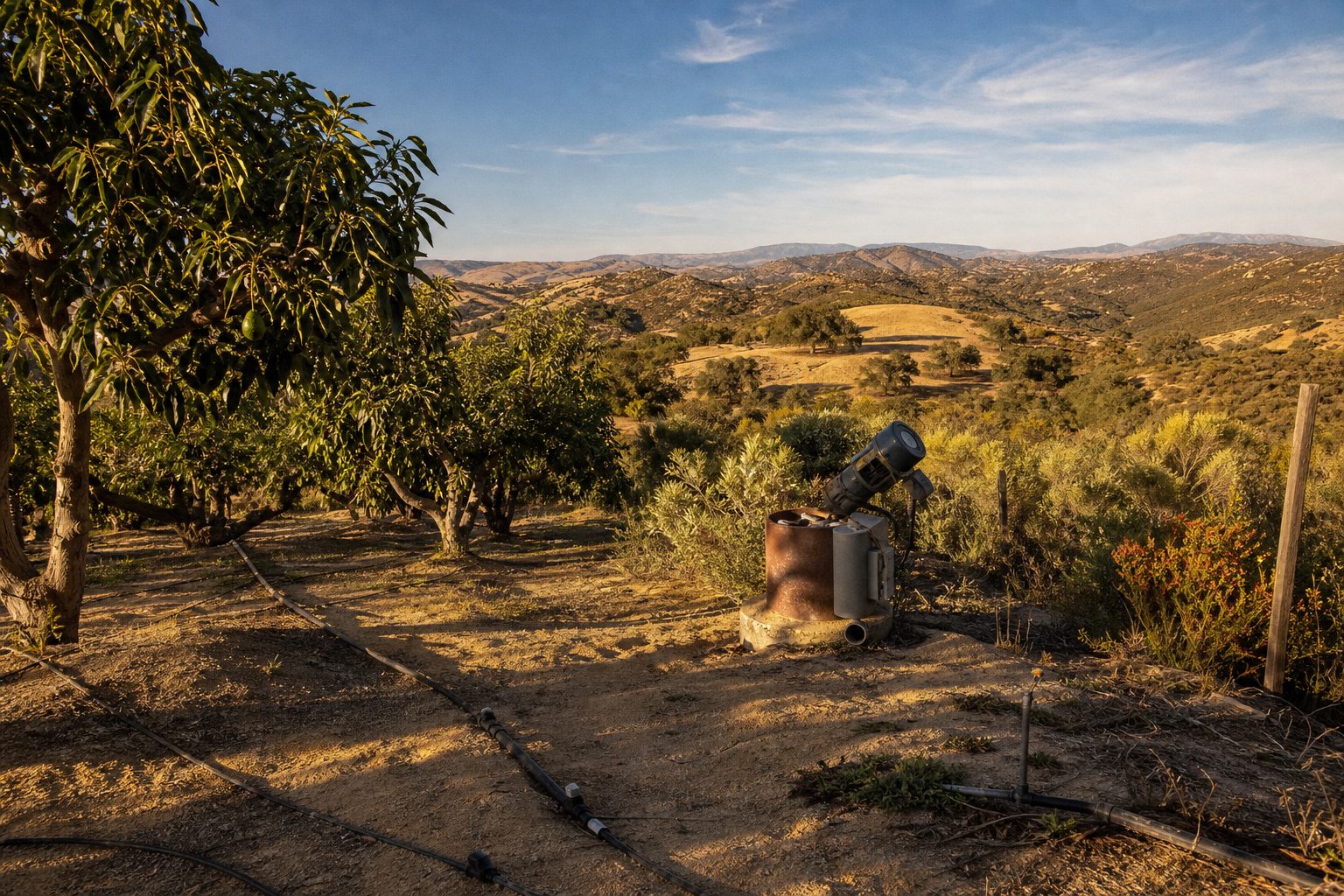
What are the real water rights and irrigation access issues you need to understand before buying a farm or ranch in Ramona, San Diego in 2026?
Water is the single factor that determines whether a Ramona farm or ranch is a viable agricultural investment or an expensive piece of scenery. You need to verify well production, understand California’s dual water rights system, and confirm irrigation infrastructure before you commit.
Why Water Rights in Ramona San Diego Matter More Than Ever in 2026
San Diego County is one of the most water-import-dependent regions in the country. The San Diego County Water Authority (SDCWA) manages the regional supply, sourcing water from the Colorado River, the State Water Project, and the Carlsbad Desalination Plant. But here is the part that matters to you as a farm or ranch buyer: most agricultural properties in Ramona’s backcountry rely on private wells, not municipal water.
That means your water supply is not automatically guaranteed by a public utility. It depends on aquifer conditions, well depth, neighboring pumping activity, and seasonal rainfall patterns. When I work with buyers exploring rural San Diego properties, what I tell them first is simple: a cloudy mind can’t make decisions. So let’s get clear on exactly what you’re dealing with before you write an offer.
With 18 years of experience and 275 closed transactions in San Diego County, I have seen how quickly a promising farm deal can fall apart when water issues surface late in the process. Let’s make sure that does not happen to you.
How California’s Dual Water Rights System Affects Ramona Farm Buyers
California operates under two separate water rights frameworks, and you need to know which one applies to any property you are considering.
Riparian Rights in Ramona
If the property borders a natural watercourse, like Santa Maria Creek, which runs through the Ramona area, you may have riparian rights. These rights allow you to use a reasonable amount of water on the riparian parcel. The good news is that riparian rights cannot be lost through non-use. The catch? You can only use the water on the parcel that touches the watercourse, and “reasonable” use is not unlimited.
Appropriative Rights and Permits
Appropriative rights apply when you want to divert water from a stream or surface source for use on land that does not border the watercourse. These require a permit from the State Water Resources Control Board, and they can be lost if you stop exercising them. If a seller tells you appropriative rights are attached to the property, verify the permit status before you proceed.
Groundwater Rights and the SGMA Factor
As an overlying landowner, you generally have the right to pump groundwater beneath your property for reasonable beneficial use on that land. Private wells are generally not regulated for the quantity of water they pump, according to California state guidelines. But here is the nuance that many buyers miss: the Sustainable Groundwater Management Act (SGMA) of 2014 is actively reshaping groundwater governance across California. While San Diego County’s groundwater basins have not been designated as critically over-drafted, you should verify whether the specific basin underlying your target property could become subject to a Groundwater Sustainability Plan that imposes future pumping restrictions.
What does that actually mean for your purchase decision? It means that even if the well is producing beautifully today, you need to think about what regulatory changes could look like five or ten years from now.
Private Wells in Ramona: The Due Diligence That Protects Your Investment
Most of the agricultural properties currently listed in Ramona depend on private wells. As of 2026, there are roughly 20 farms for sale near Ramona, with an average listing price of $1,149,750 and an average cost of $44,102 per acre, according to LandSearch. These properties range from small specialty operations to large-scale estates spanning over 100 acres.
Before you buy, here is the well due diligence checklist I walk through with my clients:
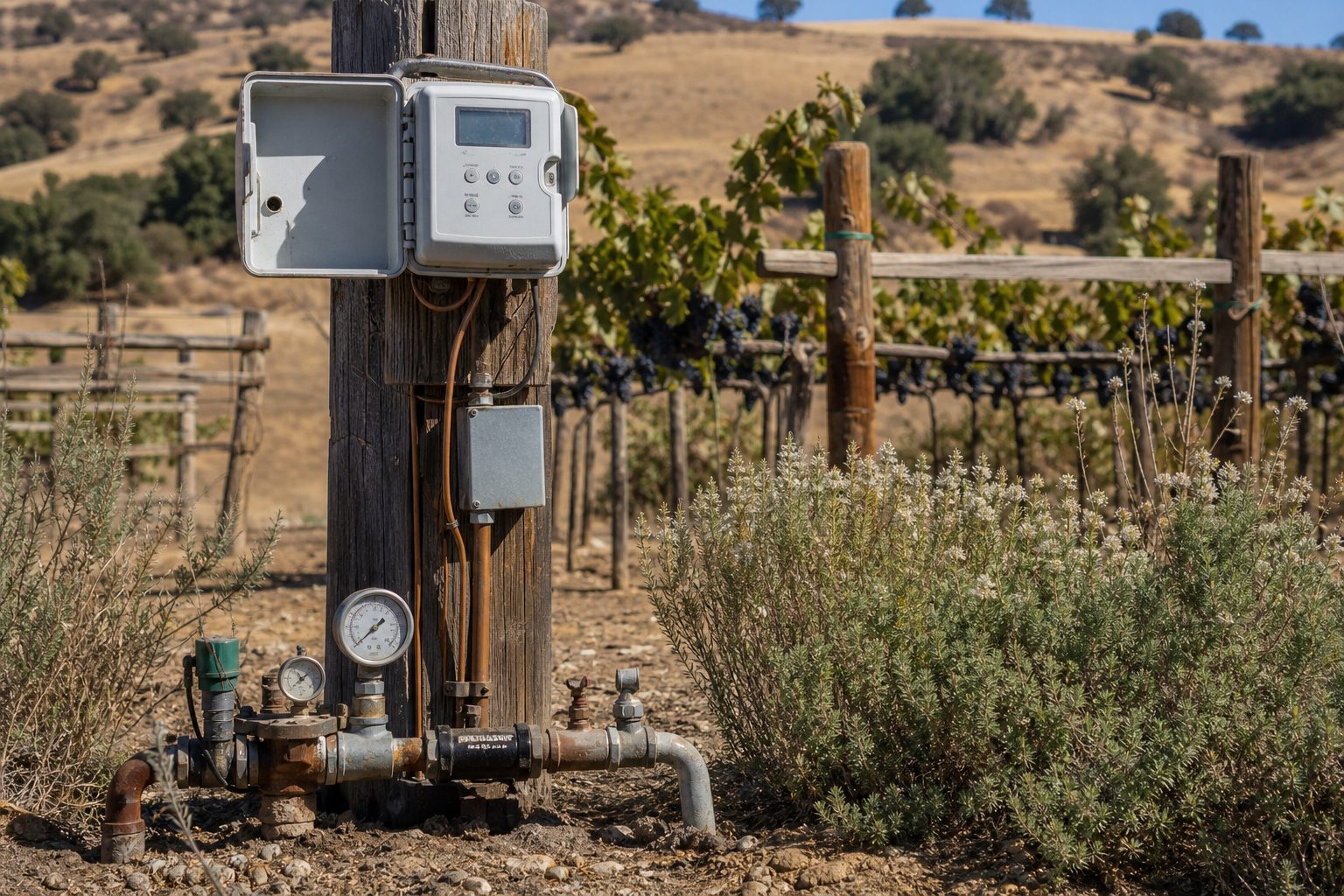
- Well production testing. You need to verify gallons-per-minute (GPM) flow rates. Residential use and agricultural use are completely different animals. Depending on crop type and acreage, agricultural operations often require 10 to 50 or more GPM.
- Well depth and aquifer reliability. Ramona wells can range from 200 to 800 or more feet deep. Deeper wells cost more to drill and maintain, but they may tap into more reliable aquifers.
- Water quality testing. Test for nitrates, total dissolved solids, bacteria, and other contaminants. For projects with poor groundwater quality, the County has identified mitigation measures including water treatment systems that reduce impacts below maximum contaminant levels.
- Historical well logs. These are available through the California Department of Water Resources well completion report database. They reveal how a well has performed over time.
- Neighboring well activity. Heavy pumping on adjacent properties can directly affect your well’s yield. This is the kind of issue that does not show up on a listing sheet but can make or break a farming operation.
What I tell my clients is that the well is the heartbeat of a Ramona farm. If it fails the stress test, the rest of the property’s features do not matter much.
Irrigation Systems and Agricultural Water Programs Available in Ramona San Diego
Your irrigation setup determines both your water efficiency and your long-term operating costs. Here are the irrigation system types most commonly found on Ramona farm and ranch properties:
- Drip irrigation: The most water-efficient option, widely used for vineyards, orchards, and row crops
- Micro-sprinklers: Common for avocado and citrus groves throughout the Ramona area
- Flood or furrow irrigation: Less common due to water scarcity in San Diego County
- Rainwater harvesting and seasonal ponds: Supplemental sources that capture rainfall for storage
The Permanent Special Agricultural Water Rate (PSAWR) Program
This is one of the most important programs to understand. The SDCWA approved the Permanent Special Agricultural Water Rate Program with an effective start date of January 1, 2021, and the CY 2026 Program Handbook is currently available, per the SDCWA. Eligible farmers who voluntarily participate receive a lower water rate in exchange for a reduced level of water service during water supply shortages or emergencies.
To qualify, you must grow or raise products of an agricultural, horticultural, or floricultural nature for commercial purposes, and you must be listed on one of the four eligibility lists managed by the County of San Diego or the San Diego Regional Water Quality Control Board. Specifically, you need at least one of the following: enrollment in the Agricultural Order from the Regional Water Quality Control Board, a valid Pesticide Operator ID number, Certified Producer status, or Organic Producer designation.
Rebate Programs That Lower Your Costs
The SDCWA offers several agricultural rebate programs worth investigating:
- The LEAVES program offers rebates on drip irrigation, flow meter and master valve combination devices, and eco-indicators
- The SoCal Water$mart program provides rebates for weather-based irrigation controllers, rotating nozzles, flow sensors, master valves, and soil moisture sensors
- The Water Savings Incentive Program (WSIP) offers incentives for commercial customers with projects projected to save at least 10 million gallons of water
Zoning, Dryland Conversion Rules, and Water Quality Compliance in Ramona
Before you plan your farming operation, you need to understand a County policy that surprises many buyers: San Diego County prohibits the conversion of dryland agricultural or non-irrigated lands to crop production. This means you cannot convert non-irrigated land to irrigated farming without demonstrating an adequate water supply.
If you are looking at a property with desirable A72 zoning (General Agriculture) and an O animal designation, you have the widest variety of agricultural uses available. But you still need to prove water supply to expand irrigated acreage. This is where having a real estate broker who understands rural San Diego becomes critical.
Agricultural Water Quality Compliance
The San Diego Regional Water Quality Control Board runs the Ag Order program, which sets requirements for commercial farms and nurseries. This program is required for all people who grow and sell their crops or plants. The Agricultural Water Quality Program checks farms and nurseries to ensure they are preventing dirt, chemicals, and other materials from leaving their property, helping prevent pollution in local waterways.
Having guided buyers through 275 transactions across San Diego, I can tell you that overlooking compliance requirements is one of the most common and costly mistakes new farm buyers make.
Tax Benefits and Financial Protections for Ramona Farm Buyers
One financial advantage available on some Ramona properties is a Williamson Act Land Contract, which provides substantially reduced property taxes on assessed land value. If a property carries an active Williamson Act contract, the tax savings can be significant, but you are also committing to keeping the land in agricultural use for a defined period.
Farm and ranch properties in Ramona currently range from roughly $65,000 for raw land to over $12.9 million for turnkey estate operations, per Land.com and LandWatch data. Financing options include USDA Farm Service Agency loans, Farm Credit lending, and conventional jumbo loans for properties above conforming limits.
Rated 5 out of 5 stars by past clients, with 275 reviews across online platforms, I also offer a complimentary attorney review of contracts and disclosures for every buyer I work with, covered by me even if escrow cancels. On a complex farm or ranch transaction with water rights, easements, and agricultural compliance in play, that added layer of protection can save you from a very expensive mistake.
Frequently Asked Questions
Do private wells in Ramona require a permit to operate?
Property owners who rely on their own wells for residential, agricultural, and in some cases commercial uses are responsible for ensuring adequate water supply and appropriate water quality. Private wells are generally not regulated for the quantity of water pumped, but you should verify local requirements through the County of San Diego before closing.
What GPM flow rate do I need for farming in Ramona?
Agricultural operations typically require significantly more water than residential use. Depending on your crop type and total acreage, you may need anywhere from 10 to 50 or more gallons per minute. Always request a professional well production test during your due diligence period.
Can I convert dry land to irrigated farmland on a Ramona property?
San Diego County policy prohibits the conversion of dryland agricultural or non-irrigated lands to crop production without demonstrating adequate water supply. You will need to prove that your water source can support the additional irrigation before the County will approve the conversion.
What is the PSAWR Program and how do I qualify?
The Permanent Special Agricultural Water Rate Program, administered by the SDCWA, provides lower water rates to qualifying agricultural customers in exchange for accepting a reduced level of water service during shortages. To qualify, you need to be listed on one of the four eligibility lists managed by the County or the Regional Water Quality Control Board.
How deep are typical wells in the Ramona area?
Wells in Ramona can range from approximately 200 to 800 or more feet deep. Deeper wells are more expensive to drill and maintain, but they may access more reliable aquifers. Historical well logs from the California Department of Water Resources can give you insight into typical depths and yields in a specific area.
What is the Ag Order and does it apply to me?
The Ag Order is run by the San Diego Regional Water Quality Control Board and sets environmental requirements for commercial farms and nurseries. If you plan to grow and sell crops or plants, enrollment is required. It is designed to prevent agricultural runoff from polluting local rivers, streams, and beaches.
Does SGMA currently restrict groundwater pumping in Ramona?
San Diego County’s groundwater basins have not been designated as critically over-drafted under the Sustainable Groundwater Management Act. However, the regulatory landscape is evolving, and buyers should verify whether the specific basin underlying their target property could face future restrictions.
What irrigation rebates are available to Ramona farm buyers in 2026?
The SDCWA offers multiple programs, including the LEAVES program for drip irrigation rebates, the SoCal Water$mart program for irrigation controllers and sensors, and the Water Savings Incentive Program for larger commercial water-saving projects.
What does A72 zoning mean for a Ramona farm property?
A72, or General Agriculture zoning, allows the widest variety of agricultural uses in San Diego County. Combined with an O animal designation, it gives you the most flexibility for farming, ranching, and livestock operations on the property.
How do Williamson Act contracts affect my property taxes?
A Williamson Act Land Contract can provide substantially reduced property taxes on assessed land value. The trade-off is that you are committing to maintain the land in agricultural production for a specified period. If a property already carries an active contract, you inherit both the tax benefits and the obligations.
The Bottom Line
Buying a farm or ranch in Ramona is one of the most rewarding real estate decisions you can make in San Diego County, but water is the variable that determines whether it works. You need to verify well production, understand your rights under California’s riparian, appropriative, and groundwater frameworks, and confirm that the property’s irrigation infrastructure matches your intended use. Programs like the PSAWR and agricultural rebates through the SDCWA can meaningfully lower your operating costs once you are up and running.
If you are exploring farm and ranch opportunities in Ramona or anywhere else in San Diego County, I would welcome the chance to walk you through the process step by step. I’m Scott Cheng, Associate Broker at REAL Brokerage, with 18 years of experience helping buyers navigate complex transactions across San Diego. You can reach me at 858-405-0002 or visit my office at 16516 Bernardo Center Dr. Ste. 300. Let’s get you clear information and a calm plan you can feel good about.
Have Questions About San Diego Real Estate?
Scott Cheng provides free, no-obligation consultations for buyers, sellers, and investors.
Schedule a Consultation