Is Pacific Beach San Diego a Good Neighborhood to Buy in 2026?
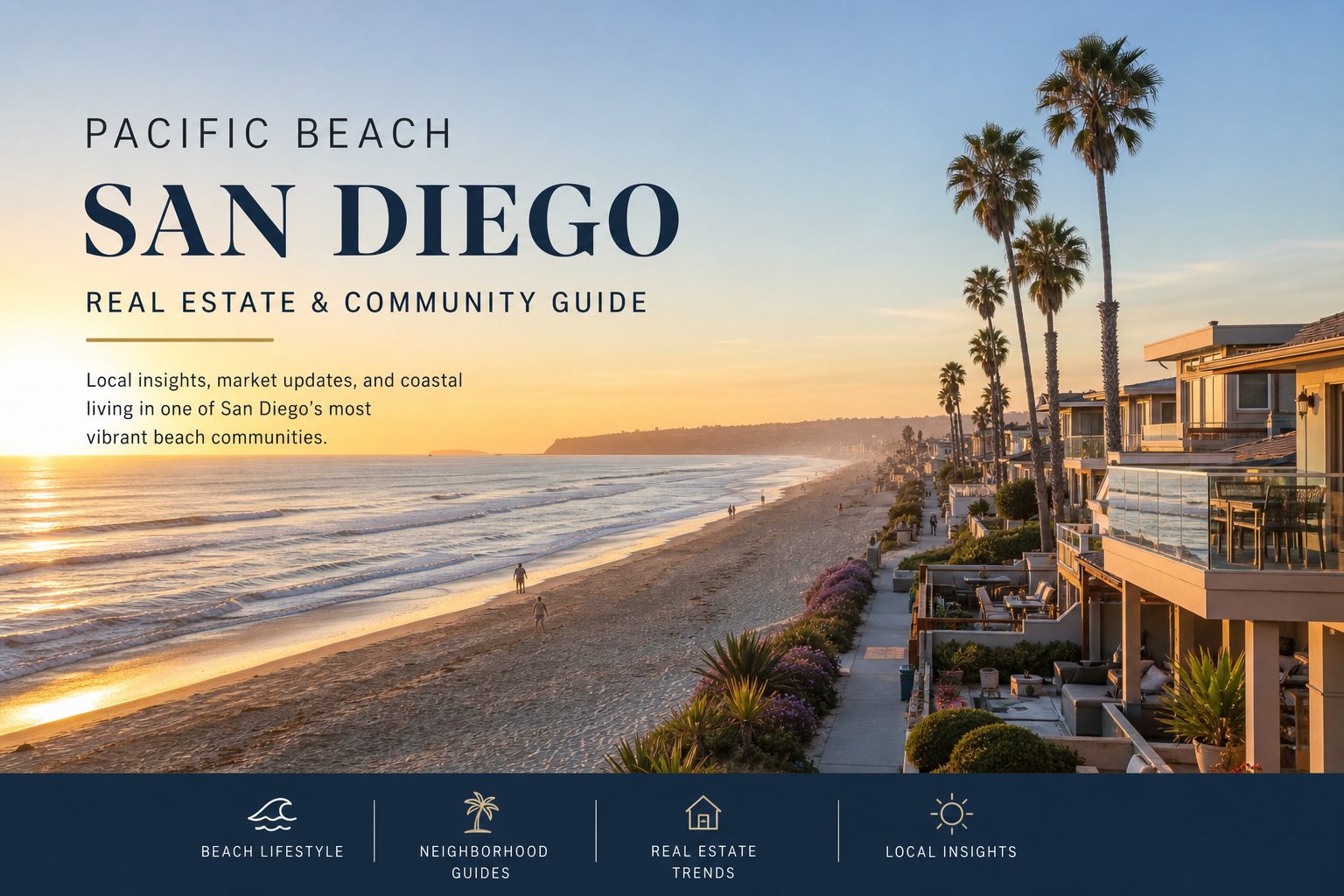
Is Pacific Beach San Diego a good neighborhood to buy a home in 2026, or are short-term rental restrictions and flood risk making it too risky for buyers?
Pacific Beach remains a strong buy in 2026 for primary residents and long-term investors, but you need to understand the STR caps and flood zones before making your move.
Why Pacific Beach San Diego Matters for Buyers Right Now
Pacific Beach, known locally as PB, is one of those San Diego neighborhoods that generates strong opinions. You hear people say it’s the quintessential beach town. You also hear buyers worry about new regulations and climate exposure. Both sides have legitimate points.
Here’s the context that matters in 2026: PB’s condo and townhome median sits at $895,000, down 14.1% year over year. Detached homes carry a median of $2,331,000. Inventory has landed in balanced territory for the first time in years, with 3.3 months of supply for condos and 2.5 months for single-family homes. That’s a meaningful shift.
What does that mean in plain terms? If you’ve been waiting for a coastal San Diego neighborhood where you actually have room to negotiate, PB’s current pace favors patient, well-prepared buyers. Condos are closing at 94.4% of list price, the widest gap between asking and selling in any of the coastal neighborhoods tracked by the San Diego Association of REALTORS. With 16 years of experience and over 275 closed transactions across San Diego, I can tell you that kind of negotiating room in a beachfront ZIP code doesn’t happen often.
Pacific Beach Short-Term Rental Restrictions: What Buyers Actually Need to Know
This is the concern I hear most frequently from buyers considering PB, so let me lay it out clearly. A cloudy mind can’t make decisions, and the STR situation has more nuance than the headlines suggest.
San Diego’s Short-Term Residential Occupancy (STRO) ordinance took effect in May 2023. Here’s what it means for you:
- Whole-home rental cap: Only 1% of the city’s housing stock (roughly 5,400 licenses citywide) can operate as whole-home short-term rentals for more than 20 days per year
- License cost: Whole-home hosting outside Mission Beach runs $1,170 annually
- Non-transferable licenses: You cannot buy a property and inherit the seller’s STR license. It stays with the person, not the address
- Enforcement teeth: The city has assessed penalties up to $10,000 per day, and a June 2026 judgment against unlicensed operators reached $1.25 million
So is this a dealbreaker? It depends entirely on your investment thesis.
If you were planning to buy a PB condo and run it as a full-time vacation rental, this ordinance effectively closes that door. San Diego has what many consider the most restrictive STR regulation in the country. A 20-day annual cap makes short-term rentals trivial side income, not a business.
But here’s what I tell my clients: for primary residents and long-term rental investors, the STR restrictions are actually a positive. They reduce transient foot traffic, stabilize the neighborhood, and remove a category of speculative buyers from competing with you.
One buyer I worked with last year almost walked away from a PB condo because he assumed STR restrictions tanked rental demand. When we looked at the actual long-term rental numbers, one-bedroom apartments in PB command $2,700 to $3,100 per month, and three-bedroom homes run $4,000 to $6,500. His condo cash-flowed on a conventional mortgage at those rates. The STR restriction was irrelevant to his actual strategy.
Flood Risk in Pacific Beach San Diego: How Serious Is It?
I won’t sugarcoat this. Pacific Beach is a low-lying coastal community bordered by the Pacific Ocean to the west and Mission Bay to the south and east. Portions of the neighborhood, particularly near Mission Bay and the beachfront, fall within FEMA Special Flood Hazard Areas (Zone AE and Zone VE). The City of San Diego’s Climate Action Plan and Sea Level Rise Vulnerability Assessment identify PB as one of the communities most exposed to future sea level rise impacts.
Here’s how to think about it practically:
- Flood insurance is required on federally backed mortgages for properties in designated flood zones. This adds $1,500 to $4,000 or more annually to your carrying costs
- Not all of PB is equally exposed. Crown Point along Mission Bay and the lowest beachfront blocks carry higher risk than properties on the elevated streets of North Pacific Beach closer to La Jolla
- Elevation matters block by block. I always recommend buyers pull the FEMA flood map for the specific property, not just the neighborhood
The critical question isn’t whether flood risk exists in PB. It does. The question is whether the cost of managing that risk (insurance, elevation certificates, property-specific mitigation) changes your numbers enough to choose a different neighborhood.
A couple I guided through a PB purchase earlier this year found a townhome on a slightly elevated street near Kate Sessions Park. Their flood insurance quote came in under $800 annually because the property sat above the base flood elevation. Compare that to a ground-floor unit three blocks closer to the bay where the quote was over $3,500. Same neighborhood, dramatically different risk profile.
Pacific Beach Market Conditions Buyers Should Understand in 2026
Let me walk you through what the numbers actually look like on the ground.
- 79 active listings across all property types in PB as of mid-2026
- More than 460 building permits issued in the past 12 months, signaling ongoing neighborhood investment
- Condos averaging 61 days on market, giving you time to do proper due diligence
- No Mello-Roos taxes in Pacific Beach, unlike many newer master-planned communities in San Diego County
The broader San Diego market context adds perspective. The county-wide median sale price hit $925,000 in May 2026, up just 1.3% year over year. Mortgage rates are sitting in the mid-6% range with the 30-year fixed conforming averaging 6.48% per Freddie Mac. And the 2026 conforming loan limit for San Diego County is $1,104,000, meaning many PB condos fall within conventional loan territory with competitive rates.
What does this tell you? PB is not appreciating wildly right now, but projections for San Diego neighborhoods place it in the 1 to 3 percent annual gain range alongside La Jolla and North Park. You’re buying stability and lifestyle, not chasing speculative gains.
Pacific Beach Lifestyle: What 47,000 Residents Already Know
Beyond the spreadsheet, you should know what daily life feels like here, because that’s ultimately what you’re buying.
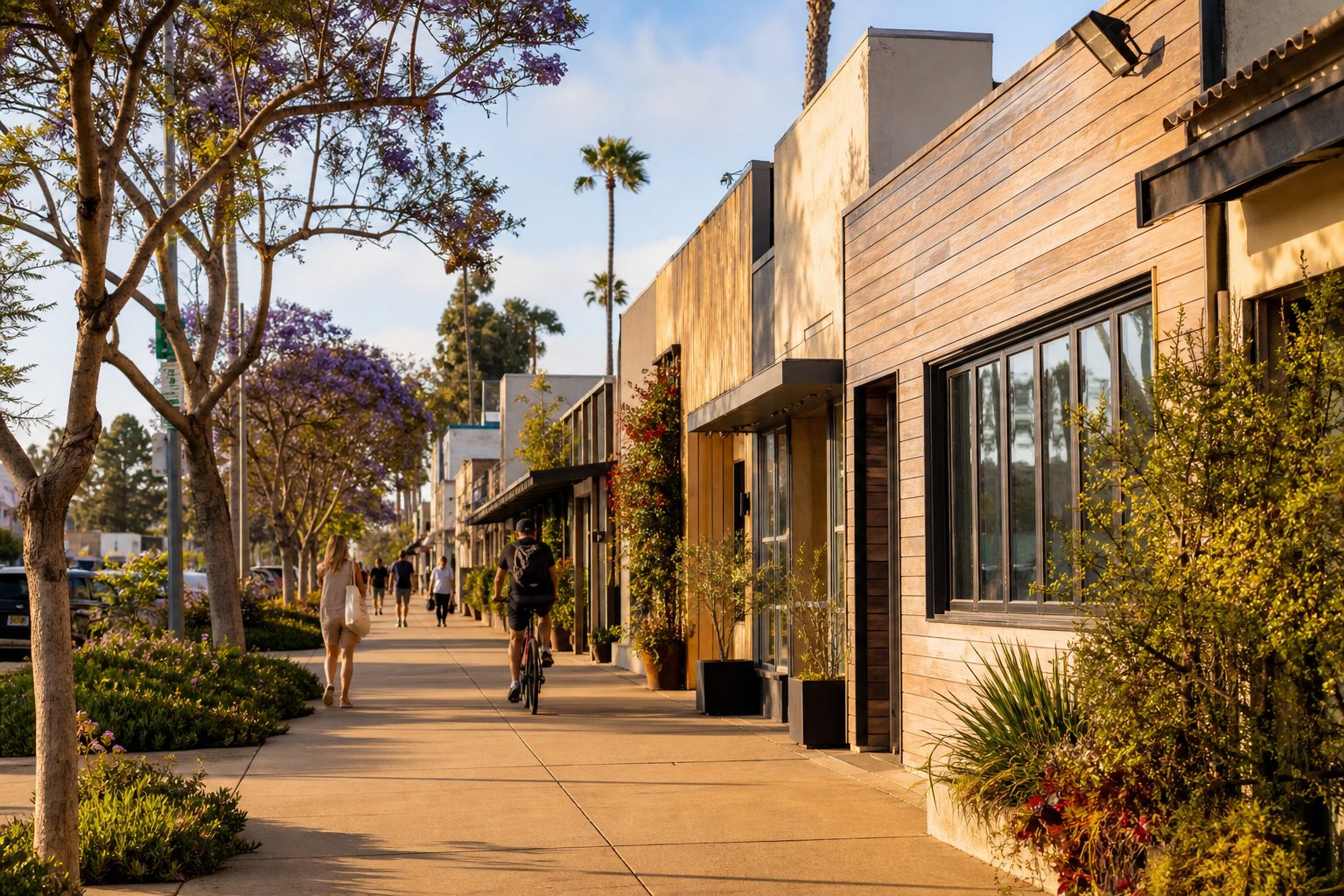
PB has a Walk Score of 74 and covers four distinct sub-areas. North Pacific Beach is closer to La Jolla and the Birdrock neighborhood, quieter and more residential with larger single-family homes. Crown Point wraps around the northern shore of Mission Bay with a mix of homes, condos, and direct bay access. The Garnet Avenue corridor is where your daily errands happen on foot, and the social scene is one of the most active in San Diego.
You can surf at Tourmaline Surfing Park before work, walk to dinner along Garnet, and reach the airport in 15 minutes. Mission Bay Park brings 4,200 acres of green space and water activities. Crystal Pier is literally in your neighborhood.
Schools include several elementary options, Pacific Beach Middle School, and Mission Bay Senior High School, with UCSD and other universities nearby for continuing education.
Here’s a detail that matters for your investment lens: 69% of PB households are renter-occupied and only 31% are owner-occupied. That high renter concentration supports strong long-term rental demand, which is exactly the income strategy that works under the current STR framework.
What I’d Tell You If You Were Sitting in My Office Right Now
After working in San Diego real estate for 16 years and earning 180 five-star reviews from clients who trusted me with their biggest financial decisions, here’s my honest read on PB in 2026:
If you’re buying a primary residence or a long-term rental property, Pacific Beach offers a rare combination of negotiating room, coastal lifestyle, and strong rental demand. The STR restrictions remove speculative competition, and the current inventory levels give you leverage that didn’t exist two years ago.
If you’re buying specifically to run a short-term vacation rental, the regulatory environment makes that functionally impossible at scale. Look at other markets.
If flood risk concerns you, don’t write off the entire neighborhood. Focus your search on elevated streets in North Pacific Beach, and budget for flood insurance during your pre-approval stage so there are no surprises.
Frequently Asked Questions About Buying in Pacific Beach San Diego
Are short-term rental restrictions in Pacific Beach permanent?
San Diego’s STRO ordinance has been in place since May 2023 with no major overhaul announced. Voters rejected a proposed vacancy tax (Measure A) in June 2026 with 57.9% voting no, suggesting the political appetite for additional restrictions is limited. The current framework appears stable, though regulations can always evolve with new city council leadership.
What is the median home price in Pacific Beach in 2026?
The year-to-date median sale price for single-family homes in Pacific Beach is $2,331,000, while condos and townhomes carry a median of $895,000. Condos have seen a 14.1% year-over-year decline, creating more negotiating room than PB has offered in recent memory.
Do you need flood insurance to buy in Pacific Beach?
If your property falls within a FEMA-designated Special Flood Hazard Area and you’re using a federally backed mortgage, yes, flood insurance is required. Costs vary dramatically by specific location, from under $800 for elevated properties to $3,500 or more for lower-lying units near Mission Bay.
Is Pacific Beach a good investment for long-term rentals?
Strong fundamentals support long-term rental investment. Average rents are approximately $2,856 per month, with one-bedrooms ranging from $2,700 to $3,100 and three-bedrooms commanding $4,000 to $6,500. The 69% renter-occupied rate confirms consistent demand.
Can you still get an STR license in Pacific Beach?
Technically yes, but the city caps whole-home licenses at 1% of housing stock (roughly 5,400 citywide), and there were 8,454 active licenses as of July 2026 across all tiers. Availability depends on license type. Tier 3 and 4 whole-home permits are functionally saturated.
How long do homes take to sell in Pacific Beach?
Condos and townhomes are averaging 61 days on market, while detached homes move somewhat faster. Both segments sit in balanced territory, giving you adequate time for inspections and due diligence.
Is North Pacific Beach safer from flooding than Crown Point?
Generally, yes. North Pacific Beach sits at higher elevation and is farther from Mission Bay’s flood zones. Crown Point, which wraps the bay’s northern shore, faces greater exposure. Always verify with property-specific FEMA flood maps before making your decision.
Are there Mello-Roos taxes in Pacific Beach?
No. Pacific Beach has no Mello-Roos taxes, which saves you a significant annual expense compared to newer master-planned communities in San Diego County.
What’s the conforming loan limit for Pacific Beach in 2026?
The 2026 conforming loan limit for San Diego County is $1,104,000 for a single-family home. Many PB condos fall within this threshold, qualifying you for conventional loan rates rather than jumbo pricing.
How does Pacific Beach compare to other San Diego coastal neighborhoods?
PB offers more negotiating room than La Jolla and a lower entry point than Del Mar, while delivering a comparable coastal lifestyle. With condos closing at 94.4% of list price, it currently represents the widest asking-to-selling gap among San Diego’s coastal neighborhoods.
The Bottom Line on Buying in Pacific Beach San Diego
Pacific Beach in 2026 is not too risky for buyers. It is, however, a neighborhood that rewards informed buyers and punishes assumptions. You need to understand where your specific property sits on the flood map, what the STR rules mean for your particular strategy, and why balanced inventory is working in your favor right now.
When you’re ready to explore a PB purchase with someone who understands the data and knows how to identify potential issues early, reach out. I’m here to help walk you through the numbers and build a plan that makes sense for your situation.
*Scott Cheng, Broker Associate, REAL Brokerage, DRE# 01509668. This blog provides general real estate information and should not be considered legal or financial advice. Market data sourced from SDAR and C.A.R. as of mid-2026. Consult appropriate professionals for decisions specific to your situation.*
Have Questions About San Diego Real Estate?
Scott Cheng provides free, no-obligation consultations for buyers, sellers, and investors.
Schedule a Consultation