

Dock Rights and Tidelands Permits for Coronado Bayfront Homes in San Diego
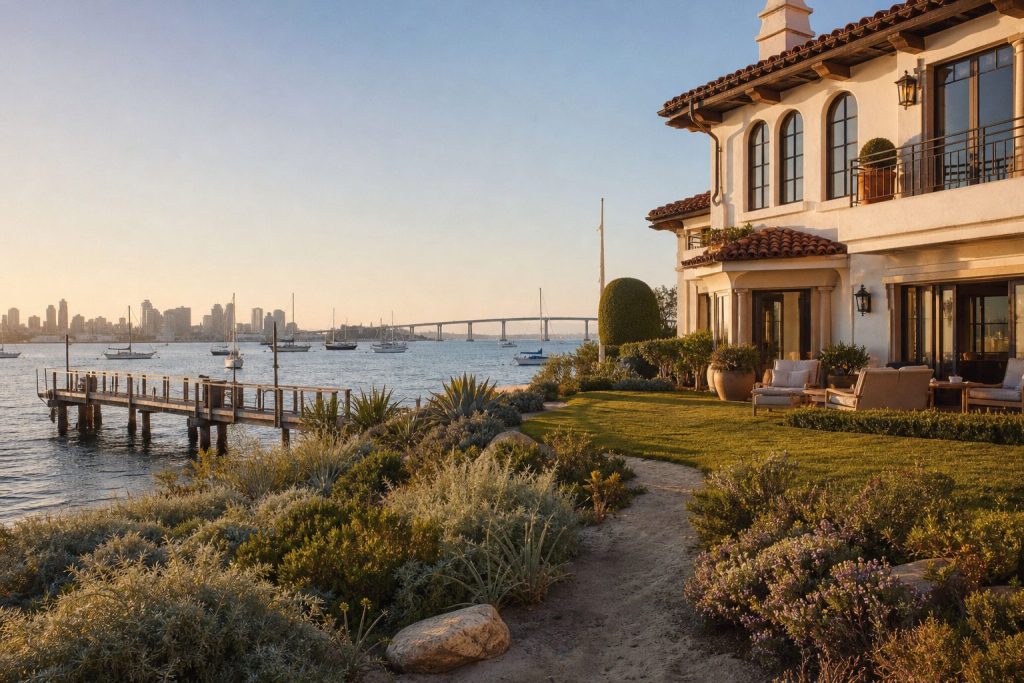
What are the real dock rights and tidelands permit requirements you need to verify before buying a bayfront home in Coronado, San Diego, in 2026?
Coronado bayfront buyers must verify that no permanent dock rights transfer with the property, that any existing dock operates under a revocable Tidelands Use and Occupancy Permit from the Port of San Diego, and that multiple agencies share jurisdiction over what you can build at the waterline.
Why Coronado Dock Rights Require Extra Scrutiny Right Now
If you’re shopping for a bayfront home in Coronado, you’re stepping into one of the most tightly regulated waterfront markets in California. And in 2026, the regulatory picture has gotten even more layered.
FEMA flood zone reclassifications that took effect in March 2026 shifted some Coronado properties from Zone X into Zone AE, according to FEMA remapping data. That alone changes your insurance costs and can affect what you’re allowed to build near the waterline. On top of that, San Diego County’s median home price reached $1,099,500 in July 2026, with coastal submarkets commanding dramatic premiums.
With 18 years helping San Diego buyers navigate complex transactions and 275 closed deals behind me, I can tell you that Coronado bayfront purchases are some of the most detail-intensive deals in the county. A cloudy mind can’t make decisions, and there’s nothing cloudier than discovering after closing that the dock you thought came with your home is actually sitting on public trust land under a revocable permit.
Let me walk you through every layer you need to verify.
The Fundamental Truth About Dock Rights in Coronado San Diego
Here’s the reality that surprises nearly every Coronado bayfront buyer I talk to: there is no such thing as automatic, permanent dock rights that transfer with a bayfront property in Coronado.
Why? Because the land between mean high tide and mean low tide is classified as tidelands, and tidelands are public trust lands. The California State Lands Commission holds sovereign ownership of those tidelands. They’re held in trust for the people of California, not for private property owners.
The San Diego Unified Port District serves as the trustee and manages these lands under a legislative grant, per Port of San Diego governance documents. So if you see a dock, a pier, or a boat slip behind a Coronado bayfront home, it almost certainly exists because someone obtained a permit from the Port District, not because the property owner has an inherent right to it.
What does that mean for you practically? It means the very first question you need answered is: where does my property end and where do the tidelands begin? That boundary line determines everything, from what you can build to which agency you’ll be dealing with.
Understanding the Tidelands Use and Occupancy Permit (TUOP) in Coronado
The specific permit you need to investigate is called a Tidelands Use and Occupancy Permit, or TUOP. The Port of San Diego issues these permits for structures and uses on tidelands within their jurisdiction, according to Port of San Diego CEQA filings.
Here’s what you need to know about TUOPs before you make an offer:
- Term length is limited. A TUOP typically carries a total term of approximately five years, per Port of San Diego documentation.
- They are revocable. The TUOP may be terminated by the District or Tenant as a matter of right and without cause at any time upon providing thirty days’ notice in writing, per the same Port District filings.
- Transferability is not automatic. You cannot assume that a TUOP transfers to you upon purchase. This requires verification with the Port District directly.
So when a listing boasts “private dock” or “boat slip included,” your first call should be to the Port of San Diego to confirm whether an active TUOP exists, when it expires, and whether it can be assigned to a new owner. Having closed over 275 transactions in San Diego, I’ve learned that what sounds like a property feature is sometimes just a permit that’s about to expire.
The Multi-Agency Jurisdiction You Need to Navigate in Coronado
One of the trickiest parts of buying bayfront in Coronado is that no single agency controls everything. You’re dealing with a layered regulatory system, and missing any one layer can stall your plans or cost you significantly after closing.
The Port of San Diego
The Port has jurisdiction on bayfront tidelands in Coronado, per the Port’s own jurisdictional guidelines. If your property fronts the bay directly and the dock or proposed structure sits on tidelands, you’ll need to apply to the Port for a Coastal Development Permit (CDP), not the city.
The City of Coronado
The City of Coronado issues Coastal Permits through Planning Commission hearings with local appeal to City Council, per the City of Coronado’s published permitting process. These cover development on private property within the coastal zone. City approvals in appealable areas may then be reviewed by the California Coastal Commission.
The California Coastal Commission
This is the appellate authority. Some Coronado approvals are appealable to the Coastal Commission, which adds time and uncertainty to any proposed dock project.
Army Corps of Engineers and Regional Water Quality Control Board
Any work below the mean high water line, including dredging or fill for a dock installation, requires separate permits from these federal and state agencies.
What I tell clients considering Coronado bayfront is to budget both time and money for the permitting process. This isn’t a situation where you close on a Friday and start building a dock on Monday.
The Complete Pre-Purchase Verification Checklist for Coronado Bayfront Buyers
Before you write an offer on a Coronado bayfront home, here’s every verification you should complete:
- Property boundary vs. tidelands boundary. Contact the California State Lands Commission or Port of San Diego to confirm where your private property ends and public tidelands begin.
- Existing TUOP or dock permit status. Confirm with the Port District whether the current dock or pier is legally permitted, when the permit was issued, and whether it’s transferable to a new owner.
- TUOP renewal status and expiration. Since TUOPs carry roughly five-year terms and are revocable with thirty days’ notice, you need to know exactly where you stand in that timeline.
- Coastal Development Permit (CDP) history. Determine whether any CDP was issued for existing waterfront structures, and whether that permit belongs to the city or the Port.
- Port Master Plan consistency. Any dock in Coronado’s bayfront must conform to Planning District 6 land use designations under the Port Master Plan, per Port of San Diego planning documents.
- Public access easement obligations. Per the City of Coronado Local Coastal Program Land Use Plan, offers of dedication of easements for public access along the shoreline shall be required in association with new development fronting on the bay.
- FEMA flood zone designation. The March 2026 reclassification moved some properties into Zone AE, per FEMA remapping data. Verify your property’s current designation and understand the insurance implications.
- Environmental review requirements. Even minor dock structures may require a CEQA categorical exemption determination through the Port of San Diego, per Port CEQA/Coastal determination records.
- Dredging or fill permits. If any below-waterline work is needed, you’ll need Army Corps of Engineers and Regional Water Quality Control Board permits.
Rated 5 out of 5 stars by 275 past clients, I take verification seriously on every transaction. One extra layer of protection I provide for buyers is a complimentary attorney review of contracts and disclosures, covered by me, even if escrow cancels. On a Coronado bayfront purchase, that attorney review can flag tidelands issues that a standard inspection never touches.
What the Coronado Local Coastal Program Means for Your Dock Plans
The City of Coronado’s Local Coastal Program Land Use Plan contains several provisions that directly affect dock rights and shoreline structures:
- Wetland protection. Diking, filling, or dredging in existing estuaries and wetlands shall maintain or enhance the functional capacity of the wetland or estuary, per the Coronado LCP Land Use Plan.
- Public access preservation. Construction of shoreline structures is permitted only when they do not preclude the public’s right of access to the bay or public beach, per the same document.
- Parking requirements in the Tidelands Overlay Zone. All development within the Tidelands Overlay Zone shall provide the number of parking spaces required by the Title, or the number of spaces required by California Department of Boating and Waterways, per the Coronado LCP.
These aren’t abstract rules. They have real consequences for what kind of dock you can maintain, whether you can expand an existing one, and how public access along the shoreline near your property will be managed.
Financing and Cost Realities for Coronado Bayfront Properties in 2026
Most Coronado bayfront homes will exceed the 2026 conforming loan limit of $1,104,000, per FHFA data. That puts you in jumbo loan territory for luxury homes in San Diego, where underwriting requirements are stricter and interest rates may differ from conforming products.
In San Diego’s luxury market, approximately 68% of buyers purchasing homes priced above $2 million pay cash, according to market reports from mid-2026. Cash buyers in this segment can close in seven to fourteen days, while financed purchases typically require thirty to forty-five days.
With mortgage rates at 6.54% in Q2 2026 (per California Association of Realtors data) and only 17% of San Diego households able to afford the county-wide median home, Coronado bayfront is a market segment that demands careful financial planning well before you tour properties. Understanding what you need before buying in San Diego can help you prepare for this complex purchase.
Frequently Asked Questions
Do dock rights automatically transfer when you buy a Coronado bayfront home?
No. Docks on Coronado’s bayfront typically sit on public trust tidelands managed by the Port of San Diego. Any dock or pier exists under a Tidelands Use and Occupancy Permit (TUOP) that does not automatically transfer with the sale. You must verify transferability directly with the Port District before closing.
How long does a tidelands permit last in Coronado?
A TUOP from the Port of San Diego typically carries a total term of approximately five years, per Port of San Diego documentation. These permits are also revocable with thirty days’ written notice by either the District or the tenant, making them far less permanent than most buyers expect.
Who has jurisdiction over Coronado bayfront docks?
The San Diego Unified Port District holds primary jurisdiction over bayfront tidelands in Coronado. The California State Lands Commission is the sovereign owner, while the City of Coronado and the California Coastal Commission also play regulatory roles depending on the project location and scope.
Can the Port of San Diego revoke a dock permit?
Yes. Per Port of San Diego documentation, a TUOP may be terminated by the District as a matter of right and without cause at any time upon providing thirty days’ notice in writing. This is a significant risk factor that buyers should weigh carefully.
What is the Coronado Local Coastal Program and why does it matter?
The Coronado Local Coastal Program Land Use Plan governs all coastal development within the city. It requires that shoreline structures preserve public access, that wetland functionality be maintained, and that public access easements may be required for new bayfront development.
Do I need a Coastal Development Permit for a dock in Coronado?
Yes. Any new construction or modification near the shoreline requires a Coastal Development Permit. Depending on whether the structure is on tidelands or private property, the permit may be issued by the Port of San Diego or the City of Coronado.
How did the March 2026 FEMA reclassification affect Coronado bayfront properties?
The March 2026 reclassification moved some properties that had been in Zone X into Zone AE, per FEMA remapping data. This can significantly increase flood insurance requirements and affect renovation options for bayfront homes.
What public access requirements apply to Coronado bayfront properties?
Per the Coronado LCP Land Use Plan, offers of dedication of easements for public access along the shoreline are required in association with new development fronting on the bay. Shoreline structures are permitted only when they do not preclude the public’s right of access.
What permits are needed for dredging near a Coronado bayfront dock?
Dredging or any work below the mean high water line requires permits from the Army Corps of Engineers and the Regional Water Quality Control Board, in addition to any applicable Port of San Diego or City of Coronado permits. Understanding homeownership requirements before purchase can help you plan for these additional costs.
How can a San Diego real estate broker help with Coronado bayfront due diligence?
A broker experienced with waterfront properties can coordinate title research, tidelands boundary verification, TUOP status checks, and attorney review of disclosures. Learning about the home buying process through CFPB resources can also help you understand your rights and obligations. With 18 years of experience and 275 closed transactions across San Diego, I include a complimentary attorney review of contracts and disclosures on every transaction, covered by me even if escrow cancels.
The Bottom Line
Buying a bayfront home in Coronado is one of the most rewarding moves you can make in San Diego, but it comes with regulatory layers that most buyers don’t encounter anywhere else. No permanent dock rights transfer automatically. Every waterfront structure exists under a permit that can be revoked. And multiple agencies, from the Port of San Diego to the California Coastal Commission, have a say in what happens at your waterline.
Your clearest path forward is thorough verification before you write that offer. If you’re exploring Coronado bayfront properties and want someone who understands these complexities firsthand, I’m happy to walk through the details with you. You can reach me, Scott Cheng, Broker Associate at REAL Brokerage (DRE# 01509668), at 858-405-0002 or through my office at 16516 Bernardo Center Dr. Ste. 300. A calm plan you can feel good about starts with clean information.