

San Diego School Safety Report: What Home Buyers Need to Know
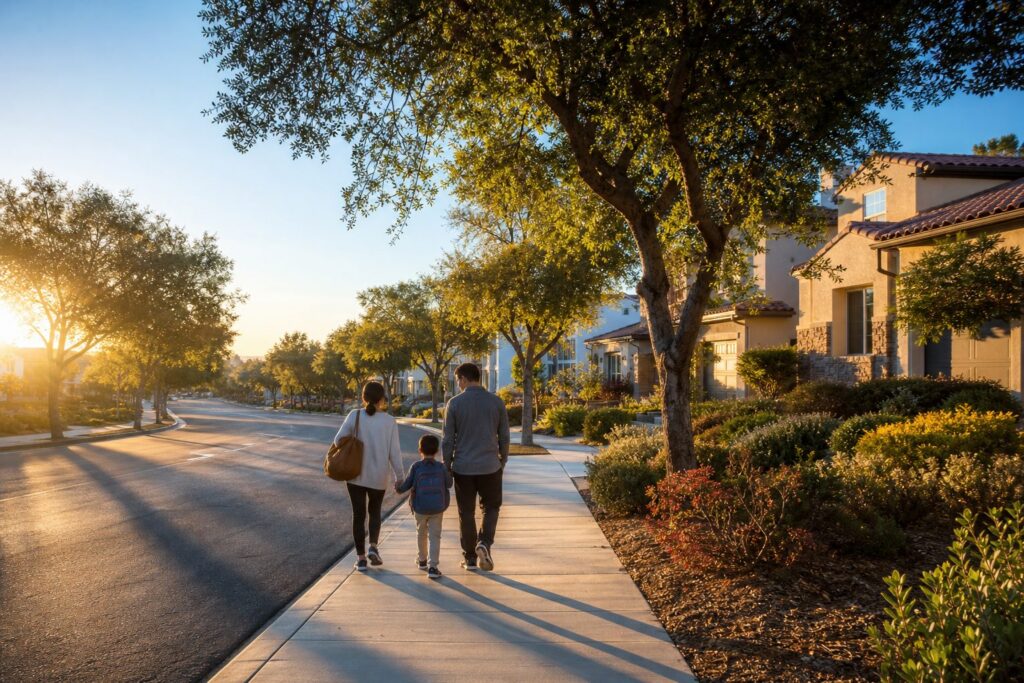
How does the new San Diego Unified school safety report affect your home buying or selling decision?
A newly released San Diego Unified report identified 107 school-based safety concerns across the city, including missing crosswalks and disorganized drop-off zones, directly impacting property values and family-focused neighborhoods.
Why the San Diego School Safety Report Matters for Real Estate Right Now
If you’re buying or selling a home in San Diego with school-age children, this report changes the conversation. San Diego Unified School District, the second-largest district in California serving over 100,000 students across 170-plus schools, just released findings that should be on every parent’s radar.
Following a tragic incident involving students walking to school in October 2025, Superintendent Fabi Bagula launched a districtwide survey of school principals. The result? A total of 107 school-based safety requests spanning the entire city, highlighting problems like speeding traffic near campuses, unsafe crossings, inadequate signage, poor lighting, and missing pedestrian infrastructure.
What I tell my clients is simple: a cloudy mind can’t make decisions. So let me lay this out clearly, neighborhood by neighborhood, so you know exactly what to evaluate before making an offer on a San Diego home.
How San Diego’s School Route Safety Issues Affect Home Values
You might think school safety is purely a parenting concern. It’s not. It’s a real estate concern, and here’s why.
Homes in San Diego’s top-performing school districts, places like Poway Unified, San Dieguito Union, and sought-after pockets within San Diego Unified, consistently command premium prices. Coastal properties and homes in strong school zones routinely move in under two weeks, with roughly 41% of homes selling above asking price in central and coastal neighborhoods.
But what happens when a school’s surrounding infrastructure gets flagged for safety hazards? That premium can soften. One family I worked with was house hunting in North Park and had their heart set on a home two blocks from an elementary school. When we walked the route together at 7:45 a.m., the lack of a marked crosswalk at the nearest intersection was immediately obvious. Cars were cutting through at speed. That observation, combined with the district’s newly released safety data, prompted them to widen their search to include Scripps Ranch, where the school approach felt significantly safer.
With 16 years of experience and over 275 transactions closed across San Diego, I’ve seen how school proximity affects resale value. But proximity alone isn’t enough. The safety of the route to school matters just as much as the school’s test scores.
What the San Diego Unified Safety Report Actually Found
Let me give you the key takeaways so you can evaluate neighborhoods with clear eyes.
- 107 safety requests were submitted by school principals across San Diego Unified
- Concerns include speeding traffic near schools, unsafe pedestrian crossings, disorganized drop-off zones, inadequate signage, and poor lighting
- The district has requested $4.5 million in federal funding for safety infrastructure improvements
- Congress members Scott Peters, Sara Jacobs, and Juan Vargas collectively secured $2.25 million in proposed appropriations for the House FY 2027 budget, though final approval is still pending
- The 2026-27 school year begins August 10, 2026, and district officials are pushing for visible progress before opening day
Superintendent Bagula put it directly: the concerns raised by principals are not theoretical. They reflect the daily realities students and families face as they walk, bike, or drive to school.
So what does that actually mean if you’re shopping for a home in San Diego right now? It means you should physically walk the school route before writing an offer. Not on a Sunday afternoon when the streets are quiet, but on a weekday morning when the drop-off chaos is real.
San Diego Neighborhoods Where School Safety Matters Most
North Park: Walkability Cuts Both Ways
North Park is one of San Diego’s most desirable urban neighborhoods, with a median home price around $1.0M (up 12.2% year over year) and a Walk Score of 86. That walkability is exactly what draws young families and professionals to the 30th Street corridor, where you’ll find Communal Coffee, Influx Cafe, and the Thursday evening farmers market.
But the same dense, walkable grid that makes North Park so livable also creates challenges around school campuses. North Park Elementary on Howard Ave. is rated 5/10, and the area near 32nd Street lacks clearly marked drop-off zones, a concern consistent with the district’s broader safety findings. Monroe Clark Middle School serves much of the neighborhood with a 3/10 rating.
If you’re buying in North Park with kids, walk the intersection at University Ave. and 32nd St. during school hours. The vehicle throughput is high, and the pedestrian infrastructure hasn’t caught up to the neighborhood’s growth.
Downtown San Diego: Urban Discovery Academy’s Unique Challenges
Urban Discovery Academy in downtown San Diego has been cited as one of the most hazardous school zones in the city, with a high number of car, pedestrian, and bike crashes within a half-mile radius. The combination of heavy pedestrian volume, dense vehicle traffic, and limited space for organized drop-off creates a situation that’s genuinely different from suburban campuses.
For buyers considering downtown condos (median around $675,000 for attached homes countywide, down 1.5% year over year), this is critical context. The lifestyle advantages of downtown are real, but if you have young children, the daily school commute requires extra planning and attention.
Suburban Alternatives: Scripps Ranch, Carmel Valley, and Rancho Bernardo
In my experience, families who weigh school safety infrastructure alongside academic ratings often gravitate toward neighborhoods like Scripps Ranch, Carmel Valley, Rancho Bernardo, and Poway. These communities were designed with wider streets, dedicated school drop-off lanes, and more consistent crossing guard coverage.
A couple I recently helped was relocating to San Diego from Austin for a biotech role in Sorrento Valley. They initially wanted the urban energy of Mission Hills, where homes carry a median around $1.85M at over $900 per square foot. After we toured the school routes together and discussed the safety report, they shifted their focus to Carmel Valley, where the school infrastructure felt purpose-built for families. They closed within three weeks and told me the route walkthrough was the single most valuable exercise in their entire search.
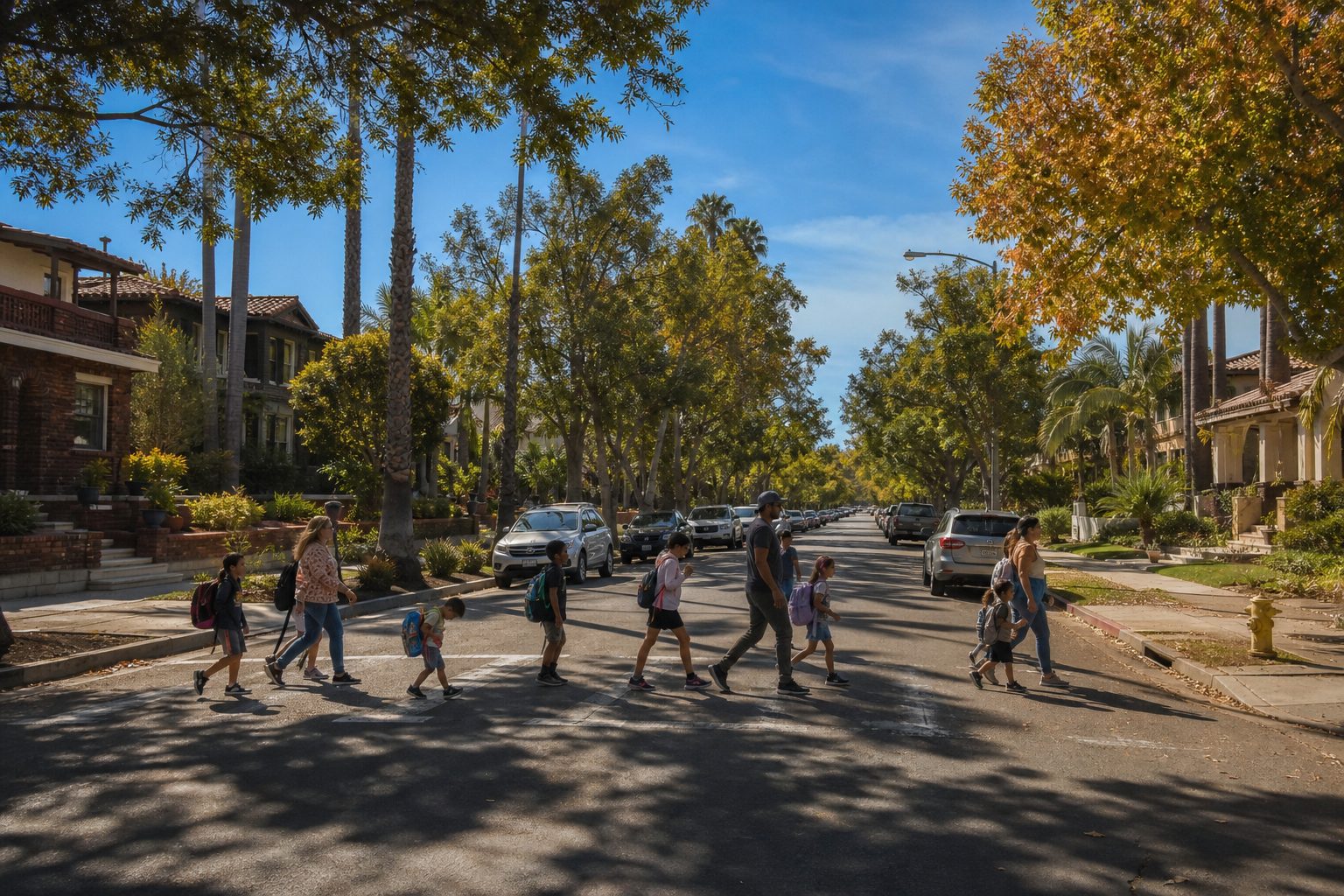
How to Evaluate School Safety Before Buying a San Diego Home
Here’s the process I walk through with every buyer who has children or plans to:
- Walk the route at drop-off time (7:30 to 8:15 a.m.). This is non-negotiable. You’ll see traffic patterns, crossing guard presence, and driver behavior that no listing photo can reveal.
- Check the SDUSD safety report by council district. The district published a council-district-by-council-district summary of safety concerns. Your real estate broker in San Diego should be able to pull the relevant section for any neighborhood you’re considering.
- Look at the school’s individual Safe School Plan. Every school in California is required to maintain and update one. Ask for it.
- Note whether new infrastructure funding is coming. The $2.25 million in proposed federal funding may target specific corridors. Improvements to crosswalks and signage near your target school could be a positive signal.
- Talk to parents already in the neighborhood. Show up at the school pickup line. Parents will tell you things no report covers.
With 180 five-star reviews from past clients, rated 5 out of 5, one thing I hear consistently is that this kind of granular, on-the-ground guidance is what sets a real estate agent in San Diego apart from someone who just opens doors and sends listings.
The San Diego Market Context You Need Alongside This Safety Data
The broader San Diego housing market in mid-2026 is competitive but navigable. The county median sits at $925,000 (up 1.3% year over year), with detached single-family homes at roughly $1,099,500 and median days on market at just 18 days. Active inventory is down 12.4% year over year, with only 5,798 units available.
Mortgage rates are hovering around 6.48% for a 30-year fixed, and San Diego County’s conforming loan limit is $1,104,000. The statewide affordability index sits at roughly 18%, meaning fewer than one in five California households can purchase the median-priced home.
What does that mean for you? In a tight market with limited inventory, the homes that combine strong school ratings AND safe school infrastructure will continue to command the strongest premiums. Homes near flagged school zones may present opportunities for savvy buyers who are comfortable monitoring infrastructure improvements.
Frequently Asked Questions About San Diego School Safety and Real Estate
What did the San Diego Unified school safety report find?
The report identified 107 school-based safety requests from principals across the district. Common concerns include speeding traffic near campuses, missing crosswalks, inadequate signage, poor lighting, and disorganized drop-off zones. The findings were released in July 2026 following a districtwide principal survey.
How many schools does San Diego Unified serve?
San Diego Unified is the second-largest district in California, operating 170-plus schools and serving over 100,000 students. The safety concerns identified in the recent report span schools across the entire city, not just one area.
Which San Diego schools have the most dangerous drop-off zones?
Urban Discovery Academy downtown has been specifically cited for hazardous conditions due to high vehicle and pedestrian volume. Pacific Beach Elementary has also been flagged. The district’s council-by-council report provides a full breakdown of each neighborhood’s concerns.
Does school safety affect home prices in San Diego?
Yes. Homes in highly rated, well-maintained school zones consistently sell faster and above asking in San Diego. Roughly 41% of homes are selling above list price, with the strongest competition in neighborhoods that combine quality schools with safe infrastructure.
Is federal funding coming for San Diego school safety improvements?
San Diego Unified requested $4.5 million in federal infrastructure funding. Congress members have secured $2.25 million in proposed House appropriations for FY 2027, though final passage is pending. Improvements could include new crosswalks, signage, and traffic calming measures.
How can I check school safety for a specific San Diego neighborhood?
Walk the school route during morning drop-off, review the SDUSD safety report by council district, ask to see the school’s individual Safe School Plan (required by California law), and talk to families already living in the neighborhood. A local real estate broker in San Diego can also help you access this information.
Are suburban San Diego neighborhoods safer for school commutes than urban ones?
Generally, neighborhoods like Scripps Ranch, Carmel Valley, Rancho Bernardo, and Poway were designed with wider roads, dedicated drop-off lanes, and more consistent pedestrian infrastructure. Urban neighborhoods like North Park and downtown offer lifestyle advantages but require more careful evaluation of school routes.
When does the 2026-27 San Diego school year start?
The first day of the new school year is August 10, 2026. District officials are working to address some safety concerns before students return, though large-scale infrastructure projects will take longer.
What should sellers in San Diego know about the school safety report?
If your home is near a school with flagged safety concerns, be prepared for informed buyers to ask questions. Highlighting any nearby improvements, crossing guards, or planned infrastructure upgrades can help frame the conversation positively. Pricing strategy and presentation matter more than ever.
How do I report a school safety concern in San Diego?
You can contact the San Diego Unified Police Department 24 hours a day at (619) 291-7678. The district also maintains an online incident reporting form through the Office of Investigations, Compliance and Accountability for equity, civil rights, and safety concerns.
The Bottom Line on San Diego School Safety and Your Next Move
The San Diego Unified school safety report isn’t meant to alarm you. It’s meant to inform you. And as someone who has spent 16 years helping families find their homes across San Diego County, from Mira Mesa to Carmel Valley to Rancho Bernardo, I can tell you that informed buyers make confident decisions.
Walk the route. Read the report. Ask the questions. And if you want someone in your corner who will point out issues early and help you navigate the details calmly, I’m here.
I’m Scott Cheng, Associate Broker with REAL Brokerage, and I’d welcome the chance to walk those school routes with you. Reach me at 858-405-0002 or visit my office at 16516 Bernardo Center Dr. Ste. 300. Let’s find you a home where your family feels safe, starting from the walk to school.
*This blog is for informational purposes only and does not constitute legal advice. School safety conditions can change, and buyers should independently verify all information before making purchasing decisions.*