

HOA Transfer Fees vs Seller Responsibilities in San Diego 2026: What Should Veterans Selling Townhomes in Mira Mesa or Scripps Ranch Expect?
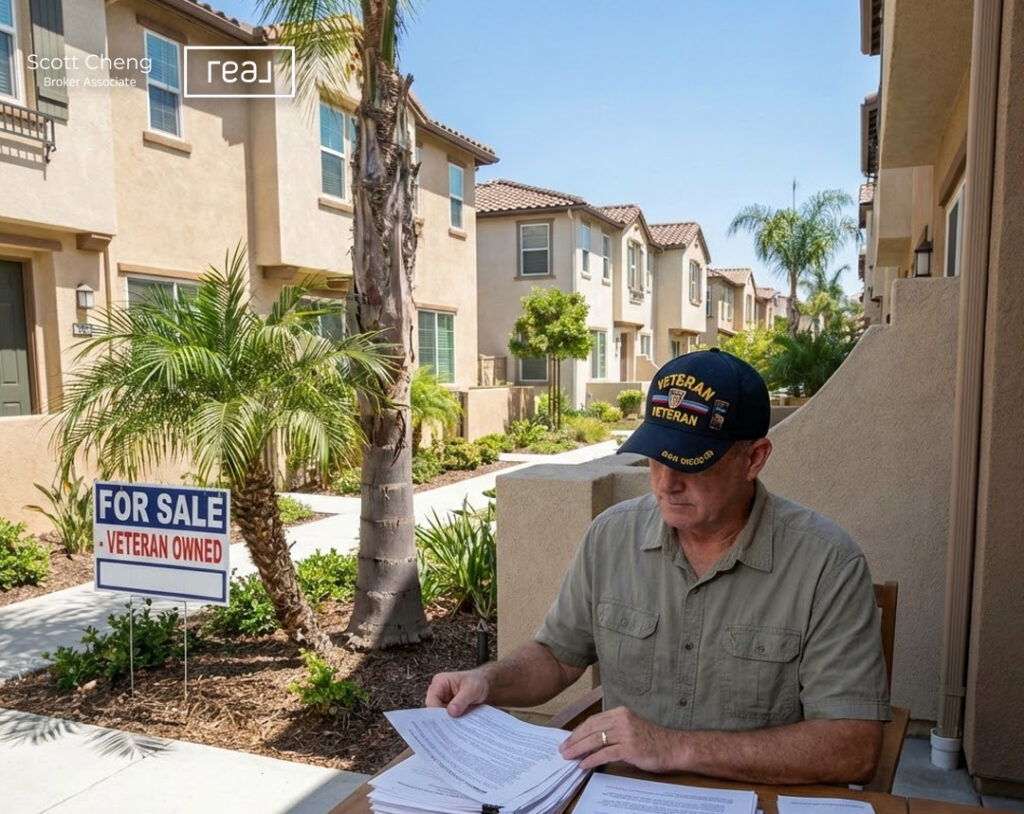
HOA Transfer Fees vs Seller Responsibilities in San Diego 2026: What Should Veterans Selling Townhomes in Mira Mesa or Scripps Ranch Expect?
The HOA transfer fee in San Diego typically runs $250 to $500 and is usually paid by you as the seller, along with required HOA disclosure documents and prorated dues. You can negotiate many items, but VA rules cap concessions at 4% for VA buyers.
Why does HOA timing matter when selling a San Diego townhome in 2026?
Locking down HOA obligations before you list protects your timeline and prevents costly surprises late in escrow. You are selling into a fast San Diego market with 1.8 months of supply and a median 18 days on market, according to local association data for January 2026. That speed is good for your bottom line, but it also means you must lock down HOA obligations early to avoid delays, surprise costs, or buyer leverage late in escrow. In townhome communities across Mira Mesa and Scripps Ranch, HOA rules drive who pays what, how quickly documents arrive, and whether violations or unpaid assessments will hold up your closing. You also need to align HOA requirements with VA-specific rules if your buyer uses VA financing or you consider a VA loan assumption. You will see similar dynamics in nearby Rancho Bernardo and Poway, so if you are cross-shopping areas or comparing comps, the same playbook applies. Your timing, document readiness, and fee strategy can add thousands to your net.
What HOA costs and seller responsibilities should you know before listing?
California law requires a comprehensive HOA disclosure package, and most sellers pay the transfer fee and disclosures — budgeting $550 to $1,200 total before negotiations. You should map your HOA costs and responsibilities before you hit the market. In California, sellers must deliver a comprehensive HOA disclosure package under Civil Code sections 4525 and 4530. If you wait to order, you risk delays and rush fees. Most HOAs contract with third-party platforms, and fulfillment often takes 5 to 10 business days.
Key items to budget and control:
- HOA transfer fee: typically $250 to $500, commonly assigned to you unless negotiated otherwise.
- HOA disclosures package: governing documents, CC&Rs, bylaws, rules, budgets, reserve study summary, insurance, assessment statements, and minutes. Typical total cost is $300 to $700 depending on the vendor and how many items your buyer requests.
- Demand statement or status letter: used by escrow to confirm dues, special assessments, and violations. Commonly $150 to $300.
- Lender questionnaire: requested by the buyer’s lender for condo or PUD underwriting. Often $100 to $350. Payment is negotiable.
- Move-in or move-out fees and deposits: sometimes charged by the HOA. Amounts vary. Decide who pays in the purchase agreement.
- Prorated dues: you pay through closing date, buyer pays after.
For sellers working with VA buyers, it’s important to understand you can offer up to 4% of the purchase price in concessions. That cap includes certain prepaid items like HOA dues paid in advance. According to San Diego median home value data, attached homes carry a county median around $720,000, so small shifts in closing costs can influence buyer behavior without materially moving your net. You should set expectations in your listing remarks and counteroffers so you do not lose time negotiating fee minutiae during inspections.
Quick Definitions and Typical Ranges
- Transfer fee: $250 to $500, HOA or management company processing ownership change.
- Disclosures package: $300 to $700, legally required HOA documents under California law.
- Demand or status letter: $150 to $300, confirms balances and compliance.
- Lender questionnaire: $100 to $350, condo or PUD underwriting details.
- Move fees or deposits: variable, check your HOA rules.
How should you compare your HOA fee allocation options as a seller?
Covering the transfer fee and disclosures yourself speeds escrow and appeals to VA buyers, while pushing the lender questionnaire to the buyer is a common and accepted split. You should weigh certainty, speed, and net proceeds when you decide how to allocate HOA costs. In a low-inventory market with an 18-day median time to sell, you can often shift some fees to the buyer. That said, offering to cover standard seller-side HOA items can prevent friction and shorten escrow.
Consider these options:
- You cover the transfer fee and disclosures package. This is common in San Diego and keeps control over document delivery. You also look stronger to VA buyers who monitor total cash-to-close.
- You ask the buyer to cover the lender questionnaire and any optional HOA documents. Many buyers accept this, especially if you priced competitively.
- You offer a targeted credit for minor move-in fees, not a blanket concession. For VA buyers, stay mindful of the 4% cap on concessions.
Pros of paying more seller-side fees:
- Faster timeline and fewer back-and-forths.
- Better optics for VA and first-time buyers with limited cash.
- Potentially broader buyer pool in Mira Mesa and Scripps Ranch where HOA rules can be strict.
Cons:
- Slightly lower net if you do not trade fees for price.
- Risk of overpaying for documents buyers do not need.
Pros of pushing fees to the buyer:
- Immediate savings if buyers accept.
- Clear division of standard vs optional items.
Cons:
- Added negotiation points that can delay closings.
- VA buyers could be constrained if cash is tight, even if rates have eased since early 2025.
Key factors to evaluate:
- Market leverage in your micro-neighborhood based on days on market and recent comps.
- Buyer type — VA, conventional, cash — and the impact of the 4% VA concession cap.
- Timeline risk if the HOA is slow or has strict scheduling for move-outs or elevator reservations.
What is the step-by-step process for selling a San Diego townhome with HOA requirements?
Following these 10 steps from pre-listing through closing gives you speed, clean paperwork, and stronger negotiating power. Follow them in order to avoid rush fees, last-minute holds, and closing extensions.
1) Pull HOA contact info and documents you already have. Gather your most recent CC&Rs, rules, budget, reserve summary, and insurance certificates. Verify the current management company.
2) Pre-listing compliance check. Ask the HOA if you have any violations, unpaid fines, or pending architectural reviews. Clear small items now so you do not trigger last-minute holds.
3) Order the disclosures package at listing launch. Civil Code requires a comprehensive set. Ordering early avoids rush fees, and you can deliver promptly once you open escrow.
4) Price strategy and fee positioning. If you price 1 to 2 percent below tight comps, you may spark multiple offers and push the final price above list. You can then accept a clean offer and still cover routine HOA fees without hurting your net.
5) Clarify who pays what in your counter. Assign transfer fee and disclosures to you. Assign lender questionnaire and any optional documents to buyer. Address move-in or elevator fees explicitly.
6) VA-specific prep. If your buyer uses VA financing, track the 4 percent concession cap. If you allow an assumption of your VA loan, document how your entitlement will be handled. Your entitlement can remain tied up if a non-veteran assumes and does not later refinance.
7) Order the demand or status letter as soon as contingencies are satisfied. This confirms balances, assessments, and any fines. Escrow needs it to calculate prorations accurately.
8) Reserve elevator or move-out slots. In some Scripps Ranch and Mira Mesa communities, you need advance scheduling for common areas. Book early to avoid closing extensions.
9) Review board meeting minutes. Buyers will read them. Address any recurring maintenance or special assessment talk upfront to reduce retrades.
10) Final walk and compliance. Fix minor items cited by HOA, return fobs or pool keys, and hand off parking permits and mailbox codes at closing.
Following these steps gives you speed, clean paperwork, and better negotiating power with top San Diego real estate agents and lenders.
What do HOA fees and market conditions look like in Mira Mesa and Scripps Ranch?
HOA dues in Mira Mesa and Scripps Ranch typically run $300 to $450 per month for townhomes, and the county’s 18-day median time on market means prepared sellers can move fast and clean. In Mira Mesa and Scripps Ranch, you often see HOA dues between $300 and $450 per month for townhomes, with well-run associations maintaining strong reserves. According to local association and industry data, attached homes across San Diego carry a county median near $720,000, with overall county median at $880,000 as of January 2026. Low inventory and an 18-day median time on market favor you if you prepare disclosures and fee allocations upfront.
In Mira Mesa, proximity to Sorrento Valley and tech corridors draws steady buyer traffic. In Scripps Ranch, top-ranked schools and quick I-15 access support stable attached pricing. If you position your listing 1 to 2 percent below the latest closed comps, you can invite multiple offers and negotiate cleaner terms on HOA costs. If a VA buyer surfaces, you can use your fee structure to help them clear upfront cash hurdles while guarding your 4 percent concession limit.
You will see similar patterns in Rancho Bernardo and Carmel Mountain Ranch where managed communities and consistent amenities create repeatable expectations on transfer fees, disclosure costs, and move scheduling. When you coordinate with your escrow and HOA early, you increase predictability and reduce the chance of last-minute credits that eat into your net.
Neighborhoods to consider in San Diego:
- Mira Mesa: Strong demand from tech workers, townhomes commonly trade in the mid 600s to high 700s depending on updates and amenities, HOA dues typically mid-range with stable reserves.
- Scripps Ranch: School-driven demand and community parks, many townhomes in the high 700s to low 900s, consistent HOA oversight that buyers value.
- Rancho Bernardo: 15 to 25 minute commutes to employment hubs, golf and community centers, HOA rules vary by sub-association but fee expectations are familiar to local buyers.
Nearby Areas Worth Exploring
- Poway: Highly rated schools and single-family focus with select townhome pockets. If you consider alternatives to Scripps Ranch, Poway offers similar family amenities and strong community services. Pricing often runs slightly higher for updated properties.
- Sabre Springs: Quick I-15 access and newer townhome stock relative to some Mira Mesa tracts. HOA operations are streamlined, which can shorten disclosure timelines and reduce surprises.
- Carmel Mountain Ranch: Shopping and transit convenience with well-kept communities. Buyers comparing Scripps Ranch often include this area due to similar commuting patterns and HOA expectations.
What mistakes do most sellers make with HOA fees and VA loans in San Diego?
The most common mistake is assuming the HOA determines who pays — it doesn’t. Payment allocation is contractual and fully negotiable between buyer and seller. You might assume the HOA sets who pays what. In reality, payment is contractual and negotiable. The HOA only sets the fee amounts and requirements. You also may think the disclosures package is optional or can wait until escrow. Under California law, you must deliver a specific set of HOA documents, and late orders often trigger delays or rush fees that reduce your leverage.
Many sellers overlook the lender questionnaire. If your buyer’s lender needs detailed condo information, fees and turnaround times matter. Assigning the questionnaire cost to the buyer while you cover the standard transfer and disclosure items is a clean split that keeps things moving. Finally, if you have a VA loan, you may not realize an assumption can tie up your entitlement if the assuming buyer does not substitute entitlement or refinance later. This can limit your future VA buying power, so you should weigh the benefit of a faster sale against the long-term impact on your entitlement.
Frequently Asked Questions
Who usually pays the HOA transfer fee in San Diego?
You usually do. In many San Diego townhome sales, the seller covers the HOA transfer fee and the disclosures package. That said, payment is negotiable. To reduce friction and protect your timeline, you can assign optional items like the lender questionnaire to the buyer.
How much are HOA documents, and how long do they take in California?
Expect $300 to $700 for the full HOA disclosures package and 5 to 10 business days for delivery once ordered. The demand or status letter typically adds $150 to $300. Order at listing so you do not pay rush fees or extend escrow.
Does this advice apply to Rancho Bernardo and Poway too?
Yes. HOA workflows in Rancho Bernardo and Poway are similar to Mira Mesa and Scripps Ranch. You should still confirm each association’s specific fees, move rules, and turnaround times. Pricing and reserves vary by sub-association, but the fee allocation and VA concession strategies are the same.
Can you use seller concessions to cover a VA buyer’s HOA costs?
Yes within limits. VA rules cap seller concessions at 4 percent of the purchase price. You can use concessions for certain prepaid items, including HOA dues paid in advance, subject to lender interpretation. Coordinate with escrow and the lender so you do not exceed the cap.
Should you allow a buyer to assume your VA loan?
It depends on your priorities. An assumption can attract buyers and speed closing, especially if your rate is below current market. The tradeoff is entitlement. If a non-veteran assumes, your entitlement can remain tied up until that buyer refinances. Decide based on your future plans.
The Bottom Line on HOA Transfer Fees and Seller Responsibilities in San Diego
You will pay the HOA transfer fee and most disclosure costs in many San Diego townhome sales, but you control the process and the allocation. In a market with 1.8 months of supply and 18 median days on market, you can protect your net by ordering documents early, clearing violations, and using targeted fee splits. If a VA buyer is in play, track the 4 percent concession cap and decide whether a loan assumption aligns with your future VA plans. Whether you are selling in Mira Mesa or Scripps Ranch or exploring nearby Rancho Bernardo and Poway, the same steps help you avoid delays and keep leverage through closing.
If you’re ready to explore your options for HOA transfer fees and seller responsibilities in San Diego or nearby communities, Scott Cheng at Scott Cheng San Diego Realtor can walk you through the specifics for your situation.
📞 858-405-0002
DRE# 01509668