
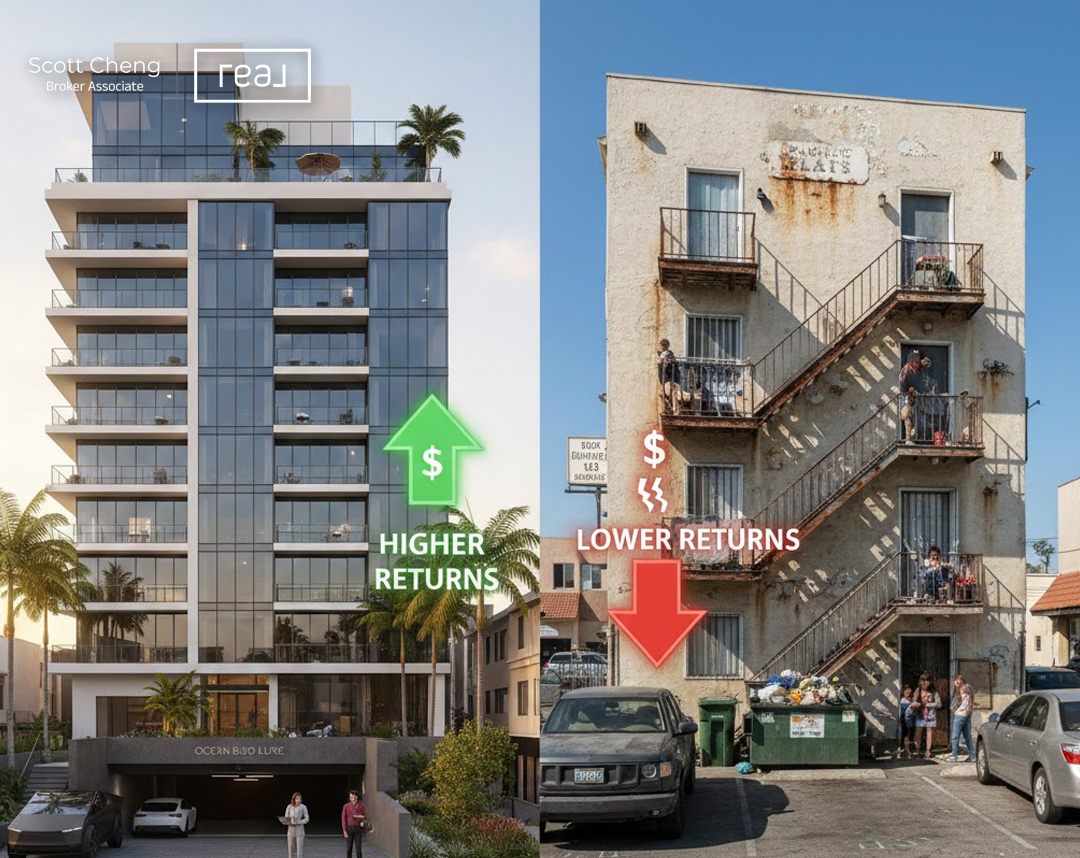
Class A vs Class C Multifamily Investments in San Diego 2026: Which Delivers Better Returns for Investors Buying Before the Flight to Quality Accelerates
Class A vs Class C Multifamily Investments in San Diego 2026: Which delivers better returns for investors buying before the flight to quality accelerates?
Class C often delivers stronger cash yields and value-add gains today, while Class A offers lower volatility with likely cap rate compression as the flight to quality accelerates. Your best move depends on your risk tolerance and timeline.
Why This Matters Right Now
You are navigating a tight 2026 San Diego market with just 1.8 months of supply and a median sale price around 875,000, both pointing to persistent demand against limited inventory. Rents average about 2,300 per month, vacancies hover near 3.6 percent, and half the market rents. That backdrop supports multifamily fundamentals, but rate volatility is slowing some buyers, creating room for disciplined investors to negotiate. You are also seeing a growing preference for newer, well-amenitized buildings. As capital shifts toward higher quality, Class A cap rates can compress further, and well-located Class C assets with clear renovation plans can reprice quickly. Your timing could let you buy before the next leg of the quality trade reduces spreads. The same logic applies if you are weighing nearby areas like Chula Vista and La Mesa, where investor interest is tracking similar trends due to transportation access and relative affordability.
What You Need to Know Before Choosing Class A or Class C
You should anchor this decision to your return target, risk tolerance, hold period, and operational capacity. In San Diego right now, both classes can work if you underwrite precisely.
- Returns by class: Class A cap rates average about 4.1 percent, with projected 3 to 4 percent annual rent growth. Class C averages about 5.6 percent, with 1 to 2 percent organic rent growth but 6 to 8 percent value-add upside if you execute renovations intelligently.
- Price context: You will typically pay around 350,000 per unit for Class A and about 200,000 per unit for Class C, with variations by submarket and asset age.
- Debt environment: Typical stabilized financing includes agency executions around 75 percent loan to value and fixed terms near 10 years. For heavier business plans, local banks provide bridge solutions around 65 percent loan to value.
- Risk profile: Class A reduces physical risk and cuts turnover costs. Class C boosts in-place yield and upside, but adds capex, management intensity, and tenant improvement complexity.
- Policy and permitting: You should plan within rent cap rules and permitting timelines. If you expect to add accessory dwelling units where allowed, you can leverage fee waivers through late 2026 in the City of San Diego, subject to current rules.
- Market direction: With investor caution persisting, a flight to quality can compress Class A yields further. Class C can outperform if you capture the spread now and deliver renovations on time and on budget.
You will likely find the best fit by matching your execution strengths to the property’s needs, then building in adequate reserves to absorb surprises.
Reading Today’s Pricing Correctly
You should separate price from value. Class A pricing can look rich at first glance, but you may win via lower downtime, steadier rent trends, and possible cap rate compression in core submarkets. Class C looks inexpensive, yet you must normalize for deferred maintenance, utility inefficiencies, and code upgrades that can push your true basis higher. Your underwriting should stress-test both retenanting timelines and contractor capacity across San Diego’s busier seasons.
How to Compare Your Options
Start with side-by-side underwriting and quantify your trade-offs. You will make a better call once you express the differences in cash-on-cash, internal rate of return, and execution risk.
- Yield vs stability: Class C should start 150 to 200 basis points higher on cap rate, often producing 7 to 9 percent cash yields after renovations. Class A may start lower, often in the 5 to 6 percent stabilized range, but can offset that with reduced vacancy, fewer capital surprises, and future cap rate tailwinds.
- Renovation scope: You should map a realistic 9 to 12 month value-add schedule for Class C, budgeting 10 to 20 percent of purchase price for renovations. In Class A, your capital plan is lighter, focused on minor upgrades and amenity refreshes.
- Tenant base and turnover: Class A targets higher income renters, often professionals tied to employment centers and transit. Class C tenants can be more price sensitive, which increases turnover if you overshoot market rents or delay maintenance.
- Location durability: Class A in core nodes near transit, universities, and hospitals can earn a premium during softer leasing seasons. Class C near employment corridors or with strong walk scores can defend cash flow if you deliver clean, functional units on time.
- Financing certainty: Agency lenders tend to favor newer, stabilized assets, while bridge financing fits heavier Class C business plans. You will want a clear debt path from day 1 through stabilization.
- Regulatory risk: You should stress-test rent caps, habitability requirements, and any local program overlays. Align your timeline to expected permitting windows.
Key factors to evaluate:
- In-place yield and the spread to your debt cost
- Verified capex budget and available contractor bandwidth
- Exit cap and rent growth assumptions by submarket
Your Step-by-Step Guide
You will make your best decision when you follow a disciplined, repeatable process.
1. Define your mandate. Set your minimum cash-on-cash, target IRR, hold period, and risk guardrails. Decide if you prefer buy-and-hold stability or a 9 to 12 month value-add lift.
2. Shortlist neighborhoods. Focus on submarkets with transit options, job access, and rent depth. Use local MLS and SDAR data to confirm sales velocity, then cross-check rents with current leasing reports.
3. Build your debt box. For Class A, underwrite agency debt at roughly 75 percent loan to value with fixed rates and interest-only if available. For Class C, line up local bridge options at around 65 percent loan to value and define your takeout path after stabilization.
4. Underwrite like an operator. Start with trailing 12 months financials, adjust for taxes at your basis, normalize utilities, and set vacancy at or above the submarket average. Add repairs, code compliance, and contingency. For Class C, allocate 10 to 20 percent for renovations.
5. Validate rent assumptions. Secret-shop 5 to 10 comps within a 1 to 2 mile radius, including older renovated buildings and newer Class A competition. Tie your pro forma to actual concessions and lease-up times.
6. Sensitize the deal. Test plus or minus 50 basis points on rates and exit cap, and shift rent growth down by 100 basis points to see if your returns still clear your hurdle.
7. Confirm permits and overlays. For any planned ADU or major work, verify timelines and fees with the City of San Diego. If you aim to use incentive programs, confirm eligibility and expiration dates in writing.
8. Assemble the team. Choose property management with proven multifamily systems. Shortlist firms with strong tech reporting and ADU familiarity for value-add plays. In a competitive market, top real estate brokers in San Diego and top real estate teams in San Diego can also help you source off-market leads.
9. Decide and calendar your playbook. For Class A, operational excellence drives returns. For Class C, construction discipline and tenant communication are everything.
What This Looks Like in San Diego
You should tailor your class choice to each submarket. San Diego’s transit network, diverse employment base, and ongoing development pipeline support both strategies, but the micro matters.
- Class A examples: Newer assets near La Jolla, University City, and Mission Valley trade near 350,000 per unit with cap rates around 4.1 percent. You will pay for location and amenities, then benefit from steady absorption and lower vacancy. These nodes link to employment hubs, universities, and major hospitals.
- Class C examples: Older buildings in City Heights, Barrio Logan, and National City often price closer to 200,000 per unit, with higher going-in yields. Many properties offer clear value-add via unit interiors, landscaping, and energy upgrades that reduce utility burden.
- Rent and vacancy context: Across the metro, average apartment rent is about 2,300 per month, with vacancy near 3.6 percent. That supports strong leasing for renovated Class C if you deliver clean, functional product and price smartly, while Class A can hold line on rent with amenity value and convenience.
Neighborhoods to consider in San Diego:
- City Heights: Strong value-add story with diverse tenant base, transit access, and median 2-bedroom rent near 2,100 per month. You could target 6 to 8 percent renovation-driven rent upside if you keep units affordable and functional.
- Barrio Logan: Emerging arts district with warehouse-to-loft conversions and a high walk score. You may find 4 to 8 units in the 1.1 to 1.4 million range, suitable for light-to-moderate renovations and creative positioning.
- National City: Older multifamily stock with cap rates averaging near 5.2 percent. Proximity to the port and employment corridors supports steady demand at accessible price points.
Nearby Areas Worth Exploring
- Chula Vista: South Bay growth center with expanding retail and civic amenities. You will find a wider range of duplex to 10-unit options than some central neighborhoods, often at a lower basis than core San Diego. Commutes to Downtown San Diego are manageable and tenant demand is diverse.
- La Mesa: East County hub with trolley access and a walkable village. You may prefer La Mesa if you want stable rent demand with a small-town feel. Price points can undercut central neighborhoods while still offering renovation upside in older stock.
- North Park: Central location near Hillcrest and University Heights with strong rental depth. If you lean toward boutique Class A-lite finishes in vintage buildings, North Park rewards well-executed interiors and consistent curb appeal.
What Most People Get Wrong
You might assume the higher cap rate always wins, or that newer is automatically safer. In practice, your outcome depends more on execution than label. Many investors understate capex in Class C, especially code compliance, electrical panels, plumbing stacks, roofs, and soft costs. Others overpay for Class A without modeling realistic rent trade-outs against competing properties. Another common miss is failing to plan for leasing seasonality, which can add weeks of downtime. You should also right-size reserves. In Class C, plan for tenant improvements, move-out spikes during renovations, and temporary concessions. In Class A, assume periodic amenity refreshes and technology upgrades. Finally, do not ignore submarket depth. A great Class C on a deep rental corridor can outperform a mispriced Class A in a thinner pocket. Your best edge is precise underwriting, hands-on management, and conservative exits.
Frequently Asked Questions
Which class is more likely to outperform if the flight to quality accelerates?
Class A is positioned to benefit from additional cap rate compression and steadier absorption as tenant preferences trend toward newer, amenitized product. You can still win with Class C, but you must create value through renovations and operational excellence to keep pace.
How should you compare Class A vs Class C on risk-adjusted returns?
Start with base cap rate, then add renovation scope, vacancy assumptions, debt terms, and exit cap sensitivity. You should calculate downside cases with lower rent growth and higher rates. Choose the asset that still clears your minimum return in the downside.
Does this advice apply to Chula Vista and La Mesa too?
Yes. In Chula Vista and La Mesa, you will see many older properties with clear value-add angles, along with select newer buildings near transit. The same framework works, but you should calibrate rent comps, seasonality, and renovation timelines to local leasing patterns.
What is a realistic renovation budget for a Class C value-add in 2026?
Plan 10 to 20 percent of purchase price, depending on scope. Interior turns with new kitchens, baths, flooring, and lighting can run 25,000 to 45,000 per unit. Add contingencies for systems, exterior repairs, and any code-driven work that emerges during demo.
Which financing path fits each class best right now?
For Class A, agency executions with 10-year fixed terms and up to 75 percent loan to value are common. For Class C, a bridge-to-agency path at around 65 percent loan to value can work if your business plan is clear, timelines are realistic, and you have a defined takeout.
The Bottom Line
You will generally pick Class C if you want higher current yield and have the team to execute renovations. You will favor Class A if you want lower volatility, consistent occupancy, and potential cap rate compression as capital rotates toward quality. In 2026 San Diego, both can work if you buy right, underwrite conservatively, and execute with discipline. Whether you are focused on San Diego or also considering nearby Chula Vista and La Mesa, the same principles apply. Define your mandate, price your risk honestly, and match the asset to your operational strengths.
If you are ready to explore your options for Class A vs Class C multifamily in San Diego or nearby communities, Scott Cheng at Scott Cheng San Diego Realtor can walk you through the specifics for your situation.
Phone: 858-405-0002
DRE# 01509668
Office: 16516 Bernardo Center Dr. Ste. 300
Leave a Reply