
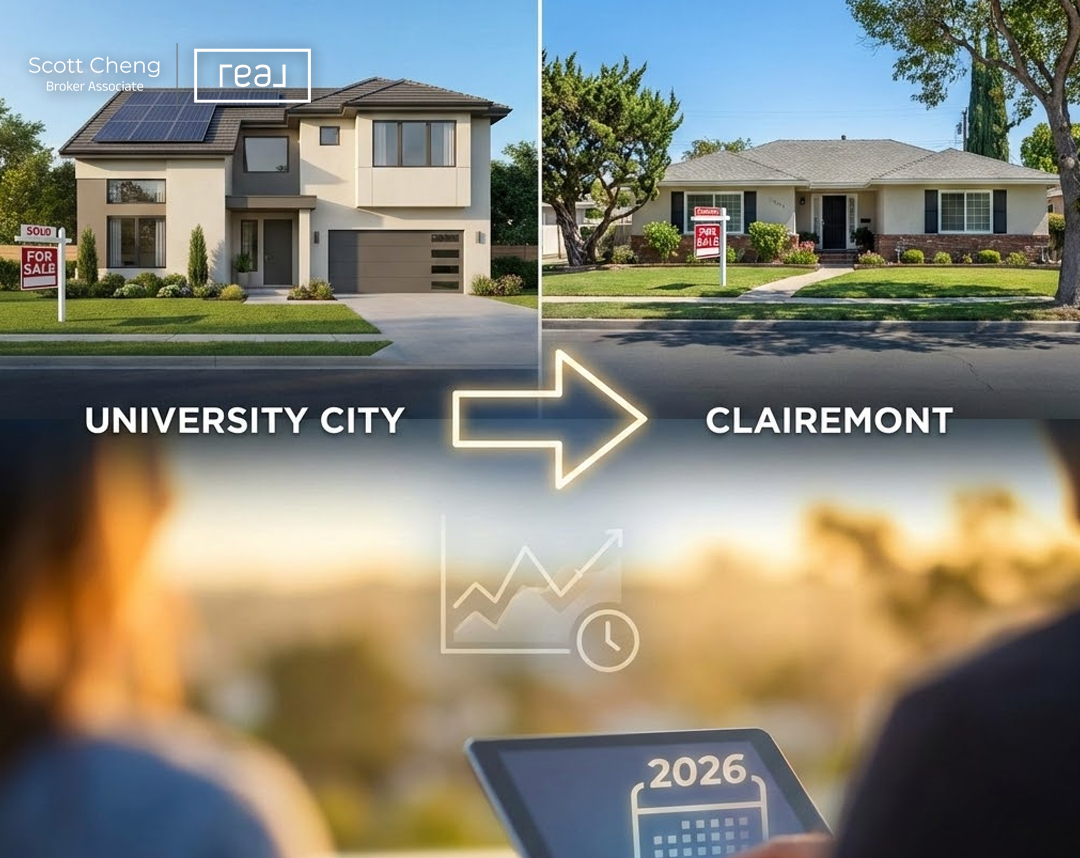
How to Price Your San Diego Home to Sell Fast in 2026: University City vs Clairemont Comparison Using Recent Comps Before Rates Shift
How to Price Your San Diego Home to Sell Fast in 2026: University City vs Clairemont Comparison Using Recent Comps Before Rates Shift
Price 1 to 2 percent below the median comp in University City and at or up to 1 percent above the median comp in Clairemont, using last 90 day MLS sales within 0.5 miles, then list during the spring surge before rates shift.
Why This Matters Right Now
You are entering a market where inventory has jumped year over year, yet supply still sits near 2 months in many submarkets, which keeps competition real. Countywide, the January median sits near 900,000, with detached around 1,050,000 and attached around 680,000. Days on market have lengthened to the mid 40s, while 30 year rates hover near 6.11 percent. That mix means you have to be sharper on price, not softer. Your timing could be the difference between multiple offers in spring and a stale listing by early summer if rates or sentiment shift. The good news is you can use recent MLS comps and a disciplined pricing plan to sell quickly for a strong net. This approach also helps if you are weighing nearby La Jolla or Pacific Beach, where pricing tiers and buyer pools behave differently but still reward precise, data driven strategies.
What You Need to Know Before You Price
You should ground your price in the most recent, closest, and most similar sales. That sounds basic, yet in a shifting market it is where most sellers win or lose. Start with these rules.
- Use MLS closed sales within 0.5 miles and the last 90 days. Widen only if you lack at least three true comps.
- Segment by property type and size. A 1,200 square foot single story in Clairemont does not price off a 2,000 square foot two story in University City.
- Track market tempo. Average days on market in January sits near 44, up from low 20s not long ago. Faster markets support smaller price spreads.
- Respect rate sensitivity. With rates near 6 percent, buyers react strongly to monthly payment differences at each price band.
- Watch inventory at your price tier. Around 2 months of supply favors firm pricing, yet longer days on market demand precision within the first 10 days.
- Lean on accepted benchmarks. Pair local MLS data with broader context from FHFA HPI metro data to gauge direction, then let hyper local comps set your exact list.
- Know your micro drivers. University City benefits from UC San Diego, UTC jobs, and the Mid Coast Trolley. Clairemont benefits from central access, parks, and family buyer demand.
- Plan for concessions. Clairemont averages roughly 2,500 in seller credits, so you should model that into your net if needed.
Your goal is to price to the market that exists today, not the one you remember from last spring.
How to Compare Your Options
You will see clear differences between University City and Clairemont when you compare recent comps, days on market, and buyer profiles. Use those differences to set your list price target and your negotiation plan.
Recent comps suggest:
- University City detached average sale around 1,085,000 with average market time near 32 days in late 2025.
- Clairemont detached average sale around 1,000,000 with average market time near 38 days in late 2025.
In University City, proximity to UC San Diego and the UTC employment center attracts both end users and investors. If your property is well updated and near trolley stops, a 1 to 2 percent under median comp price often lights the fuse on multiple offers, which can push you back to or above comp median by offer deadline. In Clairemont, strong family demand and central access support pricing at the comp median or up to 1 percent above, provided your condition and yard appeal justify it. You should still price with a plan to hold firm on credits or to swap small credits for a stronger price.
Key factors to evaluate:
- Comp quality and recency. Weigh last 90 day MLS sales most heavily, then adjust for square footage, lot, and bed bath count.
- Days on market trend. Faster than 30 days supports firmer pricing, slower than 45 days argues for a tighter list.
- Condition and energy features. Buyers pay up for newer roofs, windows, and HVAC, especially at current rates.
- Micro location. Noise corridors, canyon adjacency, and walkability can swing value five figures either way.
- School pull. University City High and Clairemont High both draw family buyers, which affects weekend traffic and offer counts.
- Concessions vs price. If you list strong in Clairemont, cap credits at a set number and trade on closing speed, not on price.
Your Step by Step Guide
Follow this sequence to price right the first time and sell fast.
1) Pull comps with discipline. Gather MLS closed sales within 0.5 miles and 90 days, plus active and pending competitors. Exclude outliers and fixers if your home is move in ready.
2) Adjust for size and features. Make simple, consistent adjustments per square foot within your immediate micro market. Note recent roofs, windows, HVAC, and solar, which can justify a higher bracket.
3) Identify your price band. In many parts of University City and Clairemont, buyers cluster at key thresholds such as 999,000, 1,050,000, and 1,099,000. Choose the band that aligns with your adjusted comp median.
4) Set a strategic list. University City sellers seeking speed should price 1 to 2 percent under comp median to catalyze early urgency. Clairemont sellers often do best at comp median or up to 1 percent above, provided condition is superior.
5) Time the market. Target the March 15 to May 15 window. University City near UC San Diego often rewards late April listings. Clairemont often performs best in early March to get ahead of spring break travel.
6) Prep with high ROI. Invest about 3,000 in landscaping and curb appeal for an expected premium near 9,000. Budget roughly 7,000 for a kitchen refresh that can yield about 15,000 in perceived value. Stage thoughtfully. These are consistent wins in best neighborhoods in San Diego for families.
7) Launch with a plan. Use professional photography, a 3 day showing sprint, and transparent offer deadlines. Your real estate agent San Diego CA should run a tight playbook.
8) Set pivot triggers. If you have zero offers and fewer than 8 serious showings in the first 10 days, plan a 1 to 2 percent price correction. If traffic is strong but offers are thin, adjust concessions instead of price.
9) Negotiate to your net. In Clairemont, limit credits to around 2,500 where possible. In University City with multiple offers, hold firm on credits and use inspection findings to cap repair credits near 3,000.
10) Safeguard the appraisal. Provide comp packets to the appraiser and consider appraisal gap language if you are above list with multiple offers.
What This Looks Like in San Diego
Here is how this plays out on the ground when you compare two core neighborhoods.
University City
- Typical detached sellers near 1,000,000 to 1,200,000, with strong pull around UTC, UC San Diego, and trolley access.
- If your 3 bed 2 bath 1,600 square foot home has a new roof and windows, and a quiet interior street, you can target a list 1 to 2 percent under the adjusted comp median to spark early bids. Expect quicker offers near 32 days or less if you price cleanly and time spring.
Clairemont
- Typical detached sellers near 900,000 to 1,100,000, with strong interest for single story homes, yards, and central access to I 5, I 8, and SR 52.
- If your 4 bed 2 bath 1,800 square foot home is move in ready with fresh landscaping, you can list at comp median or up to 1 percent above and plan to manage small credits instead of price drops. Expect market time near 38 days on average, faster if you land in a core price band.
Bay Park and Bay Ho
- These adjacent pockets often bridge the gap between Clairemont and coastal premiums. If you back Mission Bay views or canyon open space, your pricing should reflect a premium within your comp set, not a coastal leap.
Neighborhoods to consider in San Diego:
- University City: Strong job center access, trolley connectivity, and top schools. Detached often 1,000,000 to 1,200,000. Ideal if you want both end user and investor interest.
- Clairemont: Family friendly, central location, larger yards. Detached often 900,000 to 1,100,000. Ideal for firm pricing with small credit strategies.
- Bay Park: Bay views, quick access to Mission Bay Park, and a walkable vibe. Detached often 1,100,000 to 1,300,000 for updated homes. Ideal for buyers who want coastal feel without La Jolla pricing.
Nearby Areas Worth Exploring
- La Jolla: If you like University City for schools and proximity, you may also weigh La Jolla for coastal lifestyle. Expect a significant premium and a luxury buyer pool. Strong school pull and beach access support pricing power in best beach neighborhoods in San Diego.
- Pacific Beach: If you like Clairemont for location and yard space but want walkable nightlife and surf access, Pacific Beach can fit. Pricing runs higher than most Clairemont comps, yet well prepped homes still move quickly in spring.
- Del Mar: If you want a high end coastal option with commute access to Sorrento Valley and UTC, Del Mar may appeal. Expect a luxury tier and longer due diligence timelines with precise pricing required.
What Most People Get Wrong
You might think a higher list price gives you more room to negotiate. In today’s market, that mindset can cost you tens of thousands. Overpricing in the first 10 days chokes showing volume, then forces larger discounts later. You also might underweight condition and energy efficiency when rates sit near 6 percent. New roofs, dual pane windows, and modern HVAC can tighten your pricing spread, since buyers price monthly payment and deferred maintenance together. Another common mistake is dodging the spring calendar. University City benefits from late April job movement near UC San Diego, while Clairemont often benefits from early March momentum. Finally, you may overpay in credits instead of guiding the buyer toward financing strategies or targeted inspection credits. Cap repair credits near 3,000 when possible, and use small, high ROI fixes to keep your net intact.
Frequently Asked Questions
Should you price below comps in University City to sell fast in 2026?
Yes, by a small and targeted amount. Price 1 to 2 percent below a clean, recent comp median to create early urgency, then use offer deadlines to lift back to or above that level. This works best when you list in spring and your condition supports value.
Is it smarter to list high in Clairemont and plan for credits?
You can list at comp median or up to 1 percent above if your home is superior in condition. Instead of large price cuts, use a modest credit strategy around 2,500 and cap repair credits near 3,000. This protects your net while meeting buyer expectations.
Does this pricing advice apply to La Jolla or Pacific Beach too?
Yes, with adjustments for luxury and coastal premiums. In La Jolla, comps carry wider feature spreads, so you should tighten to micro comps on your block. In Pacific Beach, seasonality and walkability matter. In both, early spring timing and polished prep are key.
How much should you invest in prep before listing?
Focus on high ROI projects. Landscaping and curb appeal around 3,000 often returns roughly 9,000 in perceived value. A kitchen refresh around 7,000 can yield near 15,000. Stage living areas and primary suite. Prioritize repairs that pass inspection scrutiny.
What if rates drop right after you list?
Do not chase small weekly moves. Monitor showings and offers first. If rates dip meaningfully and your traffic spikes, you can hold price and lean on the momentum. If traffic stays soft, pivot with a small price correction or adjust credits to match buyer budgets.
The Bottom Line
You will sell fastest and for the strongest net when you price to the most recent, closest comps and time the spring window. In University City, set your list 1 to 2 percent under a clean median comp to trigger urgency. In Clairemont, lean on comp median or up to 1 percent above with a smart credit strategy. Use MLS data from the last 90 days within 0.5 miles, adjust for condition and energy upgrades, and set tight pivot rules in your first 10 days. Whether you aim for University City or consider nearby La Jolla and Pacific Beach, these principles put you in control in a market where supply has risen, rates are steady, and buyers are selective.
If you’re ready to explore your options for pricing and selling in San Diego or nearby communities, Scott Cheng at Scott Cheng San Diego Realtor can walk you through the specifics for your situation.
📞 858-405-0002
DRE# 01509668
Leave a Reply