

Buy-and-Hold vs Value-Add Strategies for San Diego Investors 2026: Which Maximizes Portfolio Growth in a Normalizing Market with Lower Rates
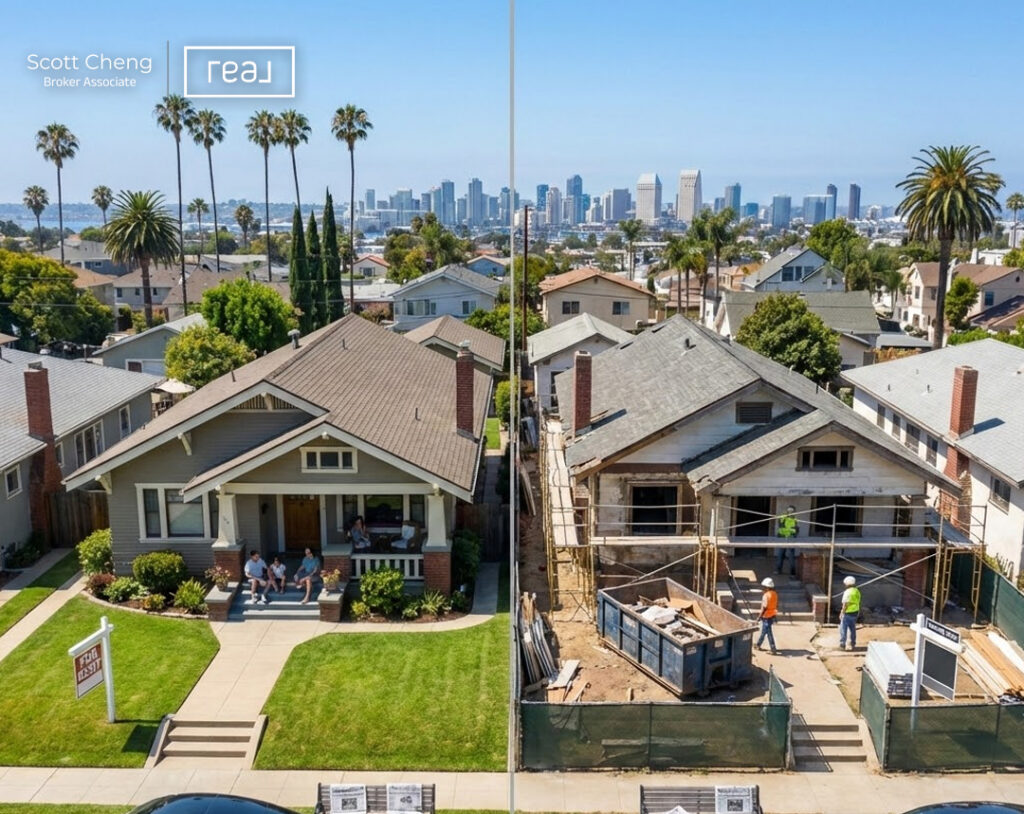
Buy-and-Hold vs Value-Add Strategies for San Diego Investors 2026: Which Maximizes Portfolio Growth in a Normalizing Market with Lower Rates
Buy-and-hold vs value-add in San Diego 2026: which strategy maximizes your portfolio growth as rates normalize and the market stabilizes?
The best path in 2026 depends on your timeline, risk tolerance, and ability to execute renovations. Value-add targets faster equity growth and higher yields, while buy-and-hold delivers steadier cash flow with less operational lift.
Why does the buy-and-hold vs value-add decision matter so much in 2026?
In a normalizing San Diego market, your strategy choice now directly shapes your 3 to 5 year returns — with inventory tight, rents rising, and rates easing, both paths offer real upside but require different execution skills.
You’re navigating a San Diego market that is normalizing after the rate shocks of 2023–2024. Prices have firmed, inventory sits near 1.8 months of supply, and rents are up with vacancies near 3.6 percent. That combination keeps competition strong for well-located assets, even as borrowing costs ease from prior peaks. Your decision between buy-and-hold and value-add now has outsized impact on your 3 to 5 year returns, especially with loan terms, renovation timelines, and rent growth converging to shape your internal rate of return. You’ll find similar dynamics in adjacent communities like Chula Vista and La Mesa, where investor interest remains high and transit access supports durable demand. Choosing the right strategy now positions you to capture stabilized cash flow or accelerated equity growth as rates drift lower and transaction velocity returns.
What do San Diego investors need to know before choosing a strategy?
Ground your choice in how San Diego cash flow and appreciation behave in tight-supply cycles — with rents near $2,300/month, 50% renter share, and improving vacancy, both stabilized and value-add acquisitions pencil when underwritten correctly.
You should ground your decision in how San Diego cash flow and appreciation typically behave in tight-supply cycles. Since 2021, median prices have trended higher after a 2024 dip, and 2026 opened stronger, signaling resilient demand. Meanwhile, renters make up roughly half the market, average apartment rents hover near 2,300 dollars per month, and vacancy has improved. That supports both stabilized acquisitions and renovations that aim to reset rents to market.
Key takeaways you can use now:
- Buy-and-hold typically pencils at 5 to 6 percent stabilized yields in San Diego when you underwrite with realistic expenses, professional management, and reserves.
- Value-add often underwrites to 7 to 9 percent yields if you budget 10 to 20 percent for renovations and hit a 9 to 12 month plan, with lease-up and stabilization built in.
- Financing matters more than ever. Many investors use agency debt near 75 percent loan-to-value with fixed 10-year terms, while bridge options at 65 percent LTV fund heavier rehabs.
- With 1.8 months of supply and unemployment low, rent growth is supported by constrained new supply. Roughly 45 percent of the pipeline is for-rent, which helps but does not flood the market.
- Your team is a differentiator. The best San Diego realtor or real estate broker who lives multifamily can help you vet off-market deals, permitting, and management quality.
How should San Diego investors compare buy-and-hold vs value-add options in 2026?
Start with side-by-side underwriting and an honest look at your execution capacity — stress-testing both strategies for 50 to 75 basis points of rate movement at refinance reveals which path truly fits your situation.
Begin with a side by side underwriting and an honest look at your execution capacity. Compare actual stabilized cash flows for buy-and-hold to pro forma rents after renovation for value-add. Stress test both for modest rent growth and 50 to 75 basis points of rate movement at refinance.
Pros and cautions:
- Buy-and-hold — Pros: Lower renovation risk, steadier cash flow, fewer surprises, easier to finance with fixed-rate agency debt. Cautions: Lower initial yield, slower equity growth, less chance to force appreciation.
- Value-add — Pros: Higher potential yield, ability to force appreciation quickly, reposition to stronger tenant base. Cautions: Construction risk, permitting timelines, higher vacancy during rehab, heavier management.
Key factors to evaluate:
- Basis and capex: Your entry price per unit and a realistic 10 to 20 percent renovation budget control returns. Overrun buffers of 10 percent help you avoid negative surprises.
- Timeline and carry: A 9 to 12 month rehab means carrying interest, taxes, and partial vacancy. Model both best case and conservative lease-up.
- Financing and exit: Blend fixed-rate stability with flexibility. If you plan to refinance, underwrite to conservative net operating income and reasonable debt service coverage, not just pro forma rent hopes.
What is the step-by-step process for executing a San Diego investment strategy in 2026?
Follow these eight steps to move from strategy selection to stabilized operations — each step builds on the last to reduce risk and maximize returns whether you choose buy-and-hold or value-add.
1) Define your outcome. Decide if you want quicker equity growth or stable income. Set a minimum acceptable cash-on-cash and IRR for each path.
2) Build your team. Line up a top San Diego real estate agent who specializes in multifamily, a lender with agency and bridge options, and a property manager with proven lease-up chops.
3) Source deals. Combine on-market inventory with off-market leads. Work closely with a real estate broker in San Diego who can pre-screen rent rolls, maintenance logs, and unit mixes.
4) Underwrite with discipline. Use conservative rent growth, full loaded expenses, and a vacancy factor. Price in professional management even if you self-manage later. A best practice is to target 1.25 debt service coverage at stabilized operations.
5) Verify permits and zoning. For value-add and ADU angles, confirm the City of San Diego ADU incentive details, fee waivers through 2026, and timelines by neighborhood. Transit-oriented overlays near trolley lines can change density and parking requirements.
6) Price construction risk. Obtain at least two bids, confirm lead times, and stage the rehab to keep partial income flowing. Consider a draw schedule that aligns with milestones.
7) Optimize operations. For buy-and-hold, lock in a competitive fixed rate and prioritize renewals with modest increases. For value-add, deliver modern finishes that command clear rent premiums for your submarket.
8) Execute and monitor. Track actuals versus pro forma monthly. Adjust leasing concessions, marketing, or finish levels to hit stabilized rents on schedule.
What does buy-and-hold vs value-add look like in specific San Diego neighborhoods?
San Diego’s tight inventory and strong renter demand create opportunities in both strategies — value-add premiums are clearest in older-stock submarkets with transit access, while buy-and-hold shines near stable employers and top schools.
San Diego’s tight inventory, strong renter share, and improving vacancy set the stage for both strategies. You’ll see the clearest value-add premiums in submarkets with older stock, improving walkability, and transit proximity. Buy-and-hold performs best near stable employers and schools with low turnover risk. If you focus on the best neighborhoods in San Diego for consistent absorption, you can still hit solid yields even as rates drift lower.
Neighborhoods to consider in San Diego:
- City Heights: Often a top choice for cash flow. Average cap rates near the low 6 percent range, median 2 bed rents around 2,100 dollars, and diverse tenant demand. Value-add scope on 1960s–1980s buildings with cosmetic and systems upgrades.
- Barrio Logan: Emerging arts and maker district with strong walkability. Average cap rates in the mid 5 percent range and 2 bed rents around 2,400 dollars. Warehouse-to-loft conversions and small multifamily repositioning can unlock upside.
- National City: Older multifamily stock and an industrial buffer create steady workforce demand. Cap rates around the low 5 percents, median pricing often lower than core San Diego. Buy-and-hold is common, and light value-add can work well.
If you also track areas popular with families and long-term tenants like La Jolla and Del Mar, you’ll find lower cap rates but strong school-driven demand. That often suits conservative buy-and-hold investors who view stability as the primary objective.
Nearby areas worth exploring:
- Chula Vista: Strong South Bay demand with convenient freeway and trolley access. You’ll find a wider range of 4 to 20 unit buildings and slightly better entry prices than many central neighborhoods. Renovation potential is solid, and buy-and-hold stability is attractive.
- La Mesa: East County hub with a walkable village core and trolley stops. Older garden-style buildings allow practical renovations at manageable budgets. Many investors like La Mesa for low vacancy and reliable tenant profiles.
- Oceanside: North County coastal city with mixed vintage stock. ADU and small value-add plays can perform well, especially inland. Timelines for permitting can be a bit longer than central San Diego, so plan your carry accordingly.
What do most investors get wrong about buy-and-hold and value-add in San Diego?
The biggest mistakes are underestimating carry costs and management intensity on value-add deals, and assuming buy-and-hold is truly passive — both strategies demand active oversight and disciplined financing to protect returns.
You might think value-add always wins because it shows higher projected yields, but unmodeled carry costs, permitting delays, and contractor bottlenecks can erode returns quickly. Many investors also underestimate ongoing management intensity during lease-up. On the flip side, buy-and-hold is not passive if you miss deferred maintenance or overpay for a low cap rate asset in a flat-rent pocket. Another miss is ignoring financing structure. In a normalizing rate environment, locking the right debt product is often as valuable as a marginal price discount. Finally, you avoid disappointment by aligning neighborhood strategy with tenant demand. For example, a high-end renovation in a workforce area can overshoot the achievable rent, while under-improving a unit near the beach can leave money on the table. Work closely with a real estate broker in San Diego who lives submarket data and with property managers who know what finishes actually move rents.
Frequently Asked Questions
Which strategy typically maximizes portfolio growth in 2026?
If you can execute renovations on time and budget, value-add usually delivers higher IRR through forced appreciation and rent resets. If your priority is steady cash flow with less risk and complexity, buy-and-hold typically wins. Match the choice to your execution capacity.
How do lower rates change the math for San Diego investors this year?
Lower rates reduce debt service, improve coverage, and boost cash-on-cash for both strategies. Value-add benefits at refinance if rates stabilize lower, while buy-and-hold enjoys improved day one cash flow. Always stress test for modest rate movement to protect margins.
Does buy-and-hold vs value-add advice apply to Chula Vista and La Mesa too?
Yes. Both areas share San Diego’s constrained supply and strong renter base. Chula Vista offers slightly better entry pricing, which can lift value-add returns. La Mesa’s transit access and village core favor buy-and-hold stability. Underwrite each submarket’s rent ceiling carefully.
Where do ADUs fit into a San Diego investment strategy?
ADUs can be a targeted value-add on small multifamily or SFR-plus lots. With local fee incentives through 2026 and supportive overlays near transit, you can add rentable area and lift yield. Model permitting times, utility upgrades, and separate meter economics before committing.
How should you pick your investment team in San Diego for best results?
Prioritize a San Diego realtor or real estate agent with proven multifamily closings, a lender fluent in agency and bridge programs, and a manager experienced in lease-ups. Vet real estate companies and top producing agents in San Diego by asking for case studies and references.
What yields can San Diego investors realistically expect from each strategy?
Buy-and-hold typically pencils at 5 to 6 percent stabilized yields when underwritten with realistic expenses, management, and reserves. Value-add often underwrites to 7 to 9 percent yields with a 10 to 20 percent renovation budget and a 9 to 12 month execution plan.
The Bottom Line
If you have the crew, capital reserves, and tolerance for complexity, value-add is your faster lane to portfolio growth in 2026 as rates normalize and demand stays firm. If you prefer dependable income and lower operational lift, buy-and-hold is the practical winner. Both paths work in San Diego’s tight market when you buy right, finance smart, and manage professionally. Whether you’re focused on core neighborhoods or also weighing Chula Vista and La Mesa, the same principles apply: underwrite conservatively, verify permits, and choose submarkets where tenant demand supports your plan.
If you’re ready to explore your options for buy-and-hold or value-add in San Diego or nearby communities, Scott Cheng at Scott Cheng San Diego Realtor can walk you through the specifics for your situation.
📞 858-405-0002
DRE# 01509668