

Zoning and ADU Conversion Opportunities for City Heights San Diego Multifamily Investors
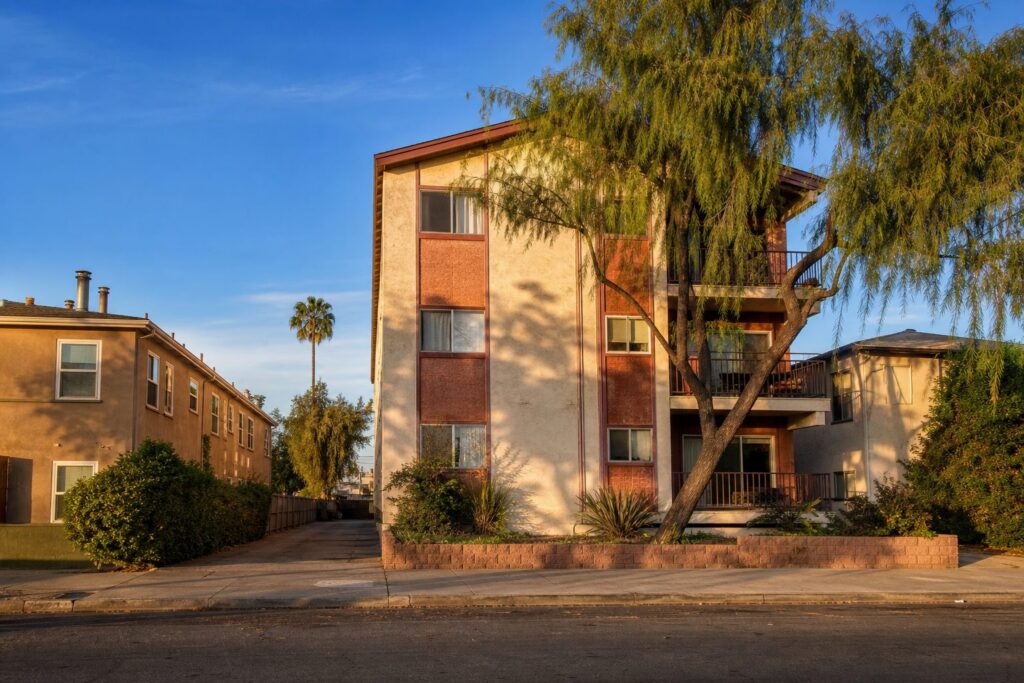
What are the real zoning and ADU conversion opportunities you need to evaluate before buying a 6-to-10 unit multifamily property in City Heights, San Diego, in 2026?
You need to verify the property’s base zone designation (RM-2-5 or RM-3-7), confirm whether the existing unit count is legally conforming, evaluate ADU conversion eligibility under California law, and assess how the Mid-City Communities Plan Update could reshape density allowances on your parcel.
Why City Heights Zoning Matters for San Diego Multifamily Investors Right Now
City Heights is one of the most dynamic multifamily submarkets in San Diego, and the regulatory landscape is shifting beneath it. The ongoing Mid-City Communities Plan Update has the potential to rezone significant portions of the neighborhood, particularly along transit corridors like El Cajon Boulevard and University Avenue. If you’re evaluating a 6-to-10 unit acquisition in 2026, the zoning story is not just about what you can do today. It’s about what the city may allow you to do tomorrow.
Here’s the broader context: San Diego’s multifamily vacancy rate sits at 5.5% as of Q2 2026, but Class B and C properties (which describes nearly every 6-to-10 unit building in City Heights) are running vacancy rates as low as 3.3%, according to Moody’s data. Average asking rents across San Diego reached $2,453 per unit per month, up 0.82% year-over-year. The demand is durable, the supply pipeline is contracting, and City Heights sits in the sweet spot. But only if you do the zoning homework first.
How to Confirm Your City Heights Property’s Base Zone Designation
Before you write an offer, you need to know exactly what zone your target property sits in. This sounds basic, but I’ve seen investors skip this step and discover after closing that their building is legally nonconforming. A cloudy mind can’t make decisions, and nothing clouds your thinking faster than finding out your 8-unit building only has permits for 6.
The City of San Diego’s ZAPP (Zoning Application) tool lets you verify the base zone designation for any parcel. For a 6-to-10 unit property in City Heights, you’re looking for one of these residential multifamily zones:
- RM-2-5 allows moderate-density multifamily development
- RM-3-7 allows higher-density multifamily, typically found closer to transit corridors
What I tell my clients is to cross-reference the base zone with the San Diego Municipal Code Chapter 13, Article 01, Division 04. This section spells out exactly which uses your zone allows, along with the development regulations for setbacks, heights, and floor area ratio. You want to confirm not just that the property can legally hold its current unit count, but also whether there’s room to add density.
City Heights is a patchwork. You’ll find RM-zoned parcels on one block and RS (single-family residential) zoning on the next. The 16 distinct neighborhoods within City Heights, from Teralta East and Teralta West near University Avenue to Azalea Park and Castle farther east, each carry different zoning profiles. One investor I worked with was evaluating a 7-unit building near Fairmount Avenue and assumed the entire corridor was multifamily-zoned. Two parcels over, the zoning shifted to RS. That distinction matters enormously when you’re thinking about future expansion or ADU potential.
ADU Conversion Rules for Existing City Heights Multifamily Properties
California’s ADU laws are some of the most investor-friendly in the country, and they apply specifically to existing multifamily properties. Here’s what you can do on a 6-to-10 unit building in City Heights under current state law:
- Conversion ADUs: You can convert existing non-habitable space (storage rooms, laundry areas, garages, carports) into ADUs. The formula allows up to 25% of existing units or at least one ADU, whichever is greater. On an 8-unit property, that means you could convert up to 2 non-habitable spaces into legal dwelling units.
- Detached new-construction ADUs: You’re allowed up to 2 detached ADUs on a multifamily lot, each up to 800 square feet and 16 feet in height.
- Parking: No additional parking is required for ADUs in many circumstances, especially when the property is located within a Transit Priority Area.
That last point is critical in City Heights. MTS bus routes run along University Avenue and El Cajon Boulevard, and multiple parcels in the neighborhood fall within the City of San Diego’s Transit Priority Area designation. The TPA Multifamily Residential Parking Standards can reduce or eliminate parking requirements for your entire project, not just the ADU portion.
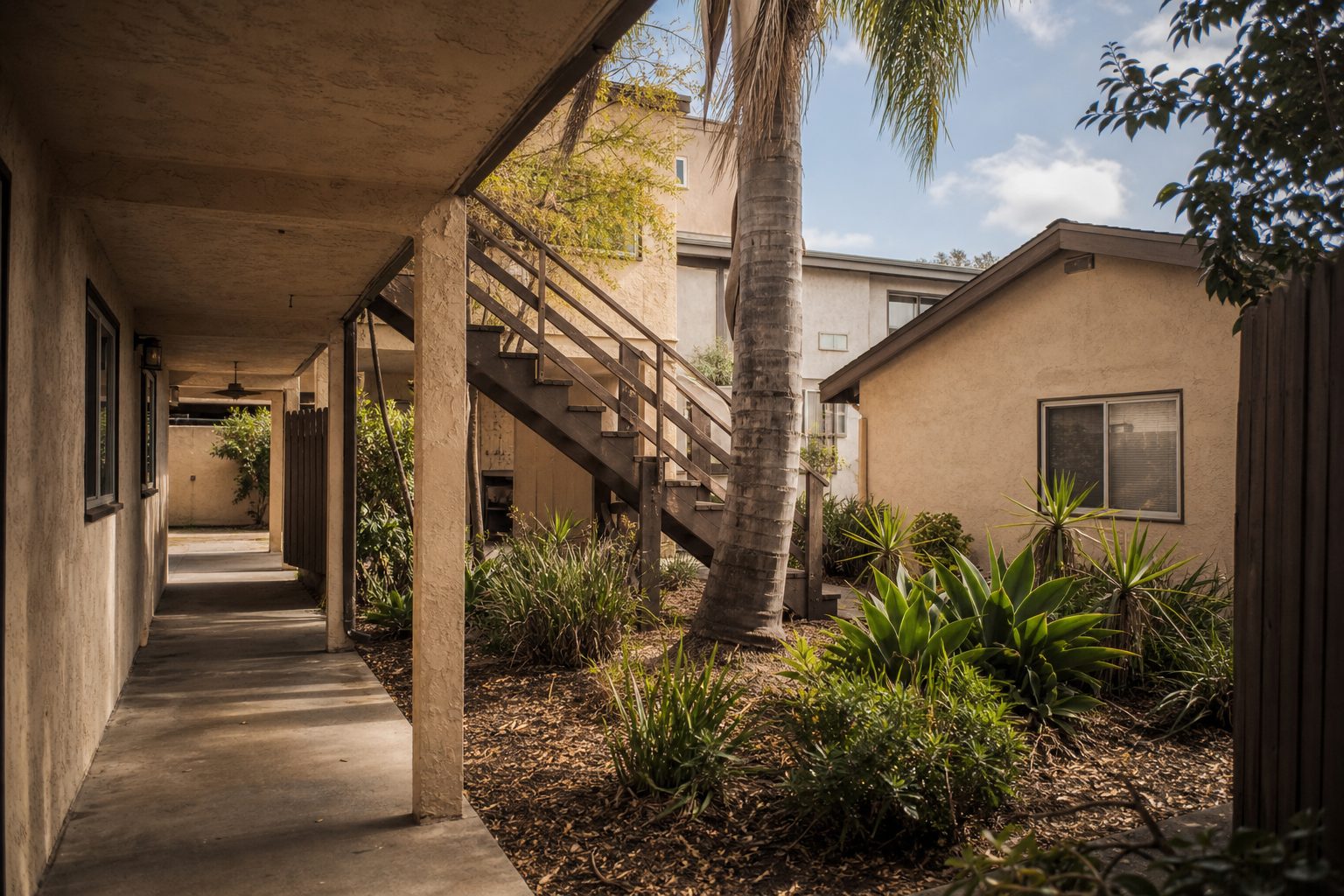
One scenario that comes up frequently: an investor purchases a 6-unit property near El Cajon Boulevard with a detached two-car garage and a large storage room at the back of the lot. Under current law, they convert the garage and the storage room into two ADUs, then build one additional detached 800-square-foot unit. That’s 9 rentable units where there were 6, and no additional parking spaces required because the property qualifies as a TPA site. The rental income improvement on a move like that can fundamentally change the property’s cash flow profile.
The Mid-City Communities Plan Update and What It Means for City Heights Density
If you’re buying and holding in City Heights, the Mid-City Communities Plan Update is the single most important policy development to track. The City of San Diego City Planning Department is actively working with the community to complete this plan, and it has the potential to upzone parcels along major arterials, increase allowable floor area ratios, and expand the boundaries of transit-oriented development zones.
What should you evaluate before making an offer?
- Current zoning vs. proposed zoning: Check whether the parcel falls within a corridor that may be upzoned. Properties along El Cajon Boulevard, University Avenue, Fairmount Avenue, and Euclid Avenue are the most likely candidates for increased density.
- Legal nonconformity risk: Some older City Heights buildings have more units than the current zoning technically allows. If the plan update brings the zoning in line with the existing use, you gain legal conformity without any construction. If the update goes the other direction, you could face restrictions on rebuilding if the structure is damaged.
- FAR and height allowance changes: Higher floor area ratios and increased height limits could allow vertical additions or lot redevelopment down the road.
Having closed over 275 transactions in San Diego County during my 18 years as a Broker Associate, I’ve seen how plan updates move values on paper before a single shovel hits the ground. The key is positioning yourself on the right side of that shift.
How Cap Rates and Pricing in San Diego Affect Your City Heights ADU Strategy
Understanding the financial framework helps you decide whether to pursue ADU conversion or simply acquire an already-optimized building. Here’s where San Diego’s multifamily market stands in Q2 2026:
- Average multifamily sales price: $398,509 per unit, essentially flat year-over-year
- Cap rates: Averaging 4.7%, with a range of 4.25% to 5.5% depending on location and asset class
- Net absorption: 3,827 units year-to-date, up 39.2% year-over-year
- Units under construction: Down 20.9% from a year ago, signaling a tightening supply pipeline
So what does that actually mean for your wallet? A 6-unit property at roughly $400,000 per unit puts your acquisition around $2.4 million. If you add 2 to 3 ADUs and bring the unit count to 8 or 9, you’re spreading your per-unit cost lower while capturing rental income at market rate. With average asking rents at $2,453 per month across San Diego and Class B/C vacancy at 3.3%, the numbers can work, but only if you’ve verified the zoning allows it.
One investor I walked through this analysis had been looking at a 7-unit building in the Corridor neighborhood of City Heights. After confirming the RM-3-7 zoning, identifying two convertible storage spaces, and factoring in TPA parking relief, the projected unit count jumped to 10. That changed the deal from a marginal hold to a strong performer.
SB 9 and Adjacent Parcel Strategy in City Heights
Here’s something many investors overlook. SB 9 (California Senate Bill 9) permits multi-dwelling unit development and urban lot splits on parcels zoned for single-family use, specifically RS, RE, RX, and RT zones. It does not apply to parcels already zoned multifamily.
However, if you’re considering assembling adjacent parcels in City Heights to expand your footprint, some of those neighboring lots may be RS-zoned. In that case, SB 9 becomes a tool for adding units on the adjacent parcel while your primary building operates under RM-zone rules. It’s a more complex strategy, but in a neighborhood as diverse as City Heights (16 distinct sub-neighborhoods, each with its own zoning character), the opportunity exists.
Frequently Asked Questions About City Heights Zoning and ADU Opportunities
What zoning do I need for a 6-to-10 unit property in City Heights?
You’ll typically need RM-2-5 or RM-3-7 zoning to legally operate a 6-to-10 unit multifamily building. Verify the specific zone through the City of San Diego’s ZAPP tool before making any offer. Some older buildings operate as legally nonconforming uses under lower-density zones, which creates risk if you need to rebuild.
How many ADUs can I add to an existing multifamily property in City Heights?
On an existing multifamily building, California law allows conversion of non-habitable spaces into ADUs (up to 25% of existing units or at least one, whichever is greater) plus up to 2 detached new-construction ADUs at 800 square feet each. A 6-unit building could potentially add 3 to 4 units total.
Do I need to add parking for ADUs in City Heights?
In many cases, no. Properties within a Transit Priority Area, which includes parcels near the major bus corridors along University Avenue and El Cajon Boulevard, can qualify for reduced or eliminated parking requirements under the City of San Diego’s TPA Multifamily Residential Parking Standards.
What is the Mid-City Communities Plan Update?
This is an active plan update by the City of San Diego that covers City Heights and surrounding communities. It could rezone parcels to allow higher density, particularly along transit corridors. For investors, this creates potential upside if your parcel gets upzoned.
Does SB 9 apply to multifamily-zoned property in City Heights?
No. SB 9 only applies to parcels zoned for single-dwelling unit development (RS, RE, RX, RT zones). If your property is already RM-zoned, SB 9 does not provide additional entitlements. It can be relevant if you’re assembling adjacent single-family-zoned lots.
What are Class B and C vacancy rates in San Diego right now?
As of early 2026, Class B and C multifamily properties in San Diego have a vacancy rate of approximately 3.3%, compared to 6.4% for Class A properties. This makes workforce housing in neighborhoods like City Heights particularly resilient.
What cap rate should I expect on a City Heights multifamily purchase?
San Diego multifamily cap rates average 4.7% in Q2 2026, with a general range of 4.25% to 5.5%. City Heights properties in the 6-to-10 unit range typically fall in the middle to upper portion of that range.
How do I check if a City Heights property is legally nonconforming?
Pull the property’s permit history through the City of San Diego Development Services Department. Compare the permitted unit count against the base zone’s density allowance. If the building has more units than the zone allows, it may be operating as a legally nonconforming use.
What is the average per-unit price for San Diego multifamily in 2026?
The average multifamily sales price in San Diego was $398,509 per unit in Q2 2026, essentially flat with a 0.25% increase year-over-year.
Should I wait for the Mid-City Plan Update before buying in City Heights?
Waiting carries its own risk. The plan update timeline is uncertain, and properties positioned for upzoning may appreciate before the update is finalized. What I advise is to buy based on current zoning viability and treat any future upzoning as upside, not a requirement for the deal to pencil.
The Bottom Line on City Heights Multifamily Zoning and ADU Opportunities
City Heights offers one of the clearest value-add multifamily plays in San Diego right now. With Class B and C vacancy rates at 3.3%, average rents climbing, and the supply pipeline contracting, the demand side is strong. But the real opportunity lives in the zoning details: confirming your base zone, identifying ADU conversion potential, leveraging Transit Priority Area parking relief, and staying ahead of the Mid-City Communities Plan Update.
With 275 five-star reviews and 18 years helping San Diego buyers and investors navigate exactly these decisions, I bring a calm, data-informed approach to multifamily acquisitions. I also provide a complimentary attorney review of contracts and disclosures, covered by me, even if escrow cancels. If you’re evaluating a 6-to-10 unit opportunity in City Heights and want clean information before you commit, reach out at 858-405-0002. I’m Scott Cheng, Broker Associate with REAL Brokerage, and I’m here to help you move forward with confidence.