Is Logan Heights San Diego a Good Neighborhood for First-Time Buyers in 2026?
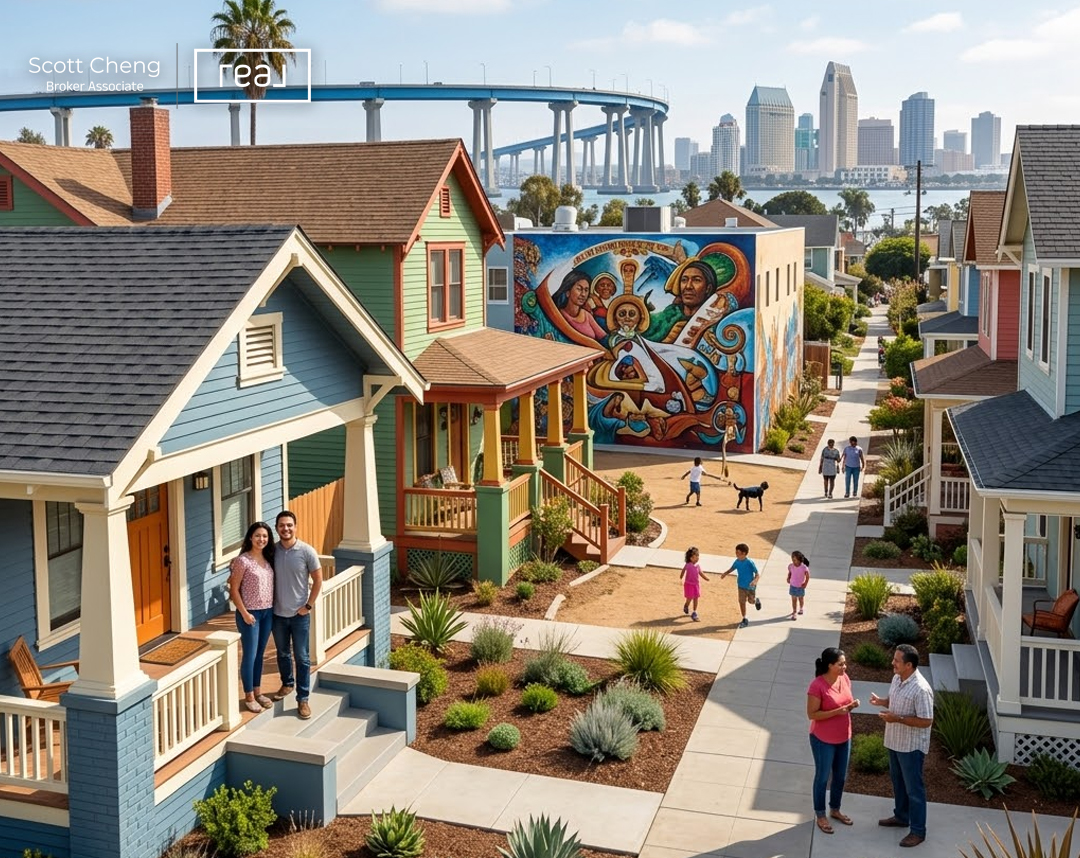
Is Logan Heights, San Diego a smart buy for first-time homeowners in 2026, or should you wait until the neighborhood’s transformation is more complete?
Why Logan Heights San Diego Matters for First-Time Buyers Right Now
Here’s the reality I share with every first-time buyer who walks into my office: only about 13% of San Diego County households can afford a median-priced home. The county median for single-family homes has crossed the $1,000,000 mark. That number alone pushes most first-time buyers out of traditional neighborhoods entirely.
Logan Heights changes the math. With a median list price around $690,000 and an average price per square foot of roughly $597, this neighborhood sits well below what you’d pay in North Park ($950,000 median), Mission Hills, or any coastal community. For context, the conforming loan limit in San Diego County is $1,104,000, meaning Logan Heights properties fit comfortably within conventional financing.
Having closed over 275 transactions across San Diego County over the past 16 years, I’ve watched this neighborhood’s trajectory closely. What I tell my clients is simple: a cloudy mind can’t make decisions, so let me give you the clear picture.
Logan Heights San Diego Pricing: What You’re Actually Looking At
Let’s talk numbers, because this is where the opportunity gets real.
As of early 2026, Logan Heights had 31 listed properties with an average of 50 days on market. New construction condos and townhomes in the area are listing between $599,000 and $690,000. Compare that to North Park, where you’re looking at $800,000 to $1.1 million for a bungalow with ADU potential, and the difference is striking.
What does that actually mean for your wallet? Let me break it down:
- Logan Heights at $690,000 with 10% down ($69,000): Your principal and interest on a $621,000 loan at approximately 6.2% runs around $3,800 per month before taxes and insurance
- North Park at $950,000 with 20% down ($190,000): You’re looking at roughly $4,750 per month on a $760,000 loan, and you need nearly three times the down payment
One first-time buyer I recently worked with, a software engineer relocating from Austin, had been looking exclusively in North Park. After we ran the numbers side by side, she realized that Logan Heights gave her a path to homeownership two to three years sooner than waiting and saving for a North Park purchase. She closed on a renovated townhome for under $650,000 and is already exploring ADU options for her backyard.
The Gentrification Question in Logan Heights San Diego: Risk vs. Reward
You’ve probably heard conflicting stories about Logan Heights. Some people call it “the next North Park.” Others warn you that gentrification is unfinished and unpredictable. Both perspectives contain truth, and your job is to understand the nuance.
What the Data Shows About Logan Heights San Diego’s Trajectory
Between 2016 and 2024, home values in Logan Heights dramatically increased, making it one of the fastest-growing submarkets in the city. Infrastructure investment, cultural preservation projects, and proximity to downtown have all fueled demand. The neighborhood’s rich Mexican-American heritage, vibrant murals, and community-driven revitalization efforts are drawing new residents and businesses.
The Block-by-Block Reality
Here’s what I explain to every buyer considering Logan Heights: this is a neighborhood where the difference between one block and the next can feel significant. Some streets feature beautifully renovated homes alongside new construction. Others still have deferred-maintenance properties and vacant lots waiting for development. This unevenness is exactly what creates opportunity, but it also means you need someone walking those streets with you who knows what to look for.
Properties here average 50 days on market versus 18 to 32 days citywide, which actually works in your favor. You have more negotiating room and less of the frantic multiple-offer competition you’d face in established neighborhoods.
Real Risks First-Time Buyers Should Understand in Logan Heights San Diego
I would never sugarcoat the challenges. That’s not how I operate, and my 180 five-star client reviews reflect that honesty. Here’s what you should weigh carefully:
Investor Competition in Logan Heights
Cash investors are actively targeting Logan Heights for value-add renovation opportunities and ADU construction. If you’re using FHA or conventional financing, your offer may compete against all-cash buyers who can close in two weeks. The strategy I use with my clients is to get your pre-approval locked in early, strengthen your offer with competitive terms, and work with a listing agent who understands that financed offers from qualified buyers are just as solid.
Insurance: The Hidden Cost Nobody Mentions
Let me share something I’ve started doing with every buyer, including those looking at Logan Heights. We run an insurance quote during the first 48 hours of a home search. In California, affordability is no longer just about the mortgage; it’s about the total cost of protection. Nearly 400,000 homeowners insurance policies have been canceled statewide since 2021, and FAIR Plan enrollment has increased by 43% in just 15 months. While Logan Heights isn’t in a wildfire zone, older properties with deferred maintenance can trigger higher premiums. I always recommend verifying your insurance options before writing an offer.
Federal Spending Sensitivity
San Diego has over 115,000 active-duty military personnel. A prolonged federal government shutdown could create a transactional freeze in lower-priced markets that rely heavily on VA and FHA loans. Logan Heights, as an affordable entry point, would feel this more than Carmel Valley or La Jolla.
Down Payment Assistance Programs That Work in Logan Heights San Diego
Here’s where first-time buyers get a genuine advantage. Several programs are specifically designed for neighborhoods at this price point:
- SDHC First-Time Homebuyer Low-Income Program: Up to 19% of the purchase price as a deferred-payment second trust deed at 3% interest, plus up to $10,000 for closing costs. You need to earn no more than 80% of Area Median Income.
- SDHC Middle-Income Program: A $40,000 deferred down payment assistance loan plus a $10,000 closing costs grant for buyers earning between 80% and 150% of AMI.
- CalHFA MyHome: Up to $17,500 in deferred assistance.
- GSFA Platinum: Approximately $48,000 as a gift on a median-priced home.
- Chenoa Fund: 3.5% forgivable after 36 on-time payments.
One young couple I guided through the SDHC Middle-Income Program last year was stunned when they realized the $40,000 in deferred assistance, combined with their savings, got them into a Logan Heights property with less out of pocket than they expected to pay for a security deposit on a rental in the Gaslamp. They went from “maybe in three years” to homeowners in about 90 days.
Since 1988, the San Diego Housing Commission has helped more than 6,100 families buy their first homes. These programs are real, funded, and available, but they require a real estate agent in San Diego who knows the application timelines and can coordinate with participating lenders.
How Logan Heights San Diego Compares to Other Affordable Neighborhoods
You might be weighing Logan Heights against other neighborhoods in your price range. Here’s how I’d frame the comparison:
- Logan Heights ($690,000 median list): Closest to downtown, strongest cultural identity, highest ADU potential, most active gentrification trajectory
- City Heights (similar price range): Larger geographic area, more scattered development, strong immigrant community fabric, less downtown proximity
- Encanto/Southeast San Diego: Lower entry price in some pockets, but farther from the job centers that drive long-term appreciation
Logan Heights’ proximity to the Port of San Diego and downtown makes it an especially strong play for young professionals who work in the urban core, biotech, or healthcare sectors. That commute advantage is something you can’t retrofit later.
Frequently Asked Questions About Buying in Logan Heights San Diego
Is Logan Heights San Diego safe for first-time buyers in 2026?
Logan Heights has experienced significant improvements in safety and livability over the past decade. Community-driven initiatives and infrastructure investment have enhanced the neighborhood noticeably. That said, quality varies block by block, and I always recommend touring the specific streets around any property you’re considering at different times of day.
What is the median home price in Logan Heights San Diego right now?
As of early 2026, the median list price in Logan Heights is approximately $690,000, with an average price per square foot around $597. New construction condos and townhomes list between $599,000 and $690,000, making it one of the most affordable central San Diego neighborhoods.
Can I use FHA financing to buy in Logan Heights San Diego?
Yes. Logan Heights pricing aligns well with FHA loan limits, and many properties in the neighborhood qualify for FHA financing. The key is working with a San Diego broker who can position your FHA offer competitively against cash buyers.
How long do homes sit on the market in Logan Heights San Diego?
Logan Heights properties average about 50 days on market, compared to the citywide average of 18 to 32 days. This gives you more time to negotiate and less pressure from competing offers.
What down payment assistance programs can I use for Logan Heights?
The SDHC First-Time Homebuyer programs (both Low-Income and Middle-Income tiers), CalHFA MyHome, GSFA Platinum, and Chenoa Fund all apply to Logan Heights purchases. Eligible buyers can access $10,000 to $50,000 or more in assistance.
Is Logan Heights San Diego a good investment for building an ADU?
Absolutely. San Diego’s ADU-friendly zoning reforms make Logan Heights one of the stronger ADU opportunity zones. Older single-family homes with unused yard space qualify, and rental ADUs in this area can generate $1,800 to $3,500 monthly.
How does Logan Heights San Diego compare to North Park for first-time buyers?
North Park’s median home price is around $950,000, roughly $260,000 more than Logan Heights. North Park offers an 88 Walk Score and an established dining and nightlife scene, but the price difference means most first-time buyers simply cannot qualify there without substantial savings or equity from another sale.
Will gentrification in Logan Heights San Diego increase my home value?
Between 2016 and 2024, Logan Heights was one of the fastest-appreciating submarkets in San Diego. Infrastructure investment, cultural preservation, and proximity to downtown continue to drive demand. While future appreciation is never certain, the trajectory is supported by strong fundamentals.
What should I watch out for when buying older homes in Logan Heights San Diego?
Older residential stock in Logan Heights can have deferred maintenance issues including outdated electrical, foundation concerns, and roofing. I always recommend a thorough home inspection, and I provide my buyers with a complimentary attorney review of contracts and disclosures for added protection.
Do I need a San Diego real estate broker who specializes in Logan Heights?
Working with an experienced real estate broker in San Diego who understands transitional neighborhoods is essential. You need someone who can evaluate block-by-block quality, navigate investor competition, and coordinate financing with assistance programs. With 16 years and 275 closed transactions across San Diego County, I bring that kind of focused guidance.
The Bottom Line on Buying in Logan Heights San Diego in 2026
Logan Heights is not a gamble. It’s a calculated decision. You’re buying into a neighborhood with legitimate affordability advantages, strong cultural roots, active investment from both the public and private sectors, and proximity to downtown San Diego that most first-time buyers simply cannot access anywhere else at this price point.
Is it a finished product? No. And that’s precisely why the pricing still works for first-time buyers. Waiting until gentrification is “done” means waiting until the prices look like North Park, and by then, you’ve missed your window.
If you want a calm, data-informed plan for buying your first home in Logan Heights or anywhere else in San Diego, I’d welcome the conversation. I’m Scott Cheng, Associate Broker at Real Brokerage, and you can reach me at 858-405-0002. Let’s get you clear information so you can make a confident decision.
*DRE# 01509668. This blog is for informational purposes only and does not constitute legal or financial advice. Market conditions change, and you should consult qualified professionals for your specific situation.*
Have Questions About San Diego Real Estate?
Scott Cheng provides free, no-obligation consultations for buyers, sellers, and investors.
Schedule a Consultation