Real Utility and Infrastructure Costs for Raw Land in Otay Ranch San Diego in 2026
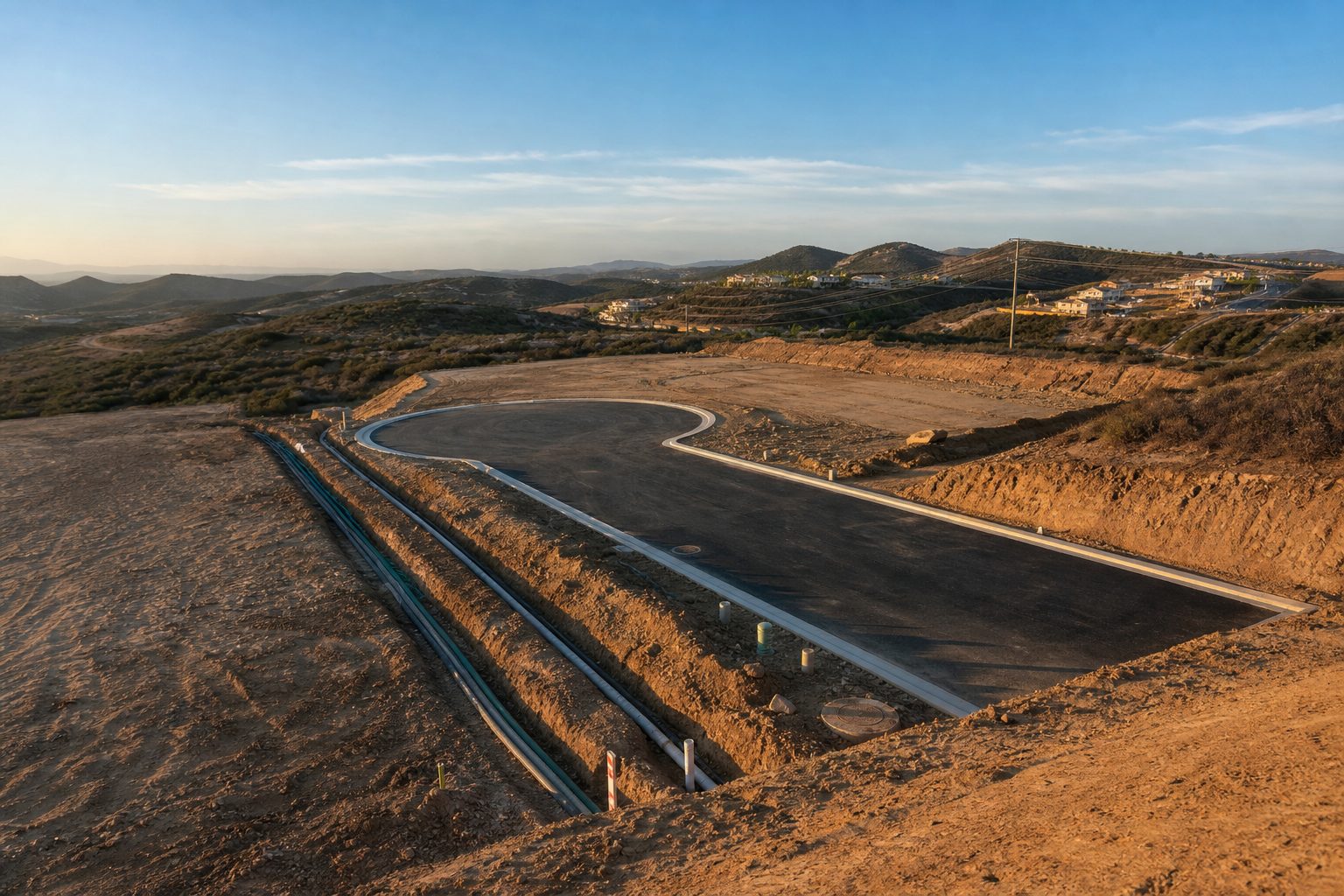
What are the real utility extension and infrastructure costs you need to budget for before buying raw land in Otay Ranch, San Diego, in 2026, including water, sewer, and road access?
Expect to budget between $75,000 and $150,000 in total site development costs for raw land in the San Diego County area, per local contractor and permitting estimates, with the final number depending heavily on your parcel’s distance from existing utility mains and road access.
Why Otay Ranch Infrastructure Costs Matter Right Now
Otay Ranch is a 23,000-acre master-planned site in southern San Diego County, and new phases are actively coming online. Village 13 alone, located in the unincorporated County portion, will bring up to 2,750 homes after Baldwin & Sons reduced the development footprint by approximately 300 acres (a 40% decrease in developed land), per the settlement between the developer, environmental groups, and the California Attorney General.
That scale of development means the infrastructure picture is shifting. Some parcels sit close to established utility mains, roads, and sewer lines. Others sit well outside existing service boundaries. The difference in your out-of-pocket cost between those two scenarios can be tens of thousands of dollars, and you need to understand exactly which category your target parcel falls into before you write an offer.
With 18 years of experience helping San Diego buyers navigate exactly these kinds of complex transactions, I can tell you that the land purchase price is often the simplest number in the equation. The infrastructure costs are where clarity matters most. A cloudy mind can’t make decisions, and a cloudy budget is even worse.
Water Connection Costs in Otay Ranch San Diego
The Otay Water District (OWD) is the primary water provider for the Otay Ranch area, and your costs will vary dramatically based on one question: how far is your parcel from an existing water main?
Municipal Water Connection
If a water main already runs near your property, you are looking at connection fees, meter installation, and a short line extension. In San Diego County, water connection fees typically range from $5,000 to $30,000 or more, depending on meter size and distance from the main, according to local utility and contractor estimates.
Trenching for water lines typically runs $10 to $25 per linear foot in Southern California, with additional costs for boring under roads or crossing easements.
Private Well Alternative
If municipal water is not accessible, well drilling in San Diego County can range from $15,000 to $50,000 or more depending on depth and geology. Before drilling, you will need a perc test (soil evaluation), which costs $450 to $2,300, per local site development data.
What You Should Know About Mello-Roos
Here is something I always walk my clients through when they are evaluating Otay Ranch parcels: within the established master-planned villages, water infrastructure is typically installed by the developer and funded through Community Facilities District (CFD, also called Mello-Roos) bonds. That means the cost is not a single lump sum you pay upfront. Instead, it is embedded in ongoing special tax assessments on your property tax bill, sometimes for 25 to 40 years.
Understanding how Mello-Roos versus standard properties work is essential when evaluating raw land in developed communities. So your “water cost” might show up as a $2,000-to-$4,000 annual special tax rather than a $25,000 check at closing. You need to know which structure applies to your parcel.
Sewer System Costs for Raw Land in San Diego’s Otay Ranch
Sewer is the utility that catches the most raw land buyers off guard. Whether you connect to a municipal system or install a private septic system, the costs and permitting requirements are significant.
Municipal Sewer Connection
Where municipal sewer is available, tap fees in San Diego County range from $3,000 to $15,000 or more, with line extension costs on top of that depending on distance and terrain.
Septic System Installation
For parcels outside established villages, or in the unincorporated County areas of Otay Ranch, you may need a septic system. According to local construction estimates, a conventional septic system averages $3,500 to $15,000. If your soil conditions require an aerobic or advanced system, expect $10,000 to $20,000 or more.
Before installation, you will need a septic permit from the County of San Diego Department of Environmental Health, which costs $300 to $1,500 and requires a passing perc test. Consulting with sewer inspectors and site specialists before finalizing your purchase decision can save you from costly surprises.
What does that actually mean for your planning timeline? It means you should request a perc test and County pre-consultation before you finalize any purchase. A failing perc test on a parcel with no municipal sewer access can turn an affordable piece of land into an unbuildable one.
Road Access and Grading Costs in Otay Ranch
Road access is often the single largest line item on a raw land infrastructure budget, and it is the one most buyers underestimate.
Driveway and Access Road Construction
A basic gravel driveway can cost $500 to $10,000 or more. Longer access roads run $10,000 to $20,000 or higher, per San Diego County construction estimates.
Here is the critical detail: most fire departments within the San Diego County area now require an asphalt or concrete driveway from the property line to the home if it exceeds a 10% grade. The driveway must be 16 feet wide with a turnaround for emergency vehicles.
- Asphalt: approximately $4.00 per square foot
- Concrete: approximately $5.25 to $6.00 per square foot
Grading Costs
Grading for the house pad and driveway can cost between $10,000 and $25,000 or more, depending on the size of the pad, length of the driveway, and whether rock blasting is involved, according to local grading contractor data.
Soils Testing
The County of San Diego requires soils compaction reports during grading. This testing, performed by a soils engineer, typically costs $2,000 to $6,000, per County development requirements.
Having closed over 275 transactions across San Diego County, I have seen grading estimates come back at two or three times what a buyer initially assumed. The terrain in parts of Otay Ranch is rolling and uneven, which is beautiful to look at but expensive to flatten.
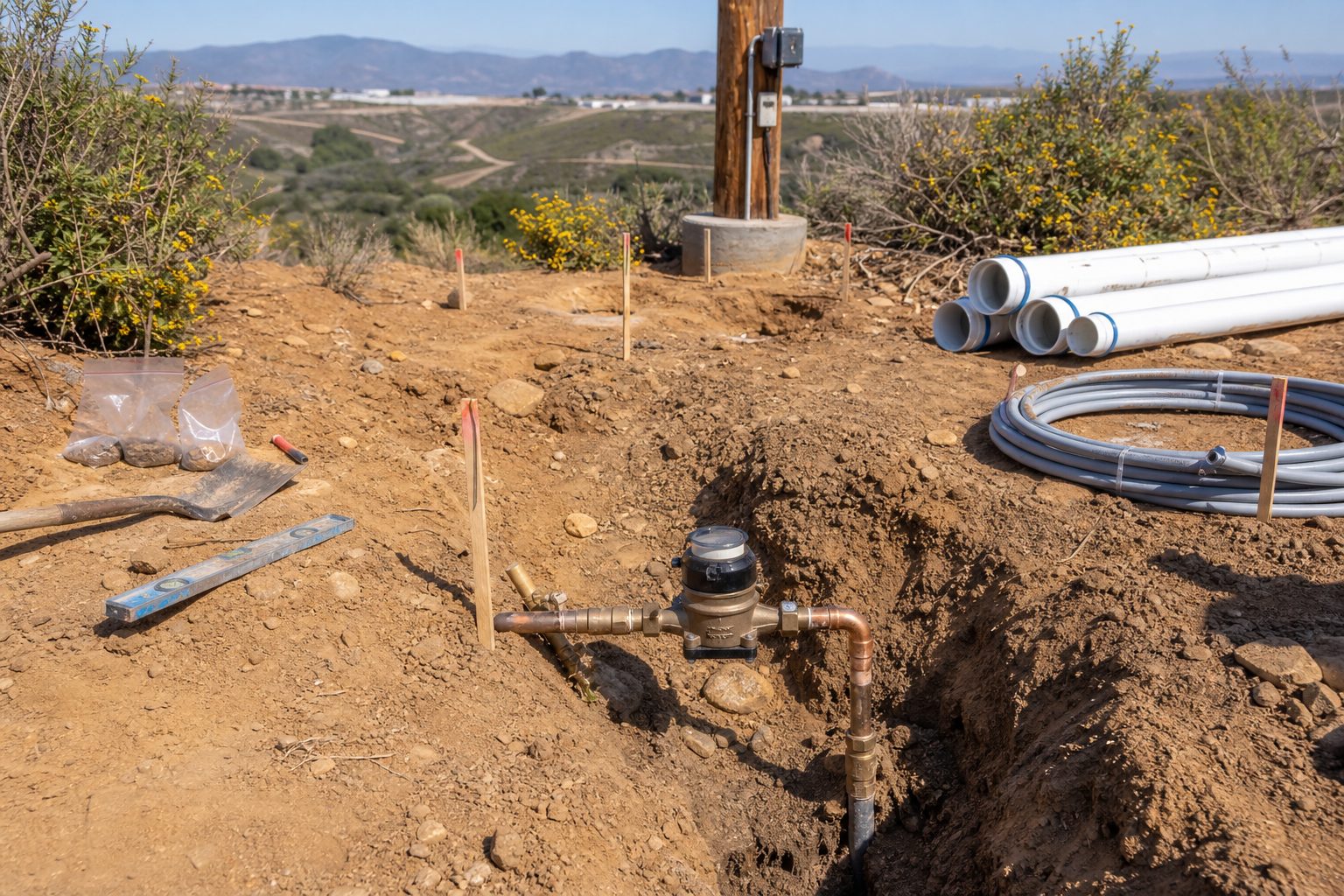
Electricity and Solar Requirements in Otay Ranch San Diego
You cannot skip this category. California has specific mandates that affect every new home on raw land, and Otay Ranch’s newer villages take those requirements even further.
Grid Connection
For properties close to an existing road with overhead power lines, a standard service drop and meter installation may cost as little as $2,500 to $5,000, per utility extension estimates. If your property sits a quarter mile or more from the nearest pole, line extension costs run $5 to $25 per linear foot. A half-mile extension can easily reach $15,000 to $30,000.
- Overhead lines: $5 to $15 per linear foot
- Underground lines: $10 to $25 per linear foot
California Solar Mandate
As of January 1, 2020, California requires a solar system on any new custom home or ADU. A new solar system costs from $15,000 to $35,000, per state building code compliance data.
Village 13 in Otay Ranch goes beyond the state minimum. Homes there will be 100% electric with solar panels, wiring for solar battery storage, and EV charging stations in half the homes, with the other half EV-ready, according to the approved development plan. The project is designed to be carbon neutral.
How to Build Your Total Infrastructure Budget for Otay Ranch
So how do you put all of this together? Here is how I walk my clients through it.
The average total site development cost in the San Diego County area runs between $75,000 and $150,000, according to local site development estimates. That range accounts for water, sewer, road access, grading, electrical, and soils work. Costs can be lower for parcels with close utility access, but they can also run significantly higher depending on terrain, distance, and permitting requirements.
Nationally, a widely cited 2026 estimate places average U.S. land development costs at about $20,000 to $100,000 per acre, with California toward the higher end, per national construction cost data.
Before you budget, take these steps:
- Contact the Otay Water District for a capacity letter and connection fee schedule specific to your parcel
- Request a perc test and consult the County Department of Environmental Health about sewer options
- Get a grading estimate from a licensed contractor who has worked in the Otay Ranch terrain
- Confirm electrical distance by contacting your utility provider about line extension costs
- Check for existing CFD/Mello-Roos special tax assessments that may already cover certain infrastructure costs
Rated 5 out of 5 stars by 275 past clients, I provide every buyer with a complimentary attorney review of contracts and disclosures, covered by me, even if escrow cancels. When you are spending six figures on infrastructure alone, that extra layer of contract protection makes a real difference.
Frequently Asked Questions
How much does it cost to extend water to raw land in Otay Ranch?
Water connection fees in San Diego County typically range from $5,000 to $30,000 or more depending on meter size and distance from the nearest main. Trenching for water lines runs $10 to $25 per linear foot. Within established Otay Ranch villages, water infrastructure may be covered by Mello-Roos special tax assessments rather than upfront costs.
What is the cost of a septic system in San Diego County?
A conventional septic system averages $3,500 to $15,000, while aerobic or advanced systems needed for poor soil conditions cost $10,000 to $20,000 or more. You will also need a septic permit costing $300 to $1,500, and a passing perc test is required before installation.
How much does road grading cost for raw land in Otay Ranch?
Grading for a house pad and driveway in the San Diego County area costs between $10,000 and $25,000 or more, depending on pad size, driveway length, and whether rock blasting is involved. Fire department driveway requirements can add significant cost.
What are the fire department driveway requirements in San Diego County?
Most fire departments in the San Diego County area now require an asphalt or concrete driveway from the property line to the home if the grade exceeds 10%. The driveway must be 16 feet wide with a turnaround for emergency vehicles.
Does California require solar panels on new homes in Otay Ranch?
Yes. Since January 1, 2020, California requires solar systems on any new custom home or ADU. Expect costs of $15,000 to $35,000. Otay Ranch Village 13 goes further, requiring 100% electric homes with solar panels and battery storage wiring.
What is the total site development cost for raw land in San Diego County?
The average total site development cost in the San Diego County area runs between $75,000 and $150,000, according to local contractor estimates. This covers water, sewer, road access, grading, electrical, and soils testing.
How much does electrical line extension cost for remote parcels near Otay Ranch?
If your parcel sits a quarter mile or more from the nearest power pole, line extension costs run $5 to $25 per linear foot. A half-mile extension can easily reach $15,000 to $30,000. Underground lines cost roughly double what overhead lines cost.
What are Mello-Roos taxes in Otay Ranch and how do they affect infrastructure costs?
Within master-planned Otay Ranch villages, infrastructure like water and sewer is often funded through Community Facilities District (Mello-Roos) bonds. Rather than paying upfront, you pay ongoing special tax assessments on your property tax bill, sometimes for 25 to 40 years. Contact the City of Chula Vista or County of San Diego for exact CFD amounts on a specific parcel.
Do I need a soils compaction report for building on raw land in San Diego?
Yes. The County of San Diego requires soils compaction reports during grading, performed by a licensed soils engineer. This testing typically costs $2,000 to $6,000 and must be completed before construction can proceed.
How long does the permitting process take for raw land development in Otay Ranch?
Permitting timelines vary significantly based on location and required approvals. Parcels in the unincorporated County area or near sensitive habitats may require permits from the U.S. Army Corps of Engineers, California Department of Fish and Wildlife, and the California Regional Water Quality Control Board, in addition to local permits. Building in a clear plan with your team before you close on the land is essential.
The Bottom Line
Buying raw land in Otay Ranch can be an exciting opportunity, but your purchase price is only the beginning of the investment. When using a VA loan to buy a starter home in Otay Ranch, or any raw land purchase, water, sewer, road access, grading, electrical, solar, and soils testing can realistically add $75,000 to $150,000 or more to your total project cost, depending on your parcel’s specific conditions.
The smartest thing you can do is get clean information before you make an offer. Contact the Otay Water District, request a perc test, get grading bids, and confirm electrical distances. When you can see every number clearly, you can make a decision you feel good about.
If you are exploring raw land opportunities in Otay Ranch or anywhere in San Diego County, I would welcome the chance to help you think through the full picture. You can reach me, Scott Cheng, Broker Associate with REAL Brokerage (DRE# 01509668), at 858-405-0002 or through my office at 16516 Bernardo Center Dr. Ste. 300 in San Diego.
Have Questions About San Diego Real Estate?
Scott Cheng provides free, no-obligation consultations for buyers, sellers, and investors.
Schedule a Consultation