Riparian Rights and Dock Permits for Mission Bay San Diego Waterfront Homes
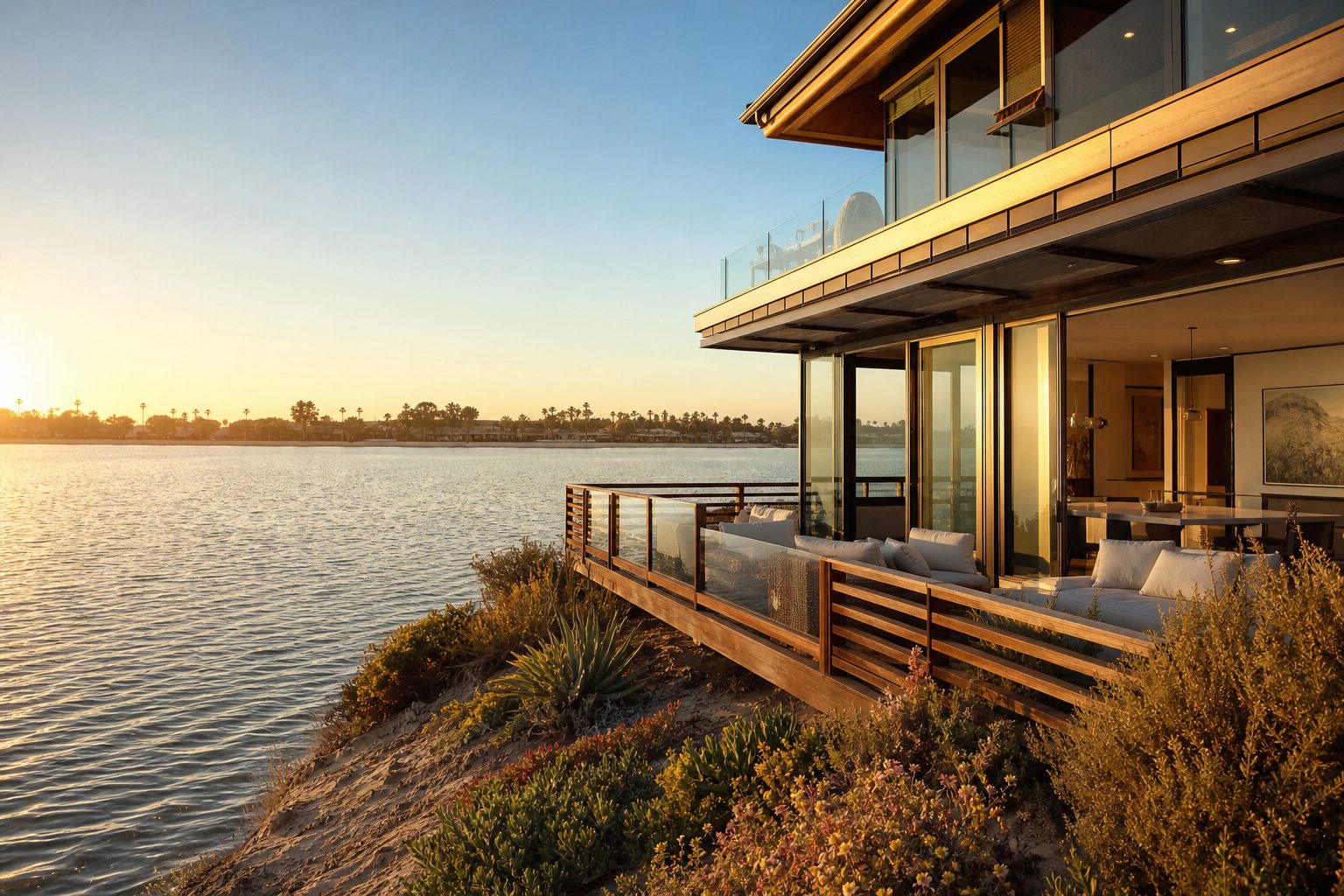
What are the real riparian rights and dock permit restrictions I need to understand before buying a waterfront home on Mission Bay, San Diego, in 2026?
Mission Bay is a publicly owned aquatic park, not a private waterway, which means traditional riparian rights have limited application and private dock permits are generally not available to residential homeowners.
Why This Matters Right Now in San Diego
If you’re shopping for a waterfront home on Mission Bay, you’re likely imagining morning coffee on your deck with a boat tied up at your private dock. I understand the appeal completely. But here’s where a cloudy mind can’t make decisions, and clarity is everything.
Mission Bay is unlike most waterfront properties you’ve encountered. It was created by dredging the San Diego River floodplain in the 1940s through the 1960s, and the submerged lands and shoreline are held in public trust by the City of San Diego. That single fact changes nearly everything about what you can and cannot do as a waterfront homeowner.
With the San Diego County median home price hovering around $1,050,000 and waterfront properties commanding significant premiums above that, you need to walk into this purchase with your eyes wide open. Having closed over 275 transactions in San Diego over my 18 years as a Broker Associate, I can tell you that the buyers who do the homework upfront are the ones who end up happiest with their waterfront investment. When evaluating whether now is a good time to buy your first home in San Diego, waterfront considerations add an important layer of complexity.
How Riparian Rights Actually Work on Mission Bay in San Diego
Let’s start with the terminology. You’ll hear “riparian rights” tossed around in waterfront real estate conversations, but the term is often misapplied when it comes to Mission Bay.
The Technical Distinction You Should Know
Under California law, riparian rights apply to properties bordering rivers and streams. Littoral rights apply to properties bordering lakes, bays, and oceans. Mission Bay is a bay, so technically we’re in littoral territory. But here’s the bigger issue: neither set of traditional water rights applies the way most buyers expect.
According to the California State Water Resources Control Board, riparian rights grant landowners a correlative share of water flowing past their property without permits or government approval. These rights run with the land and cannot be lost through non-use. Sounds great on paper, right?
The catch is that Mission Bay is a man-made aquatic park operating under the California Public Trust Doctrine. The City of San Diego manages the bay under a state tidelands trust grant. Most waterfront properties on Mission Bay do not hold traditional riparian or littoral rights because the shoreline and submerged lands are publicly owned.
What does that actually mean for you as a buyer? It means that owning a home on Mission Bay gives you incredible proximity and views, but it does not give you ownership of, or special legal claims to, the water or shoreline in front of your property.
Why Private Dock Permits Are Restricted on Mission Bay San Diego
This is the part of the conversation where I’ve watched buyers’ expressions change. One couple relocating from the Pacific Northwest reached out to me after falling in love with a bayfront listing near the Sail Bay area. They had owned a lakefront home in Washington with a private dock and assumed they’d have the same setup here. When I walked them through Mission Bay’s governance structure, it completely shifted their search criteria, and ultimately they were grateful we had that conversation before they wrote an offer.
The Agencies Controlling Dock Access
Any dock or pier construction on Mission Bay requires approvals from a layered stack of agencies:
- City of San Diego Development Services Department for local coastal development permits
- California Coastal Commission for a Coastal Development Permit
- U.S. Army Corps of Engineers for Section 10 permits on navigable waters
- California State Lands Commission for sovereign tidelands leases
- Regional Water Quality Control Board (San Diego Region 9) for Clean Water Act certification
- California Department of Fish and Wildlife for biological resource consultation
In practice, private residential docks are generally not permitted on Mission Bay. Existing dock structures are typically tied to commercial leaseholders, including hotels, marinas, and boat rental operations that hold long-term leases with the City. As a residential homeowner, you have no legal pathway to build a private dock extending into Mission Bay waters.
What You Can Actually Do as a Mission Bay Waterfront Homeowner
So if you can’t install a private dock, is bayfront living still worth the premium? In my experience, absolutely, but only if you’re buying for the right reasons.
Your Real Waterfront Access Options
- Public marina slip rentals at several marinas around Mission Bay
- Public boat launch ramps located at multiple points around the bay
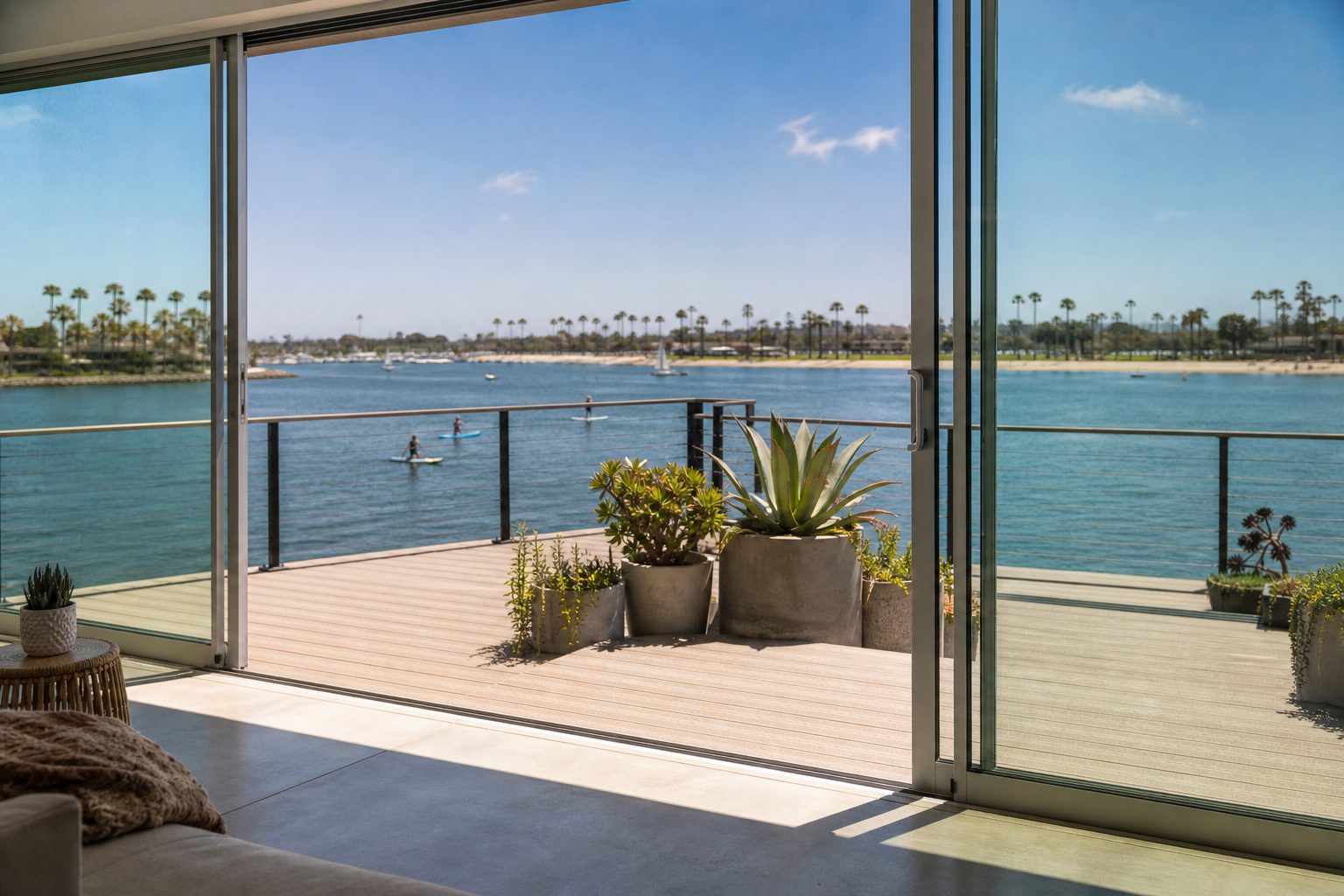
- Non-motorized watercraft launch directly from the shore for kayaks, paddleboards, and small sailboats
- Proximity to Mission Bay Park, which covers 4,600 acres of recreation space
Here’s a realistic scenario. A buyer I worked with purchased a condo on the bayfront side of Mission Beach. He was an avid sailor who initially wanted a private dock. Instead, he secured a slip at a nearby marina, which gave him covered, year-round boat storage with direct bay access. Two years later, he told me the marina arrangement was actually better because he didn’t have to deal with maintenance or permitting headaches. Sometimes the alternative turns out to be the upgrade.
The Mission Bay Park Master Plan
The Mission Bay Park Master Plan, adopted by the San Diego City Council, governs all land use around the bay. Key provisions that affect you as a waterfront buyer include:
- Designation of public recreation zones versus commercial leasehold areas
- Restrictions on private encroachments into public parkland
- Environmental protection zones, especially around the Kendall-Frost Mission Bay Marsh Reserve
- Height restrictions and setback requirements for structures near the waterfront
These rules apply regardless of how much you’re paying for the property. They protect the public nature of Mission Bay, and they aren’t going away.
Insurance, HOA, and Hidden Costs for San Diego Bayfront Buyers
Beyond rights and permits, waterfront properties on Mission Bay carry cost layers that inland homes don’t. Rated 5 out of 5 stars by 275 past clients, I’ve built my reputation on making sure buyers see every angle before committing.
What to Budget For
- Higher homeowner’s insurance premiums due to flood zone proximity and coastal exposure
- Rising HOA dues on bayfront condos, compounded by special assessment costs for balcony and elevated-element compliance
- Potential special assessments for seawall maintenance or common-area waterfront improvements
- CEQA-related constraints if you plan renovations near the waterfront, as the California Environmental Quality Act requires environmental impact review
With San Diego’s 2026 conforming loan limit at $1,104,000 for single-family properties, many bayfront purchases will push into jumbo loan territory. Understanding how much income you need to buy a home in San Diego becomes critical at these price points. Mortgage rates currently sit in the 6.0% to 6.8% range, and even modest rate decreases can meaningfully affect monthly payments at these price points. Staying in close contact with a lender through your search matters here.
How Mission Bay Compares to Other San Diego Waterfront Options
If the dock restrictions are a deal-breaker, San Diego offers waterfront alternatives worth exploring. Neighborhoods like whether to buy a luxury home in La Jolla have oceanfront properties with different access dynamics. If you’re open to bayfront lifestyle without the premium, areas adjacent to Mission Bay, like Pacific Beach and Crown Point, offer walkable proximity to the water at different price points.
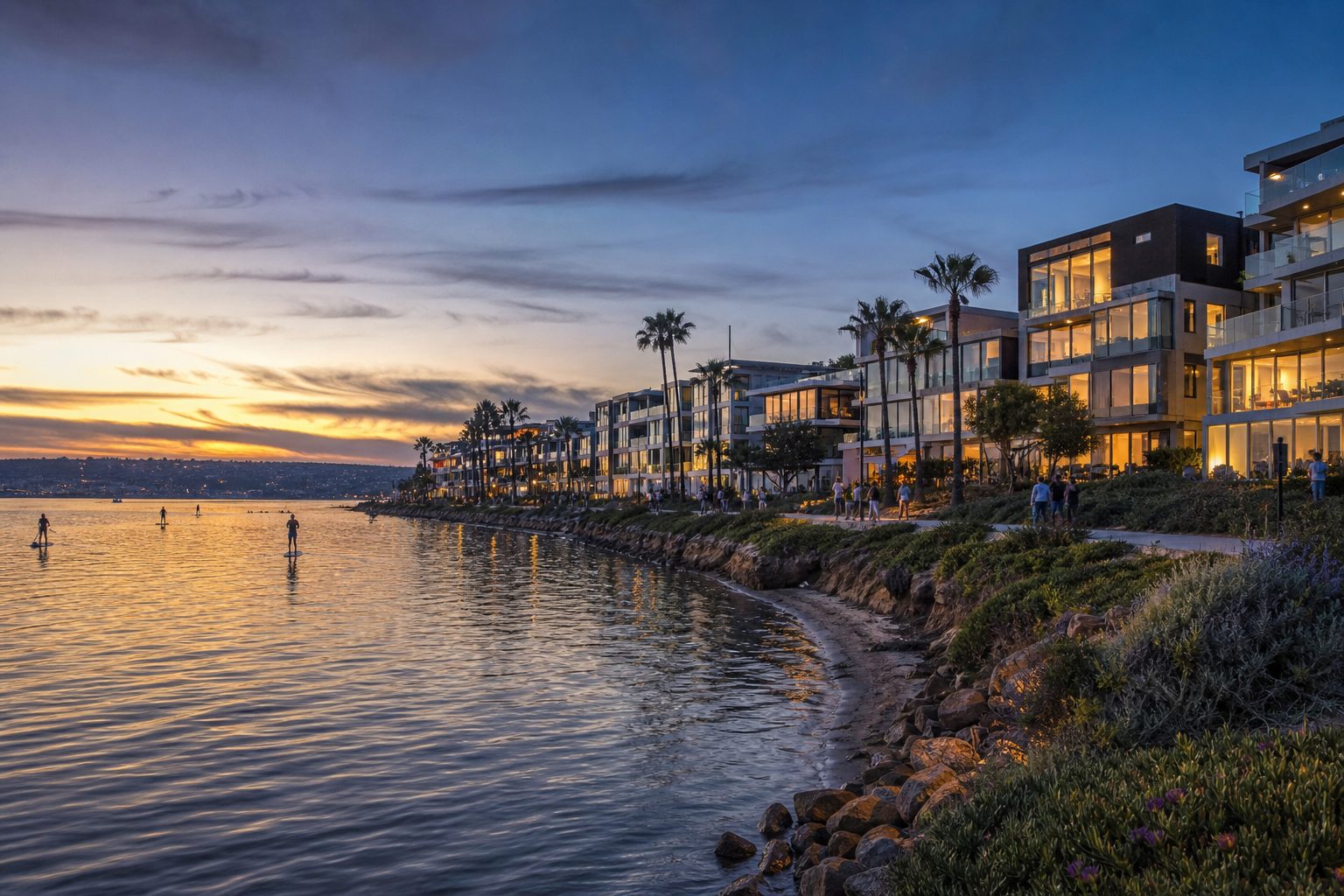
Mission Beach itself is geographically constrained, sitting on a narrow strip between the Pacific Ocean and Mission Bay. That means supply doesn’t expand when demand spikes, which has historically supported property values. Condos and townhomes in Mission Beach are selling at $1 million or more, while larger detached homes on the bayfront command significantly higher prices.
What I tell my clients is this: buy Mission Bay for the lifestyle, the views, and the scarcity. Don’t buy it expecting private dock rights you’ll never receive.
Frequently Asked Questions
Do I get riparian rights when I buy a waterfront home on Mission Bay?
Generally, no. Mission Bay is a man-made aquatic park managed under the California Public Trust Doctrine. The submerged lands and shoreline are publicly owned by the City of San Diego, so traditional riparian or littoral rights do not transfer to residential homeowners the way they might on a private lake or natural waterway.
Can I build a private dock on Mission Bay as a homeowner?
Private residential docks are generally not permitted on Mission Bay. The bay is a public aquatic park, and all dock and pier installations are controlled by the City. Existing docks are typically tied to commercial leaseholders operating under long-term city leases, not private homeowners.
How many agencies need to approve a dock permit on Mission Bay?
At least six agencies have jurisdiction, including the City of San Diego Development Services Department, the California Coastal Commission, the U.S. Army Corps of Engineers, the California State Lands Commission, the Regional Water Quality Control Board, and the California Department of Fish and Wildlife.
What is the Mission Bay Park Master Plan and how does it affect my property?
The Master Plan is the governing document for all land use around Mission Bay. It controls zoning, recreation designations, environmental protection zones, height restrictions, and setback requirements. Any changes to waterfront structures must comply with this plan.
Can I launch a kayak or paddleboard from my bayfront property?
You can generally access the water with non-motorized watercraft from the shore. However, specific launch points and any structures placed on public land require compliance with City regulations. Most bayfront homeowners enjoy this access without issue.
Are there marinas where I can rent a boat slip on Mission Bay?
Yes. Several public and commercial marinas around Mission Bay offer slip rentals for boats of various sizes. This is the most common solution for bayfront homeowners who want dedicated boat access.
How does the California Public Trust Doctrine affect Mission Bay homeowners?
The doctrine requires that tidelands and submerged lands be preserved for public use, including navigation, commerce, fishing, and recreation. This means the waterfront in front of your property is public, and you cannot restrict access or build permanent private structures on it.
Will waterfront property values on Mission Bay hold given the dock restrictions?
Mission Bay waterfront properties have historically held strong values because of lifestyle, scarcity, and views. The dock restrictions are priced into the market already. Buyers are paying for proximity, recreation access, and the limited supply of bayfront homes in San Diego.
What environmental restrictions should I know about near Mission Bay?
The Kendall-Frost Mission Bay Marsh Reserve is a protected habitat area. Properties near environmental protection zones face additional review under CEQA for renovations or development. Your real estate agent and a local environmental attorney can help clarify what applies to a specific parcel.
Should I hire an attorney before buying a waterfront home on Mission Bay?
Absolutely. Waterfront transactions involve layers of regulation that standard residential transactions don’t. One layer of protection I provide for my buyers is a complimentary attorney review of contracts and disclosures, covered by me, even if escrow cancels.
The Bottom Line
Buying a waterfront home on Mission Bay in San Diego is a lifestyle decision, not a dock-ownership decision. The bay is publicly owned, private docks are generally off the table, and traditional riparian rights don’t apply the way most buyers assume. But the views, the proximity to 4,600 acres of recreation, and the scarcity of bayfront inventory continue to make this one of San Diego’s most desirable locations.
If you’re considering a waterfront purchase on Mission Bay and want someone who will bring you clean information and a calm plan, I’d welcome the conversation. I’m Scott Cheng, Broker Associate with REAL Brokerage, and with 18 years and 275 closed transactions across San Diego, I can help you navigate the complexities so you move forward with confidence. Reach me at 858-405-0002.
Have Questions About San Diego Real Estate?
Scott Cheng provides free, no-obligation consultations for buyers, sellers, and investors.
Schedule a Consultation