Rent Control and Eviction Risks Before Buying a San Diego Apartment Building
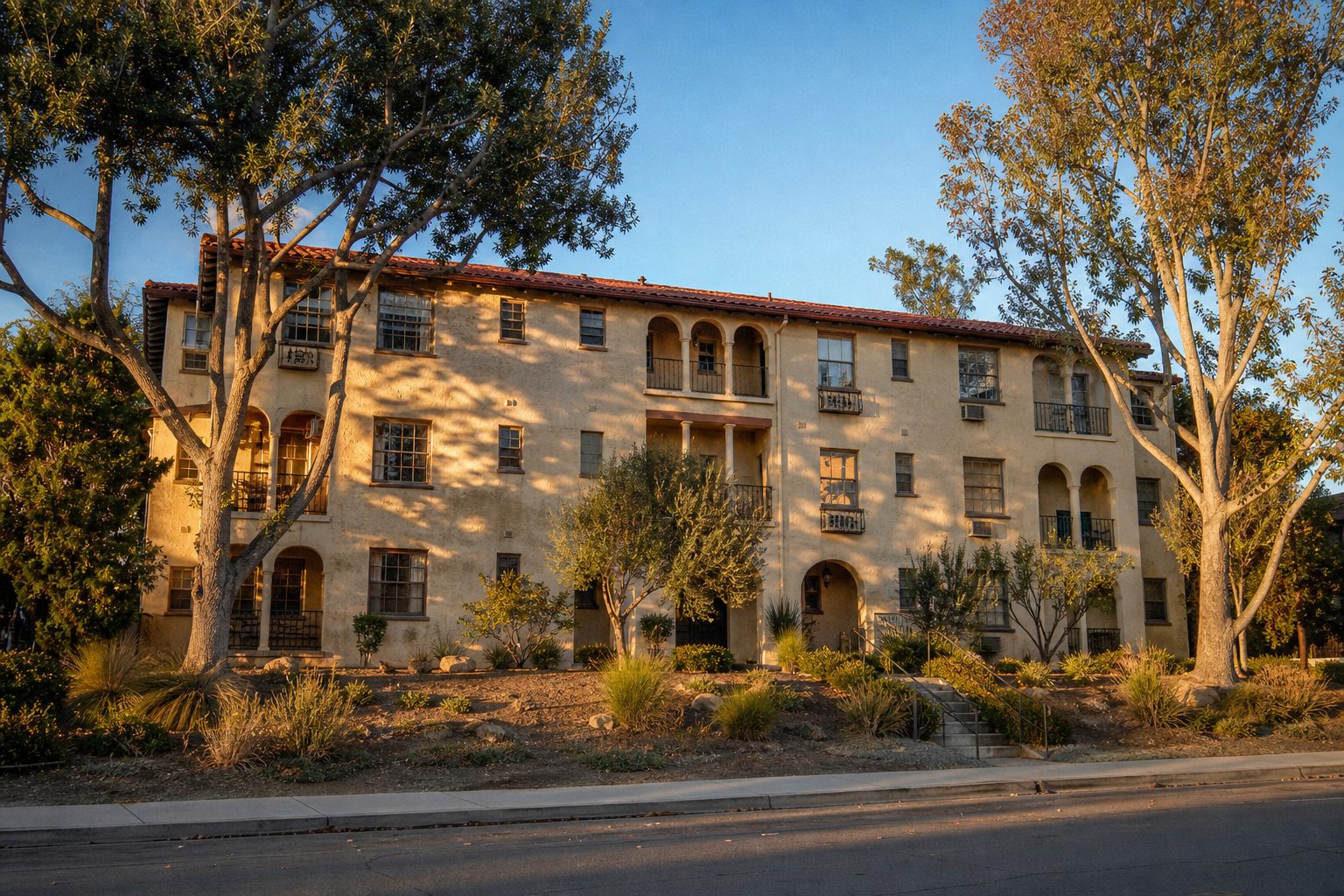
What are the real rent control and just-cause eviction risks you need to understand before buying a 10-to-20 unit apartment building in San Diego in 2026?
Your 10-to-20 unit building in San Diego almost certainly falls under two overlapping layers of tenant protection: California’s AB 1482 and the City of San Diego’s local Tenant Protection Ordinance, which is stricter and kicks in on Day 1 of tenancy.
Why This Matters for San Diego Multifamily Investors Right Now
If you’re shopping for a 10-to-20 unit apartment building in San Diego right now, you’re looking at the exact segment with the strongest fundamentals. Class B and C vacancy in San Diego sits at just 3.3% as of early 2026, compared with 6.4% at Class A properties. Demand for workforce housing is durable, and nearly all new construction is in the luxury segment, so your target properties face almost zero new competitive supply.
But here’s the thing: those same older buildings that make up the value-add sweet spot are also the ones most affected by rent control and just-cause eviction law. With average multifamily sales prices reaching $398,509 per unit in Q2 2026 and cap rates hovering between 4.5% and 5.5%, you cannot afford to underwrite a deal without fully accounting for these regulatory layers. Having closed over 275 transactions in San Diego over 16 years, I can tell you that the investors who struggle here are the ones who discover these rules after they close, not before.
How California’s AB 1482 Rent Cap Affects Your San Diego Underwriting
Your 10-to-20 unit building is almost certainly covered by AB 1482, California’s statewide Tenant Protection Act. The law applies to most multi-family units with a certificate of occupancy issued more than 15 years ago, and since almost every 10-to-20 unit building in San Diego was built well before 2011, there is no realistic exemption path for you.
What the Rent Cap Actually Looks Like in Practice
The formula is 5% plus local CPI, capped at 10%. For rent increases taking effect between August 1, 2026 and July 31, 2027, the allowable increase is 8.2%, down slightly from 8.8% the prior year as San Diego’s CPI input fell from 3.8% to 3.2%.
Here’s what I tell my clients to watch for:
- No increases during the first 12 months of a tenancy under state law
- No banking unused increases to stack onto a future year
- Maximum two increases in any 12-month period, and the total cannot exceed the annual cap
- Vacancy decontrol is intact, meaning you can reset to market rent when all original tenants voluntarily vacate
That last point is critical for your value-add strategy. One investor I worked with was looking at a 14-unit building in the North Park area where eight of the units were rented 15% to 20% below market. He initially assumed he could raise rents aggressively across the board. Once we walked through the AB 1482 math together, he realized his path to market rents was through natural turnover, not forced increases. That changed his hold timeline from three years to five, but it also gave him a realistic NOI projection he could actually rely on.
Why San Diego’s Local Ordinance Is the Layer Most Investors Miss
This is where out-of-area investors get caught off guard. The City of San Diego enacted its own Residential Tenant Protection Ordinance (SDMC §§ 98.0701 through 98.0709), effective June 24, 2023, and it goes further than state law in several important ways.
Day 1 Just-Cause Protection
Under AB 1482, just-cause eviction protections do not kick in until a tenant has lived in the unit for 12 months. Under the City of San Diego’s ordinance, protections apply from Day 1 of tenancy, with only a narrow exemption for fixed-term leases of three months or less.
What does that mean for you? It means the moment you close on a building, every existing tenant has just-cause protection. You cannot non-renew a lease or issue a no-cause termination simply because you’re the new owner.
Higher Relocation Costs for No-Fault Evictions
Here’s where the financial impact really shows up in your pro forma:
- Under AB 1482 alone: 1 month’s rent relocation assistance for no-fault evictions
- Under San Diego’s local ordinance: 2 months’ rent relocation assistance
- For seniors or tenants with disabilities: 3 months’ rent relocation assistance
At San Diego’s average asking rent of $2,453 per unit per month, a no-fault eviction on a single unit could cost you nearly $5,000 to $7,400 in relocation payments alone. Scale that across a 15-unit building where you need to vacate several units for substantial remodel, and you’re looking at a significant line item that needs to be in your acquisition budget.
How Just-Cause Rules Shape Your Value-Add Strategy in San Diego
So what qualifies as “just cause”? There are two categories, and understanding both is essential.
At-Fault Causes
These include nonpayment of rent, lease violations, nuisance behavior, and unauthorized occupants. At-fault causes give you a clear path to address problem tenancies, and they do not require relocation payments.
No-Fault Causes
These include owner move-in (not applicable to a 15-unit building in most cases), substantial remodel requiring the unit to be vacated, and withdrawal from the rental market under the Ellis Act. No-fault causes trigger the relocation payments outlined above.
A recent client of mine was evaluating a 12-unit property near Mission Hills where the seller disclosed that four units needed significant plumbing and electrical work. The buyer’s initial plan was to vacate those units, complete the renovation, and re-lease at market rates. After factoring in the relocation assistance for each displaced tenant, plus the timeline required for proper notice, the renovation budget increased by over $20,000. That number alone did not kill the deal, but it changed the return profile enough to justify renegotiating the purchase price. We ended up getting a $40,000 price reduction by presenting the documented relocation costs to the seller’s side. A cloudy mind can’t make decisions, so putting real numbers on these regulatory costs actually made the negotiation clearer for both parties.

Where Your San Diego Property Is Located Changes the Rules
Not every city within San Diego County follows the same playbook. If your target building sits within City of San Diego limits, you’re subject to both AB 1482 and the local ordinance. But if you’re looking at properties in other jurisdictions, the rules differ.
- Chula Vista: Has its own Residential Landlord-Tenant Ordinance (CVMC Chapter 9.65) with city-specific just-cause and notice requirements layered on top of state law
- Imperial Beach: Enacted a Just Cause for Termination Ordinance (IBMC Chapter 9.90, effective March 2025) with renoviction controls and a strict-compliance standard for notices
- El Cajon, La Mesa, Santee, National City, Escondido, Oceanside, Carlsbad, and unincorporated areas: AB 1482 governs alone, with no additional local ordinance
This matters because the location of the building directly affects your operating costs and eviction procedures. With 180 five-star client reviews and a specialization in multi-family properties, I always tell investors to confirm the exact municipal jurisdiction before writing an offer. A property two blocks from a city boundary line can operate under completely different rules.
What to Watch for on the Legislative Horizon
AB 1482 was originally set to sunset on January 1, 2030. While a bill that would have imposed stricter rent caps and expanded eviction controls failed to advance in a recent legislative session, a statewide proposal to tighten California’s existing rent cap law is again in play.
What should you be preparing for?
- Potential reduction of the rent cap formula, possibly lowering the ceiling below 10%
- Extension or permanent codification of AB 1482 beyond 2030
- Additional local ordinances in other San Diego County cities following the City of San Diego’s model
The smart move is to underwrite your deal conservatively, assuming these protections remain in place indefinitely. If they sunset, that is upside you did not plan on. If they expand, you are already prepared.
Frequently Asked Questions
Does AB 1482 apply to every 10-to-20 unit apartment building in San Diego?
Yes, in nearly all cases. AB 1482 covers multi-family units with a certificate of occupancy issued more than 15 years ago. Since virtually every 10-to-20 unit building in San Diego predates 2011, it falls under coverage. Single-family home and condo exemptions do not apply to apartment buildings.
Can I raise rent to market rate when a tenant moves out of my San Diego apartment building?
Yes. Vacancy decontrol remains intact under AB 1482. When all original tenants voluntarily vacate a unit, you can reset the rent to market rate. This is the primary mechanism value-add investors use to increase NOI over time through natural turnover.
What is the maximum rent increase I can impose on existing tenants in 2026?
For rent increases taking effect between August 1, 2026 and July 31, 2027, the allowable increase under AB 1482 is 8.2%. This is calculated as 5% plus San Diego’s local CPI of 3.2%. You cannot bank unused increases from prior years.
How much relocation assistance do I owe for a no-fault eviction in the City of San Diego?
The City of San Diego’s local ordinance requires two months’ rent for standard no-fault evictions and three months’ rent if the tenant is a senior or a person with a disability. This is more than the one month required under state law alone.
When do just-cause protections start under San Diego’s local ordinance?
Protections apply on Day 1 of tenancy, with only a narrow exemption for fixed-term leases of three months or less. This is significantly earlier than AB 1482’s 12-month threshold and is a detail many out-of-area investors overlook.
Can I evict a tenant to renovate a unit in my San Diego building?
Substantial remodel is a recognized no-fault just-cause reason, but it triggers relocation assistance payments and requires proper notice. In Imperial Beach, additional renoviction controls apply. Always consult a qualified attorney before proceeding.
Are there rent control rules outside the City of San Diego in the county?
Chula Vista and Imperial Beach have their own local ordinances on top of AB 1482. Most other cities and unincorporated areas in San Diego County rely solely on state law. The specific municipality where your building sits determines which rules apply.
What happens if AB 1482 sunsets in 2030?
If AB 1482 sunsets without replacement, state-level rent caps and just-cause requirements would end. However, the City of San Diego’s local ordinance would remain in effect independently. Legislative efforts to extend or strengthen AB 1482 are already underway.
How does rent control affect my cap rate when buying a San Diego apartment building?
Rent control limits your ability to grow income on occupied units, which can compress cap rates. With San Diego cap rates at 4.5% to 5.5% and average per-unit pricing at $398,509, conservative rent growth assumptions in your underwriting are essential.
Should I factor relocation costs into my acquisition budget?
Absolutely. If you plan any no-fault evictions for renovation or repositioning, model two to three months’ rent per unit as a line item. For a 15-unit building at San Diego’s average asking rent, this could add $35,000 to $110,000 to your project cost depending on the scope.
The Bottom Line
Buying a 10-to-20 unit apartment building in San Diego in 2026 is a strong play in terms of fundamentals. Class B and C vacancy at 3.3%, durable renter demand, and limited new competitive supply all work in your favor. But the regulatory landscape requires your full attention. You are operating under two layers of tenant protection, and the local ordinance is more restrictive than state law in ways that directly affect your operating costs and value-add timeline. The investors I work with who succeed in this segment are the ones who model these costs before they make an offer, not after. If you’re evaluating a multi-family acquisition in San Diego and want a clear, calm plan built on real numbers, I’d welcome the conversation. I’m Scott Cheng, Broker Associate at REAL Brokerage, and you can reach me at 858-405-0002 or visit my office at 16516 Bernardo Center Dr. Ste. 300 in San Diego.
*This blog is for educational purposes only and does not constitute legal advice. Consult a qualified California real estate attorney for guidance specific to your transaction. DRE# 01509668.*
Have Questions About San Diego Real Estate?
Scott Cheng provides free, no-obligation consultations for buyers, sellers, and investors.
Schedule a Consultation