Realistic Cap Rates and Cash-on-Cash Returns for Logan Heights San Diego Multifamily in 2026
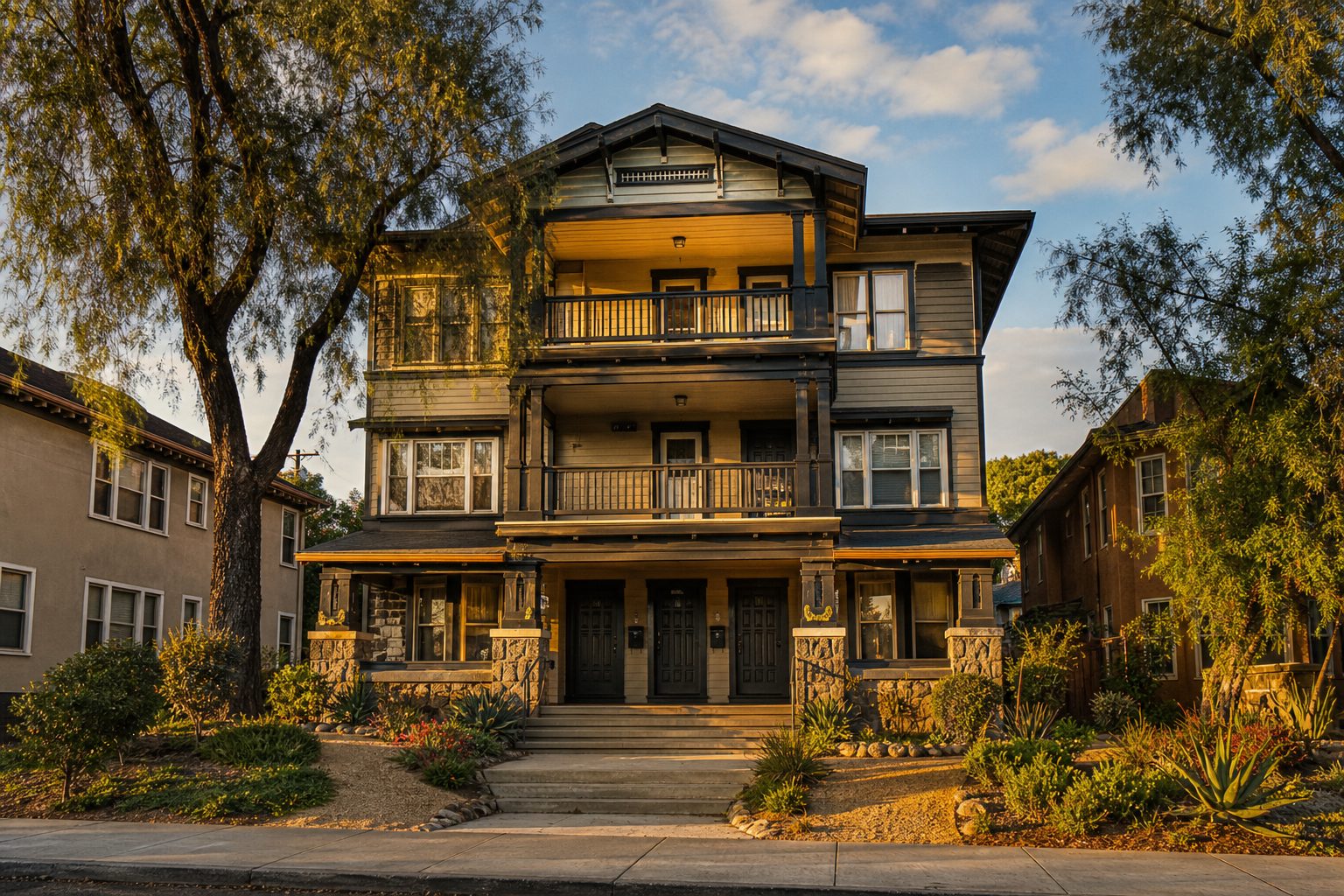
What cap rates and cash-on-cash returns are realistic for buying a small multifamily property in Logan Heights, San Diego, in 2026, given rising property taxes and rent control pressure?
In Logan Heights today, you’re looking at stabilized cap rates between 4.0% and 5.0% on small multifamily, with leveraged cash-on-cash returns that are likely negative or razor-thin unless you buy with 40% or more down or target a value-add deal.
Why Logan Heights Multifamily Returns Matter Right Now in San Diego
If you’ve been tracking the San Diego multifamily market, you already know the math has gotten tighter. Cap rates across the county held steady at 4.7% in Q2 2026 according to Kidder Mathews data, while borrowing costs sit in the mid-6% range. That spread is the core challenge, and it’s even more pronounced in emerging neighborhoods like Logan Heights where appreciation expectations get baked into asking prices.
Here’s why this matters for your 2026 decision. Logan Heights has become one of San Diego’s most investor-watched submarkets. Its proximity to downtown, the Port of San Diego, and ongoing infrastructure investment have driven significant value appreciation over the past decade. But appreciation potential and cash flow are two very different conversations, and a cloudy mind can’t make decisions when these two goals are pulling in opposite directions.
With 16 years of experience helping investors analyze deals across San Diego County and over 275 closed transactions, I can tell you: the investors who are succeeding in this environment are the ones who understand exactly what the numbers look like before they write an offer.
What Cap Rates You Can Actually Expect in Logan Heights San Diego
Let’s ground this in real data so you have something concrete to work with.
The San Diego metro average multifamily cap rate in Q2 2026 was 4.7%, per Kidder Mathews. Coastal submarkets like La Jolla and Pacific Beach compress below 4.0%. Inland and value-add properties in areas like East County and South Bay trade between 4.5% and 5.5% or higher.
Logan Heights falls somewhere in between. It’s not coastal, but it’s not deep inland either. Its urban infill location and strong tenant demand put realistic cap rates for stabilized small multifamily (2 to 4 units) in the 4.0% to 5.0% range in 2026.
What does that mean in practical terms? If you’re buying a triplex at $900,000 and it generates roughly $43,200 in net operating income, you’re looking at a cap rate around 4.8%. That’s right in line with what I’m seeing across similar San Diego submarkets.
Value-Add Properties Push Cap Rates Higher
If you target a property with below-market rents or deferred maintenance, your pro forma cap rate after renovations and rent increases could reach 5.0% to 5.5%. One investor I worked with recently found a duplex in a comparable South Bay neighborhood where existing rents were roughly 20% below market. After a modest kitchen and bathroom renovation, they repositioned the units and brought the effective cap rate from 4.2% up to just over 5.3%. That spread made the deal work, but it required both capital reserves and realistic timelines.
Why Cash-on-Cash Returns in Logan Heights Are Negative with Conventional Leverage
This is the part of the conversation where most investors either lean in or walk away. So let me be direct.
With cap rates near 4.7% and 30-year fixed mortgage rates averaging 6.48% per Freddie Mac as of June 2026, you’re in a negative leverage environment. Your borrowing cost exceeds your property yield. That’s not a Logan Heights problem; it’s a San Diego-wide (and honestly, a national) reality.
Here’s a realistic scenario for a Logan Heights triplex:
- Purchase price: $900,000 (roughly $300,000 per unit)
- Down payment at 25%: $225,000
- Loan amount: $675,000 at 6.5%
- Annual debt service: approximately $51,200
- Gross annual rent (3 units at $2,000 per month): $72,000
- Vacancy at 5%: minus $3,600
- Operating expenses at 35%: minus $25,200
- Net operating income: approximately $43,200
- Annual cash flow after debt service: approximately negative $8,000
- Cash-on-cash return: approximately negative 3.6%
That negative return is not a typo. It’s the math with conventional financing in this rate environment. Industry data from Northmarq confirms that cash-on-cash returns across San Diego multifamily are averaging around 4.8% only when measured at the asset level, before financing.
So how do you make this work?
Four Strategies to Achieve Positive Cash-on-Cash Returns in Logan Heights
You’re not stuck with negative returns. But you do need to be strategic. Here’s what I tell my investor clients.
1. Increase Your Down Payment to 40% or More
By putting 40% to 50% down, you reduce your debt service enough to flip cash flow positive. On that same $900,000 triplex, a 45% down payment ($405,000) drops your annual debt service to roughly $37,500, pushing your cash-on-cash return into positive territory near 1.4% to 2.0%.
2. Target Below-Market Rents and Renovate
Logan Heights has an abundance of older housing stock with value-add potential. Properties with long-term tenants paying below current market rates present the clearest path to improved returns. One couple I worked with recently identified a fourplex where all four units were rented $300 to $400 below comparable market rates. They budgeted $60,000 for unit-turn improvements and phased in rent increases as leases renewed, eventually reaching a stabilized cash-on-cash return above 3%.
3. Add an ADU or Convert Unused Space
Logan Heights zoning often supports accessory dwelling unit construction. Adding a permitted ADU to a duplex or triplex can meaningfully change your income picture without requiring a full property acquisition.
4. Use Short-Term Financing with a Refi Strategy
Some investors acquire with bridge or portfolio loans, complete renovations, stabilize rents, and then refinance at a lower loan-to-value. This is more complex, but it can work if your renovation budget and timeline are realistic.
How Rising Property Taxes Affect Your Logan Heights Investment in 2026
Property taxes in San Diego are assessed at approximately 1.1% to 1.2% of the purchase price under Proposition 13, plus any Mello-Roos or special assessment district charges. On a $900,000 purchase, you’re looking at roughly $10,000 to $10,800 in annual property taxes.
Here’s the part that catches investors off guard. Upon reassessment at your purchase price, your tax bill may be significantly higher than what the current owner is paying, especially if they’ve held the property for a decade or more. I’ve seen situations where a long-held Logan Heights property was assessed at $350,000 and the new buyer’s reassessment jumped the tax bill from $4,200 to over $10,500 overnight.
That increase goes straight into your operating expenses and directly compresses your cap rate and cash-on-cash return. You need to underwrite at your acquisition basis, not the seller’s current tax bill.
Understanding Rent Control Pressure on San Diego Multifamily Returns
California’s Tenant Protection Act (AB 1482) caps annual rent increases at 5% plus local CPI, up to a maximum of 10%, for properties 15 years or older. Most small multifamily in Logan Heights falls under this umbrella.
What does this mean for your returns? You still have room to raise rents meaningfully, especially on units that are well below market. But you cannot achieve dramatic one-year rent corrections. Your underwriting should model 3% to 5% annual rent growth, not the 8% to 10% some investors hope for.
The flip side is that rent control creates a floor of tenant stability. Vacancy rates at Class B and C properties in San Diego sat at just 3.3% in Q1 2026, per Moody’s data. That compares to 6.4% vacancy at Class A properties. Your Logan Heights tenants are more likely to stay, which reduces turnover costs and keeps your occupancy strong.
With 180 five-star reviews from clients and a track record as a top 1% real estate agent in San Diego, I’ve helped investors model investment scenarios accurately before they commit capital. Getting the underwriting right on the front end is everything.
Frequently Asked Questions
What is the average cap rate for small multifamily in Logan Heights San Diego in 2026?
Based on Q2 2026 data, stabilized small multifamily properties in Logan Heights typically trade between 4.0% and 5.0%. The broader San Diego metro multifamily average is 4.7%, with inland and value-add submarkets slightly higher. Logan Heights sits in the middle ground between coastal compression and inland value pricing.
Can you get positive cash-on-cash returns on a Logan Heights duplex or triplex in 2026?
Positive cash-on-cash returns are possible but require either a larger down payment (40% or more), a value-add strategy with below-market rents, or a combination of both. With conventional 25% down financing and current rates near 6.5%, most deals produce negative leverage.
How does California rent control affect Logan Heights multifamily investments?
AB 1482 caps annual rent increases at 5% plus CPI (maximum 10%) for buildings 15 years or older. Most Logan Heights multifamily falls under this rule. You can still raise rents, but dramatic one-year corrections are limited. Plan for 3% to 5% annual rent growth in your models.
What are typical operating expenses for a small multifamily in Logan Heights?
Expect operating expenses between 35% and 40% of gross rental income for 2 to 4 unit properties. This includes property taxes, insurance, maintenance, vacancy allowance, and management. Property taxes alone run approximately 1.1% to 1.2% of purchase price.
How much does property tax reassessment increase costs when buying in Logan Heights?
Upon purchase, your property is reassessed at the sale price under Proposition 13. If the seller held the property for many years at a low assessed value, your annual tax bill could double or triple compared to what the prior owner paid.
What is the average rent for multifamily units in the Logan Heights area?
San Diego-wide averages show one-bedroom units at $2,194 and two-bedroom units at $2,684 per month as of Q2 2026. Logan Heights units typically rent slightly below these averages, with two-bedroom units in the $2,000 to $2,400 range depending on condition and updates.
Is Logan Heights a good neighborhood for San Diego rental property investors?
Logan Heights offers relative affordability compared to coastal submarkets, strong tenant demand from its proximity to downtown, and value-add potential in older housing stock. It’s one of the fastest-appreciating submarkets in the city, with some estimates projecting 6% to 10% appreciation in premium scenarios.
What vacancy rate should I underwrite for Logan Heights multifamily?
San Diego’s overall multifamily vacancy reached 5.5% in Q2 2026, but Class B and C properties (which describes most Logan Heights small multifamily) showed just 3.3% vacancy. Underwriting at 5% is prudent and conservative.
How much down payment do I need for a Logan Heights triplex to cash flow?
To achieve positive monthly cash flow at current interest rates, plan for 40% to 50% down. A 25% down payment will likely result in negative monthly cash flow on most stabilized deals at today’s pricing and rates.
Should I buy a Logan Heights multifamily for cash flow or appreciation?
In 2026, the honest answer is that the investment thesis in San Diego multifamily leans heavily toward appreciation and long-term rent growth, not immediate cash flow. Logan Heights offers both, but cash flow requires either significant equity or a value-add execution plan.
The Bottom Line on Logan Heights San Diego Multifamily Investing
You’re entering a market where patience, accurate underwriting, and strategy matter more than speed. Cap rates between 4.0% and 5.0%, negative leverage with conventional financing, rent control constraints, and property tax reassessment all compress your near-term returns. But Logan Heights still offers a compelling long-term picture: low vacancy, strong tenant demand, appreciation potential, and a neighborhood trajectory that continues to trend upward.
The investors I work with who succeed in this environment are the ones who get clear on their numbers before they ever make an offer. If you’re considering a small multifamily purchase in Logan Heights or anywhere in San Diego, I’d welcome the chance to walk through the analysis with you. I’m Scott Cheng, Broker Associate with REAL Brokerage, and you can reach me at 858-405-0002. Let’s make sure your next investment decision is built on clean information and a realistic plan.
Have Questions About San Diego Real Estate?
Scott Cheng provides free, no-obligation consultations for buyers, sellers, and investors.
Schedule a Consultation