Is Logan Heights San Diego a Good Neighborhood for First-Time Buyers in 2026?
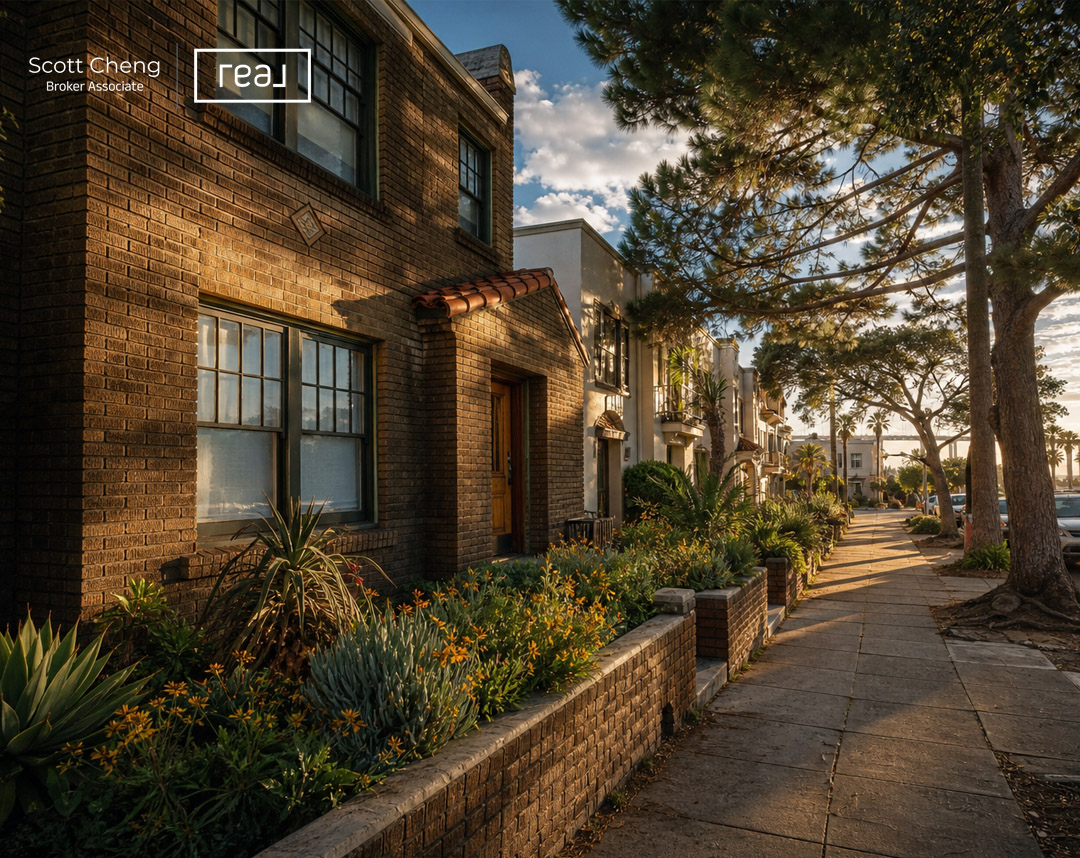
Is Logan Heights a smart move for first-time buyers in 2026, or has gentrification already pushed prices beyond reach?
Logan Heights still offers one of San Diego’s most accessible entry points for first-time buyers, especially through multi-family house-hacking, but the window is narrowing as infrastructure investment and updated community plans accelerate appreciation.
Why Logan Heights Matters for San Diego First-Time Buyers Right Now
Here’s the honest picture. San Diego’s county-wide single-family median hit $1,074,000 in April 2026, a 5.8% year-over-year jump. Only 13% of county households can currently afford a median-priced home. That’s a staggering number, and it’s exactly why neighborhoods like Logan Heights keep surfacing in conversations I have with first-time buyers every week.
Logan Heights sits immediately east of Interstate 5, bordered by Route 15 on the east. It’s home to the world-renowned Chicano Park and has long been considered San Diego’s creative and cultural epicenter for the Chicano/Mexican-American community. The neighborhood carries deep history, and that matters because it shapes both the opportunity and the complexity of buying here.
What I tell my clients is this: a cloudy mind can’t make decisions. So let me lay out what’s actually happening on the ground so you can evaluate whether Logan Heights fits your goals, your budget, and your timeline.
The Gentrification Question in Logan Heights: What You Need to Understand
You’ve probably heard the word “gentrification” attached to Logan Heights more than a few times. Let me give you the nuanced version.
Logan Heights and neighboring Barrio Logan townhome neighborhoods have been experiencing two overlapping forces. There’s traditional gentrification, where outside investors with no community ties purchase and redevelop properties. Then there’s what researchers call “gentefication,” where college-educated, upwardly mobile Latinos invest in the neighborhoods they grew up in. Both processes have contributed to rising rents and property values, making affordability harder for long-time residents.
Community organizers have been vocal. One advocate put it plainly: residents face the risk of being pushed out due to rising rents, unaffordable homeownership, house flippers, and new businesses catering to different demographics.
So what does this mean for you as a buyer? It means the neighborhood is changing, and those changes are creating both upward price pressure and increased infrastructure investment. The city recently approved an updated Community Plan for Southeast San Diego, the first overhaul in 30 years, which requires more affordable housing and includes displacement protections. That plan will shape Logan Heights for the next several decades.
The key question isn’t whether gentrification is happening. It is. The question is whether you can still get in at a price point that makes financial sense while benefiting from the long-term investment headed this way.
How Logan Heights Compares to Other San Diego Neighborhoods on Price
Let me put Logan Heights in context against nearby neighborhoods where I work with buyers regularly.
- North Park (92104): Median single-family home price around $1.05 million, with condos starting near $600,000. Homes went up 12.2% year-over-year as of January 2026. Very competitive, scoring 78 out of 100 on market competitiveness.
- Normal Heights (92116): Median home price around $816,000, with condos and townhomes in the $535,000 range. A slightly calmer market with homes selling after about 35 days.
- City of San Diego overall: Median sale price about $954,000 over the three months ending May 2026, down 3.0% from a year earlier.
Logan Heights still sits below all of these. But here’s the critical part: the gap is shrinking. I worked with a young couple last year who initially had their hearts set on North Park. When we ran the numbers at $1.05 million for a single-family home, even with an FHA loan at 3.5% down, the monthly payment was beyond their comfort zone. We pivoted to looking at duplexes in Logan Heights, and the math changed dramatically. They purchased a multi-family property, moved into one unit, and the rental income from the second unit offset a significant portion of their mortgage.
That kind of strategy only works when the entry price allows it, and for now, Logan Heights still provides that opening.
Why Multi-Family House-Hacking in Logan Heights Is a First-Time Buyer Strategy
This is where Logan Heights gets genuinely interesting for first-time buyers. The neighborhood is mostly zoned for multi-family lots. While that means companion units and ADUs may face restrictions, it also means duplexes, triplexes, and fourplexes are common.
Here’s why that matters. You can purchase a duplex, live in one unit, and rent the other. The rental income offsets your mortgage, creating a lower effective cost of homeownership. For buyers using FHA financing, you can put as little as 3.5% down on a property with up to four units as long as you occupy one.
With 16 years of experience and over 275 closed transactions across San Diego, I’ve seen this strategy transform financial outcomes for young professionals and first-time buyers. One recent client, a single engineer in her late twenties, bought a duplex in the southeastern part of San Diego. The rental income from her second unit covered roughly 40% of her total monthly housing cost. Within two years, her equity growth far exceeded what she would have accumulated renting an apartment in a neighborhood like North Park, where 71% of households are renter-occupied.
What I always tell buyers considering this path: make sure the numbers work in a conservative scenario. Don’t assume full occupancy year-round. Build in a vacancy cushion. And get a thorough inspection, because older multi-family properties in Logan Heights can have deferred maintenance that catches new owners off guard. That’s one area where my experience with flips and remodels pays off. I can walk through a property and flag the issues that matter before they become expensive surprises.
Down Payment Assistance Programs Available to Logan Heights Buyers in San Diego
One of the reasons I’m cautiously optimistic about Logan Heights for first-time buyers is the stacking of assistance programs available in 2026. Let me walk through them.
- SDHC Low-Income Program: If you earn no more than 80% of San Diego’s Area Median Income, you may qualify for a deferred-payment second trust deed loan covering up to 19% of the purchase price at 3% interest, plus a closing cost grant of up to $10,000.
- SDHC Middle-Income Program: For buyers earning between 80% and 150% of AMI, this provides a $40,000 deferred down-payment assistance loan and a $10,000 closing costs grant.
- CalHFA Dream For All: Offers up to 20% for down payment or closing costs, not to exceed $150,000. Uses a randomized drawing system, and at least one borrower must be a first-generation homebuyer.
- New County Pilot Program (launched March 2026): A San Diego County supervisor introduced a pilot program focused on down-payment assistance, interest-rate buy-downs, and public-private partnerships.
Since 1988, the San Diego Housing Commission has helped more than 6,100 families and individuals buy their first homes. These programs are real, funded, and accessible. The conforming loan limit for San Diego County in 2026 is $1,104,000, which gives you room to finance well above Logan Heights price points without jumping into jumbo loan territory.
Infrastructure and Community Improvements Coming to Logan Heights
Your investment in Logan Heights isn’t just about today’s price. It’s about what’s coming. Here are the planned improvements that will shape the neighborhood over the next decade.
- Trolley access: The existing trolley line is a major transit asset, connecting Logan Heights to downtown San Diego and beyond.
- Commercial corridors: City planners are developing commercial zones along Market Street, Imperial Avenue, Commercial Street, and National Avenue.
- Green space expansion: Multiple pocket parks are planned throughout Southeast San Diego, in addition to the historic Chicano Park shared between Logan Heights and Barrio Logan.
- School improvements: A complete overhaul has been prepared for Logan-Memorial, which serves students from kindergarten through 12th grade.
- Bicycle network: Future plans include bike infrastructure connecting Logan Heights to Barrio Logan and downtown.
- Permitting advantage: Unlike Barrio Logan, which falls within the California Coastal Zone and faces expensive, drawn-out permitting, Logan Heights sits east of I-5 and is far easier for construction permits. If you’re considering renovations or value-add improvements, this is a meaningful practical advantage.
Frequently Asked Questions
Is Logan Heights in San Diego safe for first-time homeowners?
Logan Heights has seen meaningful improvements over the past decade. Like many urban neighborhoods undergoing transition, safety varies block by block. I always recommend driving through at different times of day before making a decision. The community plan updates and increased investment signal continued positive momentum, but do your own on-the-ground research.
How much do homes cost in Logan Heights compared to the San Diego average?
Logan Heights remains well below the city-wide median of $954,000. Multi-family properties, which are the most common housing type in the neighborhood, generally offer a lower per-unit cost than single-family homes in more established neighborhoods like North Park ($1.05 million median) or Normal Heights ($816,000 median).
Can I use FHA financing to buy in Logan Heights San Diego?
Yes. FHA loans require as little as 3.5% down with a credit score of 580 or higher. For multi-family properties with up to four units, you can use FHA financing as long as you occupy one unit as your primary residence. This makes house-hacking in Logan Heights particularly accessible for first-time buyers. For more details, you can review resources on owning a home from the Consumer Finance Protection Bureau.
What is gentrification doing to Logan Heights home prices?
Gentrification, along with “gentefication” by community members investing locally, is pushing property values upward. The updated Southeast San Diego Community Plan includes affordable housing requirements and displacement protections, but rising land values and developer interest continue to apply upward pressure on prices.
Are there good schools in Logan Heights San Diego?
Logan Heights falls within San Diego Unified School District. Logan-Memorial is undergoing a complete overhaul to serve K-12 students. Many families also use the district’s magnet and open enrollment programs to access schools across the city, a strategy I’ve seen work well for buyers throughout central San Diego.
What kind of properties are available for first-time buyers in Logan Heights?
Logan Heights is predominantly zoned for multi-family housing. Duplexes, triplexes, and fourplexes are common. Single-family homes exist but are less typical. For first-time buyers, multi-family properties present the strongest financial opportunity through owner-occupied house-hacking.
How close is Logan Heights to downtown San Diego?
Logan Heights sits immediately east of I-5 with direct trolley access to downtown. The commute is short, typically under 15 minutes by car or transit, making it one of the closest affordable neighborhoods to the urban core.
Will Logan Heights San Diego home values keep going up?
The combination of limited buildable land in San Diego, an updated community plan directing investment into the neighborhood, and transit access all point toward continued appreciation. However, no one can predict exact timelines or percentages, so focus on whether the numbers make sense for you today rather than speculating on future gains.
What down payment do I need to buy a home in Logan Heights?
It depends on your loan type. Conventional loans start at 3% down, FHA at 3.5%, and VA loans offer 0% down for eligible veterans. San Diego Housing Commission programs can cover up to 19% of the purchase price for qualifying buyers, significantly reducing your out-of-pocket costs.
Should I buy in Logan Heights now or wait for prices to come down in San Diego?
I hear this question constantly. With mortgage rates projected to potentially dip toward 6.1% by mid-2026 and inventory rising to levels not seen since 2019-2020, buyers are regaining some leverage. But waiting also means watching Logan Heights prices climb as infrastructure investment continues. The strongest approach is to get pre-approved, understand the assistance programs available, and be ready to act when the right property appears.
The Bottom Line on Buying in Logan Heights San Diego
Logan Heights offers something increasingly rare in San Diego: an attainable entry point in a neighborhood with significant upside, transit access, and community identity. The gentrification question is real, and prices are moving. But the multi-family zoning, down payment assistance programs, and updated community plan create a window that still makes financial sense for prepared first-time buyers in 2026.
If you’re weighing this decision, I’d love to help you think through the numbers clearly. With 180 five-star reviews and experience guiding first-time buyers through exactly these kinds of neighborhood evaluations, I’m here to bring you clean information and a calm plan. Reach out at 858-405-0002 or connect through Scott Cheng San Diego Realtor. My office is at 16516 Bernardo Center Dr. Ste. 300, and I serve buyers across San Diego County.
Have Questions About San Diego Real Estate?
Scott Cheng provides free, no-obligation consultations for buyers, sellers, and investors.
Schedule a Consultation