

Is Navajo San Diego a Good Neighborhood for First-Time Buyers in 2026?
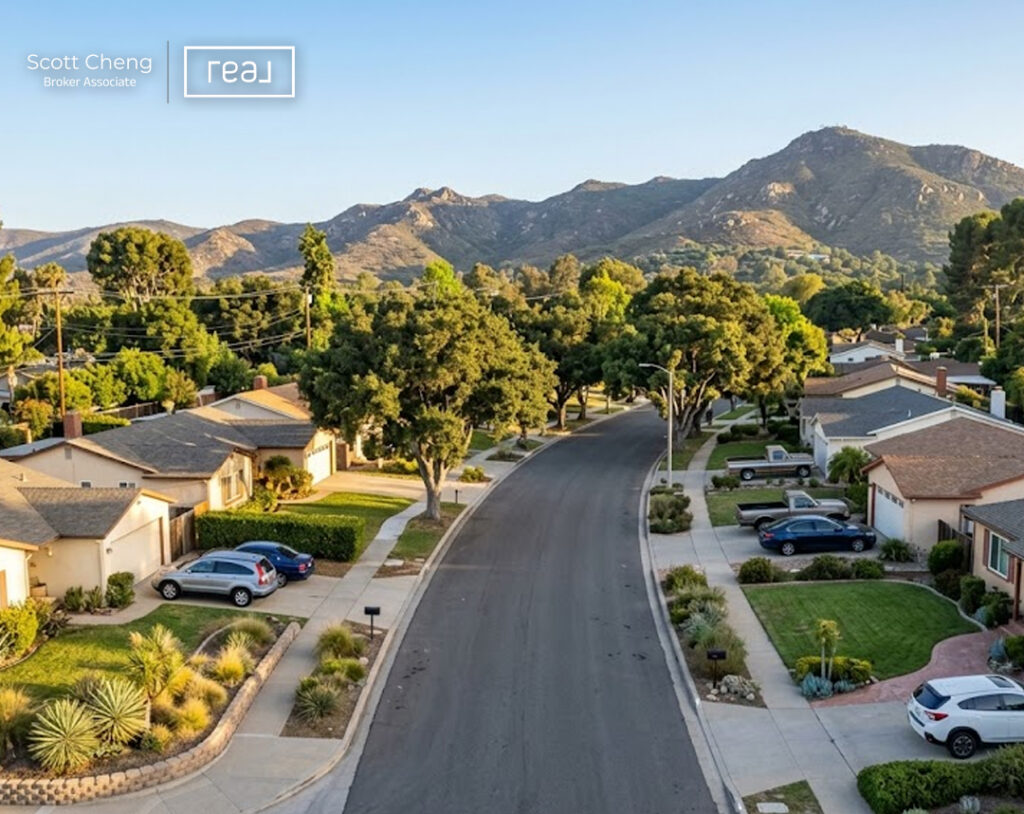
Is Navajo San Diego a good neighborhood for first-time buyers in 2026, or are the older homes and limited walkability a dealbreaker?
[SNIPPET ANSWER: Navajo is one of San Diego’s most accessible neighborhoods for first-time buyers, offering larger lots, highly rated schools, and proximity to Mission Trails. Older homes and car-dependent streets are real factors, not dealbreakers, when you plan for them.]
Why Navajo San Diego Matters for First-Time Buyers Right Now
If you’re searching for your first home in San Diego, you already know the math feels brutal. Only about 13% of county households can currently afford a median-priced home, and the citywide median for single-family homes hit $1,074,000 in April 2026.
So where does a first-time buyer even start?
This is where Navajo keeps coming up in my conversations with buyers. Spanning roughly 14 square miles between I-8 and the San Diego River, the Navajo community planning area includes Allied Gardens, San Carlos, Del Cerro, and Grantville. It’s one of San Diego’s largest residential communities, and it consistently delivers more square footage per dollar than most neighborhoods closer to the coast. With 16 years of experience helping buyers navigate San Diego County, I can tell you that Navajo is quietly one of the neighborhoods where first-time buyers actually have room to breathe.
But you need to go in with clear information. A cloudy mind can’t make decisions. Let me walk you through the real picture.
What Navajo San Diego Actually Offers First-Time Buyers
You get a neighborhood that feels established without feeling stale. Most of Navajo’s roughly 63,500 residents own their homes, and the area has a dense suburban feel with plenty of restaurants, coffee shops, and parks. It’s consistently rated as one of the better places to live in California by residents who value stability and access to nature.
Here’s what stands out for buyers entering the market:
- Larger lot sizes compared to newer developments in places like Mira Mesa or Clairemont
- Highly rated public schools, including Dailard Elementary, Green Elementary, Pershing Middle, and Patrick Henry High School, all within about a mile of most homes
- Direct access to Mission Trails Regional Park, Cowles Mountain, Lake Murray, and Navajo Canyon Open Space
- Proximity to I-8 and I-15, putting downtown San Diego roughly 20 minutes away
One family I recently worked with was relocating from the Bay Area. They wanted a three-bedroom with a real yard, good schools, and a budget under $900K. We explored Clairemont, Tierrasanta, and Navajo. They ended up in Allied Gardens because they got 300 more square feet on a significantly larger lot, with a shorter commute to Sorrento Valley than they expected.
Navajo’s Older Homes: What First-Time Buyers Should Actually Worry About
Let’s talk about the elephant in the room. Most homes in Navajo date from the 1950s through the 1980s. You’ll see mid-century ranch-style layouts, single-story floor plans, low-pitched roofs, and attached garages. Some Spanish Colonial Revival mixed in with stucco and tile accents.
Does older construction mean problems? Not necessarily, but it means you need to be intentional about your inspection and your budget.
Here’s what I tell my clients to watch for in this era of homes:
- Galvanized plumbing (common in 1950s builds) can corrode and restrict water flow
- Older electrical panels may need upgrading, especially if you plan to add an EV charger or modern appliances
- Roofing and HVAC systems that have been patched rather than replaced
- Single-pane windows that drive up energy costs
Because I’ve worked on flips and remodels alongside investors and homeowners, I can help you see past cosmetic issues and identify what actually matters structurally. One buyer I guided through a San Carlos purchase initially walked away from a 1962 ranch because the kitchen felt dated. We ran the numbers together, and a $35,000 renovation turned that home into exactly what they wanted, still well under what a comparable updated home would have cost two streets over.
The key is knowing the difference between a home that needs love and a home that needs a lifeline. With 275 transactions closed across San Diego, I’ve seen both many times, and I always recommend buyers budget 1 to 3 percent of the purchase price for near-term repairs on older inventory. When evaluating properties, it’s important to review the home inspection report thoroughly to catch structural issues before closing.
Is Navajo San Diego’s Walkability Really a Dealbreaker?
Here’s where I want to give you a straight answer: if walkability to nightlife, boutique coffee shops, and urban amenities is your top priority, Navajo is probably not your neighborhood. San Diego overall scores a 53 out of 100 for walkability, and Navajo’s suburban layout sits at or below that average.
But let me reframe this for you.
Navajo was built for families who drive. Daily errands are manageable with Aldi, Albertsons, and Smart and Final nearby. Grossmont Center Mall and Reading Cinemas are less than three miles away for shopping and entertainment. You’re also minutes from the 125 freeway.
What you trade in walkability, you gain in outdoor access. You’re essentially living at the doorstep of one of San Diego’s premier trail systems. Cowles Mountain, Mission Trails, and Lake Murray are weekend staples for residents here. That’s not something you get in North Park or Hillcrest.
What does that actually mean for your day-to-day life? If you work from home a few days a week (as many San Diego tech and biotech professionals do), Navajo’s quiet residential streets and proximity to nature may actually suit your lifestyle better than a walkable but noisy urban corridor.
How Navajo San Diego Pricing Compares for First-Time Buyers in 2026
Let’s put real numbers on this. The San Diego countywide median for attached homes (condos and townhomes) sits around $670,000 as of early 2026, and that segment actually dipped 1.1% year over year, giving buyers slightly more negotiating room.
Navajo’s condo and townhome complexes, several of them near Admiral Baker Golf Course with pools and tennis courts, typically offer one to three bedroom options that fall within or below that median. Detached homes in the Navajo area generally feature 1,738 to 2,539 square feet, which is considered midsize and high value for San Diego.
Here’s why this matters for your financing:
- San Diego’s 2026 conforming loan limit is $1,104,000, meaning most Navajo homes qualify for conventional financing without jumping into jumbo territory
- SDHC’s Middle-Income Program offers a $40,000 deferred down payment loan plus a $10,000 closing cost grant for buyers earning between 80% and 150% of area median income
- The County’s DCCA Program provides additional assistance if your household income stays below 80% of AMI, with no payments until you sell or refinance
Having helped many first-time buyers access these programs, I always recommend exploring your eligibility early. These funds have caps, and understanding what you qualify for before you start touring homes saves you from falling in love with something outside your budget.
What a Smart Navajo San Diego Purchase Looks Like in 2026
Your strategy here is straightforward. Get pre-approved with a lender who understands San Diego’s down payment assistance landscape. Identify whether you’re targeting a condo for the lowest entry point or a single-family home where the renovation upside is strongest. And work with someone who can evaluate older construction honestly.
I provide every buyer client with a complimentary attorney review of contracts and disclosures, covered by me, even if escrow cancels. On homes built in the 1950s through 1980s, that extra layer of protection matters.
Frequently Asked Questions About Buying in Navajo San Diego
Is Navajo San Diego affordable for first-time buyers in 2026?
Navajo is one of San Diego’s more accessible neighborhoods, particularly for condos and townhomes near or below the $670,000 attached home median. Detached homes offer strong value relative to their square footage. Down payment assistance programs through SDHC can further reduce your upfront costs.
What are the main neighborhoods within Navajo San Diego?
The Navajo community planning area includes Allied Gardens, San Carlos, Del Cerro, and Grantville. Each has a slightly different character, but all share access to the same schools, parks, and freeway corridors.
Are Navajo San Diego schools good for families?
Yes. Dailard Elementary, Green Elementary, Pershing Middle, and Patrick Henry High School are all highly rated within San Diego Unified. Foster Elementary and Marvin Elementary are also nearby options that receive strong marks.
How far is Navajo from downtown San Diego?
Downtown is approximately 10 miles west, usually a 20-minute drive via I-8. You also have quick access to I-15 for reaching Sorrento Valley, University City, and North County employment centers.
Do older homes in Navajo San Diego need major renovations?
Not always, but budgeting for updates is wise. Common needs include plumbing upgrades, electrical panel replacements, and energy efficiency improvements. I recommend setting aside 1 to 3 percent of the purchase price for near-term repairs.
What style of homes are in Navajo San Diego?
Most homes are mid-century ranch style from the 1950s through 1980s. You’ll find single-story layouts, stucco exteriors, attached garages, and generous lot sizes. Some Spanish Colonial Revival architecture adds variety.
Is Navajo San Diego walkable?
Navajo is a car-dependent suburban community. Grocery stores and shopping are nearby by car, and public transit options exist via MTA bus routes. However, most residents rely on personal vehicles for daily errands.
What outdoor activities are near Navajo San Diego?
Mission Trails Regional Park, Cowles Mountain, Lake Murray, and Navajo Canyon Open Space are all within minutes. This is one of San Diego’s premier neighborhoods for hiking, trail running, and outdoor recreation.
Can I use an FHA loan to buy in Navajo San Diego?
You can, but be aware that FHA mortgage insurance premiums on San Diego-priced homes add significant monthly cost. On a $900,000 home with 3.5% down, you’d pay roughly $397 per month in permanent MIP unless you refinance into a conventional loan later.
What down payment assistance is available for Navajo San Diego buyers?
SDHC offers both Low-Income and Middle-Income first-time buyer programs with deferred loans and closing cost grants. The County’s DCCA program provides additional support. CalHFA’s Dream For All program, when funded, offers up to 20% or $150,000 in assistance through a randomized drawing.
The Bottom Line on Buying in Navajo San Diego
Navajo is not flashy. It won’t give you a walkable urban lifestyle, and the homes won’t have the modern finishes you see in new construction. But for first-time buyers in San Diego’s 2026 market, it offers something increasingly rare: space, stability, great schools, and a realistic path to ownership without stretching into jumbo loan territory.
The older homes are a feature if you approach them strategically, not a flaw. And the outdoor access alone sets Navajo apart from most neighborhoods in this price range.
If you’re weighing Navajo against other San Diego neighborhoods, I’d love to walk through the numbers with you. With 180 five-star client reviews and a focus on first-time buyer education, I make sure you have clean information before you make any decisions. Reach out to me, Scott Cheng, at 858-405-0002 or visit my office at 16516 Bernardo Center Dr. Ste. 300. Let’s figure out your next move together.
*Scott Cheng, Associate Broker, Real Brokerage, DRE# 01509668. Information is believed accurate but not guaranteed. Buyers should verify all facts independently.*