

Best Neighborhoods in San Diego for Relocation Buyers: Top 10 Comparisons to Avoid Costly Mistakes
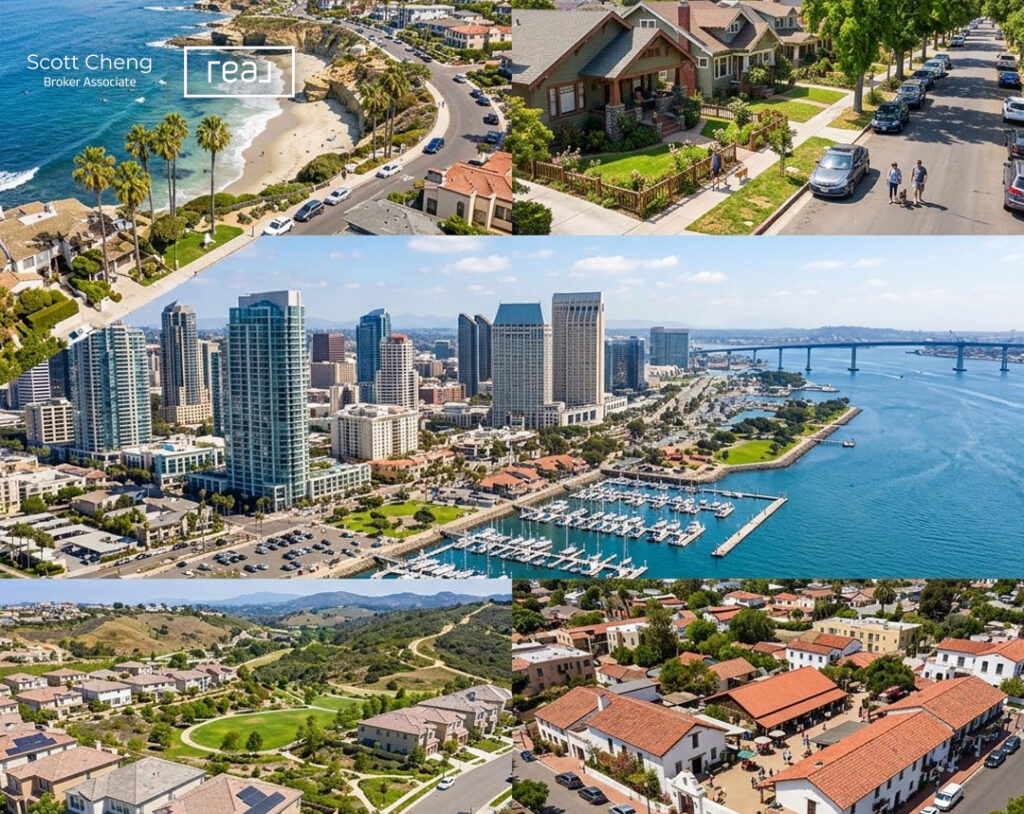
# Best Neighborhoods in San Diego for Relocation Buyers: Top 10 Comparisons to Avoid Costly Mistakes
What are the best neighborhoods in San Diego for relocation buyers, and how do you compare the top 10 so you avoid costly mistakes?
You should focus on ten proven neighborhoods and compare price, schools, commute, HOA and Mello-Roos, wildfire risk, noise, and future resale. Matching your budget and daily life needs helps you avoid overpaying or choosing the wrong fit.
Why This Matters Right Now
Recent regional data shows San Diego’s average home value near $1,001,265, down about 3.2% year over year, with homes going pending in roughly 18 to 21 days. Median prices held steady month over month and ticked up about 1% year over year, while sales jumped over 22% from January to February. With a 3.2-month supply indicating a seller’s market and roughly one-third of homes selling over list, you need a clear plan. You could see modest 2% to 4% appreciation in 2026, so timing and precision matter. When you compare neighborhoods the right way, you secure value, reduce commute stress, protect your lifestyle goals, and position yourself for strong resale. When you get it wrong, you risk paying too much, overextending on taxes, or ending up in the wrong school or microclimate for your family.
What You Need to Know Before Choosing a San Diego Neighborhood
You should align your search with how San Diego actually moves: fast, microclimate-driven, and highly neighborhood-specific. Entry-level single-family options can start near the mid-600s in select inland pockets, with many family-oriented areas ranging from the high 900s to the mid-1 millions, and coastal luxury well above $2 million. Condos and townhomes often become your bridge into prime zip codes.
Key takeaways:
- Speed matters: Typical listings go pending in about 18 to 21 days. You should have proof of funds or preapproval ready, plus flexibility for same-day showings.
- Pricing quirks: Citywide, about 32.7% of sales close over list, but over half close under. You should target homes that sit longer than 21 days for leverage.
- Inventory trends: For-sale inventory rose from historic lows yet remains tight, keeping pressure on desirable areas. You should expand your radius one or two neighborhoods to unlock opportunities.
- Microclimates: Coastal fog, inland heat, canyon breezes, and elevation all affect comfort and utility bills. You should compare day-night temperature swings by area before you commit.
- Taxes and fees: Mello-Roos and HOA dues are common in master-planned communities. You should model the total monthly payment, not just principal and interest.
- Risks and rules: Wildfire zones, aircraft paths near Miramar, and coastal short-term rental restrictions can affect quality of life and resale. You should check maps, noise patterns, and local ordinances during due diligence.
Neighborhood Fit Signals You Should Watch
- School alignment: If public schools drive your choice, you should focus on districts known for strong outcomes such as Poway Unified and San Dieguito Union, then verify individual school assignments.
- Commute anchors: You should plan around job hubs like UTC, Sorrento Valley, Downtown, Mission Valley, and Kearny Mesa, then cap your drive time during actual rush hours.
- Housing stock reality: You should match your needs to area inventory, for example townhomes in Del Sur, larger lots in Poway, older charm in North Park, or coastal condos in Point Loma and Pacific Beach.
Top 10 Neighborhood Comparisons to Avoid Costly Mistakes
Use these side-by-side contrasts to decide faster and avoid overpaying for the wrong fit.
1) Carmel Valley vs Del Sur
- Carmel Valley: Coastal-proximate, highly ranked public schools, many detached homes and low-maintenance yards, higher prices, limited yard size in some tracts.
- Del Sur: Newer master-planned living with community amenities, Mello-Roos common, townhome and single-family mix, strong schools via Poway Unified, more value per square foot than Carmel Valley.
2) Rancho Bernardo vs 4S Ranch
- Rancho Bernardo: Established neighborhoods, golf course pockets, good freeway access, lower Mello-Roos in many areas, broader age of homes, diverse price points.
- 4S Ranch: Newer homes, walkable town center feel, more HOAs and Mello-Roos, strong schools, easy access to parks and trails.
3) Rancho Peñasquitos vs Scripps Ranch
- Rancho Peñasquitos: Family-friendly streets, Poway Unified schools for many addresses, good freeway access, more suburban density.
- Scripps Ranch: Mature tree canopy, lake and canyon pockets, strong community feel, some wildfire history to evaluate, sought-after public schools.
4) UTC/University City vs La Jolla
- UTC/University City: Newer condo towers and townhomes, convenient to UCSD and biotech, lower price point than coastal La Jolla, modern amenities.
- La Jolla: Premium coastal setting, upscale single-family homes and view condos, higher prices, tourist traffic near village centers.
5) North Park vs Normal Heights
- North Park: Trend-forward dining and breweries, Craftsman and Spanish-style homes, competitive pricing for updated properties, limited parking in some blocks.
- Normal Heights: Similar vintage charm with a slightly quieter vibe on many streets, potential value relative to North Park, convenient freeway access.
6) Mission Hills vs Hillcrest
- Mission Hills: Historic homes, quieter residential feel, views in some pockets, premium pricing for classic architecture.
- Hillcrest: Vibrant urban scene, condos and smaller lot homes, walkable retail, nightlife energy that you may love or avoid.
7) Point Loma vs Ocean Beach
- Point Loma: Nautical setting, strong single-family market, reputable schools, scenic harbor views, higher price points.
- Ocean Beach: Laid-back surf culture, beach bungalows and condos, tighter lots, parking and noise can be factors near the main strips.
8) Pacific Beach vs Mission Beach
- Pacific Beach: Larger year-round community, more diverse housing stock, lively scene, value depends on distance from the beach and noise corridors.
- Mission Beach: Narrow strip with boardwalk condos and vacation appeal, premium for oceanfront, short-term rental rules to understand before buying.
9) Clairemont/Bay Ho vs Serra Mesa
- Clairemont/Bay Ho: Central location, canyon views in Bay Ho, older but improving housing stock, strong access to beaches and job centers.
- Serra Mesa: Central to major freeways, appealing for value and commute, more mid-century homes, evolving retail.
10) Poway vs Carmel Mountain Ranch
- Poway: Larger lots in many areas, equestrian and semi-rural feel in parts, high-performing schools, more space for ADU opportunities where zoning allows.
- Carmel Mountain Ranch: Suburban convenience, shopping and services close by, townhomes and single-family mix, typically lower lot sizes than Poway.
Key factors to evaluate:
- Total monthly cost: Price, rate, taxes, HOA, and Mello-Roos combined.
- Commute and access: Drive times to your job hubs during peak traffic.
- Lifestyle match: Parks, trails, beach access, dining, and community events.
Your Step-by-Step Guide
1) Define your non-negotiables You should rank budget range, school needs, commute time, and housing type. Set a hard cap on total monthly payment that includes HOA and Mello-Roos.
2) Preapproval and funds You should obtain a fully underwritten preapproval and proof of funds. In a market where 18 to 21 days to pending is common, readiness beats hesitation.
3) Shortlist three zones You should select a primary, secondary, and backup area. For example, Del Sur, 4S Ranch, and Rancho Peñasquitos if you value schools and newer homes.
4) Microtour days and nights You should visit on weekdays and weekends, day and night. Check traffic, parking, aircraft noise, and local activity. Microclimates can shift comfort levels by area.
5) Price-to-value checks You should compare recent sales, days on market, and seller trends. If a home has sat past 21 days, you may gain leverage. Look for price-per-square-foot gaps that favor you.
6) Offer strategies You should use escalation only when needed, and lean on appraisal gaps or flexible timing if competing. Consider targeting listings that just fell out of escrow.
7) Due diligence You should review HOA budgets, Mello-Roos expirations, wildfire maps, noise patterns, and any short-term rental rules. Verify school assignment rather than relying on assumptions.
8) Backup plan You should maintain an active backup zone to avoid settling under pressure. If inventory is tight in your top pick, pivot quickly to your secondary area.
What This Looks Like in the Rancho Bernardo Area
Around 16516 Bernardo Center Dr STE 300, you are in the heart of North Inland living with strong access to job centers via Interstate 15 and Highway 56. You get a mix of established neighborhoods, master-planned communities, and highly regarded public schools. You benefit from suburban convenience, with parks, trails, and shopping close by, and you can still reach the coast in a reasonable drive.
Neighborhoods to consider:
- Rancho Bernardo: You get diverse tracts from older ranch homes to golf course communities. Many areas have lower or no Mello-Roos. Typical single-family pricing often ranges from the high 800s to the mid or high 1 millions depending on size, upgrades, and location. Condos and townhomes can provide entry under the single-family median.
- 4S Ranch: You get newer construction, walkable amenities, and community parks. Expect HOAs and Mello-Roos that trade for planned conveniences and newer builds. Single-family homes commonly fall from roughly the low 1 millions to the upper 1 millions, with townhomes often below that.
- Del Sur: You get a highly amenitized master plan with pools, parks, and trails. Mello-Roos is typical, and you see a mix of townhomes and larger detached homes. Many single-family options land between the mid 1 millions and low 2 millions, with townhomes providing a more affordable entry point.
Nearby complements: Carmel Mountain Ranch for suburban convenience at a slightly lower price point than Del Sur and Carmel Valley, and Poway for larger lots, potential ADU opportunities, and a more semi-rural feel in some areas.
You should compare these side by side, then anchor your search to how your daily routine will actually feel, not just list price. Commute patterns on the I-15 and the 56 can shape your quality of life.
What Most People Get Wrong
- Chasing the cheapest sticker price: You might save on the purchase price, then overspend on taxes, HOA, Mello-Roos, and driving time. You should budget for the total monthly cost and weigh it against lifestyle value.
- Ignoring microclimates: You might pick a home that feels perfect at noon but too foggy, windy, or hot during your actual use hours. You should test morning and evening comfort.
- Assuming school assignments: Boundaries can shift and not all addresses feed the same schools. You should verify your specific property’s assignment before you write.
- Overvaluing list price signals: With roughly one-third selling over list and more than half under, you should study days on market and recent comps rather than anchoring to list price alone.
- Waiting for a crash: Inventory remains tight, and forecasts call for modest appreciation in 2026. You should focus on micro-level value where your budget stretches furthest.
Frequently Asked Questions
Where can you still find single-family homes under $900,000?
You can find them in select inland pockets such as older tracts in Rancho Bernardo, parts of Clairemont, or areas of Escondido and San Marcos. You should expand your radius and consider homes that need light updates. Condos and townhomes often provide the most accessible entry in prime school zones.
How much should you budget for HOA and Mello-Roos?
You should plan for several hundred dollars per month in many master-planned areas, and some communities add Mello-Roos that can last for years. The exact amount varies widely. You should request full HOA docs, budgets, reserve studies, and Mello-Roos schedules to calculate your total monthly payment before you offer.
How fast do you need to move on a good listing?
You should assume you have hours, not days. With pending times near 18 to 21 days on average, top listings can draw activity immediately. You should have your preapproval and proof of funds ready, tour the same day, and consider pre-inspections or flexible timing to strengthen your position when needed.
What are the best neighborhoods for public schools?
You should look at areas feeding into Poway Unified in North Inland communities like 4S Ranch, Del Sur, Rancho Peñasquitos, and parts of Rancho Bernardo, and also consider coastal and North County districts like San Dieguito Union. You should verify the exact school assignment for each property and compare commute and budget trade-offs.
Is 2026 a good year to buy in San Diego?
You are entering a market with tight supply, steady demand, and forecasts of modest 2% to 4% appreciation. Prices appear stable to slightly rising in many areas, and homes sell quickly. If you buy with a long-term horizon, prioritize total monthly cost, and pick a high-demand neighborhood, you position yourself well.
The Bottom Line
You should choose from ten proven neighborhoods, then make a decision by comparing the factors that matter most to your daily life. Focus on total monthly cost, commute, schools, microclimate, and future resale. In a market where homes move in under three weeks and about one-third sell over list, precision wins. When you pair a strong pre-approval vs pre-qualification for relocating professionals with a clear neighborhood strategy, you avoid costly mistakes and secure the right fit for your budget and lifestyle.
If you are ready to explore your options for the best neighborhoods in San Diego, Scott Cheng at Scott Cheng – REAL Brokerage can walk you through the specifics for your situation.
 858 405 0002 DRE #01509668