Best Home Inspectors for Downsizers Buying in Mission Valley San Diego 2026: Top Reviews and How to Choose for Low-Risk Properties Before Escrow Closes
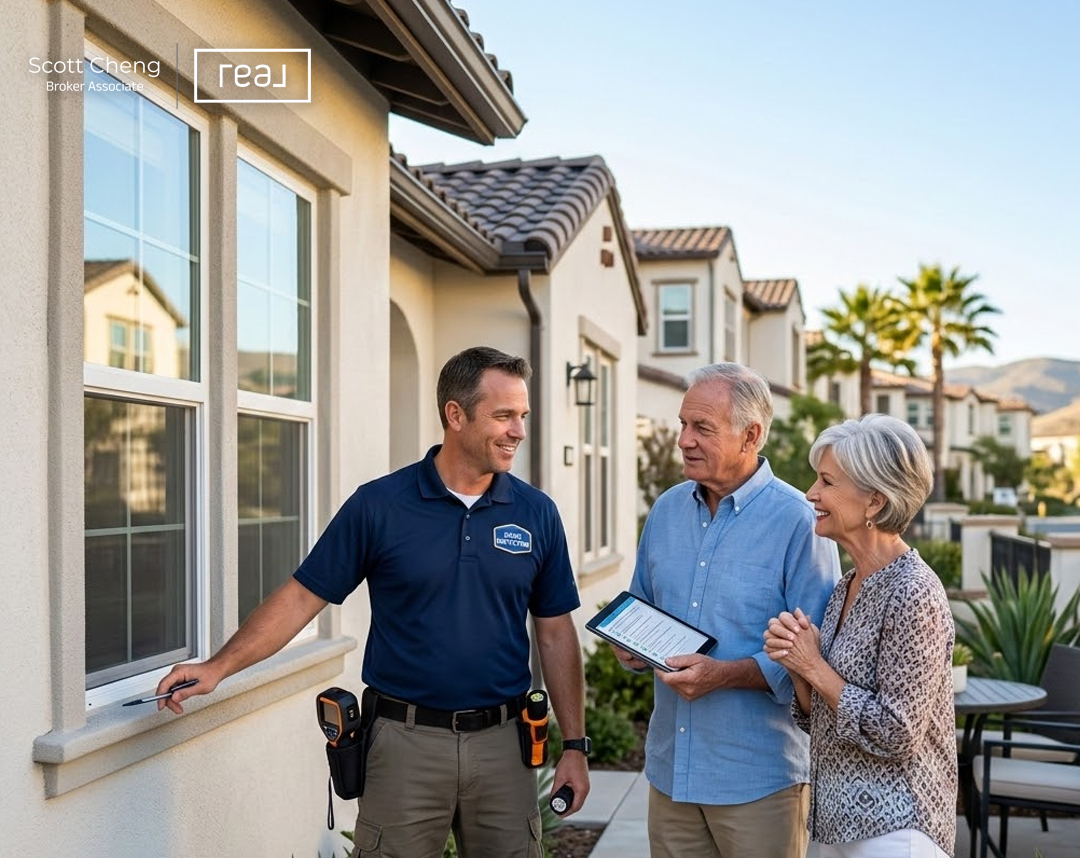
Best Home Inspectors for Downsizers Buying in Mission Valley San Diego 2026: Top Reviews and How to Choose for Low-Risk Properties Before Escrow Closes
The best Mission Valley inspectors for downsizers are certified, insured condo and multi-unit specialists who deliver fast, photo-rich reports and coordinate mold, balcony, roof, and sewer scope add-ons within your contingency window.
Why does choosing the right home inspector matter for downsizers in Mission Valley right now?
Careful due diligence buys you real leverage in today’s market. Local MLS and association data show San Diego still favors sellers, yet higher mortgage rates near seven percent and modest inventory growth have pushed more buyers to negotiate under list price.
Attached homes, which dominate Mission Valley, have seen some of the strongest inventory expansion since 2025 according to SDAR, so you may have more choice but also more building-to-building variability. That means an inspector’s condo expertise can protect you from surprise assessments, hidden moisture, and HOA responsibility gaps before escrow closes. Your timing could save you thousands if you document issues early and request credits or repairs. This same approach applies if you are also considering nearby Hillcrest and Normal Heights, where older buildings and diverse HOAs require the same sharp, inspection-led strategy.
What should you know before hiring a home inspector in Mission Valley?
You should choose an inspector who is built for condos and townhomes, not just single-family homes. Mission Valley has a high concentration of mid-rise and garden-style communities with shared systems, flat roofs, balconies, and complex HOA boundaries.
Your inspector needs a plan for unit-level issues and common area interfaces so you do not pay for HOA responsibilities or miss problems you will inherit.
Key takeaways to guide you:
- Focus on condo credentials. You should see certifications like CREIA or ASHI, plus InterNACHI. Ask about SB 721 and SB 326 familiarity, since California balcony and deck laws drive HOA compliance and reserve needs.
- Expect moisture intelligence. The San Diego River corridor and older stucco assemblies raise the risk of hidden intrusion. Your inspector should use moisture meters and thermal imaging at bathrooms, exterior walls, and window assemblies.
- Plan add-ons early. Termite and wood destroying organism inspection is standard in San Diego. In condos, you often still need a separate WDO contractor. Sewer scopes can matter for lower level units and older complexes. Pools and spas in common areas warrant at least a visual safety overview by a qualified pro.
- Verify insurance. You should require errors and omissions plus general liability. Ask for coverage limits and claims history.
- Match the market clock. Attached inventory in San Diego has run near three months of supply per SDAR, and pendings often move fast. Your inspector must schedule within 48 to 72 hours and deliver a same or next day report.
When you compare options, you will notice that top San Diego real estate agents emphasize paperwork as much as pipes. You should pair the inspection with a deep read of HOA minutes, budgets, and reserve studies to connect unit findings with building-wide realities.
How do you compare and choose the best home inspector for a Mission Valley condo?
Your best option is to grade inspectors with a simple scorecard that fits Mission Valley’s building stock and your downsizing goals. You should compare capacity, credentials, turnaround, and specialty depth so you do not chase three vendors at the last minute.
Key factors to evaluate:
- Certifications and condo experience: You should look for CREIA or ASHI, InterNACHI CPI, and demonstrated condo or multi-unit focus. Ask how many Mission Valley or central San Diego inspections the inspector completed in the last 12 months.
- Report quality and speed: You should require same or next day delivery, annotated photos, summary by priority, and cost ballparks. Your strongest leverage comes from clear defects summarized for repair or credit requests.
- Insurance and guarantees: You should verify E&O plus general liability. Ask if there is a workmanship guarantee for re-inspections and if the inspector will speak with the appraiser or underwriter if questions arise.
- Specialty coverage: You should confirm that the inspector can coordinate or refer WDO, sewer scope, mold sampling, infrared scans, roof evaluations for flat roofs, and balcony safety observations aligned with SB 721 and SB 326.
- Pricing and value: You should expect a base inspection fee for a condo in the 700 to 1,600 square foot range, with add-ons priced separately. Faster scheduling within 48 hours often carries a rush fee that can be worth it in a competitive environment.
- References and reviews: You should ask for three recent clients from Mission Valley, Hillcrest, or Linda Vista and skim reviews for report clarity, communication speed, and how findings translated into credits or repairs.
As a buyer working with a real estate agent San Diego CA families trust, you can also request two or three inspector referrals, then run your own comparisons. Top producing real estate agents in San Diego usually know which pros excel in specific buildings and which ones are best at documenting issues without torpedoing good deals.
What is the step-by-step process for low-risk inspections before escrow closes?
You should lock in a clear plan the moment you go under contract. Mission Valley condos often have ten to fourteen day inspection contingencies, so coordination is everything.
- Day 0 to 1: Schedule the general home inspection. You should hold a spot for a WDO inspection the same day or the day after. If your unit is older or on a slab, pencil in a sewer scope vendor.
- Day 1 to 3: Attend the inspection. You should walk the property, ask about moisture meter readings, balcony and railing conditions, roof access limitations, and HVAC age for packaged or rooftop units. Clarify what is unit responsibility versus HOA coverage.
- Day 2 to 4: Order specialty add-ons. You should confirm WDO, consider mold sampling if there is musty odor or past intrusion, and request a roof evaluation if your unit-level roof exposure is in question or if recent reserve studies flag roof life near end-of-life.
- Day 3 to 5: Review the report. You should prioritize health and safety, water intrusion, electrical safety, and structural or balcony concerns. Tag lower priority cosmetic items for future maintenance.
- Day 4 to 6: Pull the HOA file. You should read minutes for the last twelve months, the current budget, and the latest reserve study. Match inspection defects to pending special assessments or deferred projects.
- Day 5 to 7: Get bids. You should request at least two repair quotes for unit-responsible items, then translate those into a credit or repair request. Your real estate broker San Diego advisers can help package the request to fit local norms.
- Day 7 to 9: Negotiate. You should leverage clear, safety-focused evidence first. In a market where many buyers still pay under list, clean documentation often wins reasonable credits without delaying close.
- Day 9 to 12: Re-inspect if repaired. You should ask your inspector to verify completed work or send receipts with photos for remote confirmation.
Follow this schedule and you minimize surprises, even if you expand your search to Hillcrest and Normal Heights where timelines and building types are similar.
What do home inspections look like across San Diego’s central neighborhoods?
Inspection priorities differ meaningfully from one San Diego neighborhood to the next. In Mission Valley, you are often buying within large HOAs that manage roofs, exteriors, and shared systems.
Your focus should be interior moisture, windows, electrical panels, balconies, and appliance life, paired with HOA document review for the rest. SDAR data placed attached median prices in the high six hundred thousands in 2025, and many Mission Valley homes trade in the six hundred to nine hundred thousand range depending on size, age, and community amenities. Newer master-planned pockets like Civita offer energy-efficient construction, yet you should still verify window seals, ventilation, and builder warranty paths.
In Hillcrest, you may encounter mid-century buildings with lighter seismic retrofits and older plumbing stacks. Your best move is to prioritize electrical safety, balcony anchorage, plumbing lifespan, and potential elevator modernization needs. In Normal Heights, smaller buildings and vintage four-plexes can bring aluminum wiring or galvanized supply lines into play, so you should add targeted electrical and plumbing scrutiny. Linda Vista has pockets of hillside development where drainage and slope management deserve attention.
San Diego’s attached inventory has hovered around three months per SDAR, so you should plan for quick scheduling. Your negotiation power improves when you anchor requests to documented safety issues and cite reserve studies or board minutes that validate building-wide projects.
Neighborhoods to consider in San Diego:
- Mission Valley: Strong condo and townhome mix, typical prices roughly $600,000 to $900,000 for updated units, central access to I-8 and I-163, plentiful amenities and HOAs that ease maintenance for downsizers.
- Hillcrest: Urban lifestyle with medical centers nearby, walkable dining, older buildings that reward careful inspection of plumbing, electrical, and balconies, pricing often higher for larger updated units.
- Normal Heights: Charming vintage buildings and smaller HOAs, often more budget friendly than Hillcrest, best for buyers willing to modernize systems with clear inspection-led plans.
Nearby Areas Worth Exploring
- Hillcrest: If you like Mission Valley’s central access but want a more walkable, urban feel, you will find a diverse condo stock close to hospitals and Balboa Park. You should budget for older-system upgrades, which you can quantify through inspection.
- Normal Heights: If you want community character and slightly lower price points than Hillcrest, you will see smaller HOAs and vintage charm. You should scrutinize plumbing and electrical lifespan and verify balcony safety.
- Linda Vista: If you value proximity to University of San Diego and a quick drive to Mission Bay, you can find townhomes and condos that balance price and access. You should pay close attention to slope drainage and roof condition.
What mistakes do most buyers make when inspecting Mission Valley condos?
Most surprises come from what your unit inspection does not cover — not what it finds. You should connect your findings to HOA documents, reserve studies, and pending capital projects to avoid special assessment shocks.
Another common mistake is skipping a sewer scope because it is a condo. If your unit is at or below grade or you notice slow drains, a quick camera run can catch root intrusion or collapsed segments that are still your responsibility. You should not assume the HOA covers everything. Exclusive-use elements like windows and some balcony components are often unit-owner items. Many buyers also confuse appraisal with inspection. An appraisal checks value, not condition. Finally, some buyers skip WDO in attached homes. In San Diego’s climate, termite activity is common, and a separate licensed inspection is a smart baseline even in concrete-heavy complexes.
Frequently Asked Questions About Home Inspections for Downsizers in Mission Valley
What certifications should your Mission Valley condo inspector have?
You should look for CREIA or ASHI plus InterNACHI CPI. Ask about ICC familiarity and proof of continuing education on SB 721 and SB 326 for balcony safety. You should also confirm E&O and general liability insurance, then verify recent condo-specific experience.
Do you need a separate termite inspection in San Diego?
Yes. You should order a licensed WDO inspection even in condos. Termites and wood rot can affect patios, door trim, and balcony components. A separate WDO report supports your repair or credit request and pairs well with the general home inspection.
Does this inspection advice apply to Hillcrest and Normal Heights too?
Yes. You should follow the same plan. In Hillcrest, add focus on older plumbing stacks and elevators. In Normal Heights, weigh electrical upgrades and galvanized pipes. Your inspector’s condo and vintage-building experience matters just as much as in Mission Valley.
How long should your inspection contingency be for a Mission Valley condo?
You should aim for ten to fourteen days for condos, with inspections booked within the first three days. That window allows for general, WDO, and any specialty follow-ups, plus time to collect bids and negotiate credits before your deadline.
Should you ever waive inspections to win a deal in San Diego?
No. You should never waive critical inspections. If you must compete, you can keep the timeline short and cap credit requests to safety and system failures. Skipping inspections risks costly surprises and weakens your negotiation position.
The Bottom Line: How to secure a low-risk Mission Valley condo before escrow closes
You protect your budget and your stress level when you hire a certified condo specialist who moves fast, documents clearly, and connects unit issues with HOA realities. You should line up general, WDO, and targeted add-ons like moisture, balcony, roof, and sewer scope early, then pair the findings with reserve studies and minutes.
Whether you buy in Mission Valley or explore nearby Hillcrest and Normal Heights, the same inspection-led strategy helps you secure a low-risk property and leverage fair credits before escrow closes. When you compare your options, you will see why top realtor in San Diego guidance often starts with the right inspector and a tight timeline.
If you are ready to explore your options for the best home inspectors for downsizers in Mission Valley San Diego or nearby communities, Scott Cheng at Scott Cheng San Diego Realtor can walk you through the specifics for your situation.
📞 858-405-0002
DRE# 01509668
You should also lean on a real estate broker San Diego buyers count on to coordinate vendors, since top real estate brokers in San Diego and top realtors in San Diego CA often maintain vetted lists of condo-focused inspectors. As you weigh the best neighborhoods in San Diego for families or consider the best neighborhoods to buy in San Diego, the right inspection team will keep your escrow low risk. If you are comparing a real broker San Diego option or evaluating the best real estate brokerage in San Diego, ask how they handle inspection logistics, since top real estate companies in San Diego and top real estate teams in San Diego win deals by pairing speed with due diligence. You can apply this same approach in nearby best beach neighborhoods in San Diego or popular neighborhoods in San Diego when lifestyle and maintenance-light living matter most.
Have Questions About San Diego Real Estate?
Scott Cheng provides free, no-obligation consultations for buyers, sellers, and investors.
Schedule a Consultation