Seismic and Structural Risks for North Park San Diego Apartment Buildings in 2026
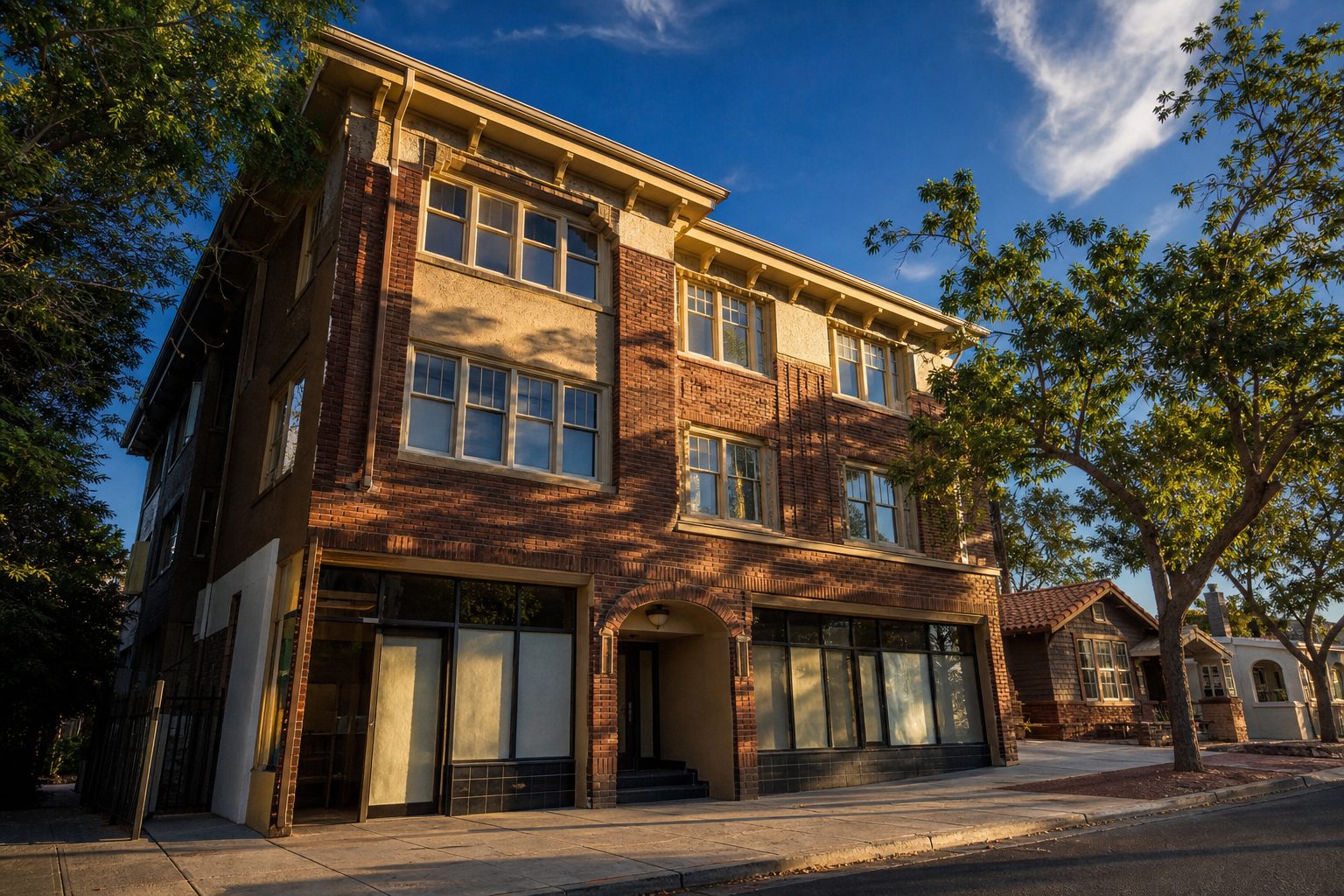
What are the real seismic and structural risks you need to evaluate before buying a 6-to-12 unit apartment building in North Park, San Diego in 2026, and how do they affect your financing options?
North Park’s pre-war building stock carries meaningful seismic risk, especially soft-story apartments built before 1978, and that risk directly shapes your insurance costs, loan terms, and capital reserve requirements.
Why This Matters for North Park Investors Right Now
If you’re shopping for a 6-to-12 unit apartment building in North Park in 2026, you’re looking at one of San Diego’s most desirable rental markets. With a Walk Score of 86, a median renter household income of $94,014, and 71% renter occupancy across the 92104 ZIP code, tenant demand here is strong and steady. Average apartment rents run between $2,400 and $2,770 per month.
But here’s what trips up investors who come in focused only on cap rates and rent rolls: North Park was built largely between the 1920s and 1950s. That Craftsman-era charm along 30th Street and University Avenue comes with a structural reality that can reshape your entire deal. The Engineering and Environmental Research Institute projects that a 6.9-magnitude event on the Rose Canyon fault could cause $38 billion in regional damage and affect 120,000 buildings. Multifamily housing takes the hardest hit, with an estimated 4% of multifamily structures suffering irreparable damage compared to just 0.3% of single-family homes. So this is not a theoretical concern. It is a financial one that belongs in your underwriting from day one.
The Five Structural Risk Categories You Need to Know in North Park
Not all older buildings carry the same level of seismic vulnerability. When I walk a 6-to-12 unit property with an investor client, I focus on five specific structural types that San Diego engineering groups have identified as high-risk.
Soft-Story Buildings (Pre-1978)
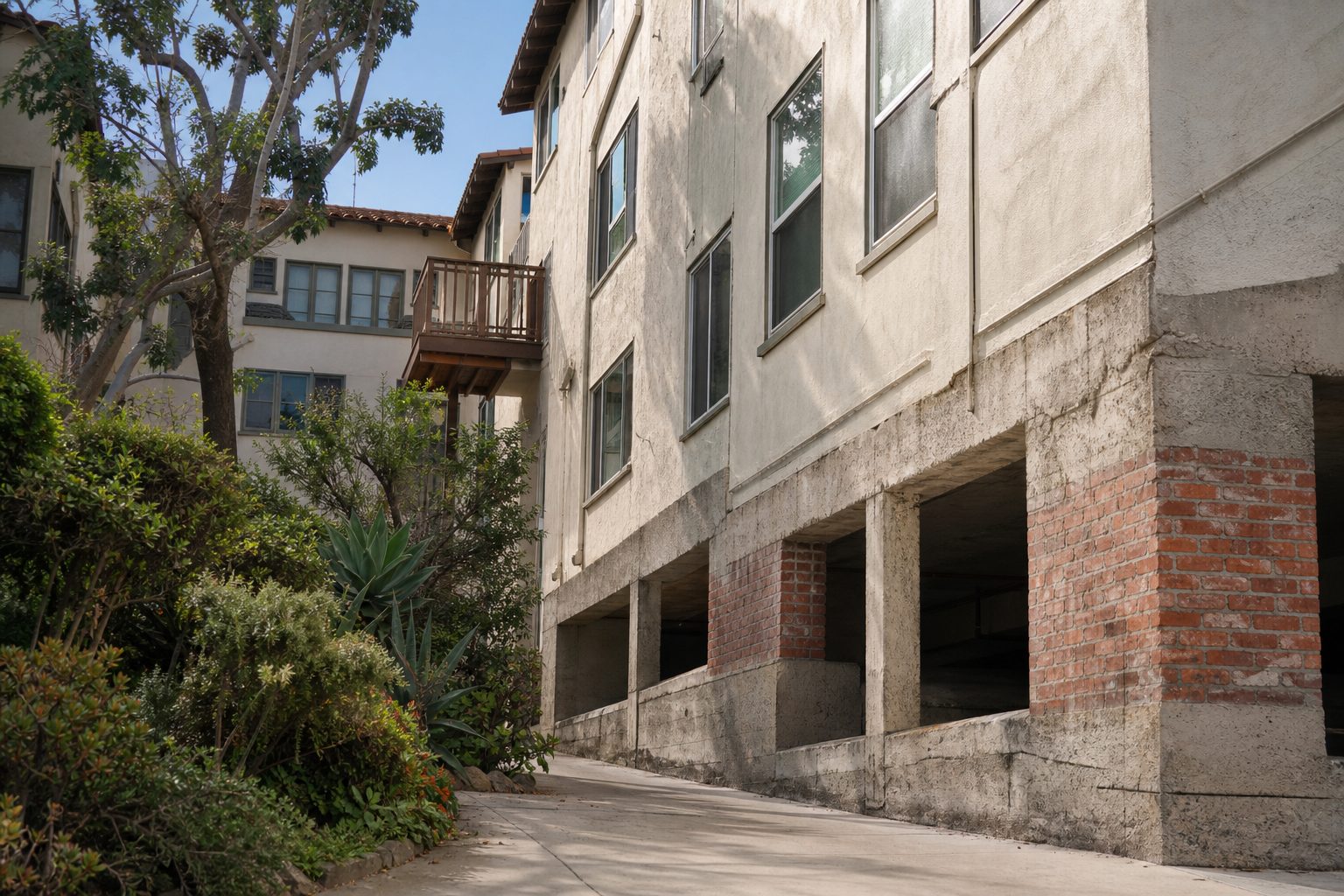
This is the single most common risk in North Park’s multifamily stock. These are buildings where the ground floor is open for parking or commercial space, with residential units stacked above. The lack of lateral support at the ground level means the building can pancake during a significant earthquake. Many of the apartment buildings along University Avenue and the side streets between El Cajon Boulevard and Upas Street fall into this category.
Unreinforced Masonry (Pre-1975)
Older brick facades are beautiful, but without modern reinforcement, they can shear off during shaking. You will find these in some of the mixed-use buildings near the 30th Street corridor.
Non-Ductile Concrete (Pre-1978)
These structures lack the flexibility to absorb lateral forces. They are brittle and prone to catastrophic failure rather than gradual yielding.
Concrete Tilt-Up (Pre-1994)
Weak wall-to-roof connections can cause walls to separate and collapse. Less common in North Park’s residential stock but present in some commercial-adjacent buildings.
Steel Moment Frame (Pre-1996)
Welded beam-to-column joints can fracture in a brittle way. This risk surfaced dramatically during the 1994 Northridge earthquake in Los Angeles.
What does this mean practically? If the building you’re considering was built before 1978 and has ground-floor parking, you’re almost certainly looking at a soft-story structure. That single factor will influence every downstream decision in your acquisition.
How the Rose Canyon Fault Changes Your North Park Investment Calculus
San Diego’s earthquake risk is significantly higher than most investors realize. The Rose Canyon fault, widely considered San Diego’s most significant seismic threat, is capable of producing quakes in the 6.5 to 6.8 magnitude range. Updated maps from the California Geological Survey show the fault zone stretching from La Jolla through the airport, beneath downtown, and into the harbor area, with energy corridors that affect North Park directly.
What makes this especially relevant is a recent discovery of a “blind-thrust” fault beneath the region. This is the same fault type that triggered the devastating 6.7-magnitude Northridge earthquake in 1994. Blind-thrust earthquakes are undetectable at the surface, and while they are not necessarily the most energetic faults, they rank among the most destructive.
I worked with an investor last year who was evaluating a 10-unit building on a side street near North Park Way. The building had solid rents and low vacancy, but a structural engineering report revealed it was a textbook soft-story with original cripple walls and no seismic upgrades. The retrofit estimate came in around $85,000. That number completely changed his return projections and ultimately his offer price. Without that report, he would have overpaid by six figures when you factor in both the retrofit cost and the insurance premium increase.
Having closed over 275 transactions in San Diego, I can tell you that the investors who get hurt are the ones who skip the structural engineering report during due diligence. A cloudy mind can’t make decisions, and incomplete data is the fastest way to cloud your judgment.
What Seismic Retrofitting Actually Costs in North Park
Let me give you realistic numbers. For a single residential structure, basic foundation bolting runs $3,000 to $6,000. Comprehensive retrofits including cripple wall bracing cost $10,000 to $25,000. But for a 6-to-12 unit apartment building, you are working at a different scale entirely.
Soft-story retrofit construction typically involves installing steel moment frames, reinforcing the foundation, and adding drag lines to absorb ground motion. Engineering takes 3 to 6 weeks, and construction runs 2 to 6 months for commercial soft-story buildings. Industry guidance suggests a retrofit at roughly 3% of the building’s value is a reasonable benchmark.
So on a $2 million North Park building, you might budget $60,000 to $80,000 for a comprehensive seismic retrofit. That is not pocket change, but compare it to the alternative: a building that could suffer catastrophic structural damage in a moderate earthquake, with no insurance coverage for the loss.
One investor I worked with in San Diego was looking at a bungalow-court style 8-unit property near Morley Field. The proximity to Balboa Park made it an attractive long-term hold, but the 1940s construction meant original foundations and no lateral bracing. We brought in a structural engineer before the offer was finalized. The retrofit scope came in manageable, around $45,000, and she negotiated a purchase price credit that covered most of it. That is how you protect yourself.
How Seismic Risk Directly Affects Your Financing on a North Park Apartment Building
Here is where the financial rubber meets the road. Your building’s seismic profile will affect three critical areas of your financing.
Insurance Requirements and Costs
Standard commercial property insurance does not cover earthquake damage. Full stop. Earthquake policies are available, but they are expensive and come with high deductibles, sometimes up to 20% of the building’s insured value. On a $2 million asset, that could mean a $400,000 deductible. Depending on your building’s age, condition, and whether it has been retrofitted, coverage may be limited or difficult to obtain at all.
Lender Underwriting Scrutiny
Lenders underwriting 6-to-12 unit buildings in seismic zones will evaluate whether the building has been retrofitted, require structural engineering reports, and may mandate earthquake insurance as a loan condition. A pre-1978 soft-story building without a retrofit will face tighter terms, higher rates, or outright denial from some lenders. Multifamily loan rates in 2026 start around 5.42% for HUD loans and 5.44% for FHA, but those rates assume a building in good structural standing.
Capital Reserve Expectations
Even if your lender does not require a retrofit before closing, they will want to see capital expenditure reserves that account for seismic upgrades. With San Diego’s median multifamily cap rate sitting at just 4.3%, well below the 6.1% national average, your margins are already thin. Underestimating your capital needs can turn a marginal deal into a money-losing one.
Your Due Diligence Checklist for North Park Multifamily Buildings
Before you make an offer on any 6-to-12 unit property in North Park, you need clean answers to these questions.
- When was the building constructed? Pre-1978 is the critical threshold for most seismic risk categories.
- Does the ground floor have open parking or commercial space? If yes, it is likely a soft-story structure.
- Has any seismic retrofit been completed? Ask for engineering reports and permits.
- What is the foundation type? Raised foundations on older buildings are more vulnerable.
- Are there visible signs of settling, cracking, or lateral movement? These may indicate deeper structural issues.
- What will earthquake insurance cost, and is it available? Get quotes before you finalize your offer.
- What does your lender require? Some loan programs will not fund without a retrofit or structural clearance.
With 18 years of experience in the San Diego market and a specialty in investment and multi-unit properties, I make sure my investor clients work through every item on this list before we get anywhere near a final offer. I also provide a complimentary attorney review of contracts and disclosures, covered by me, even if escrow cancels. That extra layer of protection matters when the stakes are this high.
Frequently Asked Questions
How do I know if a North Park apartment building is a soft-story structure?
Look for a ground floor that is predominantly open for parking or retail space, with residential units above. Buildings constructed before 1978 in North Park, particularly along University Avenue and the streets between El Cajon Boulevard and Upas, are the most common examples. A structural engineer can confirm with a site inspection.
What is the Rose Canyon fault, and how close is it to North Park?
The Rose Canyon fault runs from La Jolla through the airport and beneath downtown San Diego. It is capable of generating earthquakes in the 6.5 to 6.8 magnitude range. While the fault trace does not run directly through North Park, the neighborhood falls well within the projected damage zone for a significant event.
How much does a seismic retrofit cost for a 6-to-12 unit building in San Diego?
Costs vary by scope, but industry benchmarks suggest roughly 3% of the building’s value. For a $2 million North Park apartment building, budget $60,000 to $80,000. Basic foundation bolting on smaller residential structures runs $3,000 to $6,000.
Will my standard property insurance cover earthquake damage in North Park?
No. Standard commercial property insurance does not cover earthquake damage. You need a separate earthquake policy, which typically comes with high premiums and deductibles that can reach up to 20% of the building’s insured value.
Can I get a conventional loan on a soft-story building that hasn’t been retrofitted?
It depends on the lender. Some will require a retrofit or a structural engineering report before funding. Others may approve the loan but mandate earthquake insurance and larger capital reserves. Expect tighter terms overall.
What types of apartment buildings in North Park are most at risk?
Soft-story buildings built before 1978 are the highest risk category. Unreinforced masonry buildings, non-ductile concrete structures, and older steel moment frame buildings also carry significant vulnerability. North Park’s 1920s to 1950s housing stock includes many of these types.
How long does a seismic retrofit take for a multifamily building?
Engineering typically takes 3 to 6 weeks. Construction for commercial soft-story buildings runs 2 to 6 months depending on complexity. Plan for the full timeline when structuring your acquisition and renovation budget.
Do seismic risks affect property values in North Park?
Yes. A building with a completed retrofit is more attractive to lenders and buyers, which supports value. Conversely, a building with known seismic deficiencies and no retrofit history may sell at a discount, and the “flight to quality” trend in 2026 means deferred-maintenance properties face measurably lower demand.
What is a blind-thrust fault, and why should North Park investors care?
A blind-thrust fault lies hidden beneath the surface and cannot be detected by surface mapping. The same type triggered the 1994 Northridge earthquake. Recent California Geological Survey data has identified blind-thrust fault activity beneath the San Diego region, increasing the area’s overall seismic risk profile.
Should I get a structural engineering report before making an offer on a North Park multifamily property?
Absolutely. This is not optional for a serious investor. The report will identify soft-story conditions, foundation deficiencies, lateral bracing needs, and any previous retrofit work. It shapes your offer price, your insurance costs, your loan terms, and your capital expenditure budget.
The Bottom Line
North Park remains one of San Diego’s strongest rental markets, with tenant demand driven by walkability, culture, and proximity to Balboa Park and the 30th Street corridor. But the neighborhood’s pre-war building stock carries real seismic risk that directly affects your financing, your insurance, and your long-term returns. If you are evaluating a 6-to-12 unit apartment building here in 2026, structural due diligence is not a line item you skip. It is the foundation of your entire investment thesis.
I’m Scott Cheng, Associate Broker with REAL Brokerage, and I have spent 18 years helping San Diego investors navigate exactly these kinds of decisions. With 275 five-star reviews and a deep network of structural engineers, inspectors, and lenders, I bring the team you need to evaluate a deal clearly and move forward with confidence. If you’re looking at multifamily in North Park or anywhere in San Diego, call me at 858-405-0002. Let’s make sure the numbers work before you commit.
Have Questions About San Diego Real Estate?
Scott Cheng provides free, no-obligation consultations for buyers, sellers, and investors.
Schedule a Consultation