Realistic Gross Rent Multipliers for Winnetka Woodland Hills Apartment Buildings in 2026
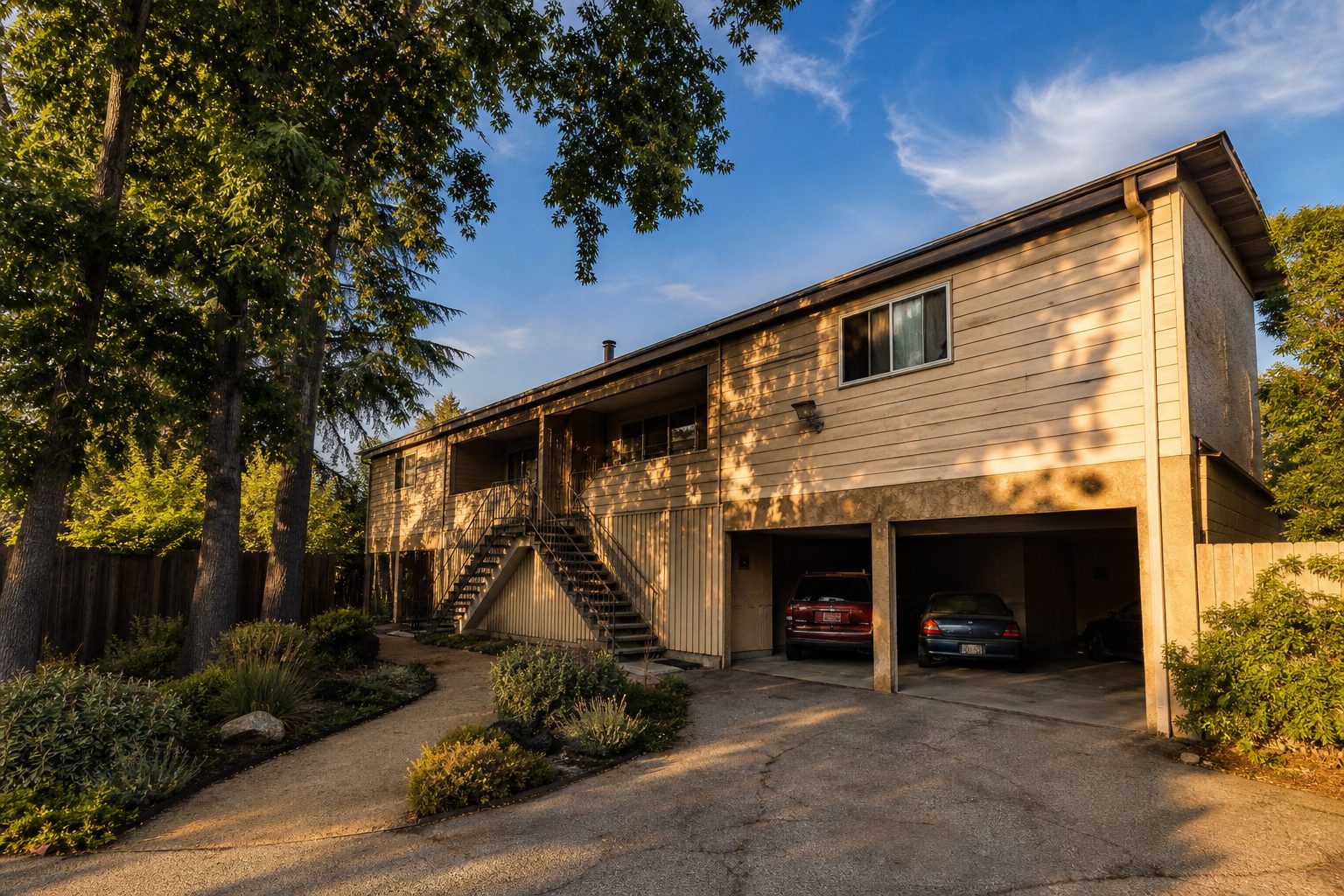
What are the realistic gross rent multipliers and value-add upside for buying a 5-to-8 unit apartment building in Winnetka and Woodland Hills in 2026 when rents are already compressed by LA rent stabilization?
For RSO-covered 5-to-8 unit buildings in the Winnetka and Woodland Hills corridor, realistic GRMs currently range from 11x to 17x depending on loss-to-lease, with true value-add upside concentrated in natural tenant turnover and ADU additions rather than organic rent growth.
Why This Matters for Winnetka Investors Right Now
If you are underwriting a small multifamily deal in the western San Fernando Valley in 2026, the ground has shifted beneath you. On December 12, 2025, the Los Angeles City Council voted 12-to-2 to approve a revised RSO formula that took effect January 24, 2026. Starting July 1, 2026, your allowable annual rent increase is calculated on 90% of CPI instead of the prior 100%, your maximum increase drops from 8% to 4%, and your minimum drops from 3% to just 1%.
On top of that, the 1% utility adders for gas and electric were eliminated effective February 2, 2026, and the 10% dependent adder is gone as well. The only adder that survived is a 10% increase for an additional tenant (not a dependent) moving into an existing unit.
So what does this mean for your underwriting? It means the rent growth assumptions you were modeling even 12 months ago are no longer valid. A cloudy mind can’t make decisions, and that old pro forma is creating exactly that kind of fog. Let me lay out what the numbers actually look like today.
Realistic GRM Ranges for Winnetka and Woodland Hills RSO Buildings in 2026
You need to understand that GRM in the San Fernando Valley trades differently than Westside or Eastside LA submarkets. Across Los Angeles, GRM typically ranges from 11 to 19 depending on the submarket. Winnetka and Woodland Hills, sitting in the western Valley along the Sherman Way and Vanowen Street corridors, tend to fall in the lower-to-middle portion of that range.
Here is how that breaks down by deal profile:
Rents at or Near Market (Compressed Upside)
- GRM: 11x to 13x
- Estimated Cap Rate: 4.5% to 5.5%
- You are buying stability, not growth. If the current tenants moved in recently and are paying close to what the market will bear, your organic rent growth is now capped at 1% to 4% annually under the revised RSO formula. This is a cash-flow hold, not a value-add play.
Moderate Loss-to-Lease (15% to 25% Below Market)
- GRM: 13x to 15x
- Estimated Cap Rate: 3.5% to 4.5%
- This is where most Winnetka deals land. You are paying a premium for the embedded upside that unlocks when long-tenured tenants voluntarily move out and you reset rents to market. For a 6-unit building off Winnetka Avenue, that might mean waiting 3 to 5 years to capture meaningful turnover across enough units to move the NOI needle.
Significant Loss-to-Lease (30%+ Below Market)
- GRM: 14x to 17x
- Estimated Cap Rate: 3.0% to 4.0%
- This is the heavy value-add scenario. For comparison, Koreatown RSO buildings with deep loss-to-lease have been trading at 14x to 17x GRM in 2025 and 2026. In Winnetka, you are not paying Koreatown premiums, but you are still paying for the promise of future rent resets. The question is whether you have the patience and balance sheet to wait 5 to 7 years.
Deferred Maintenance or Distressed
- GRM: 10x to 12x
- Estimated Cap Rate: 5.0% to 7.0%
- This is where physical value-add meets rent upside, and it carries the highest risk. With insurance costs in LA climbing 15% to 30% year-over-year post-wildfire, your operating expense ratio on a deferred-maintenance building can easily hit 40% to 45% of gross income.
What I always tell investors evaluating these numbers: GRM opens the conversation, but it does not close it. You need to pair it with a realistic loss-to-lease analysis and a clear-eyed view of the RSO constraints before any offer goes out.
The Value-Add Playbook When Winnetka Rents Are Already Compressed
Here is where you need to be honest with yourself. If “compressed” means your tenants are already paying close to what the market will bear, the traditional value-add playbook is severely limited. But if “compressed” means you are stuck collecting well below market because long-tenured tenants are protected by RSO, you actually have embedded upside. The distinction changes everything.
Strategy 1: Natural Turnover (Your Primary Lever)
Average annual turnover in LA RSO buildings runs about 8% to 12% of units. In a 6-unit building along Mason Avenue or Corbin Avenue in Winnetka, that means you can realistically expect 0 to 1 units turning over per year. Each turnover can yield a 20% to 50% rent increase depending on how far below market the departing tenant was paying. You need patience and a 5-to-7 year hold horizon.
One investor I worked with recently was evaluating a 7-unit building where five of the tenants had been in place for over a decade. Current gross rents were roughly 30% below market. The temptation was to overpay at a 16x GRM, banking on rapid turnover. After running the numbers together, we modeled a scenario where only one unit turned over per year. The deal only penciled at a 14x GRM entry, which changed the entire offer strategy.
Strategy 2: ADU Addition (Your Most Powerful Tool)
California’s ADU laws allow you to add units to existing multifamily parcels. New ADU units are exempt from RSO for 15 years under Costa-Hawkins. Adding 1 to 2 ADUs to a 6-unit building can increase gross income by 15% to 25% at full market rents, with construction costs running $150,000 to $300,000 per unit. This is, in my experience, the single strongest value-add play in the western Valley right now.
Strategy 3: Capital Improvement Pass-Through
You can petition LAHD for rent increases to recover capital improvement costs. Common qualifying improvements include new roofing, plumbing, electrical upgrades, and seismic retrofit work. The pass-through is amortized over the improvement’s useful life and typically adds $50 to $150 per month per unit. It is slow and bureaucratic, but it compounds over time.
Strategy 4: RUBS (Ratio Utility Billing System)
If you are currently paying tenant utilities, implementing RUBS can reduce your operating expenses by $100 to $200 per unit per month. This is a separate strategy from the now-eliminated RSO utility adder, and it remains one of the cleanest ways to improve NOI without touching rents.
How the 2026 RSO Changes Reshape Winnetka Underwriting
Let me be direct. The RSO changes that took effect in early 2026 are not cosmetic tweaks. They fundamentally alter the risk profile of owning stabilized multifamily in any City of Los Angeles neighborhood, including the entire Winnetka and Woodland Hills corridor.
The RSO covers roughly 650,000 units citywide, about 74% of LA’s multifamily rental stock. Nearly every 5-to-8 unit building in Winnetka was built before the October 1, 1978 cutoff, which means RSO coverage is the default.
Here is what changed and why it matters to your pro forma:
- Annual increase formula: Now 90% of CPI for “All Items,” down from 100%
- Maximum increase: Reduced from 8% to 4%
- Minimum increase: Reduced from 3% to 1%
- Utility adders: Eliminated entirely as of February 2, 2026
- Dependent adder: Eliminated (10% add for dependents is gone)
For context, California’s statewide AB 1482 allows increases of 5% plus regional CPI, capping at 10%. The LA metro AB 1482 ceiling is 8.7% effective August 1, 2026. If you can find a post-1978 building near the Woodland Hills border that falls under AB 1482 instead of RSO, your rent growth runway is dramatically wider. That distinction alone is worth investigating on every deal you evaluate.
A second investor scenario illustrates this well. A buyer was comparing two 6-unit buildings, one on the Winnetka side (pre-1978, RSO) and one just south near Warner Center (built in 1982, AB 1482). The RSO building had a lower GRM at 12x, but after modeling the capped rent growth at 1% to 4% annually versus the AB 1482 building’s 8.7% ceiling, the post-1978 property actually projected stronger 7-year returns despite a higher entry price. The lesson: GRM without regulatory context is a meaningless number.
Financing and Operating Realities for Winnetka Small Multifamily
For a typical 5-to-8 unit building priced in the $1.2M to $2.5M range along the Winnetka corridor, here is what your capital stack looks like:
- Down payment: 25% to 30% for conventional multifamily financing ($300K to $750K)
- Debt service: At mid-6% to low-7% commercial loan rates, monthly payments are heavy relative to compressed RSO rents
- Operating expense ratio: Typically 35% to 45% of gross income for older Valley buildings, higher if you pay tenant utilities
- Insurance: Rising aggressively in LA, adding 15% to 30% year-over-year cost pressure
With 16 years of experience and over 275 transactions behind me, including work with investors across Southern California, I can tell you the single biggest underwriting mistake I see is projecting expense growth at the same rate as revenue growth. Under the new RSO formula, your expenses can climb at full CPI (or faster, given insurance trends), while your rents are capped at 90% of CPI with a 4% ceiling. That spread compounds against you every single year.
Frequently Asked Questions
What is a good GRM for a 5-to-8 unit building in Winnetka in 2026?
For RSO-covered buildings in the Winnetka and Woodland Hills area, a realistic GRM ranges from 11x to 17x depending on the gap between current rents and market rents. Buildings with minimal loss-to-lease typically trade at 11x to 13x, while those with significant below-market tenants can command 14x to 17x as buyers price in future turnover upside.
Are Winnetka apartment buildings covered by LA’s Rent Stabilization Ordinance?
Yes. Winnetka is a neighborhood within the City of Los Angeles, not an independent municipality. Nearly every multifamily building with two or more units built before October 1, 1978 is covered by the RSO. The vast majority of 5-to-8 unit buildings in the area fall into this category.
What is the maximum annual rent increase allowed under the new RSO formula?
Effective July 1, 2026, the maximum annual RSO increase drops from 8% to 4%, with a minimum of 1%. The formula now uses 90% of CPI for “All Items” rather than the previous 100%. The current allowable increase through June 30, 2027 remains at 3%.
Can I add ADUs to a Winnetka apartment building to increase income?
Yes. California’s ADU laws permit adding units to existing multifamily parcels, and new ADU units are exempt from RSO for 15 years under Costa-Hawkins. Construction costs typically run $150,000 to $300,000 per unit. This is one of the strongest value-add strategies available in the western Valley.
What happened to the utility adders under the RSO?
The 1% utility adders for gas and electric were eliminated effective February 2, 2026. Landlords can no longer add these surcharges to annual rent increases. However, implementing a Ratio Utility Billing System (RUBS) is a separate strategy that remains available.
How often do tenants turn over in RSO buildings in Winnetka?
Average annual turnover in LA RSO buildings runs approximately 8% to 12% of units. For a 6-unit building, you can realistically expect 0 to 1 units turning over per year. Each vacancy allows you to reset rent to market rate with no RSO cap on the initial rent for a new tenant.
Is the Ellis Act a viable strategy for small apartment buildings in Winnetka?
The Ellis Act allows you to withdraw all units from the rental market, but it requires relocation payments of $10,000 to $25,000 or more per unit depending on tenant status. There is also a 5-year re-rental restriction at original rents. It is a high-cost, high-risk option typically reserved for repositioning or redevelopment scenarios.
What cap rates are realistic for Winnetka RSO buildings in 2026?
Cap rates for 5-to-8 unit RSO buildings in the Winnetka and Woodland Hills corridor typically range from 3.0% to 5.5%, depending on the loss-to-lease profile. Distressed or deferred-maintenance buildings may trade at 5.0% to 7.0% cap rates, reflecting higher physical risk.
Does AB 1482 apply to any buildings in the Winnetka area?
Yes. Buildings constructed after October 1, 1978 fall under California’s statewide Tenant Protection Act (AB 1482) rather than the city’s RSO. AB 1482 allows increases of 5% plus regional CPI, capping at 10%. The LA metro ceiling is 8.7% effective August 1, 2026, which is significantly more favorable than the RSO’s 4% maximum.
What operating expense ratio should I model for a Winnetka building?
For older Valley multifamily buildings, operating expenses typically run 35% to 45% of gross income. If the owner pays utilities, expect the higher end of that range. Insurance costs in LA are climbing 15% to 30% year-over-year, which can push expense ratios even higher on older properties.
The Bottom Line
Buying a 5-to-8 unit apartment building in Winnetka or Woodland Hills in 2026 requires a fundamentally different underwriting approach than even two years ago. The revised RSO formula, the elimination of utility and dependent adders, and rising insurance costs all compress your growth trajectory on the expense side while capping your revenue upside at 1% to 4% annually.
Your realistic value-add levers are natural tenant turnover, ADU additions, capital improvement pass-throughs, and RUBS implementation. The deals that pencil are the ones you enter at the right GRM with a patient hold thesis.
If you are evaluating a multifamily investment in the San Fernando Valley or anywhere in Southern California and want a clear-eyed underwriting conversation, I am here to help. With 180 five-star reviews, over 275 closed transactions, and direct experience working alongside investors on value-add properties, I bring a level of analysis that helps you see what a building could be, not just what it is today. Reach out to me, Scott Cheng, at 858-405-0002.
Have Questions About San Diego Real Estate?
Scott Cheng provides free, no-obligation consultations for buyers, sellers, and investors.
Schedule a Consultation