Zoning Rules and Lot Size Requirements for Buying Raw Land in Miramar San Diego
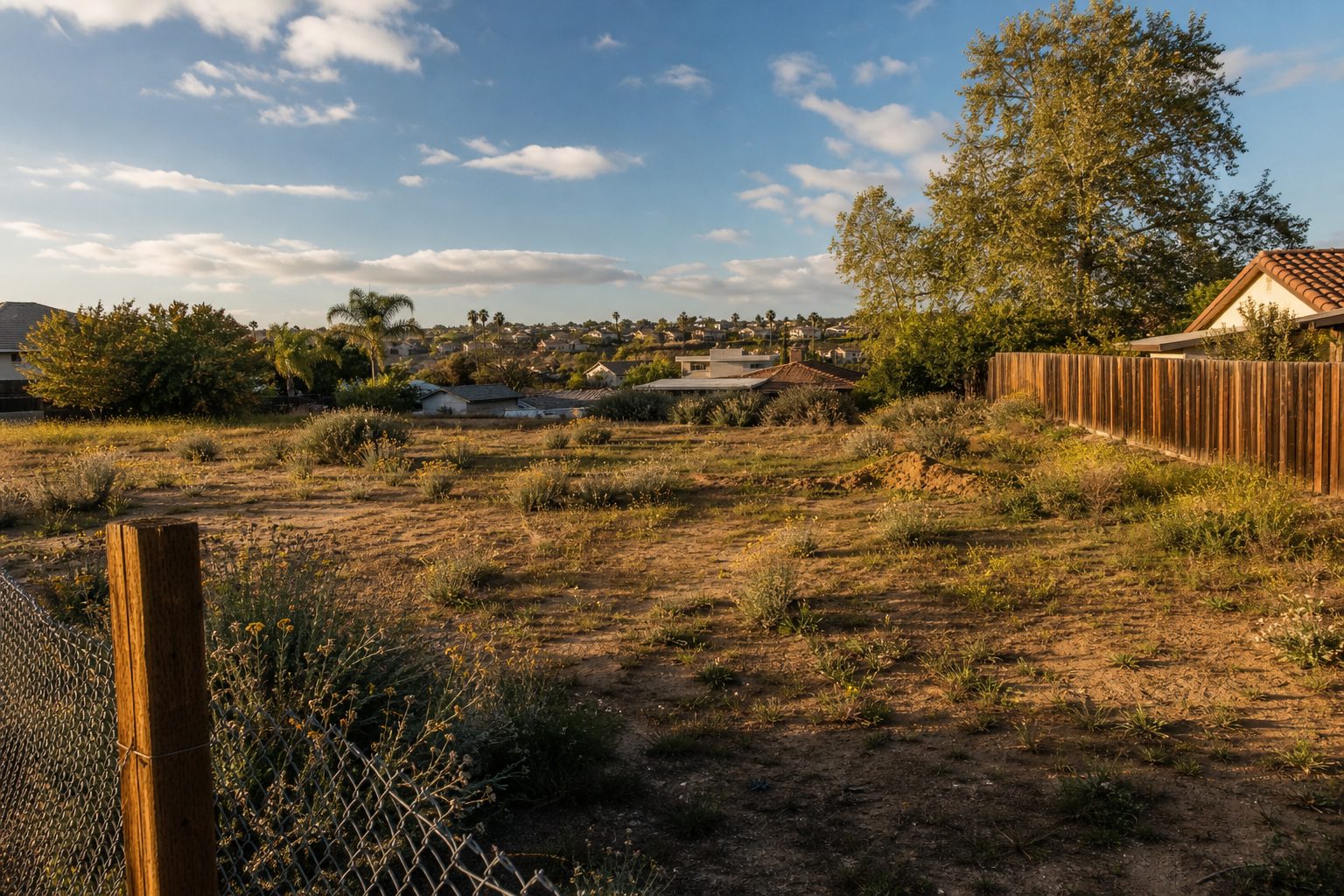
What zoning rules and minimum lot size requirements do you need to know before buying raw land in Miramar, San Diego, in 2026 to build a single-family home or ADU?
Your Miramar parcel’s base zone dictates everything: minimum lot sizes range from 4,000 to 40,000 square feet depending on the RS classification, and the MCAS Miramar airport overlay may add height, noise, and density restrictions that override standard rules.
Why This Matters Right Now in San Diego
San Diego is in the middle of a significant regulatory shift. The 2026 Land Development Code Update includes 134 proposed amendments, and many of those directly affect what you can build, where you can build it, and how quickly your permits move through the system. If you’re looking at raw land in or near Miramar, the timing of your purchase relative to these code changes could affect your project timeline and your bottom line.
Here’s the other piece: Miramar is one of San Diego’s active development hotspots. Nearly 79% of the 3,670 apartments expected to open in 2026 will be within the city of San Diego, with Miramar, Kearny Mesa, and Mission Valley absorbing a large share. That tells you something about where the city sees growth heading, and it also means competition for buildable parcels is real.
With 16 years of experience and over 275 transactions closed across San Diego County, I can tell you that land deals are where the most expensive mistakes happen. A cloudy mind can’t make decisions, and nothing clouds your thinking faster than discovering your “perfect parcel” sits inside an accident potential zone after you’ve already closed escrow.
How San Diego’s Residential Zoning System Works in Miramar
Before you write an offer on raw land, you need to understand how San Diego classifies residential parcels. The city uses the Land Development Code, which organizes 48 total zone classifications across its 107+ community plan areas. For a single-family home build, you’ll be looking at the RS (Residential Single-Unit) zones.
Here’s how the most common RS zones break down:
- RS-1-1: 40,000 sq ft minimum lot (very large estate parcels)
- RS-1-2: 20,000 sq ft minimum lot (large estate parcels)
- RS-1-14: 10,000 sq ft minimum lot (larger suburban parcels)
- RS-1-7: 5,000 sq ft minimum lot (the most common single-family zone in San Diego)
- RS-1-4: 4,000 sq ft minimum lot (compact single-family)
The number after the dash tells you the minimum lot area in thousands of square feet. So if your Miramar parcel is zoned RS-1-7, you need at least 5,000 square feet to build a conforming single-family home. What I tell my clients is to look at the zone suffix first, because it immediately tells you whether the parcel is large enough for what you want to build.
You’ll also encounter RE (Residential Estate) and RX (Residential Small Lots) zones. RE zones tend to appear in areas with larger, more spacious parcels, while RX zones allow more compact single-family homes and are designed to increase density while keeping a single-unit structure.
Setbacks, Height, and Floor Area Ratios
Your zone classification also dictates how much of the lot you can actually use. For RS-1-7 parcels:
- Front setback: 15 feet
- Interior side setback: 4 feet
- Street side setback: 10 feet
- Rear setback: 13 feet
- Maximum height: 30 feet
- Base FAR (Floor Area Ratio): 0.60
That FAR number is important. On a 5,000 sq ft lot with a 0.60 FAR, your maximum floor area is roughly 3,000 square feet. For RS-1-14 lots, the FAR drops to 0.45, and the setbacks increase (20-foot front, 6-foot sides).
The MCAS Miramar Airport Overlay: What Most San Diego Land Buyers Miss
This is where Miramar gets complicated, and it’s where I’ve seen buyers run into trouble. Marine Corps Air Station Miramar creates an Airport Land Use Compatibility Plan (ALUCP) overlay that can impose restrictions beyond your base zoning.
One buyer I worked with found a parcel in the Miramar area at what seemed like a below-market price. When we dug into the parcel data, the lot sat within the 60+ dB CNEL noise contour, which meant additional sound attenuation requirements for any residential construction. That added roughly six figures to the construction budget and completely changed the project’s financial picture. We redirected the search and found a better-positioned parcel outside the most restrictive noise zones.
Here’s what the airport overlay can mean for your project:
- Noise contour restrictions: Parcels within the 60+ dB CNEL noise contour may face residential density limits or require expensive sound attenuation measures in the building envelope
- Height restrictions: Structures near flight paths could be limited below the standard 30-foot residential maximum
- Safety zones: Certain accident potential zones may prohibit residential construction entirely
You can verify your parcel’s overlay status using the city’s online ZAPP tool. Step one is always confirming the base zone designation, and step two is checking every overlay that touches the property.
ADU Rules on Raw Land in Miramar San Diego in 2026
If you’re buying raw land with the intention of building both a primary residence and an ADU, San Diego’s rules are actually quite favorable right now, thanks in large part to state-level overrides.
California Government Code Section 65852.2 requires San Diego to allow at least one ADU up to 800 square feet, 16 feet tall, with only 4-foot side and rear setbacks, even in zones that would normally require more clearance. San Diego’s own Information Bulletin 400 goes further and allows detached ADUs up to 1,200 square feet.
Here’s the quick breakdown for ADU sizing:
- Attached ADU: Up to 50% of the primary home’s size, capped at 1,200 sq ft
- Detached ADU: Up to 1,200 sq ft regardless of primary home size
- State minimum (all zones): At least one 800 sq ft ADU permitted with 4-foot setbacks
What makes this especially interesting for land buyers is AB 1033. The City of San Diego implemented this bill effective August 22, 2025, making it one of the early adopters allowing ADUs to be sold separately from the primary home via condominium conversion. That means your ADU isn’t just a rental unit; it can become a sellable asset.
A client scenario I see regularly: a couple buys a parcel zoned RS-1-7 with the plan to build a 2,400 sq ft primary residence and a detached 1,000 sq ft ADU. The ADU generates rental income immediately, and down the road, they have the option to condo-convert and sell the ADU as a separate unit. On paper, that strategy turns one land purchase into two real estate assets.
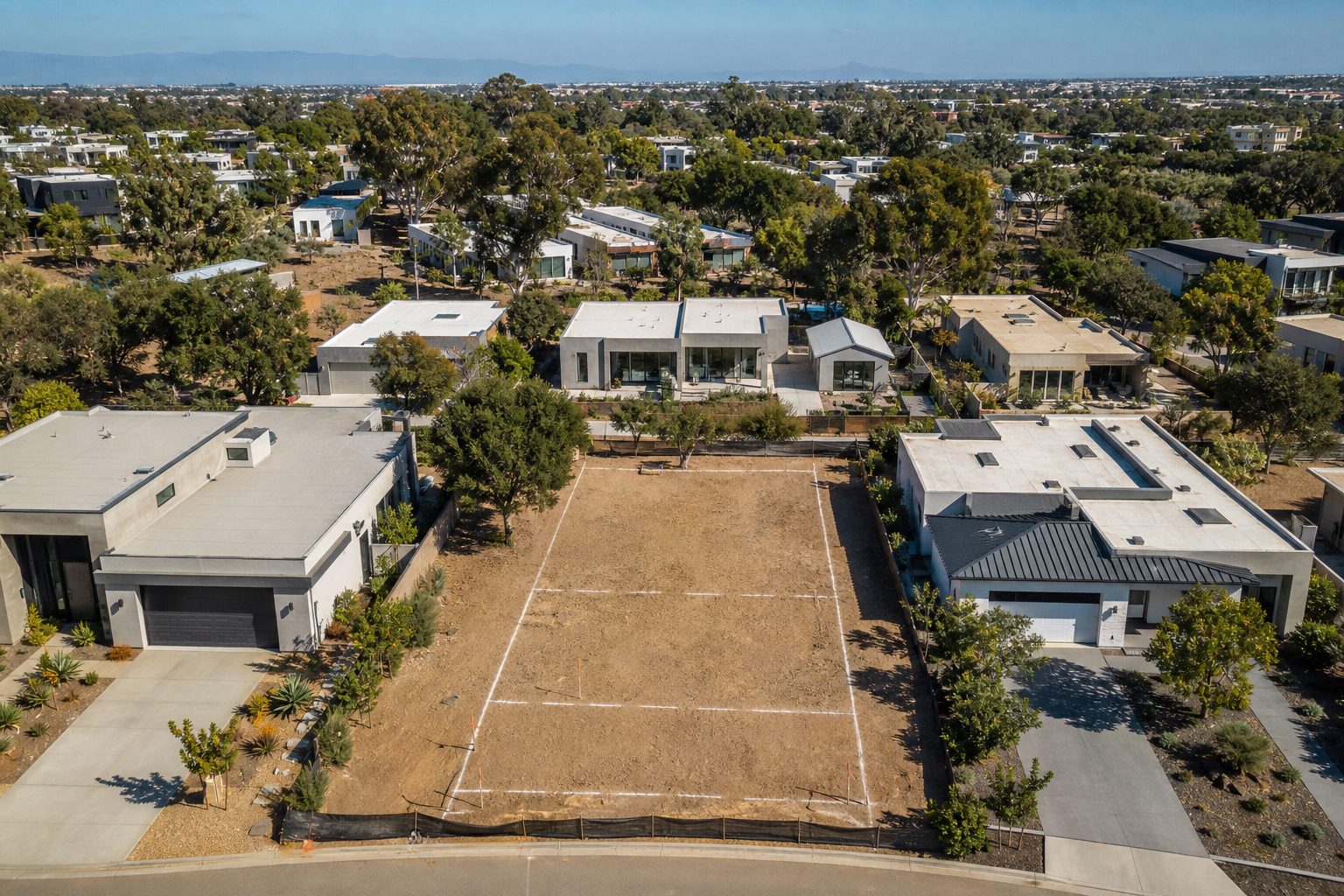
SB 9 Lot Splits and Additional Density Options in Miramar
Senate Bill 9 gives you another tool if you’re thinking about maximizing a single-family parcel’s potential. Under SB 9, you can subdivide a qualifying single-family lot and build an additional primary dwelling unit.
Eligible zones include RS, RE, RX, RT, and Planned District Zones that allow single-dwelling-unit development. However, some critical exclusions apply:
- Prime farmland
- Conservation and habitat areas (MHPA/MSCP)
- Hazardous waste sites
- Historic districts and properties
San Diego also requires two new or existing trees for every 5,000 square feet of lot area, with a minimum of one tree per lot. This is a small detail that catches some buyers off guard during the permitting process.
Essential Due Diligence Before Buying Raw Land in San Diego
With 180 five-star client reviews and a track record as a top 1% real estate agent in San Diego, I’ve developed a clear checklist that I walk through with every land buyer. Here’s what you need to verify before making an offer:
- Base zone designation (confirmed via ZAPP)
- Community plan overlay requirements (Miramar has its own community plan)
- Airport influence area restrictions (MCAS Miramar ALUCP)
- Environmental sensitivity layers (ESL, MHPA, MSCP)
- Utility availability (water, sewer, electricity, gas connections)
- Grading and topography constraints (Miramar has varied terrain)
- Fire hazard severity zone classification
- Transit Priority Area status (affects parking and FAR)
If your parcel falls within a Transit Priority Area, AB 2097 removes parking minimums for new developments, and FAR bonuses can push allowable density significantly higher depending on the Mobility Zone.
Financing is another consideration. Raw land typically requires 30% to 50% down because conventional lenders don’t offer standard mortgage products for vacant parcels. Construction-to-permanent loans are the most common path forward.
Frequently Asked Questions
What is the most common single-family zone in Miramar San Diego?
RS-1-7 is the most common single-family zone in San Diego, including areas in and near Miramar. It requires a minimum lot size of 5,000 square feet, allows a maximum height of 30 feet, and has a base floor area ratio of 0.60. You’ll want to verify your specific parcel’s zone classification through the city’s ZAPP tool before proceeding.
Can I build an ADU on raw land in Miramar before the primary home exists?
San Diego’s ADU regulations require an ADU to be accessory to a primary dwelling. On raw land, you would typically need to build the primary residence first or simultaneously. However, California state law now allows Junior ADUs and standard ADUs with fairly minimal setbacks, so planning both structures into your site design from day one is the smartest approach.
How does the MCAS Miramar airport overlay affect my ability to build?
The Airport Land Use Compatibility Plan can impose height restrictions, noise attenuation requirements, and density limitations depending on which zone your parcel falls within. Some accident potential zones prohibit residential construction entirely. You should check your parcel’s position relative to MCAS Miramar flight paths and noise contours before writing an offer.
What is the minimum lot size to build a single-family home in San Diego?
It depends entirely on the zone. RS-1-4 requires as little as 4,000 square feet, while RS-1-1 requires 40,000 square feet. The suffix number after “RS-1” tells you the minimum lot size in thousands of square feet. Most standard suburban parcels in San Diego fall into the RS-1-7 category at 5,000 square feet.
Can I split my Miramar lot under SB 9?
If your lot is zoned RS, RE, RX, or RT and does not fall within conservation areas, historic districts, or the MHPA of the MSCP Subarea Plan, you may be eligible for an SB 9 lot split. This allows you to subdivide a single-family lot and build an additional primary dwelling. San Diego requires at least one tree per lot and two trees per 5,000 square feet.
What setback requirements apply to an RS-1-7 lot in San Diego?
RS-1-7 requires a 15-foot front setback, 4-foot interior side setback, 10-foot street side setback, and 13-foot rear setback. For ADUs, California state law overrides local setbacks and allows only 4-foot side and rear setbacks for units up to 800 square feet and 16 feet tall.
How does AB 1033 affect ADU investment potential in Miramar?
AB 1033, implemented by San Diego effective August 22, 2025, allows ADUs to be sold separately from the primary home via condominium conversion. This means you can potentially build an ADU on your Miramar parcel and later sell it as an independent unit, creating two sellable assets from one land purchase.
What financing options exist for buying raw land in San Diego?
Raw land purchases typically require 30% to 50% down since conventional lenders don’t offer standard mortgage products for vacant parcels. Construction-to-permanent loans are the most common route for buyers who plan to build. The 2026 FHFA conforming loan limit for San Diego County is $1,104,000 for completed single-family properties, but that applies to the finished home, not the raw land.
What environmental layers could block my Miramar build?
Parcels with environmentally sensitive land layers (ESL) require additional documentation with any permit application. If your parcel intersects with the MHPA or MSCP conservation boundaries, residential development may be restricted or prohibited. Grading constraints and topography in Miramar’s varied terrain can also add costs and timeline to your project.
What happens if the 2026 LDC Update changes the rules after I buy?
The 2026 Land Development Code Update includes 134 proposed amendments, with anticipated approval in Spring 2026. If you purchase before the update takes effect, your project may be reviewed under either the existing or new code depending on when you submit permits. Working with someone who tracks these changes closely helps you plan around regulatory timing rather than being surprised by it.
The Bottom Line
Buying raw land in Miramar to build a single-family home or ADU in 2026 is absolutely doable, but it requires more upfront homework than a standard home purchase. Your base zone determines lot size, setbacks, height, and floor area. The MCAS Miramar airport overlay adds a second layer of restrictions that can change your entire project plan. And California’s ADU and SB 9 laws create real opportunities to maximize your investment if you plan the site correctly from the start.
If you’re considering a raw land purchase in the Miramar area or anywhere in San Diego County, I’d welcome the chance to walk through your specific parcel’s zoning and help you build a clear plan. I’m Scott Cheng, Broker Associate with REAL Brokerage, and you can reach me at 858-405-0002 or visit my office at 16516 Bernardo Center Dr. Ste. 300. With over 275 closed transactions and a focus that includes land and lots in San Diego, I’m here to bring you clean information and a calm plan you can feel good about.
For more information on homeownership resources and current market conditions, visit the Consumer Finance Bureau’s homeowning guide.
*This blog is for informational purposes only and does not constitute legal advice. Zoning regulations are subject to change. Always verify current zoning, overlay, and permit requirements with the City of San Diego Development Services Department before purchasing raw land.*
Have Questions About San Diego Real Estate?
Scott Cheng provides free, no-obligation consultations for buyers, sellers, and investors.
Schedule a Consultation