Real Risks of Buying a Waterfront Home in Mission Bay San Diego in 2026
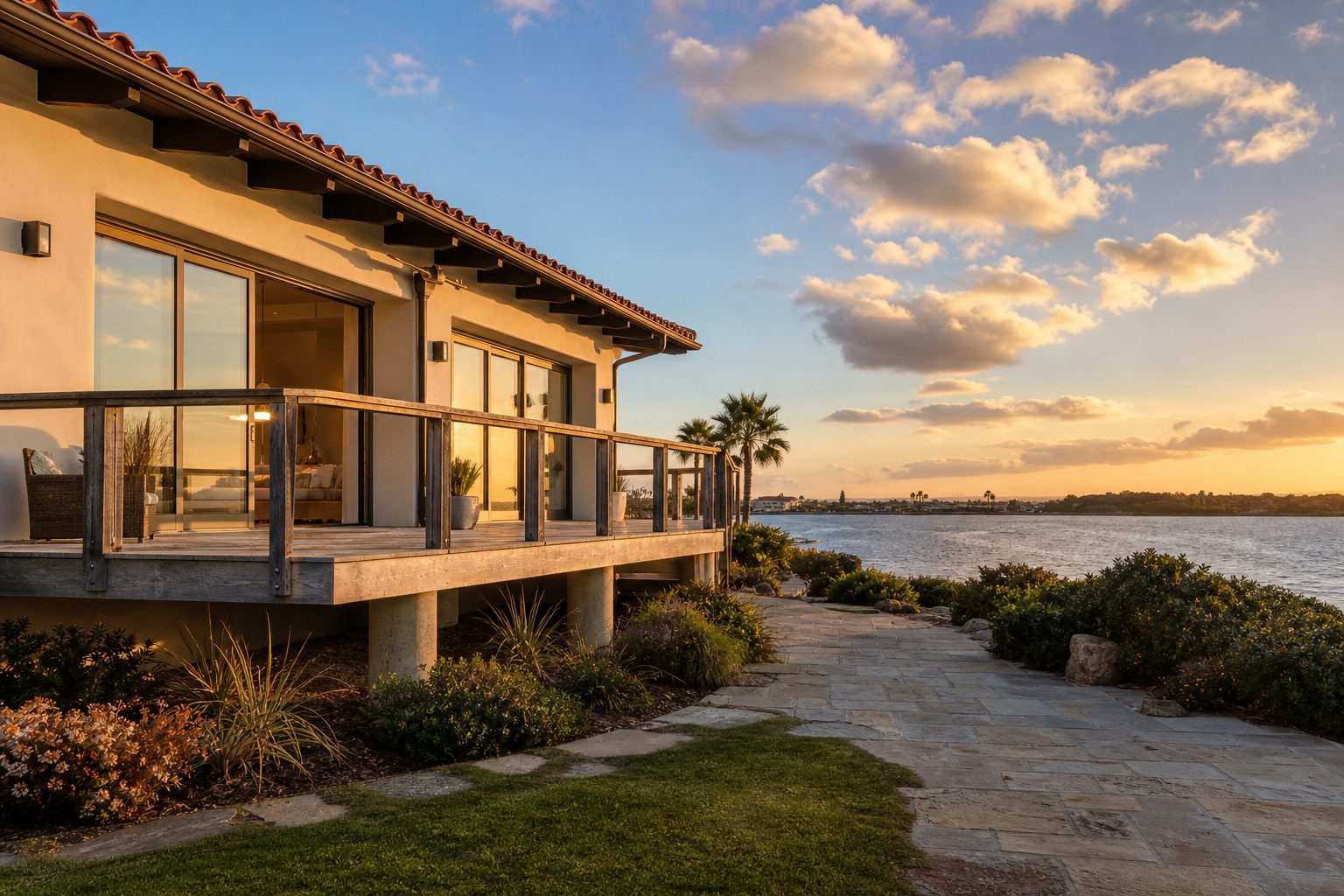
What are the real risks of buying a waterfront home in Mission Bay, San Diego, in 2026, including flood zone designations, Coastal Commission restrictions, and sea level rise projections you need to understand before making an offer?
The risks are real but manageable when you understand them upfront. New FEMA flood maps, Coastal Commission permit requirements, and rising sea level projections all create financial and regulatory exposure that can significantly affect your costs, renovation options, and long-term property value around Mission Bay.
Why This Matters Right Now for Mission Bay Buyers
If you’ve been watching the San Diego coastal market, you already know demand hasn’t slowed. Luxury pending sales at $5M and above rose 21.8% year over year, and about 41% of homes across the county are selling above asking. Coastal San Diego is persistently inventory-starved at the price points buyers want most.
But here’s what makes 2026 different from any prior year: the regulatory landscape around Mission Bay shifted dramatically on March 3, 2026, when new FEMA Flood Insurance Rate Maps took effect. At the same time, San Diego’s Coastal Resilience Master Plan, adopted in September 2025, introduced new rules that directly affect what you can build, what you’ll pay for insurance, and how the city plans to manage shoreline change over the next several decades.
With 16 years of experience and over 275 transactions closed across San Diego County, I can tell you that a cloudy mind can’t make decisions. So let me walk you through the three biggest risk categories clearly, so you can evaluate whether a Mission Bay waterfront home fits your financial picture and lifestyle goals.
FEMA Flood Zone Reclassification Around Mission Bay in 2026
This is the single most consequential change for waterfront buyers in San Diego this year.
On March 3, 2026, updated FEMA maps reclassified significant portions of South Mission Beach, North Mission Beach, Pacific Beach, Bird Rock, and La Jolla Shores from Zone X (low to moderate risk) into Zones AE and VE (high-risk Special Flood Hazard Areas). If you’re looking at properties near Mission Bay, you need to understand what these designations mean for your wallet.
What Zone AE and Zone VE Mean for You
- Zone AE covers areas with established Base Flood Elevations where flooding is expected, but without significant wave action. Your lender will require flood insurance, and elevated foundations may be mandated for new construction or substantial improvements.
- Zone VE is the more restrictive coastal high-velocity zone, where waves of 3 feet or higher can occur during a base flood event. Construction requirements here are the strictest in the system, including breakaway walls and elevated foundations. Insurance premiums are the highest.
What does this actually mean for your monthly costs? If you’re financing with any federally backed mortgage (conventional, FHA, VA, or USDA), flood insurance is now mandatory for properties in these zones. And if you’re buying cash, skipping flood insurance is technically possible but financially risky, because you’d be self-insuring against events that FEMA has now classified as high probability.
One buyer I worked with was evaluating a property near the bayfront in Pacific Beach. The home had been in Zone X for decades, meaning the previous owner never carried flood insurance. After the March 2026 reclassification, that same property landed squarely in Zone AE. The annual flood insurance cost added over $3,000 to the buyer’s carrying expenses, something that wasn’t on anyone’s radar six months earlier. We adjusted the offer accordingly, and it made the deal work. But without identifying that change early, the buyer would have been blindsided at closing.
You can verify any property’s flood zone by searching the FEMA Flood Map Service Center or through SanGIS, San Diego County’s geographic information system.
California Coastal Commission Restrictions on Mission Bay Properties
The California Coastal Commission holds significant regulatory authority over development within the Coastal Zone, and virtually all of Mission Bay falls within that jurisdiction. If you’re planning to renovate, add square footage, or even modify exterior features, you need a Coastal Development Permit before you start.
What You Can and Cannot Do
- Exterior modifications, additions, and new construction all require a CDP. This isn’t optional and the permitting timeline can add months to your project.
- The 75-year design life requirement means any new coastal structure must demonstrate structural integrity over 75 years, accounting for projected sea level rise and erosion. This raises engineering and construction costs.
- Seawalls and shoreline armoring are increasingly difficult to get approved. The Coastal Commission favors nature-based solutions, which means existing seawalls may not be eligible for reconstruction when they reach end of life.
- Bluff setback requirements are being refined under updated guidance incorporating sea level rise scenarios. New methodology is expected by July 2026.
For a standard residential lot near the coast, a comprehensive coastal geotechnical analysis runs between $8,000 and $15,000. What I tell my clients is to budget for this upfront during due diligence, not after you’ve already committed to the purchase. That geotechnical report will tell you exactly what the Coastal Commission and the City of San Diego will require before approving any construction plans.
Mission Bay Specific Projects to Watch
The De Anza Natural project and Mission Bay Park improvements are reshaping the area through wetland expansion, water quality improvements, and shoreline restoration. These nature-based changes will affect adjacent property values positively in many cases, but they also signal the city’s long-term direction: managed retreat from hard infrastructure toward softer, adaptive solutions. If you’re buying near these project zones, understanding the timeline and scope is essential.
Sea Level Rise Projections for San Diego’s Coastline
Here’s where the long-term math gets interesting. Sea levels in San Diego have risen about 6 inches since 1970. According to research from the Scripps Institution of Oceanography at UC San Diego, sea levels along the coastal United States are projected to rise by an average of 10 to 12 inches between 2020 and 2050.
Looking further out, if global temperatures increase by 2°C above pre-industrial levels, San Diego’s sea level is projected to rise approximately 3 feet by 2100. In less likely but still possible scenarios, that figure could reach 6.6 feet.
What does this mean for you today? Rising sea levels don’t just mean higher tides. They mean more frequent flooding, longer flood durations, and flooding that extends further inland. Groundwater tables also rise as sea levels increase, which can cause issues with foundations, landscaping, and street-level flooding even before tidal waters reach your property.
One couple exploring Mission Bay waterfront options asked me whether this meant they should avoid coastal properties entirely. My answer was no, but they needed to price the risk honestly. We worked through the numbers together: projected insurance increases over 10 years, potential renovation restrictions, and resale considerations. They ended up purchasing with full awareness of the cost trajectory and structured their renovation budget to include flood-resilient materials and elevated living spaces. They love the home and they aren’t losing sleep over surprises.
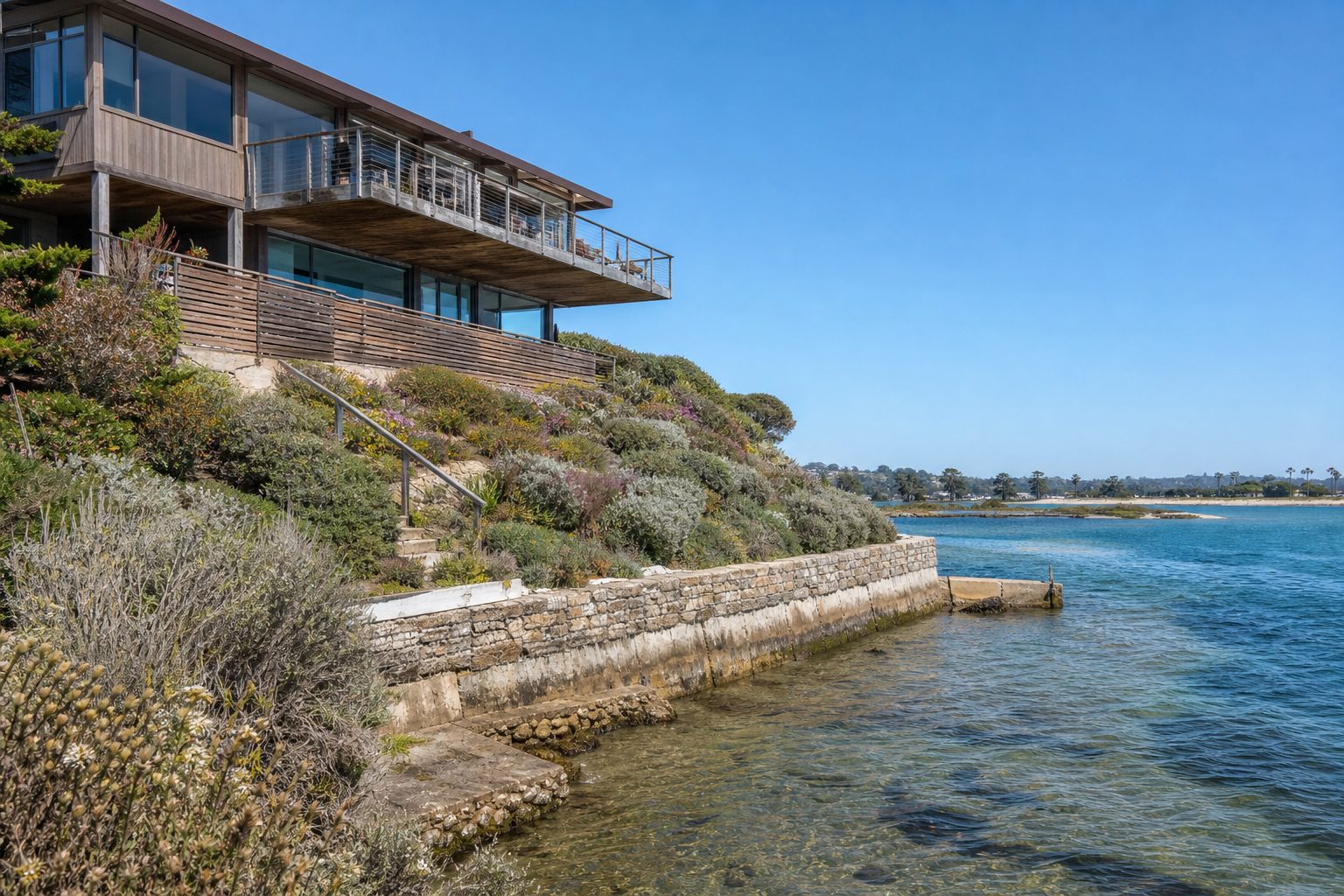
Insurance and Carrying Costs You Should Anticipate in Mission Bay
Beyond the purchase price, your carrying costs on a Mission Bay waterfront property in 2026 will look different from what they did even two years ago.
- Flood insurance is now mandatory for most properties near the bay if you’re financing. Premiums vary widely based on zone, elevation, and construction type.
- Homeowner’s insurance premiums across coastal California have been escalating as carriers reprice risk.
- Elevation requirements for new construction or substantial renovations add $15,000 to $40,000 depending on site conditions and foundation design.
- Geotechnical reports run $8,000 to $15,000 for Coastal Commission compliance.
The San Diego County median sale price is $925,000 as of May 2026, but waterfront properties near Mission Bay typically range from $1.2M to well over $3M. Most of these purchases exceed the 2026 conforming loan limit of $1,104,000, putting you in jumbo loan territory. Factor in the additional insurance and compliance costs, and the true cost of ownership can be 15 to 25% higher than the sticker price suggests.
How to Protect Yourself Before Making an Offer in Mission Bay
So how do you move forward with confidence? Here’s what I recommend to every buyer considering waterfront property in San Diego.
- Verify the FEMA flood zone for every property you’re considering. The March 2026 maps are current, so make sure you’re looking at the most recent FIRM panels.
- Budget for a coastal geotechnical analysis during your inspection period. This report will reveal what the Coastal Commission will require and what your construction limitations look like.
- Get flood insurance quotes before you finalize your offer, not after. This number directly affects your total monthly cost.
- Review any planned city or Coastal Commission projects near the property, including the De Anza Natural project and Mission Bay Park improvements.
- Work with a broker who understands coastal transactions. With 180 five-star client reviews, a 5/5 average rating, and recognition in the top 1% of real estate agents in San Diego, I bring the kind of experience where I can spot issues early and help you negotiate as if your money were my money. I also provide a complimentary attorney review of contracts and disclosures covered by me, even if escrow cancels. On a coastal purchase with this many regulatory layers, that review has caught issues that saved clients tens of thousands of dollars.
Frequently Asked Questions About Buying Waterfront Property in Mission Bay San Diego
Is flood insurance mandatory for Mission Bay homes in 2026?
Yes, for most properties near Mission Bay. The March 2026 FEMA map revision reclassified much of the area into Special Flood Hazard Areas (Zones AE and VE). If you have a federally backed mortgage, flood insurance is required by federal law. Even cash buyers should strongly consider carrying it given the elevated risk classification.
How much does flood insurance cost for a Mission Bay waterfront home?
Premiums vary based on your specific flood zone, the property’s elevation relative to the Base Flood Elevation, and the construction type. Annual costs can range from a few thousand dollars to significantly more for Zone VE properties. Getting quotes during your due diligence period is essential before committing to a purchase.
What is the difference between Zone AE and Zone VE near Mission Bay?
Zone AE applies to areas with established flood risk but without significant wave action. Zone VE is the coastal high-velocity zone where waves of 3 feet or more can occur during a base flood event. Zone VE carries stricter construction requirements, including breakaway walls and elevated foundations, and higher insurance premiums.
Do I need a Coastal Development Permit to renovate a Mission Bay property?
In most cases, yes. Virtually all of Mission Bay falls within the California Coastal Commission’s jurisdiction. Exterior modifications, additions, and new construction require a Coastal Development Permit. Even interior renovations that increase square footage or change the building footprint may trigger permitting requirements.
How much will sea levels rise in San Diego by 2050?
Based on research from the Scripps Institution of Oceanography, sea levels along the coastal U.S. are projected to rise 10 to 12 inches between 2020 and 2050. San Diego has already seen about 6 inches of rise since 1970, and the rate is accelerating. Properties at low elevations near Mission Bay face increasing flood frequency.
Can I build a seawall to protect my Mission Bay waterfront property?
The California Coastal Commission increasingly disfavors hard shoreline armoring like seawalls and riprap. New seawall permits are difficult to obtain, and existing seawalls may not be approved for reconstruction at end of life. The policy direction favors nature-based coastal resilience solutions.
What is the 75-year design life requirement for San Diego coastal construction?
All new coastal structures must demonstrate structural integrity over a 75-year lifespan, factoring in sea level rise and erosion projections. This means engineering and material costs are higher than for inland construction, and your architect and engineer must account for future conditions, not just current ones.
How does rising groundwater affect Mission Bay properties?
As sea levels rise, groundwater tables rise too. This can cause foundation issues, increased street-level flooding, and landscape drainage problems even before tidal waters reach your property. Low-lying areas around Mission Bay are particularly susceptible to this less obvious but very real impact.
What is the De Anza Natural project and how does it affect Mission Bay property values?
De Anza Natural is a planned amendment to the Mission Bay Park Master Plan that will incorporate nature-based shoreline solutions, wetland expansion, and water quality improvements. Properties adjacent to these improvements may benefit from enhanced surroundings, but the project also signals the city’s commitment to managed adaptation over hard infrastructure.
Should I avoid buying waterfront property in Mission Bay entirely?
Not necessarily. The risks are real, but they’re quantifiable. You need to understand your flood zone, budget for insurance and compliance costs, assess long-term sea level rise exposure, and factor Coastal Commission restrictions into any renovation plans. With clear information and experienced guidance, many buyers find that the lifestyle value of Mission Bay waterfront living justifies the additional costs and planning involved.
The Bottom Line on Waterfront Risk in Mission Bay San Diego
Buying a waterfront home in Mission Bay in 2026 comes with regulatory and environmental considerations that didn’t exist even a few years ago. The FEMA reclassification, Coastal Commission restrictions, and sea level rise projections are all real factors that affect your costs, your renovation options, and your long-term investment.
But a cloudy mind can’t make decisions. When you understand the risks clearly, quantify the costs honestly, and plan for the regulatory landscape as it actually exists today, you can make a confident decision about whether Mission Bay waterfront living fits your financial picture and your life.
If you’re considering a waterfront purchase in San Diego and want experienced guidance through these complexities, I’m here to help. I’m Scott Cheng, Associate Broker with REAL Brokerage, and you can reach me at 858-405-0002 or through my office at 16516 Bernardo Center Dr., Ste. 300. Let’s get you clear information so you can move forward with confidence.
Have Questions About San Diego Real Estate?
Scott Cheng provides free, no-obligation consultations for buyers, sellers, and investors.
Schedule a Consultation