Water Rights and Well Permits for Buying a Farm or Ranch in Ramona San Diego

What are the water rights and well permit requirements for buying a farm or ranch property in Ramona, San Diego, in 2026, and how do they affect what you can actually do with the land?
Your water supply dictates everything you can do on a Ramona farm or ranch. In 2026, you need to understand California’s dual water rights system, San Diego County well permit rules, and SGMA groundwater regulations before you close, or you risk buying land that cannot support your plans.
Why Water Rights in Ramona San Diego Matter More Than Ever
Ramona averages just 16 inches of rain per year, and nearly all of it falls between November and March. From late April through mid-October, almost no measurable rain falls. That means if you are buying a farm or ranch property here, your well, your water rights, and your permits are not just paperwork. They are the foundation of your entire operation.
Here is what has changed. The Sustainable Groundwater Management Act (SGMA) now requires all high and medium priority groundwater basins in California to be under active management. As of 2026, local Groundwater Sustainability Agencies can impose pumping limits, metering requirements, and even restrict new well permits. This is a different landscape than what existed even five years ago.
With 16 years of experience and 275 closed transactions across San Diego County, I have worked with buyers navigating rural and agricultural properties in communities like Ramona, Poway, and the surrounding backcountry. A cloudy mind can’t make decisions, so let me walk you through exactly what you need to know.
How California Water Rights Work on Ramona Farm and Ranch Land
Before you can evaluate a property’s potential, you need to understand which type of water right applies. California uses a dual system, and the type of right attached to your Ramona parcel directly shapes what you can do.
Riparian Rights
If your property borders a natural watercourse like a creek or stream, you hold riparian rights. You can use a reasonable amount of that water on your parcel. The key advantage here is that riparian rights are never lost through non-use. However, “reasonable” is the operative word. You cannot divert the entire creek for irrigation and leave downstream neighbors dry.
Appropriative Rights
If you want to divert surface water for use on land that does not border the water source, you need an appropriative right. For post-1914 diversions, this requires a permit from the State Water Resources Control Board. These permits are not quick to obtain, and the process can be competitive.
Groundwater Rights for Well Owners
This is where most Ramona buyers focus their attention. As an overlying landowner, you have the right to pump groundwater for reasonable and beneficial use on your property. But under SGMA, your local Groundwater Sustainability Agency may now limit how much you pump, require you to install meters, charge extraction fees, or even deny new well permits if the basin is stressed.
What does this actually mean for you day to day? If you are planning a vineyard (Ramona has over 100 vineyards and more than 30 wineries in its valley), a livestock operation, or row crops, the volume of water you need is significant. You cannot assume an existing well produces enough, or that you can drill a new one without restriction.
San Diego County Well Permit Requirements You Need to Know in 2026
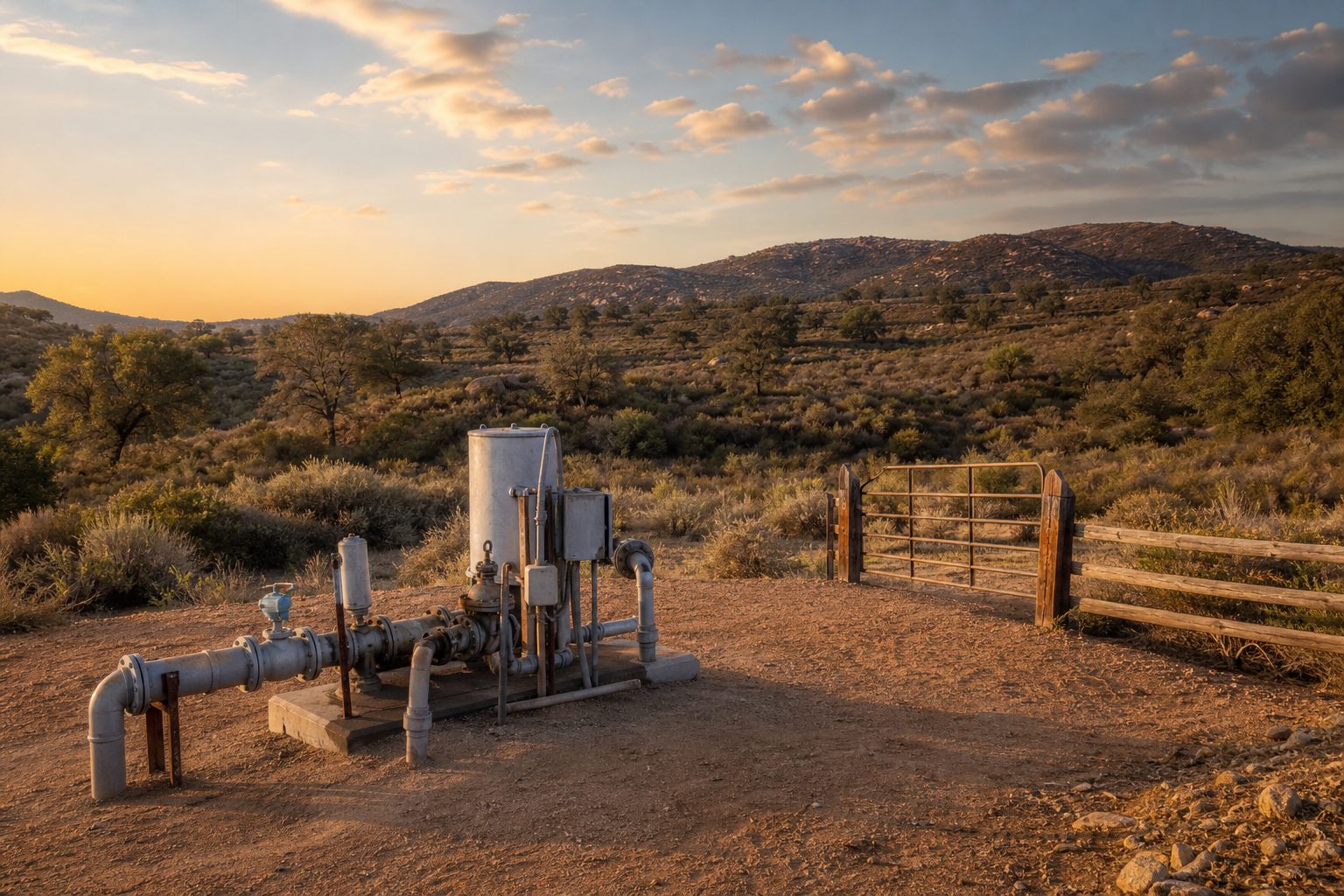
The San Diego County Department of Environmental Health, through its Land and Water Quality Division, regulates well construction, modification, and destruction across the county. If you are buying a Ramona property with an existing well, or planning to drill one, here is what the permitting process looks like.
What Requires a Well Permit in San Diego County
- New well drilling (domestic, agricultural, or commercial)
- Well deepening to access more water
- Well destruction (sealing an abandoned well)
- Modifications to the well casing or seal
Routine pump repairs and replacements do not require permits. But everything else does, and there are no exemptions for small properties, rural locations, or minimal water use. Even replacing an existing well typically requires a permit.
Permit Application Essentials
Your application needs to include property information (APN and ownership documentation), a site plan showing the proposed well location with setback distances from septic systems, property lines, and structures, the well specifications including proposed depth and casing size, and your contractor’s C-57 license number and insurance.
San Diego County requires a 100-foot setback from septic leach fields. This is stricter than many other California counties and can significantly impact well placement on smaller parcels. If you are looking at a 4-acre property with an existing septic system, the buildable zone for a well may be more limited than you expect.
Permit Costs and Timelines for 2026
- Basic domestic well permits: approximately $1,200 to $1,500
- Wells requiring CEQA review or in special zones: $2,000 to $3,500 or more
- SGMA and GSA fees: $100 to $2,000 or more
- CEQA review if required: $500 to $5,000 or more
- Standard processing time: 4 to 8 weeks for straightforward applications
- Complex applications (environmental review, sensitive areas): 2 to 4 months
One couple I worked with was interested in a 40-acre Ramona parcel zoned A-72 (General Agriculture) with plans to raise livestock and grow specialty crops. When we investigated the existing well, we discovered it had no recent water quality testing and the flow rate was marginal for their planned operation. They ended up budgeting an additional $15,000 for well testing, potential deepening, and permitting before they made their offer. That clarity upfront gave them confidence to negotiate the purchase price accordingly.
How SGMA Changes What You Can Actually Do With Your Ramona Land
The Sustainable Groundwater Management Act is the single biggest regulatory shift affecting farm and ranch buyers in San Diego County right now. Here is how it plays out practically.
If your Ramona property sits over a groundwater basin that has been designated as high or medium priority, the local GSA has the authority to impose pumping allocations, require well metering, charge extraction fees, and restrict new well permits. This can limit the scale of your agricultural operation, the number of livestock you can support, or whether you can irrigate a vineyard at all.
What I tell my clients is this: before you fall in love with 100 acres of rolling Ramona rangeland, we need to verify which groundwater basin underlies the property and what the GSA’s current management plan says about extraction limits. The geology in this part of San Diego County, which is primarily decomposed granite and fractured crystalline rock, creates unique challenges. Wells may produce inconsistent flow rates, and not every location on a parcel will yield water.
A buyer I recently guided through an agricultural property search was surprised to learn that two neighboring parcels in Ramona had dramatically different well production rates. One well produced reliably at 15 gallons per minute, while the adjacent parcel’s well barely managed 2 gallons per minute. Same road, same elevation, completely different geology beneath the surface.
Zoning, Water Quality, and What Your Ramona Property Can Support
Agricultural Zoning in Ramona
Most Ramona farm and ranch properties carry an A-72 (General Agriculture) zoning designation with a Rural Lands (RL-40) general plan land use classification. This zoning permits crop cultivation, livestock raising, and other agricultural activities. The surrounding area is predominantly rural, characterized by agricultural operations, ranches, and open spaces.
Water Quality Regulations
The San Diego Regional Water Quality Control Board actively regulates agricultural water discharges in Ramona. If your farming operation generates runoff (irrigation tailwater, animal waste, fertilizer), you may need to comply with water quality permits and monitoring requirements. This is separate from your well permit and adds another layer to your due diligence.
Practical Land Use Considerations
So what can you actually do with the land? It depends on the intersection of your zoning, your water supply, and current regulations. Ramona properties range from 4-acre specialty farms (like the Moringa Farm on Feghali Road) to sprawling 277-acre ranches and 137-acre vineyard estates. The property’s water capacity, not just its acreage, determines its productive potential.
With 180 five-star client reviews and a focus that includes farm and ranch properties, I approach these transactions the same way I approach any complex deal: clarity first, so you can make a confident decision.
Frequently Asked Questions About Ramona Water Rights and Well Permits
Do I need a permit to use an existing well on a Ramona property I just purchased?
You do not need a new permit to use an existing, legally permitted well. However, you should verify the well has a valid permit on file with San Diego County, request recent water quality test results, and confirm flow rates meet your needs before closing.
Can I drill a new well on my Ramona farm without a permit?
No. All wells in California require permits, including domestic, agricultural, and commercial wells. There are no exemptions for rural locations, small properties, or minimal water use. Your licensed C-57 contractor submits the application on your behalf.
How much does it cost to drill a new well in Ramona San Diego in 2026?
Permit fees alone range from $1,200 for basic domestic wells to $3,500 or more for wells requiring environmental review. The drilling itself, which is separate from permitting, adds significantly to the total cost depending on depth and geology.
What is the setback requirement from a septic system to a well in San Diego County?
San Diego County requires a 100-foot setback from septic leach fields. This is stricter than many other California counties and can limit where you place a new well, especially on smaller parcels.
How does SGMA affect my ability to pump groundwater on my Ramona ranch?
SGMA allows local Groundwater Sustainability Agencies to impose pumping limits, metering requirements, extraction fees, and restrictions on new well permits. You need to verify which basin your property sits over and review the current management plan before purchasing.
What are riparian rights and do they apply to Ramona properties?
Riparian rights attach to land bordering a natural watercourse and allow reasonable water use on that parcel. If your Ramona property borders a creek or stream, you may hold riparian rights, but these do not replace the need for well permits if you also use groundwater.
How long does it take to get a well permit approved in San Diego County?
Standard permit processing takes 4 to 8 weeks. Simple domestic wells in unincorporated areas may process faster at 3 to 4 weeks. Wells requiring CEQA review or located in sensitive areas can take 2 to 4 months.
Can my well permit be denied in Ramona?
Yes. If your property sits over a stressed groundwater basin, the local GSA may restrict new well permits. Additionally, if setback requirements cannot be met or environmental concerns exist, the county can deny your application.
What water quality testing should I request before buying a Ramona farm?
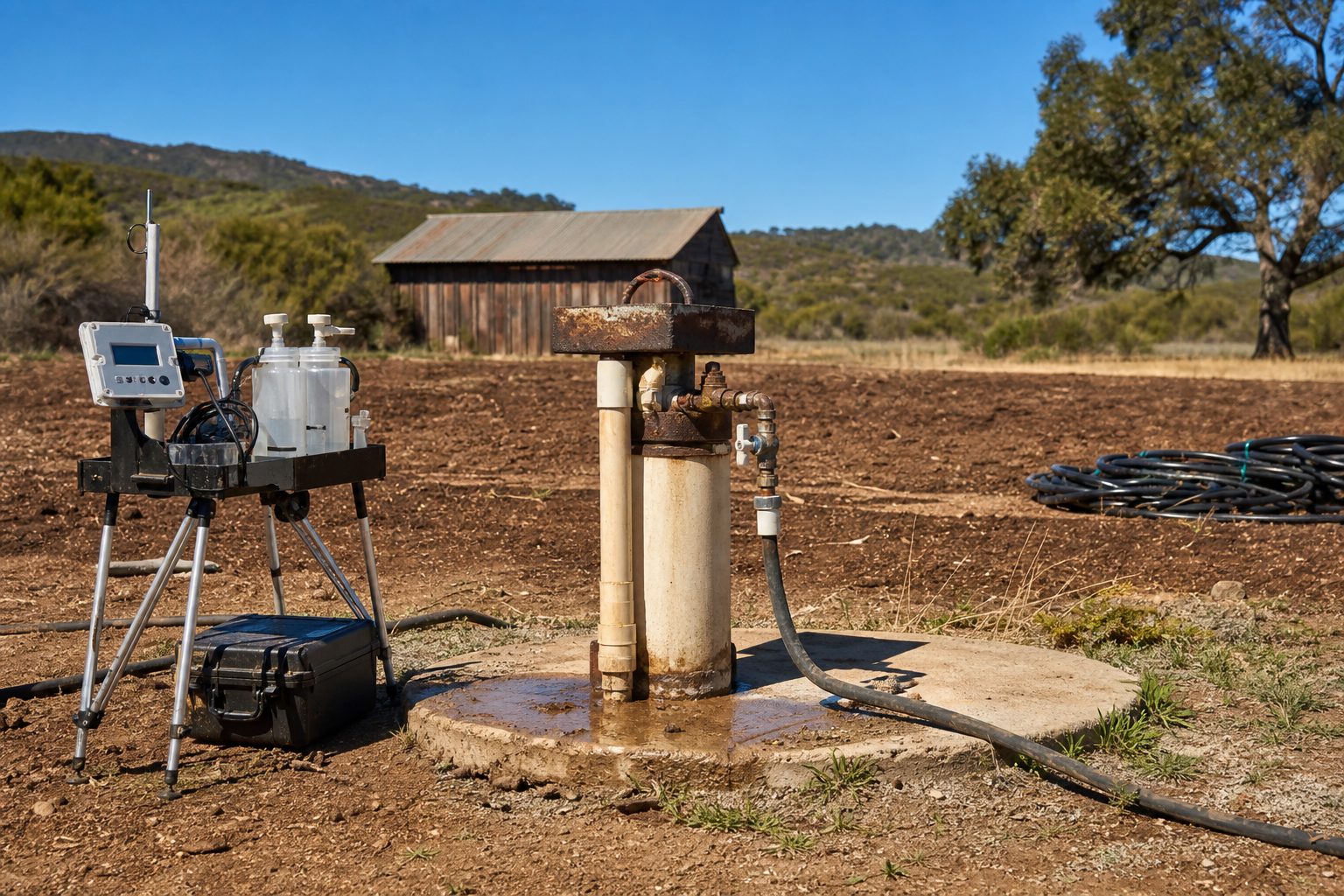
At minimum, request testing for bacteria, nitrates, total dissolved solids, and any contaminants common to the area. The San Diego Regional Water Quality Control Board has specific standards for agricultural water discharges that may also apply to your operation.
Should I get a well inspection during my due diligence period?
Absolutely. I recommend having the well inspected by a technician experienced with San Diego County’s decomposed granite and fractured crystalline rock geology. Flow rate testing, water quality analysis, and a review of the well’s construction records should all happen before you remove contingencies.
The Bottom Line on Buying Farm and Ranch Property in Ramona San Diego
Water is the single most important variable in any Ramona farm or ranch purchase. Your water rights, well condition, permit status, and SGMA compliance determine what the land can actually support, from a small vineyard to a full-scale livestock operation.
The due diligence process for agricultural properties is more complex than a standard residential purchase, and the stakes are higher. When you are considering a farm or ranch property in Ramona or anywhere in San Diego County, getting clear answers about water before you close is not optional. It is essential.
If you need guidance navigating water rights and property requirements, I would welcome the chance to walk through your options. I am Scott Cheng, Broker Associate with REAL Brokerage, and you can reach me at 858-405-0002. Let’s bring clarity to your search so you can move forward with confidence on how much cash you need to buy in San Diego and understand all the factors that affect your agricultural purchase.
Have Questions About San Diego Real Estate?
Scott Cheng provides free, no-obligation consultations for buyers, sellers, and investors.
Schedule a Consultation