Why University Town Center Condos Near UCSD Have Stagnant Prices in San Diego
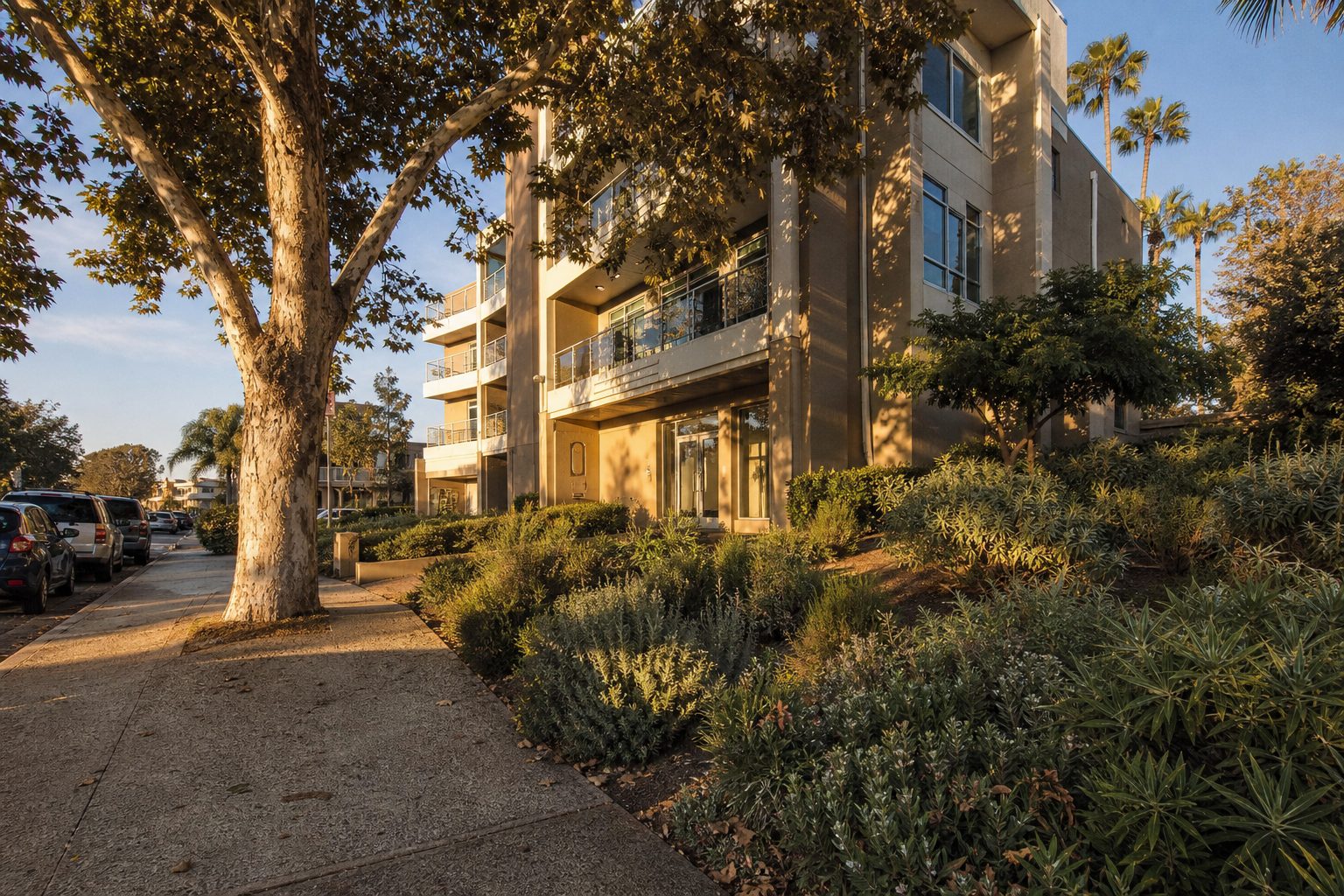
Why has the condo-heavy University Town Center market near UCSD seen flat price growth, and are condos still a sound investment compared to single-family homes in San Diego?
UTC condos are losing ground to single-family homes because rising HOA fees, surging fire insurance costs, and oversupply near UCSD are quietly eroding equity. If you own a condo here, your window to sell well is narrowing.
Why This Matters Right Now in University Town Center
I’m preparing a listing in University Town Center right now, and what I’m seeing on the ground matches what the data confirms: the condo market here has gone flat. University City‘s median sale price across all homes over the last 12 months is $865,000, down 4% from the prior period. Condos and townhomes specifically listed at a median of $689,000 in May 2026, reflecting a 3% year-over-year decrease with price per square foot down 5%.
Meanwhile, detached single-family homes along the Governor Drive corridor and in South UC continue to hold value, frequently selling above $1,200,000. The gap between these two property types is not just widening. It is accelerating.
If you own a condo or townhome in the Golden Triangle, you need to understand why this is happening and what your options look like moving forward. A cloudy mind can’t make decisions, so let me lay this out clearly.
How UCSD’s Proximity Shapes the University Town Center Condo Market
UC San Diego is one of the world’s leading research universities, specializing in business and engineering. That prestige drives enormous demand for housing in its orbit, particularly along La Jolla Village Drive near the Westfield UTC complex and the Blue Line trolley station. Over the past two decades, developers responded by building condo after condo, mid-rise tower after mid-rise tower, across the northern half of University City.
Here is where that becomes a problem for your equity. When you saturate a neighborhood with similar product, you create internal competition. There are currently 50 University City condos, lofts, and townhomes listed for sale, with asking prices ranging from $325,000 to $1,980,000. That is a lot of attached inventory competing for the same buyer pool.
What I tell my clients is this: scarcity drives value. Single-family homes in South UC, the ones on those wide, tree-shaded streets near Curie Elementary and Standley Middle School (both earning A or A+ ratings), are inherently scarce. You cannot build more 1960s ranch homes on Governor Drive. But developers can and do keep adding condo units near the retail core.
One couple I worked with owned a two-bedroom condo near Executive Drive. They had purchased it seven years earlier for $485,000, hoping the UCSD proximity would fuel strong appreciation. When we ran the numbers for a potential sale, comparable units were closing around $510,000. After accounting for the transaction costs, their real return was essentially flat. That is the kind of math that catches condo owners off guard.
Rising HOA Fees Are Quietly Killing UTC Condo Equity
This is the factor I think too many condo owners underestimate. Monthly HOA dues for attached properties in University Town Center typically range from $300 to over $600, and those numbers are climbing.
Why are they climbing? Several forces are converging at once:
- Aging buildings need expensive repairs. Many UTC condo complexes were built in the 1980s and 1990s. Roofs, elevators, plumbing, and common-area infrastructure are all hitting replacement age simultaneously.
- SB 326 compliance costs. California’s balcony inspection law is requiring older buildings to complete structural assessments and remediation, adding costs that flow directly into your monthly dues.
- Insurance premium increases. Over 90% of California HOA associations have seen insurance costs rise steeply. When the master policy premium doubles, your HOA fee absorbs that increase.
- Special assessments. If the HOA reserve fund is underfunded (and many are), the board may levy one-time special assessments of thousands of dollars per unit.
Here is what that means in practical terms. If your HOA fee increases by $150 per month, that is $1,800 per year in additional carrying cost. Over a typical hold period of seven to ten years, that compounds to $12,600 to $18,000 in extra expense that produces zero equity return. Buyers see these rising costs too, and they adjust their offers downward accordingly.
What I always encourage condo owners to do is pull the HOA’s reserve study and recent meeting minutes before deciding on timing. Those documents tell you what expenses are coming and whether a special assessment is on the horizon.
Fire Insurance Costs Are Reshaping San Diego Condo Values
California’s fire insurance crisis is not just a headline for homeowners in canyon-adjacent neighborhoods. It is directly impacting condo owners in University Town Center, and here is how.
When an insurer raises premiums on a condo building’s master policy, or withdraws coverage entirely, the HOA must find replacement coverage at a higher cost. That cost gets divided among all unit owners through increased dues. You, as an individual owner, have zero control over this process. You cannot shop for your own structural coverage. You are along for the ride.
The data backs this up. According to San Diego Association of REALTORS data, older condos and townhomes countywide are down roughly 10% to 15% from recent highs. Rising HOA dues, SB 326 inspection costs, and higher insurance are identified as the primary drag on condo values.
Neighborhoods near Rose Canyon Open Space Preserve and other natural areas face additional scrutiny from insurers. Even if your specific building has not experienced a premium spike yet, the market is pricing in the risk. Buyers and their lenders are factoring insurance uncertainty into their offers.
A recent seller I worked with in a nearby San Diego condo complex was stunned when their HOA announced a $4,200 special assessment tied almost entirely to a master policy premium increase. That kind of surprise erodes buyer confidence across the entire building.
Why Single-Family Homes in University City Outperform Condos as Investments
So what makes the single-family homes along Governor Drive and Regents Road so much more resilient? It comes down to three structural advantages.
You Own the Land
In a market where buildable residential land is genuinely scarce, the ground underneath your house is often more valuable than the structure itself. San Diego County’s compound appreciation over the last 25 years has been roughly 4% to 6% annually, and single-family homes have consistently outperformed that average. Detached home inventory countywide fell 26.1% year-over-year, while attached inventory edged up. Scarcity compounds value.
You Control Your Costs
There is no HOA board deciding to replace a pool you never use. No special assessment landing in your mailbox. Your insurance, your maintenance, your timeline. With single-family homes, what I see clients appreciate most is the feeling of control over their own financial exposure.
You Can Force Appreciation
You can add an accessory dwelling unit, remodel a kitchen, or upgrade landscaping to boost value. With a condo, your value is largely tied to the most recent sale of your neighbor’s identical unit. In my experience working with buyers and sellers across Mira Mesa, Carmel Valley, and University City, the renovation ROI on single-family homes consistently outpaces what is achievable in attached housing.
What University Town Center Condo Sellers Should Do Right Now
If you currently own a condo near UTC and you are considering selling, here is what I recommend:
- Price with precision. Countywide, the median attached home price decreased 4.4% year-over-year to $632,000. UTC condos are not immune. Overpricing will cost you time, and time on market in a softening segment costs you money. Homes in high-demand neighborhoods go under contract within 21 to 34 days when priced correctly.
- Review your HOA financials before listing. Buyers and their agents will scrutinize the reserve study. If your building has strong reserves and stable dues, that is a selling point. If not, you need to address it in your pricing strategy.
- Get ahead of the insurance conversation. Know your building’s master policy status and premium history. Being transparent about this builds buyer confidence rather than creating a surprise during escrow.
- Consider the sell-and-buy calculation. If you are planning to move into a single-family home in University City or a neighboring community like Clairemont Mesa or Scripps Ranch, the equity gap between what you sell and what you buy may be wider than you expect. Let’s map that out together so you have a calm plan.
Frequently Asked Questions
Why have University Town Center condo prices stayed flat?
UTC’s housing stock is heavily weighted toward condos and townhomes, creating internal competition among similar units. Combined with rising HOA fees, increasing fire insurance costs, and SB 326 compliance expenses, buyer demand has softened. Countywide, attached home prices decreased 4.4% year-over-year while single-family homes increased. The oversupply near UCSD amplifies this gap locally.
How much are HOA fees in University Town Center condos?
Monthly HOA dues for attached properties in University Town Center typically range from $300 to over $600. These fees cover exterior maintenance, roof repairs, and shared amenities like community pools. Many complexes have seen increases due to rising insurance premiums and aging infrastructure requiring major capital projects.
Are condos in San Diego still a good investment in 2026?
The data suggests condos are underperforming single-family homes as investments. San Diego’s countywide condo median dropped while single-family prices rose. Downtown and UTC condos with high HOA dues are projected flat to negative 3% in appreciation. Single-family homes in strong school districts are projected at 4% to 6% growth.
How does fire insurance affect UTC condo values?
When insurers raise premiums on a condo building’s master policy, or exit the market entirely, HOA dues increase to cover the gap. Over 90% of California associations saw insurance costs rise steeply. Individual unit owners cannot shop for alternative coverage on the building structure. This cost gets baked into monthly fees and erodes your net equity.
What is SB 326 and how does it affect my condo?
SB 326 is California’s balcony inspection law requiring structural assessments of exterior elevated elements in condo buildings. Older buildings in University City are facing compliance costs that flow directly into HOA budgets, often resulting in special assessments or fee increases for unit owners.
Should I sell my University Town Center condo now or wait?
If your building faces rising HOA costs, insurance premium increases, or upcoming special assessments, waiting may cost you more than selling in a softer market. Attached homes countywide are taking 43 days to sell, roughly 10% longer than last year. Pricing correctly now may net you more than waiting for conditions that may not improve.
Why do single-family homes appreciate faster than condos in San Diego?
Single-family home value is tied to land, and buildable residential land in San Diego is scarce. Land typically appreciates faster than structures. You can also force appreciation through renovations, ADUs, or remodels. Condo values are largely determined by comparable sales in your building, limiting your ability to influence equity growth.
How much condo inventory is available in University City right now?
There are currently 50 University City condos, lofts, and townhomes listed for sale with asking prices from $325,000 to $1,980,000. Meanwhile, detached home inventory countywide fell 26.1% year-over-year. This imbalance gives single-family sellers leverage that condo sellers simply do not have.
What is the median home price in University City in 2026?
The blended median sale price in University City is approximately $807,000, pulled lower by the high volume of condo transactions. Single-family homes typically range from $800,000 to $1,200,000, while condos and townhomes fall between $450,000 and $900,000. Over the last 12 months, the overall median dropped 4%.
Can I convert my University Town Center condo investment into a single-family home?
Yes, and many UTC condo owners are doing exactly this. The equity you have in your condo can serve as a down payment on a detached home in University City’s South UC neighborhoods, or in adjacent communities like Escondido and Mira Mesa. The key is mapping the numbers realistically before you list.
The Bottom Line for University Town Center Condo Owners
The University Town Center condo market near UCSD has structurally changed. Rising HOA fees, escalating fire insurance costs, SB 326 compliance, and persistent oversupply are working together to suppress the appreciation that condo owners once counted on. Single-family homes in University City and across San Diego continue to outperform, driven by land scarcity and owner control over costs.
If you own a condo in UTC and you are thinking about your next move, the clearest path forward starts with understanding exactly where your building stands financially and what your realistic options are. I am preparing a listing in University Town Center right now, and I am working through these exact questions with my client. If you want that same level of clarity for your situation, call me at 619-920-7220 or visit my site to start the conversation. I would rather you make a well-informed decision today than a reactive one six months from now.
*Scott Cheng, Associate Broker, Real Brokerage, San Diego, CA. This blog reflects market data available as of mid-2026 and is intended for informational purposes. It is not legal or financial advice. Consult appropriate professionals for your specific situation.*
Have Questions About San Diego Real Estate?
Scott Cheng provides free, no-obligation consultations for buyers, sellers, and investors.
Schedule a Consultation