Should You Sell Your Mission Hills San Diego Home Now or Wait for Spring 2027?
If you own a home in Mission Hills, San Diego, you’re probably asking yourself: should I sell now in 2026, or hold out for a potentially stronger spring 2027 market?
[SNIPPET ANSWER: Mission Hills sellers in 2026 face strong conditions now, with homes selling at 97.6% of list price and just 2.6 months of supply. Waiting for spring risks more competition and uncertain economic conditions.]
Why This Decision Matters for Mission Hills Homeowners Right Now
Here’s the reality. The San Diego housing market in 2026 is not the simple, fast-moving seller’s market we saw during 2020 to 2022. It’s more nuanced, more selective, and more split by property type. But for Mission Hills specifically, the fundamentals remain strong.
I’ve spent 16 years helping San Diego homeowners navigate exactly this kind of decision. What I tell my clients is that a cloudy mind can’t make decisions, so let me lay out the data and the strategy so you can see the picture clearly. The detached single-family market in ZIP 92103 (which includes Mission Hills) currently has just 2.6 months of supply. Homes are selling at 97.6% of list price within an average of 38 days. That’s a seller-favorable environment by any measure.
But here’s the part that makes this moment interesting: after climbing to a record $1.05 million countywide median in June 2026, prices retreated to $1.02 million in July. That $30,000 pullback is the first meaningful softening signal we’ve seen, and it raises real questions about where things go next.
The Case for Selling Your Mission Hills Home Now in 2026
If you’ve been leaning toward listing sooner rather than later, the data supports that instinct for several reasons.
Inventory Is Historically Low
New listings of detached homes across San Diego County fell 17.6% compared to last year. That means fewer competing listings on streets like Randolph, Sunset Boulevard, and Fort Stockton Drive. When I look at Mission Hills specifically, there were only 33 active listings as of mid-June 2026. For a neighborhood this desirable, that is remarkably thin inventory. Fewer competing homes means more buyer attention on yours.
Buyer Demand Remains Strong in Central San Diego
San Diego County saw a 16.1% surge in home sales year over year in June 2026. Central neighborhoods, including Mission Hills, continue outperforming the broader market. Move-up buyers and out-of-area relocations remain steady. The median days on market countywide dropped to 18 days, down from 21 the prior year.
One couple I worked with earlier this year owned a Craftsman bungalow near Goldfinch Street. They kept going back and forth about timing. Once we reviewed the comparables together and saw that restored Craftsman and Spanish Revival properties were consistently trading above $2 million, they decided to list. Their home went under contract in 26 days at 98% of asking price. That outcome is not unusual for a well-presented Mission Hills property right now.
The Price Peak May Already Be Behind Us
That July pullback from $1.05 million to $1.02 million countywide is worth paying attention to. While Mission Hills operates on its own micromarket dynamics (with irreplaceable historic housing stock and canyon views toward the bay, downtown, and Point Loma), broader trends do eventually affect premium neighborhoods. Selling into strength, while demand is verified and prices are near their highs, is often a stronger financial decision than gambling on a future peak.
What Happens If You Wait for Spring 2027 in San Diego
Spring traditionally brings more buyers. That’s true. But it also brings more sellers, and that’s the part most homeowners underestimate.
More Competition Could Dilute Your Advantage
Right now, new listings are running 15.9% below last year’s pace. That is giving current sellers a built-in advantage. Spring 2027 will almost certainly bring more inventory to market. When you’re competing against five other historic homes on the West Lewis Street corridor instead of two, your pricing power diminishes.
Mortgage Rates Could Help or Hurt
Fannie Mae projects the 30-year fixed rate to fall to roughly 5.9% by the end of 2026. If rates dip below 6%, that could unlock pent-up buyer demand. But here’s the catch: it also unlocks pent-up seller supply. Many homeowners locked into 2 to 3% rates have been sitting tight. Lower rates give them permission to move, flooding the market with new listings precisely when you’re trying to sell.
Economic Uncertainty Adds Risk
The CPI reading hit 3.8% in April 2026, the highest since May 2023. Trade policy uncertainty and potential job losses create headwinds. The California Association of REALTORS pegs statewide housing affordability at roughly 18% for 2026, meaning fewer than one in five households can afford the median California home. Waiting assumes conditions improve, and that is not something anyone can reliably predict right now.
How Mission Hills Stands Apart from the Broader San Diego Market
This is where my experience working across San Diego neighborhoods for over 275 transactions really comes into play. Mission Hills is not a typical neighborhood, and that changes the calculus for sellers.
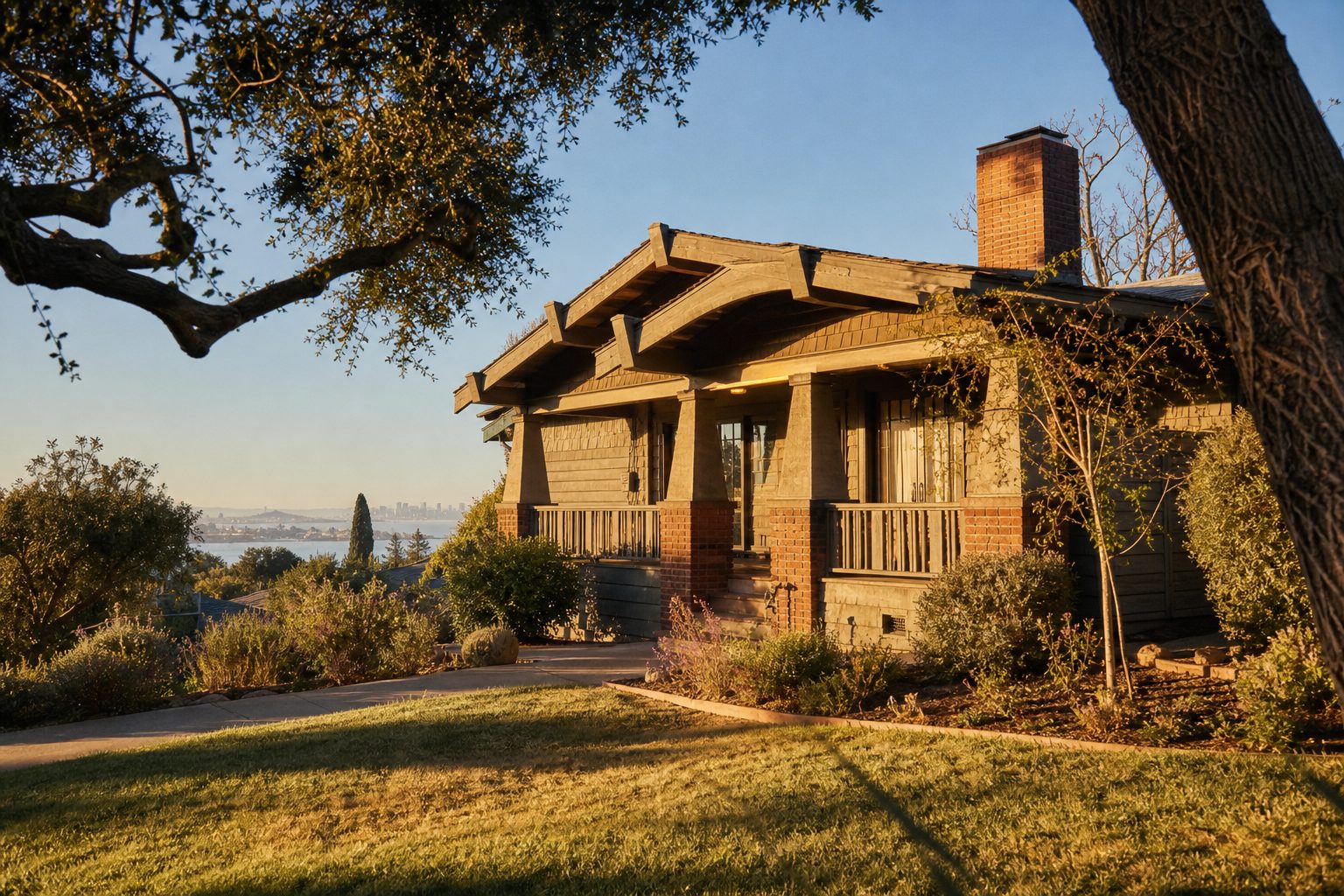
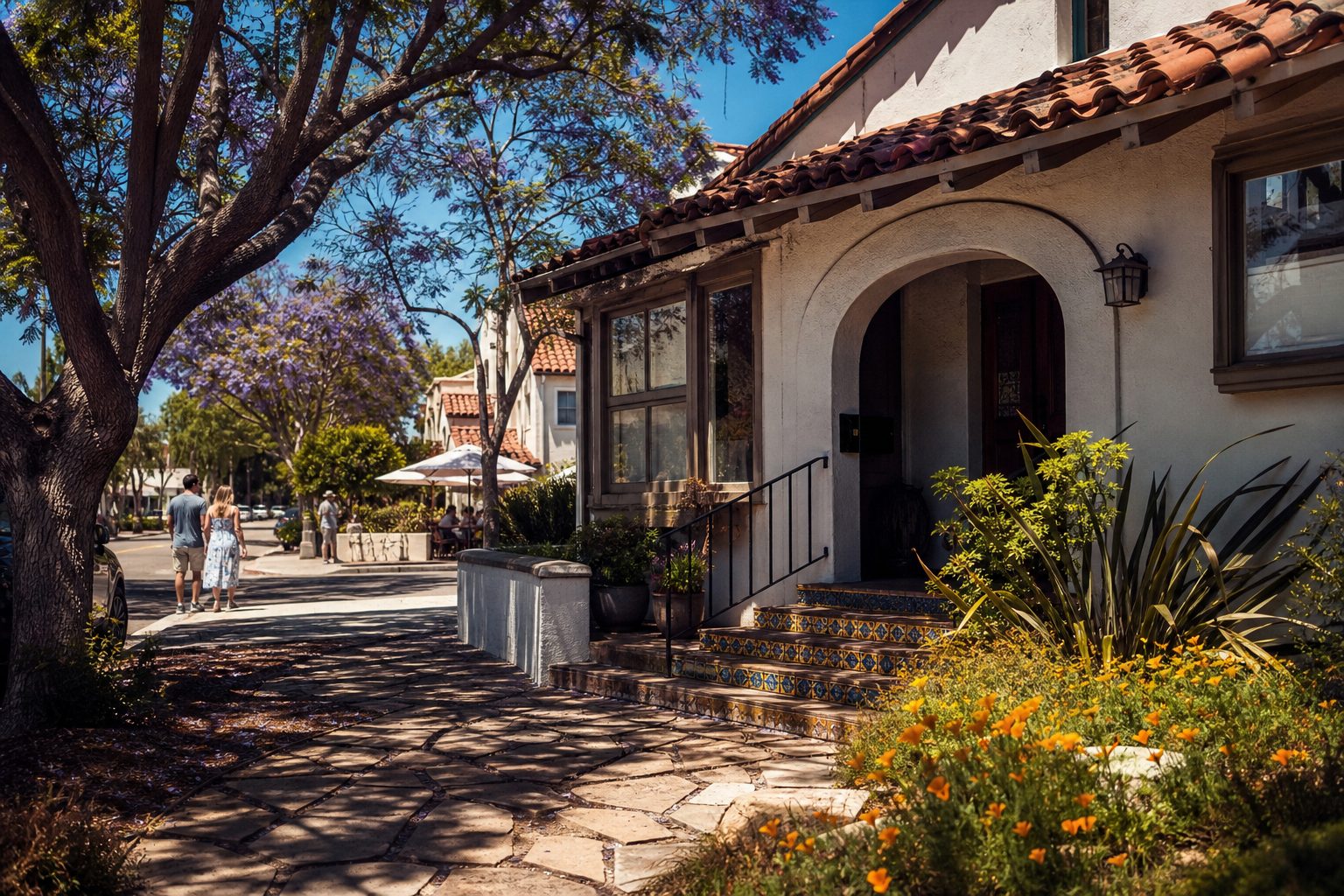
The housing stock here is architecturally irreplaceable. Craftsman bungalows from the early 1900s, Spanish Colonial Revival homes, Mission Revival and Prairie-style properties. You simply cannot build more of them. That scarcity creates a pricing floor that other San Diego neighborhoods do not have.
The year-to-date median sale price for detached homes across ZIP 92103 sits at $1,621,250 as of March 2026, essentially flat year over year. For Mission Hills proper, the market skews higher because the neighborhood is predominantly single-family historic homes rather than condos. Entry-level properties needing work can still appear in the $1.2 to $1.6 million range, while mid-size restored homes typically trade between $1.8 and $3 million. Estate-scale properties with architectural significance routinely trade at $4 million and above.
The average price per square foot in Mission Hills is $895.63. Compare that to North Park at $786 to $800 per square foot, and you can see the premium that buyers place on Mission Hills’ ridgeline views, walkable village pockets, and proximity to downtown (just 8 minutes away).
Pricing Strategy for Mission Hills Sellers: What Actually Works in 2026
I recently worked with a downsizer who had lived in Mission Hills for over 20 years. Their Spanish Revival home was gorgeous but needed updated systems. They wanted to list at the top of the range because of the view toward Point Loma. What I told them was simple: in a more selective market, clean data and realistic pricing earn stronger offers and fewer price reductions. We priced based on recent comparable sales, invested in professional staging, and addressed the most visible deferred maintenance items. The home attracted three offers within the first two weeks.
Here is what I recommend for Mission Hills sellers in 2026:
- Price competitively from day one. Listings priced right from the start earn stronger buyer interest and avoid the stigma of price reductions
- Invest in presentation. Move-in ready homes still sell faster. Declutter, handle deferred maintenance, and get professional photography
- Be flexible on terms. Closing cost credits are increasingly common as buyers manage upfront costs. Staying firm on price while offering credits often nets you the same amount while creating a deal that actually closes
- Highlight what makes Mission Hills irreplaceable. Canyon views, walkability to Goldfinch Street cafés and Fort Stockton Drive boutiques, proximity to Balboa Park and Old Town. These are not amenities you can replicate elsewhere in San Diego
Frequently Asked Questions
Is Mission Hills San Diego still a seller’s market in 2026?
Yes. With just 2.6 months of supply for detached homes in ZIP 92103 and properties selling at 97.6% of list price, conditions clearly favor sellers. A balanced market would have 5 to 6 months of inventory, so Mission Hills is well below that threshold.
What is the median home price in Mission Hills San Diego right now?
The year-to-date median sale price for detached homes across ZIP 92103 is $1,621,250 as of March 2026. Mission Hills specifically tends to trade above that ZIP-wide figure due to its predominantly single-family historic housing stock.
How long does it take to sell a home in Mission Hills in 2026?
Detached homes in the 92103 ZIP code are averaging about 38 days on market. Countywide, the median is 18 days. Well-priced, well-presented Mission Hills homes tend to fall somewhere between those figures.
Will San Diego home prices go up or down in 2027?
Modest appreciation is expected for central San Diego neighborhoods, with forecasts in the 3 to 4% range. However, the July 2026 countywide pullback from $1.05 million to $1.02 million suggests the pace of growth may be slowing.
Should I renovate my Mission Hills home before selling?
Focus on high-impact items: professional staging, curb appeal, and addressing visible deferred maintenance. Having worked on flips and remodels alongside investors for years, I can help you identify where renovations are most likely to move the needle on value and where they’re a waste of money.
What are current mortgage rates in San Diego for 2026?
The 30-year fixed conforming rate averaged 6.48% as of early June 2026 per Freddie Mac data. Fannie Mae projects rates could fall to approximately 5.9% by year end.
How does Mission Hills compare to North Park for home values?
Mission Hills trades at a significant premium. The average price per square foot in Mission Hills is $895.63 compared to North Park’s $786 to $800 range. Mission Hills’ architectural significance, bay views, and canyon-edge lots drive that difference.
Is spring really a better time to sell in San Diego?
Spring brings more buyers, but it also brings more competing listings. Currently, new listings are running 15.9% below last year. Sellers who list now face less competition, which can be more valuable than the seasonal uptick in demand.
What types of buyers are looking at Mission Hills homes?
Mission Hills attracts move-up buyers, out-of-area relocations (especially from tech, biotech, and healthcare sectors), and lifestyle buyers who value architectural character, walkability, and central location. It is also popular with downsizers moving from larger suburban properties into a walkable urban neighborhood.
Do I need a San Diego real estate broker who knows Mission Hills specifically?
Absolutely. Mission Hills has unique considerations around historic home disclosures, renovation ROI on period-appropriate updates, and block-by-block pricing variations. A real estate agent with deep local knowledge and experience negotiating in this micro-market can make a meaningful difference in your outcome.
The Bottom Line for Mission Hills Sellers in San Diego
If you own a home in Mission Hills and you’ve been thinking about selling, the data points toward acting from a position of strength rather than waiting and hoping for better conditions. Inventory is low, buyer demand is verified, and your home sits in one of San Diego’s most irreplaceable neighborhoods.
Waiting for spring 2027 is a reasonable consideration, but it comes with real risks: more competing listings, economic uncertainty, and no reliable way to predict whether prices will be higher or lower six months from now.
With 180 five-star reviews and 16 years of experience as an Associate Broker serving San Diego, I help homeowners work through exactly this kind of decision with clean information, realistic options, and a calm plan. If you’re weighing your timing and want a clear-eyed look at what your Mission Hills home could sell for today, I’d welcome the conversation. Reach out to me, Scott Cheng, at 858-405-0002.
*Scott Cheng is an Associate Broker with REAL Brokerage, DRE# 01509668, serving San Diego County. This blog provides general market information and does not constitute legal or financial advice. Always consult with appropriate professionals for your specific situation.*
Have Questions About San Diego Real Estate?
Scott Cheng provides free, no-obligation consultations for buyers, sellers, and investors.
Schedule a Consultation