Is now a good time to buy a home in San Diego in 2026?
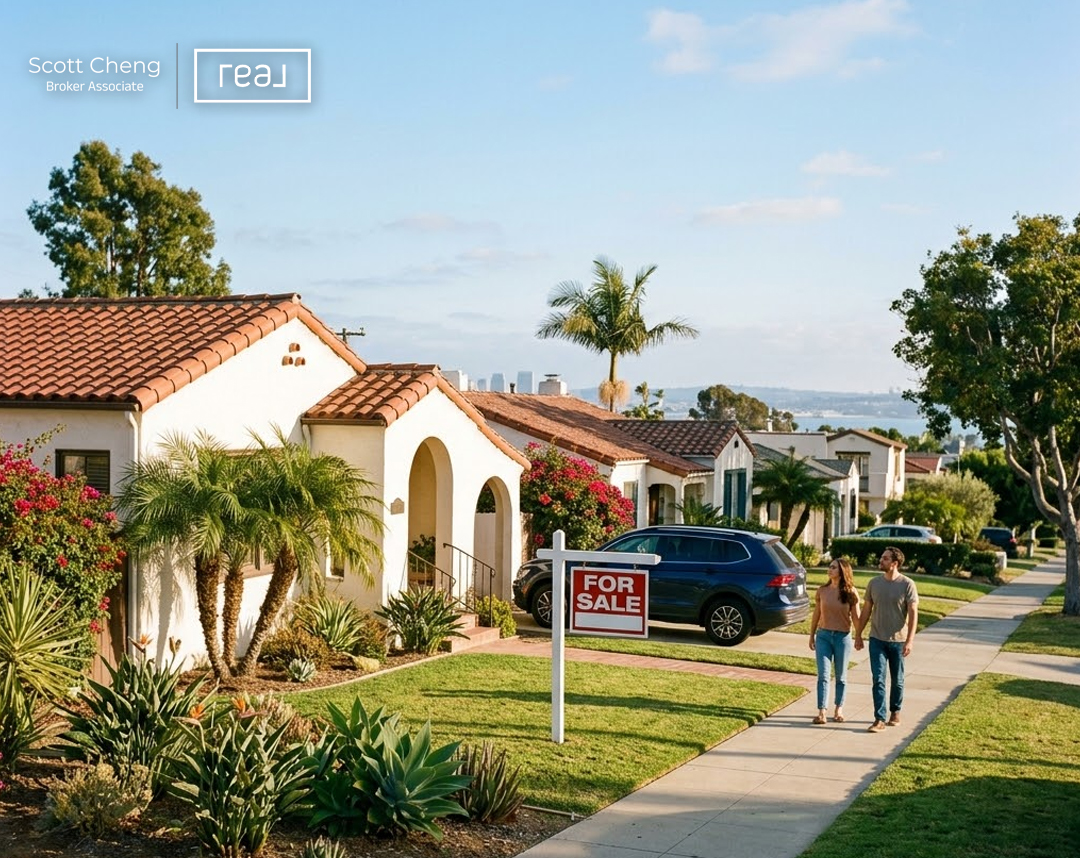
Is now a good time to buy a home in San Diego in 2026?
Yes. With mortgage rates near 6%, moderating price growth, and rising sales, 2026 San Diego offers better selection and leverage, especially for move-in ready condos and well-priced homes.
Why does the San Diego market favor buyers more in 2026?
The 2026 San Diego market tilts slightly more in your favor than recent years. Local reports show median single-family prices around $1,089,795 in February 2026, up a modest 2.1% year over year. Attached homes such as condos and townhomes sit near a $660,000 median and have softened slightly, down 2.2%. Mortgage rates are expected to average about 6.1% in 2026, which increases your buying power compared to last year. Forecasts also point to an 11% rise in existing home sales and about 4% price growth, suggesting more listings and activity without a full return to bidding-war chaos. Days on market hover near 57, a touch higher than last year, and that can open the door to negotiation on well-priced, move-in ready homes. If you are strategic, 2026 can be a smart entry point in San Diego.
What do San Diego buyers need to know before making an offer in 2026?
Anchor your decision in the data and in your monthly budget before writing an offer. Detached inventory is still tight, down roughly 19.1% year over year, with months of supply lower by about 20.8%. That keeps single-family homes competitive, especially in desirable pockets. At the same time, attached homes have more flexibility and present a clearer path for first-time buyers.
- Rates near 6.1% improve affordability compared to 2025. A $3,000 monthly budget can buy about $25,000 more home than last year, based on mortgage market scenarios.
- Median detached sits around $1.09 million, up just 2.1% year over year, while condos and townhomes hover near $660,000 and are down 2.2%. That gap points you toward attached homes for leverage and lower maintenance.
- Days on market around 57 mean you can negotiate repairs or credits, especially if a property needs cosmetic work.
- Forecasts call for about 4% price growth and 11% more sales in 2026. If you are waiting for a big drop, that scenario looks unlikely with persistent undersupply, especially along the coast.
Confirm your down payment options early. Many buyers assume 20% down is required, but you can often buy with less. Check local resources like the San Diego Housing Commission, CalHFA, and HUD for first-time buyer assistance and deferred options tied to area median income.
How Attached Homes Fit Your San Diego Plan
Condos and townhomes provide an efficient entry point in 2026. With softer pricing, generally lower maintenance, and more negotiability, you can focus on move-in ready units in neighborhoods with strong amenities. Factor in HOA dues when you stress-test your monthly payment.
How do you compare condos versus detached homes in San Diego in 2026?
The right choice comes down to your budget, lifestyle, and timeline — and comparing total monthly cost is the only fair way to evaluate both. With detached homes still inventory-constrained, you should compare them directly against attached options using the same budget lens. Focus on total monthly cost rather than list price alone. That includes principal and interest, taxes, insurance, HOA dues if applicable, and ongoing maintenance.
Pros of attached homes in 2026:
- Lower median price and more negotiability in a segment that softened slightly.
- Less maintenance and faster turn-key living, which matters as buyers favor move-in ready.
Pros of detached homes:
- More space and long-term upside in land value, but with tighter supply and stronger competition.
Use recent comps that match condition and micro-location. In San Diego, buyer interest is steady for well-priced, move-in ready listings, so you gain leverage by targeting units that were mispriced or lingered on the market.
Key factors to evaluate:
- Monthly payment comfort: Model all-in costs, including HOA dues for condos.
- Condition and updates: Move-in ready properties sell faster and hold value better in a moderating market.
- Neighborhood quality: Access to parks, schools, and transit boosts resale prospects.
- Days on market: Near 57 locally. Longer DOM can justify credits or price adjustments.
- Rate strategy: Compare permanent buydowns and temporary buydowns against your time horizon.
How do you buy a home in San Diego step by step in 2026?
Follow these seven steps to move from preparation to a successful closing in the 2026 San Diego market.
1) Define your monthly budget. Start with a firm number you can live with long term. Include taxes, insurance, HOA dues for condos, and a maintenance reserve.
2) Get a fully underwritten pre-approval. Ask lenders to compare a standard rate, a 1-point buydown, and a 2-1 temporary buydown. Confirm closing cost estimates and cash-to-close scenarios.
3) Explore first-time buyer programs. If your income is near or below 80% of area median income, many California and local programs may offer deferred or down payment support. Confirm eligibility with the San Diego Housing Commission, CalHFA, and HUD resources.
4) Pick your property lane. If you want speed and lower maintenance, lean into condos and townhomes. If you need a yard and space, target entry-level detached homes and accept tighter supply.
5) Focus on high-quality, move-in ready options. In today’s market, buyers favor updated homes. Prioritize strong condition to minimize surprise costs.
6) Make a data-driven offer. Use a precise comp analysis for similar homes in the same micro-area. If DOM is over the neighborhood average, ask for credits for interest rate buydowns or repairs.
7) Manage risk through contingencies. Keep inspection, appraisal, and loan contingencies unless competitive pressure forces a change. Do not waive key protections without a clear plan and backup options.
What does the San Diego real estate market look like on the ground in 2026?
San Diego presents two distinct buying environments depending on whether you target coastal or inland neighborhoods. Coastal neighborhoods like La Jolla, Pacific Beach, and Point Loma remain undersupplied, so well-priced listings still draw attention quickly. Inland neighborhoods such as Mira Mesa, Clairemont, Serra Mesa, Rancho Bernardo, North Park, and Mission Valley typically offer more attached inventory and approachable entry points for first-time buyers.
Attached homes near Mission Valley or North Park around the $600,000 to $700,000 range can deliver strong amenities, transit access, and solid rental backstops if your plans change. With the attached median near $660,000 and softening year over year, you can negotiate on condition and credits. Detached homes remain higher, with the median around $1,089,795 as of February 2026, supported by tight supply. Average home values countywide hover near $989,768, which is down about 3.4% over the past year, though 2026 forecasts expect roughly 4% growth as rates settle near 6.1%. If your budget is about $3,000 per month, improved rates mean you can afford approximately $25,000 more home than last year. That difference can be the bridge between a dated unit and a move-in ready one.
What mistakes do buyers make when buying a home in San Diego in 2026?
The biggest mistake is waiting for a price crash that the data does not support. Local data and statewide forecasts do not support a large correction in 2026. With detached inventory down and months of supply lower, chronic undersupply limits downside risk, especially in coastal pockets. Another mistake is assuming you must put 20% down. Many programs allow lower down payments, and first-time buyer assistance can help if you meet income and credit guidelines. Finally, do not ignore total monthly cost. HOA dues, insurance, and taxes shape affordability more than list price alone. Running the full numbers early will prevent payment shock and keep your offers focused and realistic.
Frequently Asked Questions
Is 2026 a good time to buy a first home in San Diego?
Yes, if you are prepared and focused. Rates near 6%, modest price growth, and rising sales signal better selection with some negotiating room. Attached homes around a $660,000 median offer an approachable path while single-family supply stays tight.
Should you wait for mortgage rates to drop further in San Diego?
Not necessarily. If rates fall meaningfully, more buyers re-enter and competition rises. With rates already near 6.1% on average for 2026, you can buy now if the monthly payment works and revisit refinancing later if rates improve further.
Are condos in San Diego a smart entry point in 2026?
Yes. The attached segment is softer, with a median near $660,000 and better negotiability. You also benefit from lower maintenance and faster move-in timelines. Remember to factor HOA dues into your total monthly cost to compare apples to apples.
How far does a $3,000 monthly budget go in San Diego in 2026?
Improved rates mean your $3,000 monthly budget can buy about $25,000 more home than last year. That gain can cover better condition or a stronger location. Model full costs, including taxes, insurance, and HOA dues if you target condos or townhomes.
When is the best month to shop for a home in San Diego in 2026?
Late spring through early summer often brings more listings, while late fall can offer less competition. In 2026, with sales activity normalizing, you should watch pre-spring momentum and act quickly on move-in ready homes priced in line with comps.
How competitive are offers on move-in ready San Diego homes now?
Move-in ready homes still attract strong interest, but days on market around 57 indicate more balance than peak frenzy. If a home is priced with comps and shows well, you should move decisively, but you may still negotiate credits or timing concessions.
Can you get down payment assistance in San Diego if you earn about 80% AMI?
Often yes, but eligibility depends on the specific program. Many California and local programs use 80% AMI thresholds for deferred loans or grants. Verify details and availability with the San Diego Housing Commission, CalHFA, and HUD resources.
What does 57 days on market mean for your San Diego offer?
It signals a more balanced market. If a home has been listed near or above 57 days, you can justify asking for closing cost credits, rate buydowns, or repair concessions. If DOM is shorter, expect tighter timelines and fewer concessions.
How do HOA fees affect your buying power in San Diego?
HOA dues directly reduce your loan amount at the same monthly payment. Always calculate principal, interest, taxes, insurance, and HOA together. A solid HOA can still be worth it if it covers amenities, exterior maintenance, and reserves that protect resale value.
What negotiation credits are realistic in San Diego right now?
Credits for rate buydowns, closing costs, and repairs are common on listings with higher days on market or condition issues. Target 1% to 3% of purchase price in credits when the comps and DOM support it, and back your request with inspection findings.
The Bottom Line
If you are buying your first home in San Diego in 2026, you are stepping into a market that finally rewards a measured, data-driven plan. Rates near 6% improve affordability, attached homes offer leverage, and modest price growth with rising sales provides more options without peak bidding intensity. Focus on total monthly cost, prioritize move-in ready homes with comp-aligned pricing, and use days on market to inform credits and timing. Waiting for a big drop looks unlikely given persistent undersupply, especially in coastal areas. The better strategy is to buy the right home at the right payment and improve your terms later if rates fall.
If you’re ready to explore your options for buying a home in San Diego in 2026, Scott Cheng at Scott Cheng Team – Real Broker can walk you through the specifics for your situation. Call 858-405-0002 | DRE #01509668 | 16516 Bernardo Center Dr STE 300, San Diego CA 92128
Have Questions About San Diego Real Estate?
Scott Cheng provides free, no-obligation consultations for buyers, sellers, and investors.
Schedule a Consultation