Is now a good time for first-time buyers to buy in San Diego?
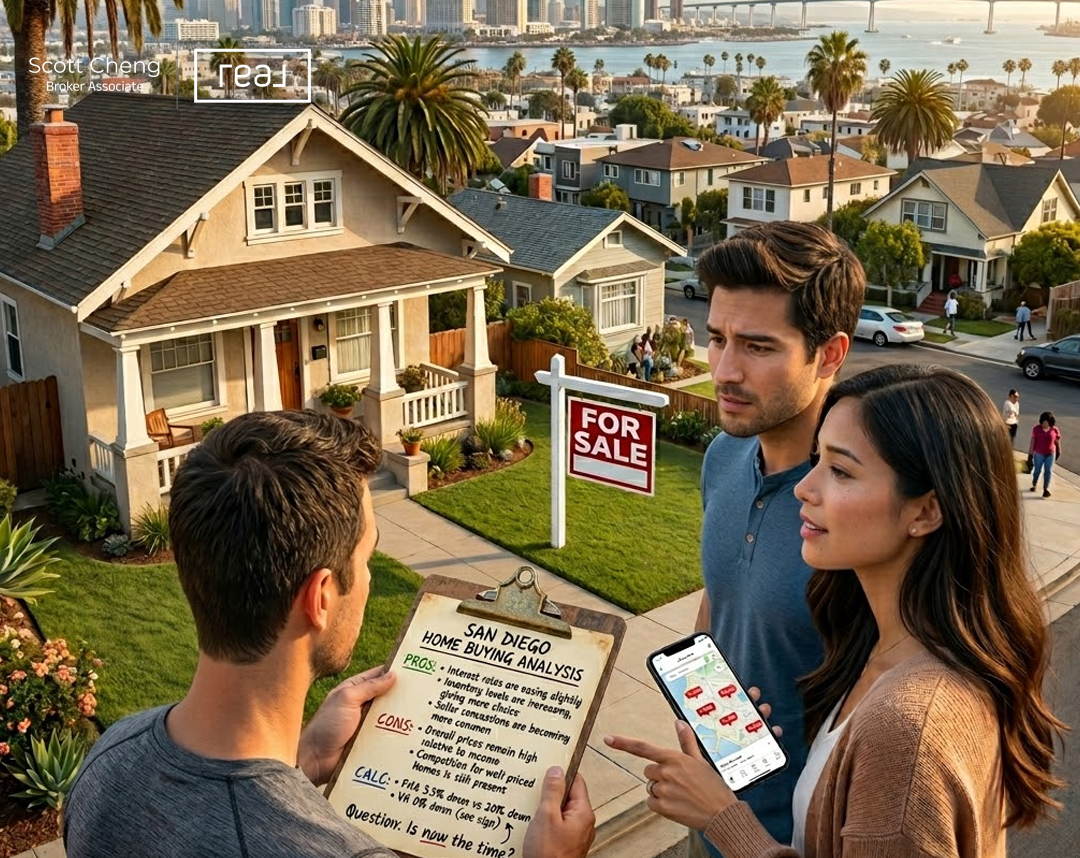
Is Now a Good Time for First-Time Buyers to Buy in San Diego?
Is now a good time for first-time buyers to buy in San Diego? Yes. Early 2026 brings easing mortgage rates near 6%, rising inventory, and more negotiating room in San Diego, especially for condos and townhomes, before projected price gains of about 4% this year.
Why does the 2026 San Diego market favor first-time buyers right now?
The market finally leans your way. San Diego’s median single-family price reached about $1,000,000 in December 2025, up 2.6% year over year, but average values as of February 2026 were down 3.4%, showing stabilization rather than a surge. Active inventory rose to roughly 4,222 homes, up 14.1% from the prior December, and homes are going pending in around 28 days.
Forecasts for 2026 call for prices up about 4%, existing home sales up 11%, and mortgage rates averaging near 6.1%, possibly dipping to 5.9%. That combination eases the lock-in effect, brings more listings to market, and strengthens your negotiating power. If you have a clear budget and a plan, you can secure a starter home now while conditions are balanced and before projected price gains take hold.
What do first-time buyers need to know before buying in San Diego?
Frame your decision around affordability, selection, and timing. Rates in the 5.9% to 6.1% range improve your monthly payment compared to last year’s peak, and a $3,000 monthly housing budget now stretches to about $25,000 more home. Inventory is trending higher, which means you’ll likely see more options and better terms, especially for condos and townhomes that fit first-time budgets.
Key points to ground your expectations:
- Market balance: Homes go pending in about 28 days, and only about 31.6% sell over list. That is far from the bidding frenzy of prior years.
- Price trends: A median single-family price near $1,000,000 and a median sale price across property types near $909,333 signal a two-track market where entry-level options remain within reach.
- Total cash: Plan for 5% to 20% down and 2% to 5% in closing costs. Your down payment and reserves matter as much as your monthly budget.
- Negotiation levers: With inventory up 14.1%, you can target seller credits, closing cost help, and repair concessions, particularly on condos and townhomes.
How do mortgage rates near 6% change your home buying power in San Diego?
A small rate change can move your affordability band quickly. If rates settle near 6.1%, you can keep the same monthly payment and still afford roughly $25,000 more home than a year ago. Use this window to upgrade from a studio to a one-bedroom, or from an older condo to a newer townhome with lower maintenance risk.
How should first-time buyers compare their options in San Diego?
You have three main tradeoffs to weigh: property type, location, and cost structure. Condos and townhomes often present the best entry in San Diego because shared maintenance and smaller footprints keep prices lower. Single-family homes carry a premium, particularly near the coast, but improving inventory opens chances inland.
Consider this framework:
- Property type: Condos and townhomes align with median sale prices near $909,333 and tend to have more negotiable sellers. Single-family homes around the $1,000,000 mark usually demand stronger offers, but buyer traffic is more rational than peak years.
- Location: Coastal neighborhoods still command top dollar due to chronic undersupply. Inland areas like Rancho Bernardo, Mira Mesa, and Clairemont usually offer larger floor plans at lower prices than prime coastal zip codes.
- Cost structure: HOAs add monthly costs but can reduce surprise maintenance. Single-family homes avoid HOA dues but require larger emergency funds for roofs, systems, and landscaping.
Key factors to evaluate:
- Monthly all-in payment: Principal, interest, taxes, insurance, and HOA compared side by side.
- Time horizon: A 5- to 7-year plan helps you ride out normal market cycles and reduce pressure to time rates perfectly.
- Maintenance risk: Newer construction or renovated homes can offset higher prices with fewer repair surprises.
What is the step-by-step process for buying your first home in San Diego?
Follow these 10 steps to move from decision to keys in San Diego’s 2026 market.
- Set your budget and timeline. Align your maximum all-in monthly number with your savings for down payment, closing costs, and reserves.
- Get pre-approved with rate scenarios. Ask for estimates at 6.1% and 5.9% to see how a small rate shift impacts price and payment.
- Define your must-haves by neighborhood. In San Diego, balance commute, lifestyle amenities, and school preferences with your budget.
- Prioritize property types. If your goal is a starter home, condos or townhomes often unlock better options and seller flexibility.
- Track live inventory shifts. When active listings rose to about 4,222, buyers gained leverage. Use that to negotiate credits or price improvements.
- Tour early, fast, and often. In a 28-day-to-pending environment, touring in the first week helps you spot quality and value quickly.
- Structure a winning yet protective offer. Use inspection contingencies, appraisal strategies, and potential seller credits to safeguard your budget.
- Complete due diligence. Budget 2% to 5% for closing costs, review HOA documents if applicable, and verify monthly payments and reserves before you remove contingencies.
- Lock your rate strategically. If rates brush 5.9%, lock. If they sit near 6.1% with signs of easing, watch daily and lock when it meets your monthly goal.
- Plan your first-year cash flow. Factor moving costs, furnishings, and a small maintenance buffer even in a condo or townhome.
Which San Diego neighborhoods are best for first-time buyers in 2026?
Your first home strategy in San Diego often starts with condos and townhomes in areas where supply is building. Mission Valley and University City frequently offer move-in-ready condos near transit, shops, and job centers. North Park and Hillcrest can provide updated smaller units with strong walkability, appealing if you value lifestyle and dining. Clairemont and Mira Mesa can unlock larger floor plans or attached townhomes at prices that stretch your dollar further than coastal neighborhoods.
If you work north of the city, Rancho Bernardo and nearby communities provide townhome options with convenient freeway access. Downtown offers high-rise condos where prices vary by building age and amenities. Coastal pockets like Pacific Beach and La Jolla remain premium, with limited entry points, but you can sometimes find studio or one-bedroom condos where competition is less intense than for detached homes.
Across these areas, active inventory is rising and days-to-pending hover around four weeks. That gives you time to compare HOA dues, amenities, and long-term maintenance plans. With forecasts calling for prices to rise about 4% in 2026 and sales up 11%, you can focus on locking a home that fits your budget now and ride projected gains later.
What do most first-time buyers get wrong about timing the San Diego market?
Many buyers think waiting for the perfect interest rate is the smartest move. In practice, waiting often costs you selection and increases the risk you face a tighter market later. If rates hold near 6.1% or dip to 5.9% while prices trend up around 4% this year, you risk chasing a moving target. Many first-time buyers also assume you need 20% down, which keeps you on the sidelines when 5% to 10% down can get you in the door.
Another miss is ignoring HOA tradeoffs. A well-run HOA can protect your property value, but dues and special assessments need careful review. Finally, some buyers treat every home the same across the city. San Diego is hyper-local. You should analyze each neighborhood’s inventory, turnover, and price-to-rent dynamics to avoid overpaying and to capture real value.
Frequently Asked Questions
Is early 2026 a good time to buy your first home in San Diego?
Yes. Rates near 6% improve your monthly affordability versus last year’s highs, inventory is up about 14.1%, and homes are going pending in around 28 days. Forecasts expect roughly 4% price growth, so buying now can balance negotiation room with potential appreciation.
Can you afford a San Diego starter home on a $100,000 income?
Possibly, especially for condos or townhomes. With a $3,000 monthly housing budget and rates near 6%, your purchasing power is stronger than last year, roughly $25,000 more. Keep total debt-to-income near 43%, plan 5% to 10% down, and compare HOA dues across neighborhoods to stay on budget.
Are condos or townhomes better for first-time buyers in San Diego?
Often yes, because they align with median sale prices closer to $909,333 and offer more negotiating leverage. You’ll trade HOA dues for lower maintenance and a simpler entry point. If you want a yard or more privacy, a single-family home works, but you’ll likely stretch further financially.
Should you wait for rates to fall further in San Diego?
Not if waiting risks higher prices or reduced selection. With rates hovering near 6.1% and possible dips to 5.9%, you already have an improved payment outlook. If you find a home that meets your budget and needs, capture today’s terms. You can always refinance later if rates drop.
How much cash do you need to buy in San Diego as a first-time buyer?
Plan for 5% to 20% down plus about 2% to 5% in closing costs. On a $600,000 condo, that can mean $30,000 to $120,000 down and $12,000 to $30,000 in closing costs. Rising inventory can support seller credits to offset part of your closing costs if you negotiate well.
Which San Diego neighborhoods fit a $3,000 monthly budget best?
Start with Mission Valley, University City, North Park, Clairemont, Mira Mesa, and Rancho Bernardo for condos and townhomes that balance price, HOA dues, and amenities. Compare buildings side by side, accounting for parking, reserves, and special assessments to keep your true monthly cost near your target.
How competitive are offers in San Diego right now?
Less intense than peak frenzy. About 31.6% of homes sell over list, and typical time to pending is around 28 days. Well-priced listings still draw attention, but you can often win with strong terms, a solid pre-approval, and focused contingencies rather than extreme overbids.
What is the smartest offer strategy for first-time buyers in San Diego?
Lead with a clean, well-documented pre-approval and realistic pricing informed by recent comps. Target seller credits to reduce closing costs, and use inspections to negotiate repairs or credits. In balanced segments like condos and townhomes, smart terms can matter more than top-dollar bids.
How long should you plan to own your first San Diego home?
Aim for at least 5 to 7 years. That horizon increases your chance to benefit from projected appreciation and offsets upfront costs. With 2026 forecasts showing price growth and sales rising, a multi-year plan helps you absorb routine market shifts and refinance if rates improve.
What assistance programs can help first-time buyers in San Diego?
Programs change frequently. You should research down payment assistance and first-time buyer programs available at the state and local level. Pair any assistance with a lender who understands income limits, repayment rules, and how to combine credits with seller concessions to lower your cash to close.
The Bottom Line
You can buy your first San Diego home with more confidence in 2026. Inventory is rising, rates hover near 6%, and condos and townhomes offer practical, negotiable entry points. If you match a clear budget to neighborhoods like Mission Valley, University City, Clairemont, or Rancho Bernardo, you can secure a home before projected price gains firm up. Focus on total monthly cost, review HOA details carefully, and use seller credits to manage cash to close. The window is open enough to act without rushing and tight enough to reward decisive buyers.
If you’re ready to explore your options for buying your first home in San Diego, Scott Cheng at Scott Cheng – REAL Brokerage can walk you through the specifics for your situation.
858-405-0002 • Scott Cheng – REAL Brokerage • 16516 Bernardo Center Dr. Ste. 300 • DRE #01509668
Have Questions About San Diego Real Estate?
Scott Cheng provides free, no-obligation consultations for buyers, sellers, and investors.
Schedule a Consultation