Best first-time buyer neighborhoods in San Diego for young professionals
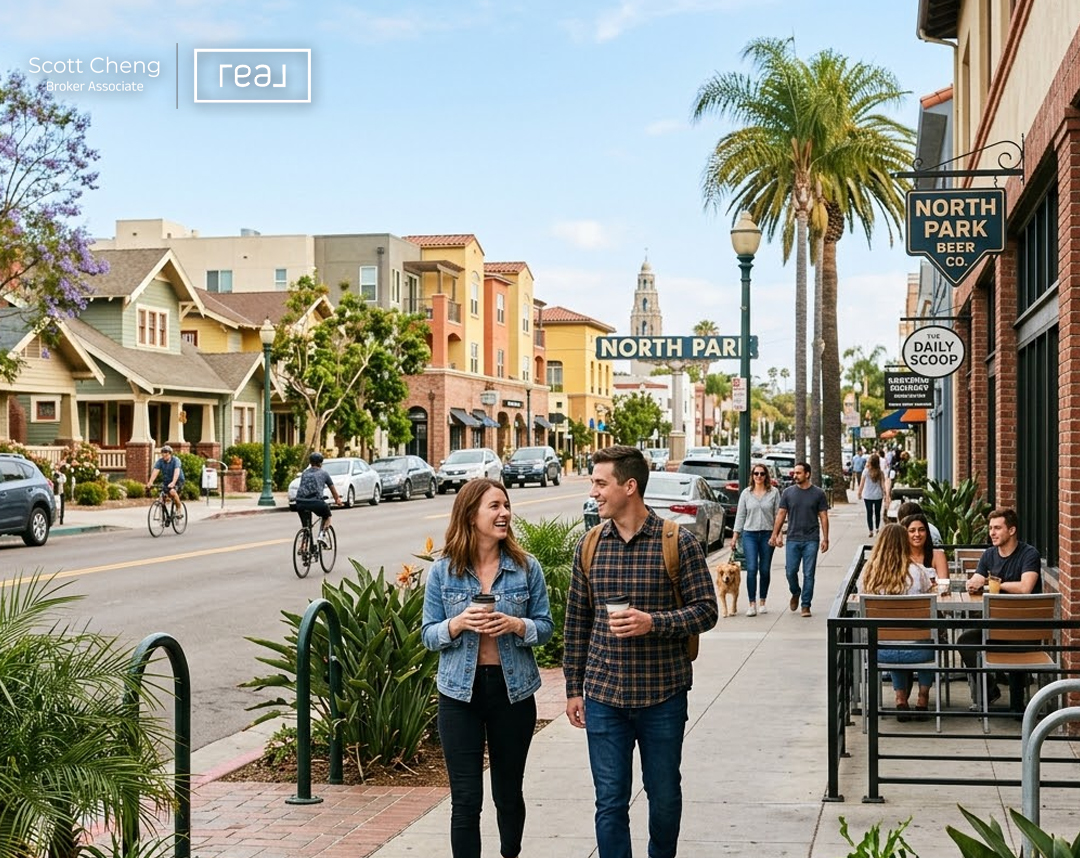
Best First-Time Buyer Neighborhoods in San Diego for Young Professionals 2026
San Diego’s best starter-home areas for young professionals in 2026 are condo and townhome hubs near jobs and transit. You should focus on Mission Valley, UTC, North Park, and Downtown’s East Village for negotiable prices, convenience, and lifestyle.
Why does this matter right now in San Diego?
You are navigating a market that finally gives you some leverage. Active inventory sits around 4,222 homes, up roughly 14 percent since late 2025, while homes go pending in about 28 days.
Median values hovered near $990,000 as of early 2026, with a one-year dip, and forecasts call for about 4 percent price growth this year. Mortgage rates averaging around 6.1 percent, possibly dipping near 5.9 percent, can stretch your budget. A $3,000 monthly budget now buys roughly $25,000 more home than a year ago. With demand still strong but conditions more balanced, you can target neighborhoods with growing condo and townhome supply that match your commute, social life, and payment comfort.
What do you need to know before picking a San Diego neighborhood?
You should match your lifestyle and budget to submarkets where inventory and pricing favor first-time buyers. Starter homes in San Diego often mean condos and townhomes, with median sales near the low $900s for the broader market and single-family medians nearer $1,000,000.
Rates around 6.1 percent keep monthly payments manageable compared with last year. A third of homes still sell over list, yet rising supply means you can negotiate, especially on condos.
Key takeaways:
- You are likely choosing between location and space. Many young professionals trade a second bedroom or yard for walkability and transit.
- HOA fees matter. Budget for $300 to $700 per month for mid-rise buildings, sometimes higher in full-amenity towers.
- Your competition is most intense in coastal pockets with chronic undersupply. Look slightly inland for value.
- With inventory approaching multi-year highs, you can push for seller credits, rate buydowns, or repairs, especially on listings that sit beyond 21 to 30 days.
- Time on market is your friend. If a home is pending in 28 days on average, anything above that suggests flexibility.
How rates and inventory play into affordability
Small rate moves change your buying power. With rates near 6 percent and more listings to choose from, your chance of winning with credits or price adjustments improves, particularly in condo-heavy corridors like Mission Valley, UTC, and Downtown.
How do you compare your neighborhood options in San Diego?
You will get the best result when you rank neighborhoods by commute, lifestyle fit, building type, and total monthly cost. In 2026, the strongest value for young professionals often sits where new supply and older inventory overlap, creating negotiation room without sacrificing convenience.
Pros and cons to weigh:
- Mission Valley: Abundant newer condos, central location, retail convenience, and trolley access. HOA fees can be mid to high but buildings are newer and low maintenance.
- UTC and University City: Close to biotech and tech jobs, shopping, and the trolley extension. Prices trend higher, yet modern amenities and rental restrictions can protect value.
- North Park and University Heights: Walkable, lively food and coffee scene, smaller buildings with lower HOAs. Street parking and older systems can add hidden costs.
- Downtown and East Village: Walk-to-work, nightlife, and amenities. High-rise fees and special assessments require diligence, but inventory can be negotiable.
- Clairemont Mesa and Serra Mesa: Central, car-friendly, older townhomes and entry-level single-family options. Less nightlife, more space for the price.
Key factors to evaluate:
- Commute and transit: Trolley proximity in Mission Valley, UTC, and Downtown can cut costs and time.
- Total monthly payment: Principal, interest, taxes, insurance, HOA, and utilities — not just rate.
- Building age and reserves: Older buildings may have upcoming repairs. Review reserves and inspection reports.
- Noise and parking: Visit at different times of day and test your commute.
- Rental and pet rules: Know restrictions before you buy.
What is the step-by-step process for buying your first home in San Diego?
Follow these seven steps to maximize your buying power and negotiate effectively in the 2026 San Diego market. Repeat steps 4 through 7 as new listings appear — the best deals often surface after two weekends on market.
- Get pre-approved and set a comfort payment. If your target is $3,000 per month, anchor your search to that number including HOA and taxes.
- Define must-haves and trade-offs. Decide if you prioritize trolley access, garage parking, in-unit laundry, or a second bedroom for work-from-home.
- Target three neighborhoods. Start with one condo-heavy area like Mission Valley, one lifestyle zone like North Park, and one job-centric area like UTC.
- Track days on market. Focus on listings past the 21 to 30 day mark to improve your negotiation odds for credits or buydowns.
- Analyze the HOA. Read budgets, reserves, insurance coverage, litigation status, and any planned assessments.
- Offer with leverage. Consider asking for closing cost credits, a rate buydown, or repairs in exchange for clean contingencies and a realistic timeline.
- Lock your rate strategically. Watch for weekly rate dips. Even a small improvement can add buying power or reduce payment.
What does the buying experience actually look like in each San Diego neighborhood?
Each area offers a distinct profile of price, lifestyle, and negotiability. Here is what you can expect on the ground in 2026.
Mission Valley: You will find newer condos, resort-style amenities, and trolley access. Inventory tends to be deeper than coastal neighborhoods, which means more negotiable listings. HOA fees are higher but offset by lower maintenance and modern systems.
UTC and University City: If you work in biotech or tech, this puts you minutes from job centers and the trolley line. Prices can be a notch above Mission Valley, but strong demand supports long-term value. Expect mid to high HOA fees in full-amenity buildings.
North Park, University Heights, and Normal Heights: You get character, walkability, and a dynamic food scene. Many small condo buildings and townhomes keep HOAs reasonable. Homes can be older — budget for inspections, sewer lines, and electrical updates.
Downtown, East Village, and Little Italy: Lifestyle-forward, walkable, and close to the bay. Inventory can be negotiable in early 2026, especially for units that linger. You must scrutinize reserves, insurance, and any special assessments. Higher HOAs come with concierge services, gyms, and security.
Clairemont Mesa and Serra Mesa: Central location and good freeway access. Older townhomes and some entry single-family options create a path to more space. Nightlife is limited, but daily living is easy and commutes are straightforward.
What do most first-time buyers get wrong about San Diego starter neighborhoods?
You may overvalue list price and undervalue total monthly cost. An attractively priced condo can become expensive once you add HOA fees, insurance, and taxes.
You might also chase the lowest HOA only to face deferred maintenance and surprise assessments. Many first-time buyers wait for a perfect rate drop and miss negotiable listings right now. The market still moves in 28 days, so timing matters. Finally, you should not skip the HOA review — budget, reserves, and insurance coverage are just as important as a clean inspection.
Frequently Asked Questions
What are the most affordable first-time buyer neighborhoods in San Diego in 2026?
Look at Mission Valley, Serra Mesa, and parts of Clairemont for value, along with smaller condo buildings in North Park. These areas have deeper condo and townhome supply, which improves negotiation odds. Focus on homes that have been listed more than three to four weeks.
Is North Park a good place to buy a first home in San Diego?
Yes, if you want walkability and character. You get smaller buildings, reasonable HOAs in some complexes, and a lively scene. Expect older systems, occasional street parking, and competitive bidding on standout units. Inspections and a strong contingency plan are essential.
Are Mission Valley condos a smart buy for young professionals in San Diego?
They can be, especially in early 2026. You benefit from central location, newer construction, and trolley access. Inventory is often deeper, which allows credits or rate buydowns. Weigh higher HOAs against lower maintenance and amenity access that supports daily convenience.
How far will a $3,000 monthly budget go in San Diego in 2026?
With rates near 6 percent, a $3,000 target can stretch farther than in 2025. Your price ceiling depends on taxes, HOA, and debt. In condo-heavy areas, you may target the mid $500s to mid $700s with 5 to 10 percent down. Verify with a lender based on your full DTI.
Should you wait for mortgage rates to drop further in San Diego?
Not necessarily. If rates fall, competition usually rises. Early 2026 combines improving rates with rising inventory, which supports negotiation now. If a listing offers credits or a buydown, your effective rate may rival future market rates without waiting.
Are HOA fees worth it for San Diego condos?
They can be, provided the budget and reserves are healthy. Good HOAs reduce surprise repairs and include amenities that offset gym or security costs. Review financials, insurance coverage, and planned projects. A slightly higher fee can be a better long-term value than a low-fee, underfunded HOA.
How competitive is Downtown San Diego for first-time buyers in 2026?
Downtown can be manageable for first-time buyers right now. Elevated inventory and longer market times for some high-rises create room to negotiate. Be thorough with disclosures, reserves, and assessments. The tradeoff is higher HOAs in exchange for premium amenities and walkability.
Can you buy in San Diego with a $100,000 income in 2026?
Yes, with strategy. Keep total debt near 43 percent of gross income and target condo markets with negotiable pricing. With 5 to 10 percent down and a $3,000 monthly comfort payment, you can shop select condos or townhomes. Lender pre-approval will define your exact range.
Which San Diego neighborhoods fit a biotech or tech commute?
UTC and University City are closest to major hubs, with trolley access. Mission Valley offers central access across job clusters. North Park and Serra Mesa work if you split time between Downtown and Sorrento Valley. Rank commute time against price and HOA to find your balance.
What down payment assistance should first-time buyers watch in San Diego?
You should track city and state programs, plus lender credits and seller-paid buydowns. Early 2026 inventory makes negotiated credits realistic, which can lower cash to close. Verify income and property limits and confirm if condos are eligible before you write an offer.
The Bottom Line
If you are a young professional buying your first home in San Diego in 2026, your best bets concentrate where inventory, transit, and amenities meet. Mission Valley, UTC, North Park, and Downtown’s East Village consistently offer the right mix of access and negotiability, especially in condos and townhomes.
With inventory up, rates near 6 percent, and homes going pending in about 28 days, you can secure credits, buydowns, or price adjustments if you target listings that sit a bit longer. Decide on your comfort payment, compare total monthly costs, and review HOAs carefully to protect your budget.
If you’re ready to explore your options for the best first-time buyer neighborhoods in San Diego, Scott Cheng at Scott Cheng – REAL Brokerage can walk you through the specifics for your situation.
858-405-0002 | DRE #01509668 | 16516 Bernardo Center Dr STE 300, San Diego, CA 92128
Have Questions About San Diego Real Estate?
Scott Cheng provides free, no-obligation consultations for buyers, sellers, and investors.
Schedule a Consultation