Best Home Inspectors for Downsizers Buying Condos in San Diego 2026
Best Home Inspectors for Downsizers Buying Condos in San Diego 2026
You’ll get the best results by hiring a condo specialist inspector with strong coastal experience, adding sewer scope and WDO, and pairing it with a disciplined HOA document review focused on reserves, upcoming assessments, and SB 326 balcony reports.
Why does choosing the right home inspector matter so much when downsizing to a San Diego condo in 2026?
The 2026 market gives you more leverage and better selection than recent years. Local MLS and association data show inventory is up meaningfully from 2025, and many homes are closing below original list price, which gives you room to negotiate for repairs, credits, or both. If you’re downsizing to a Pacific Beach condo, your decision hinges on two things you can fully control right now: who inspects your unit, and how you evaluate the HOA’s financial and structural health. Getting this right can save you thousands and prevent surprise assessments. The same approach works if you’re also comparing nearby Mission Beach or La Jolla, where coastal wear, balconies, and flat roofs are common. Your timing could help you secure a walkable, low-maintenance home near the water without inheriting expensive building issues.
What should you know before hiring a home inspector for a San Diego condo?
Prioritize inspectors who specialize in coastal condos and understand HOA-controlled elements. A standard home inspection is not enough when you buy into a building managed by a homeowners association — you need a professional who flags unit issues and explains where HOA responsibility begins.
- Focus on coastal experience: Salt air accelerates corrosion of railings, fasteners, window hardware, and rooftop equipment. You need eyes that catch early signs of spalling concrete and rust.
- Demand condo fluency: An inspector should explain unit components versus common elements, and how that affects your repair exposure and HOA responsibilities.
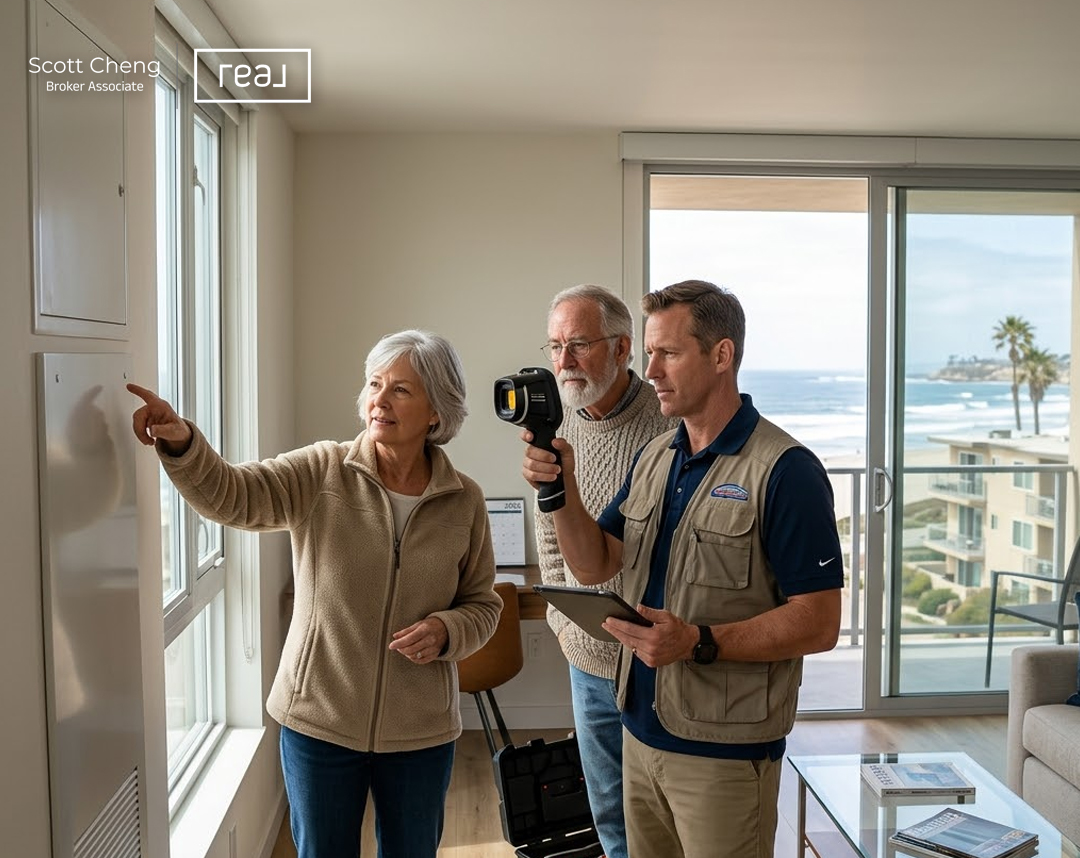
- Add targeted add-ons: Sewer scope for 1960s–1980s buildings with cast iron lines; WDO (termite) inspection for drywood activity common in beach areas; thermal imaging for moisture around showers, exterior walls, and below flat roofs.
- Ask for sample reports: Look for detailed photos, clear priority ratings, and repair timelines that support negotiation.
- Confirm insurance and certifications: General liability and E&O coverage, plus certifications from recognized inspector associations.
- Coordinate with your real estate agent in San Diego to schedule inspections within your contingency window. Top San Diego real estate agents often know which inspectors are excellent with coastal buildings, though you should still vet them independently.
Local nuances to expect in San Diego coastal condos
- Balconies and walkways: In California, HOAs must comply with SB 326 balcony inspections on exterior elevated elements. Ask the HOA for its SB 326 report and repair plan.
- Roof access: Many HOAs limit access. Your inspector may evaluate from the ground or rely on recent HOA roof reports.
- Electrical panels: Older condos sometimes have problematic brands. Budget for upgrades if noted.
- Windows and sliders: Sea air degrades rollers and frames. Clarify whether the HOA or you are responsible for window replacements under the CC&Rs.
How do you compare home inspector options and estimate costs in San Diego?
Choose between inspectors by comparing scope, sample reporting, coastal experience, and availability. Reviews matter, but read them for substance — not just star ratings.
What strong top reviews look like:
- Consistent notes about thoroughness on condos, not just single-family homes
- Mentions of catching balcony deterioration, moisture intrusion, or failing cast iron
- Praise for clear next steps you can use in negotiations, not vague red flags
Pros and cons to weigh:
- One-person boutique inspectors: Deep experience, consistent quality, often better on-site explanations — but limited availability and fewer specialized tools.
- Multi-inspector firms: Faster scheduling, add-ons in-house, standardized reporting — but variable expertise, especially on older coastal buildings.
Costs to expect in 2026:
- General condo inspection: about $350 to $600 depending on size and age
- Sewer scope: about $200 to $350
- WDO report: sometimes no fee, often about $75 to $175
- Mold screening or air sampling: about $250 to $400
- HOA document review by an attorney or reserve specialist: about $300 to $800
What is the step-by-step process for inspecting a condo as a San Diego downsizer?
Follow this repeatable process to control risk and improve your negotiation power before closing.
- Lock your timelines: As soon as you open escrow, schedule the general inspection within the first 3 days. Ask for WDO and sewer scope at booking, especially for 1960s–1980s buildings.
- Secure all HOA documents: Request CC&Rs, bylaws, rules, current budget, reserve study, master insurance summary, 12 months of board and annual meeting minutes, special assessment history, litigation disclosures, and the SB 326 balcony report with any engineer memos.
- Walk with your inspector: Attend the last 45 minutes. Ask about moisture readings at exterior walls, balcony conditions, prior stucco repairs, HVAC coastal corrosion, and any signs of concrete spalling.
- Order targeted follow-ups: If sewer lines show scaling or offsets, schedule hydrojetting quotes and re-scoping. If balcony or walkway issues appear, request the engineer report from the HOA and confirm planned timelines and funding.
- Analyze the HOA’s financials: Compare the reserve study to the age of big-ticket items like roofs, elevators, waterproofing, and exterior paint. Look for reserve percent funded above 70% for healthy buildings, and scrutinize below 50% for potential special assessments.
- Negotiate with data: Use inspection photos and the HOA’s own repair schedules to seek credits or repairs. With higher inventory and more price reductions, you often win concessions when you present clear documentation.
- Decide with confidence: If the unit passes and the HOA has money and plans aligned with SB 326 findings, proceed. If reserves are weak and balconies or roofs are due soon without funding, renegotiate or pivot to a stronger building.
Which San Diego neighborhoods should downsizers consider when buying a condo?
San Diego offers several strong condo markets for downsizers — but HOA strength varies widely between buildings and neighborhoods. Your priorities as a downsizer should include elevator access, step-free entries, solid reserves, and walkable streets near shops and the water.
Local MLS data shows more options than last year, and many listings are closing under list price, which benefits repair credit negotiations.
- Pacific Beach: Coastal lifestyle with walkability to the bay and ocean. Older low-rise buildings often have flat roofs, exposed walkways, and cast iron stacks — pay extra attention to roof drainage, parapet flashing, balcony rails, and stucco cracks. If you’re comparing the best beach neighborhoods in San Diego, PB offers a strong blend of lifestyle and value relative to pricier La Jolla.
- Mission Valley: Newer elevator buildings with strong amenity sets, typical HOA fees in the mid range, and excellent commuting access.
- Bay Park and Clairemont: Townhome alternatives with larger floor plans, attached garages, and shorter drives to the coast — often with quicker maintenance resolutions due to smaller HOAs. If you’re weighing the best neighborhoods to buy in San Diego, compare HOA rules, pet limits, and parking in each area.
Nearby areas worth exploring for San Diego condo buyers
- La Jolla: Premium coastal access, typically higher prices, with more robust HOA budgets in some buildings — yet balcony and waterproofing standards still require close review.
- Mission Beach: Ultra-close to the sand and boardwalk with mixed-age buildings. Focus on salt exposure, balcony rails, and noise rules. Read HOA minutes carefully for upcoming projects.
- Clairemont: Often more attainable than direct oceanfront areas, with townhomes that reduce elevator reliance. Special assessments may be less frequent in well-run, smaller communities.
What are the most common mistakes downsizers make when buying a San Diego condo?
The biggest mistake is assuming a clean unit inspection means you’re safe. Condos live or die by HOA financials and common-area condition — the greatest risk is in the building’s exterior elements and the cash set aside to maintain them.
Many buyers skip sewer scopes in older coastal buildings, only to inherit slow drains or cracked cast iron as a costly surprise. Another common mistake is underestimating balcony and walkway needs under SB 326. Even if your unit inspection looks great, the HOA’s engineer report might flag widespread deterioration with a near-term repair schedule. In a market with more listings and frequent price adjustments, clear inspection documentation can help you secure credits and avoid future assessments that erode your downsizing budget.
Frequently Asked Questions
Which home inspector type is best for a San Diego coastal condo?
Choose a condo specialist with coastal experience who offers add-ons like sewer scope, WDO, and thermal imaging. Ask how many Pacific Beach, Mission Beach, or La Jolla condos they inspected in the past year. Review sample reports to confirm photo-rich, prioritized findings you can use in negotiation.
How do you spot HOA issues before you buy a condo in San Diego?
Request the full HOA packet early, including CC&Rs, rules, reserve study, budget, 12 months of minutes, assessment history, litigation disclosures, insurance summary, and the SB 326 balcony report. Compare reserves to upcoming projects like roofs, waterproofing, and elevator work. Look for reserve percent funded above 70% for healthy buildings.
Does this condo inspection advice apply to La Jolla and Mission Beach too?
Yes. The same inspection approach works throughout San Diego’s coastal communities, though salt exposure can be even higher in direct oceanfront buildings. Emphasize balcony rails, concrete spalling, and flat roof drainage. HOA reserves and assessment history matter even more in premium coastal zip codes.
What are typical home inspection costs for a condo in San Diego in 2026?
Budget about $350 to $600 for the general inspection, $200 to $350 for a sewer scope, $75 to $175 for WDO, and $250 to $400 for mold screening if indicated. HOA document review by an attorney or reserve specialist often runs $300 to $800.
How can you use a home inspection to negotiate when buying a San Diego condo?
Leverage clear inspection photos, contractor estimates, and the HOA’s own reserve and SB 326 timelines. With higher inventory and more price cuts in 2026, you can often secure seller credits, pre-close repairs, or both — especially for sewer line issues, balcony safety items, or moisture intrusion repairs.
What is SB 326 and why does it matter when buying a condo in California?
SB 326 is a California law requiring HOAs to conduct engineering inspections of exterior elevated elements like balconies and walkways. An HOA’s SB 326 report may reveal widespread structural deterioration and near-term repair costs that could trigger special assessments. Always request the SB 326 report and any engineer memos before completing your purchase.
The Bottom Line
You’ll make your best San Diego condo decision by pairing a strong coastal condo inspector with a rigorous HOA review that targets reserves, special assessments, and balcony compliance. Add WDO and sewer scope to protect yourself from common beach-area surprises, then negotiate with clear documentation. Whether you’re focused on Pacific Beach or also considering nearby Mission Beach and La Jolla, the same playbook applies. If you want the low-maintenance lifestyle that downsizing promises, rely on inspectors and HOAs that can prove they’re ready for the next decade of coastal wear and tear.
If you’re ready to explore your condo options and want guidance on inspection coordination and HOA due diligence, Scott Cheng at Scott Cheng San Diego Realtor can walk you through the specifics for your situation.
📞 858-405-0002
DRE# 01509668
- When you compare the best San Diego realtors or top San Diego real estate agents, ask who consistently closes coastal condos for downsizers.
- As you research the best real estate companies in San Diego, confirm they have deep condo and HOA expertise.
- When weighing the best neighborhoods in San Diego for walkability and low-maintenance living, use the inspection and HOA framework above to protect your budget and lifestyle.
Have Questions About San Diego Real Estate?
Scott Cheng provides free, no-obligation consultations for buyers, sellers, and investors.
Schedule a Consultation