Best 203k Lenders for Rehab Investors in San Diego 2026: Top Picks from Scott Cheng Realtor
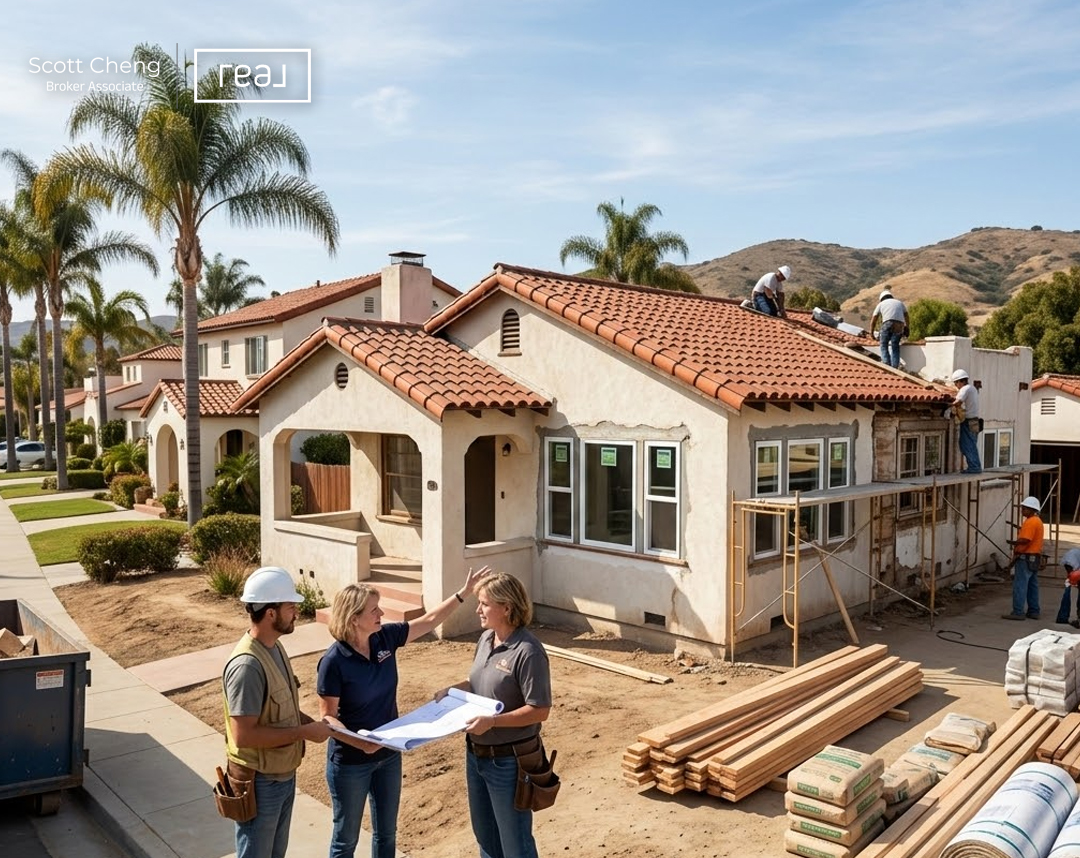
Best 203k Lenders for Rehab Investors in San Diego 2026: Top Picks from Scott Cheng Realtor
What are the best 203k lenders for rehab investors in San Diego in 2026? The best 203k lenders in San Diego for 2026 are FHA-approved lenders with strong rehab administration, fast draw turnarounds, and proven local appraiser and contractor networks. Compare lender overlays, draw schedules, and closing speed to win deals now.
Why does the San Diego market create a 203k opportunity right now in 2026?
You are in a rare window where inventory is up, price cuts are widespread, and rates have stabilized. This makes 2026 one of the best environments for 203k rehab investing San Diego has seen in years.
San Diego’s active listings jumped sharply year over year, roughly a quarter of homes saw reductions, and months of supply sits near 3.6, still tight but the best buyer leverage since pre-2020. Median prices for single family homes hover near the low 900s, condos near the high 600s, and the S&P CoreLogic Case-Shiller index showed several months of softening through late 2025. You can use a 203k loan to buy distressed or dated properties and capture equity through renovation while this buyer-friendly pocket lasts. This same playbook helps if you are also considering nearby Chula Vista or La Mesa, where price discovery and days on market can offer you additional negotiating power.
What do you need to know before choosing a 203k lender in San Diego?
You should start with product fit and eligibility. FHA 203k combines purchase and rehab into one loan with up to roughly 95 percent loan-to-cost, subject to FHA county limits and standard FHA underwriting.
You get an escrowed construction budget with controlled draws, which can make sellers more confident you will close and complete the work.
Key points you should lock down:
- Limited vs Standard 203k. Limited suits non-structural items up to about 35,000 in repairs. Standard covers major systems and structural work with a HUD consultant, contingency reserves, and more documentation.
- Owner-occupancy. You must plan to occupy the property as your primary residence for FHA 203k. As an investor, you can use house hack strategies on 1 to 4 units, living in one unit, then holding or exiting later.
- Timing. Plan on 45 to 60 days to close, sometimes faster with complete contractor bids and permits ready. Appraisals use after-improved value, which helps your leverage, but adds time.
- Pricing. 203k rates often price about 0.5 to 1.0 percentage point above standard FHA, plus FHA mortgage insurance. Your net IRR still works if your scope targets high ROI items.
- Scope control. Lenders care about permits, contractor vetting, and realistic timelines. Your contractor’s experience with 203k matters as much as the lender’s.
- Local comps. With micro-markets moving differently, you should insist on appraisers who use neighborhood-level comps in places like Clairemont, North Park, or La Mesa, not just county medians.
Limited vs Standard 203k and Investor Eligibility
You should match the product to your scope. Use Limited 203k when you are refreshing kitchens, baths, flooring, roofing, windows, and basic MEP work without structural changes. If you need foundation repair, wall moves, room additions, or extensive systems upgrades, Standard 203k fits better and requires a HUD consultant to guide specs, cost checks, and draws. As a rehab investor, you must satisfy FHA’s owner-occupancy rule. The cleanest path is a 2 to 4 unit purchase where you live in one unit for at least a year while you renovate and lease the others. If you are targeting a pure flip or non-occupant hold, consider a conventional renovation product or a bridge loan rather than 203k.
How do you compare 203k lender options in San Diego to find the best fit?
You should evaluate both the loan terms and the execution speed. In a market where roughly 26 percent of listings have cut prices and inventory is still constrained, execution beats paper pricing.
A lender who closes reliably in 45 days with 3 to 5 business day draw reimbursements often outperforms a slightly cheaper lender with slow admin.
Consider these local standouts and what you get:
- Guild Mortgage, San Diego 203k desk: You get strong 203k volume, experienced in-house processing, and efficient draw administration. Great for first-time house hackers and duplex to fourplex buyers who want coaching on contractor packages. Watch credit overlays and DTI caps.
- CrossCountry Mortgage, local renovation team: You get deep contractor vetting, proactive construction desk, and competitive locks. Ideal when you need speed and predictable draws after inspections. Watch lender fees and make sure your contractor turnaround aligns with their draw cadence.
- Bank of Southern California: You get relationship banking, responsive communication, and familiarity with local permitting patterns. Good fit for complex Standard 203k scopes with multiple trades. Confirm product availability and any overlay differences on FICO, reserves, and condo approvals.
You should also interview two backups. Even the best San Diego broker or real estate agent San Diego buyers trust will tell you a second approval can save a deal if appraisals or contractor docs stall. Rate differences matter, but draw speed, HUD consultant access, and appraisal competency matter more for net returns.
Key factors to evaluate:
- 203k volume and local appraiser panel. You need a lender who regularly closes 203k loans in San Diego and assigns appraisers using neighborhood comps, not county averages.
- Draw schedule and turnaround. You want 3 to 5 business day reimbursement after inspection, clear holdback rules, and minimal change order friction.
- Overlays and limits. You should confirm FICO minimums, DTI caps, max rehab relative to after-improved value, and condo or 2 to 4 unit experience.
What is the step-by-step process for using a 203k loan to buy and renovate in San Diego?
Follow these eight steps to successfully finance, close, and manage your 203k rehab project in San Diego. Preparation at each stage directly determines how fast you close and how well your renovation appraises.
1) Define your buy box. You should target price points where the after-repair value supports your exit. In early 2026, single family medians sit near the low 900s, attached near the high 600s, with wider discounts inland. Tighten to 1 to 4 units where the numbers pencil and you can occupy.
2) Pre-underwrite with two 203k lenders. You should provide income docs, credit, asset proofs, and a rough rehab plan. Ask for scenario sheets that show max total loan, MIP, and estimated payment post-renovation.
3) Build a contractor package. You should use 203k-experienced licensed contractors with line-item bids, labor and materials separated, permits identified, and timeline matching lender expectations. For Standard 203k, select a HUD consultant early.
4) Write offers that win. You should present lender-prepared 203k pre-approval letters, proof of funds for earnest money and reserves, a short inspection timeline, and a clear renovation outline. Your real estate broker San Diego investors rely on can frame your offer as low risk despite financing.
5) Appraisal and after-improved value. You should give the appraiser your plans and contractor bids. Confirm they are using closely matched comps in submarkets like City Heights, Clairemont, or La Mesa, not distant substitutes.
6) Final underwriting and close. You should clear contractor vetting, insurance, and permits in parallel. Expect 45 to 60 days, sometimes faster if docs are complete and the appraiser is prompt.
7) Draw management. You should plan inspections and reimbursement requests in 30 to 45 day milestones. Keep 10 to 20 percent contingency for surprises. Avoid change orders unless they improve safety, code compliance, or ROI.
8) Exit and hold strategy. You should lock in your post-renovation plan before demo starts. If you are house hacking, set realistic lease-up timelines and reserve targets. If you plan to refinance, track rate trends, and consider when mortgage insurance can be reduced or removed with sufficient equity.
Which San Diego neighborhoods offer the best 203k rehab investment opportunities in 2026?
You are operating in a market where inventory rose materially year over year and around 26 percent of listings cut prices, yet total supply is still below equilibrium. The best submarkets for 203k investing are those where days on market have lengthened and dated housing stock creates clear renovation upside.
Case-Shiller data showed several months of softer pricing through late 2025, suggesting near-term negotiation room while longer-term fundamentals remain firm.
Neighborhood fit matters:
- Clairemont: You get mid-century housing stock, strong buyer demand, and many homes needing systems upgrades. Typical fixers list below nearby renovated comps, often in the high 700s to high 900s depending on size and location. Great for Limited 203k cosmetic refreshes.
- City Heights: You get attainable entry points for house hacking in 2 to 4 units, diverse tenant demand, and consistent rent growth over cycles. Prices for dated duplexes can offer spreads that support Standard 203k scopes. Permits may add time, so pre-plan your calendar.
- La Mesa: You get a central location, older housing with value-add kitchens and baths, and better inspection windows as days on market increase. Many properties sit in the 700s to low 900s depending on lot and condition, ideal for Limited 203k with a few structural exceptions.
You should also keep an eye on coastal micromarkets like Pacific Beach and University City where premium pricing persists, but older condos and townhomes can pencil for Limited 203k updates. Your real estate agent San Diego CA based, who knows neighborhood-level comps, can help you avoid paying top-of-market for a property that still needs a full systems rehab.
Neighborhoods to consider in San Diego:
- Clairemont: Strong resale demand, many mid-century fixers, good ROI on kitchen, bath, and systems updates.
- City Heights: Duplex to fourplex inventory, house hack potential, steady rental demand, value-add renovations.
- La Mesa: Central access, older homes with cosmetic upside, improving buyer leverage on dated listings.
Nearby Areas Worth Exploring
You might find even better spreads just outside your initial target zone. Similar dynamics are showing up in several adjacent communities.
- Chula Vista: You get larger tract homes with dated finishes, competitive pricing compared with central San Diego, and strong family rental demand. Rehab timelines are often predictable, which helps draw scheduling.
- La Mesa: If you started elsewhere, circle back here for manageable scopes, good schools nearby, and commute-friendly access to Mission Valley and Downtown.
- Escondido: You get a broader range of distressed single family and small multifamily, often at lower basis than coastal submarkets, with upside on systems and cosmetic upgrades.
What mistakes do most rehab investors make when using 203k loans in San Diego?
The most common mistake is assuming 203k is too slow to win competitive deals. In reality, your speed depends entirely on preparation — not the loan product itself.
If you pre-vet contractors, secure a HUD consultant early, and send a clean bid package with your offer, you can close in a timeline that sellers accept. Another misconception is that 203k always costs more than private money. While rates are slightly higher than standard FHA and you pay mortgage insurance, 203k can be cheaper than hard money when you hold beyond a few months or when you want a single close to lock your capital stack.
You also might assume appraisers will magically credit every dollar you spend. You should target market-supported improvements, not luxury items that do not appraise. Pools, high-end imported finishes, or out-of-character additions often underperform on appraisal. Finally, you should avoid underestimating soft costs, including permit fees, title updates after change orders, and draw inspection charges. A 10 to 20 percent contingency is not a cushion, it is survival.
Frequently Asked Questions
Can you use an FHA 203k for an investment property in San Diego?
Yes, if you occupy the home as your primary residence. You can buy 1 to 4 units, live in one, and renovate the others. Pure flips or non-occupant investments are not eligible, so consider a conventional renovation loan or bridge financing if you will not occupy.
Should you choose a Limited or Standard 203k loan for rehab projects in San Diego?
Choose Limited for non-structural work up to about 35,000 and Standard for structural changes or larger scopes. If you need wall moves, foundation repair, or major systems upgrades, Standard fits better and requires a HUD consultant and contingency.
Does the 203k rehab loan strategy work in Chula Vista and La Mesa too?
Yes, you can use the same 203k approach in both. Chula Vista offers larger tracts with consistent scopes and family rental demand, while La Mesa provides central access with many cosmetic updates. Timelines depend on permitting, so confirm local requirements before locking your close date.
How do 203k loan rates compare to standard FHA and hard money lenders?
203k rates are usually about 0.5 to 1.0 percentage point above standard FHA, plus FHA mortgage insurance. They are typically far below hard money and include longer terms, which helps if you plan to hold or refinance after stabilization.
What are the most important questions to ask a 203k lender before choosing one?
Ask how many 203k loans they closed in the past 12 months in San Diego, typical draw turnaround times, their HUD consultant roster, contractor approval steps, and whether they assign appraisers with proven local comp selection. Then confirm overlays on FICO, DTI, and reserves.
The Bottom Line
You are choosing a 203k lender in the best buyer window San Diego has offered since before 2020. Inventory is up, price cuts are common, and rates are steady, giving you room to buy distressed properties and add value through renovation. Your best option is an FHA-approved lender with high 203k volume, fast draws, and strong local appraisers, paired with a contractor who knows the program. Whether you focus on San Diego or explore nearby Chula Vista and La Mesa, the same principles apply. Prepare your contractor package early, compare overlays and draw schedules, and target scopes that the market rewards.
If you are ready to explore your options for 203k renovation financing and neighborhood selection in San Diego or nearby communities, Scott Cheng at Scott Cheng San Diego Realtor can walk you through the specifics for your situation. Scott can help you navigate California multifamily transaction markets with expert advice.
📞 858-405-0002
DRE# 01509668
Have Questions About San Diego Real Estate?
Scott Cheng provides free, no-obligation consultations for buyers, sellers, and investors.
Schedule a Consultation