HOA Fee vs No-HOA Comparison for Downsizers in University Heights San Diego 2026: How to Choose Low-Cost Maintenance Options Before Listing Your Current Home
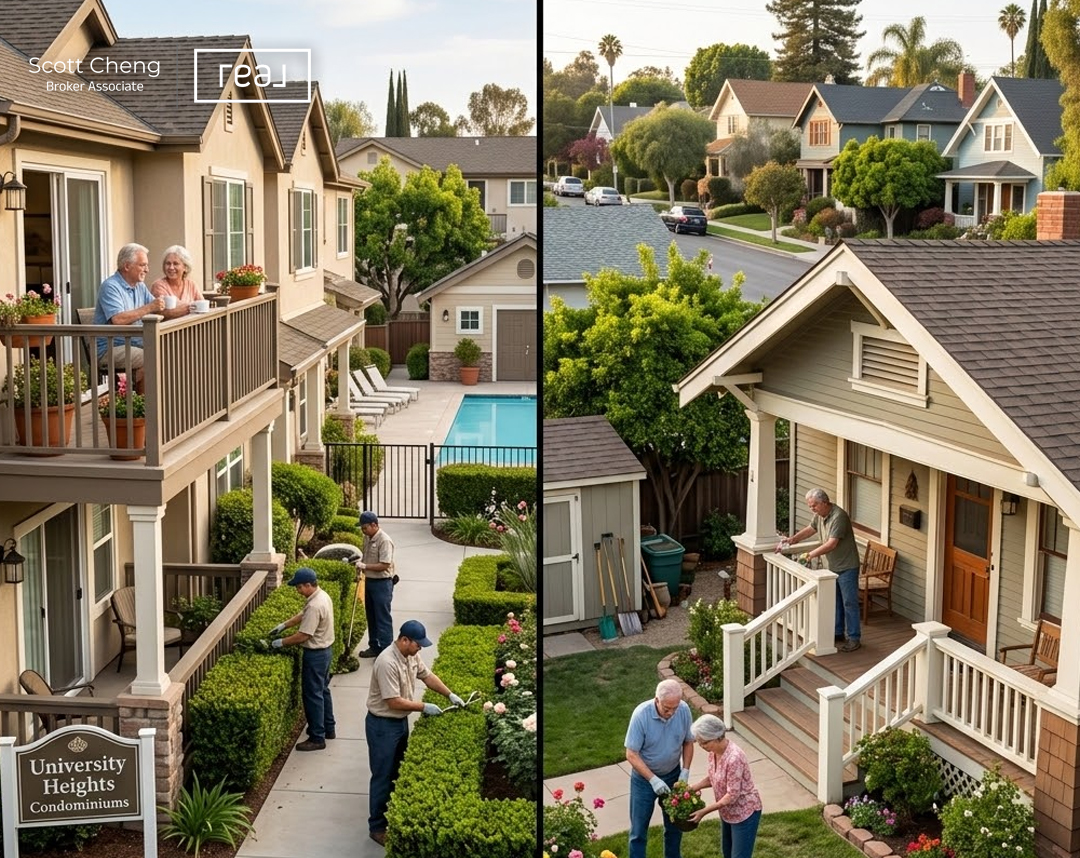
HOA Fee vs No-HOA Comparison for Downsizers in University Heights San Diego 2026: How to Choose Low-Cost Maintenance Options Before Listing Your Current Home
Choose an HOA condo or townhome when you want predictable maintenance and lower insurance, often $400–$600 per month. Choose no-HOA when you prefer control and potentially lower long-term costs, but only if you budget properly for exterior, roof, and landscape.
Why Does Choosing Between HOA and No-HOA Matter for Downsizers in 2026?
Your choice between HOA and no-HOA directly shapes your monthly budget, daily lifestyle, and five-year cost of ownership as a downsizer. In early 2026, San Diego remains a sellers’ market with months of inventory near three for attached homes and under three for detached, making this decision more consequential than ever.
You are weighing a move that will shape your budget, your daily routine, and your resale timeline. Mortgage rates are hovering near 7 percent. Many buyers are negotiating below list, often by about 6 percent, yet low supply still limits choices. If you are downsizing in University Heights, your decision between an HOA condo or a no-HOA home can reduce your five-year cost of ownership and free up equity before you list your current home. You will also see similar trade-offs if you are considering nearby North Park and Normal Heights, where attached options are common and single-family homes vary widely in age and maintenance needs. Your timing, your budget, and your maintenance appetite all intersect here.
What Should You Know Before Comparing HOA vs No-HOA in University Heights?
Start with a cost-of-ownership lens, not just a purchase-price lens. HOA fees can feel like a penalty, yet they often replace expenses you would pay out of pocket in a no-HOA home — and a clear side-by-side comparison will help you decide quickly.
- HOA fee coverage: exterior maintenance, roof, common-area utilities, landscape, master insurance, sometimes water and trash. In University Heights, typical HOA ranges land around $400–$600 per month for many mid-size communities.
- No-HOA reality: lower monthly outlay, but you absorb roof, exterior paint, fences, pest control, sewer lines, tree trimming, and full homeowners insurance.
- Insurance difference: condo HO-6 policies often run $300–$700 per year because the master policy covers the structure, while single-family HO-3 policies can commonly be $1,500–$2,500 per year depending on coverage, age, and claims.
- Special assessments: review the HOA reserve study and percent funded. Under 50 percent funded can signal risk of assessments for roofs, plumbing stacks, or elevators. Solid reserves and recent big-ticket replacements lower risk.
- Mobility and lifestyle: if you travel, want lock-and-leave living, or prefer elevators and single-level layouts, an HOA building can reduce daily headaches. If you love gardening or value private outdoor space, a no-HOA home may suit you.
- SDAR data shows low months of inventory, so your pre-list and purchase timelines matter. Attached inventory has grown faster than detached in recent years, which can expand your condo choices.
Quick Cost Filter You Can Run Today
List each target property and note: HOA monthly, what the fee covers, HO-6 or HO-3 insurance quote, age of roof and major systems, landscape scope, and any HOA rules that affect your lifestyle. Add five-year estimates for accurate comparisons.
How Do You Compare Five-Year Costs for HOA vs No-HOA Homes?
Translate all fees and maintenance tasks into five-year totals using real quotes — not rough guesses — so your comparison reflects your exact buildings and blocks in University Heights.
- Scenario A — HOA condo or townhome:
– HOA fee example: $550 per month equals $33,000 over five years.
– HO-6 insurance: estimate $500 per year equals $2,500 over five years.
– Interior maintenance: plan $500 per year equals $2,500 over five years.
– Special assessments: use $2,000 as a contingency unless reserve health is excellent.
– Five-year placeholder total: about $40,000, often lower if water and trash are included.
- Scenario B — no-HOA bungalow or small-lot townhome:
– Exterior and roof reserve: plan $2,500–$3,500 per year equals $12,500–$17,500 over five years.
– Landscape and tree service: plan $800–$1,500 per year equals $4,000–$7,500 over five years.
– Pest, gutters, fencing, minor hardscape: plan $800 per year equals $4,000 over five years.
– HO-3 insurance: estimate $1,800 per year equals $9,000 over five years.
– Five-year placeholder total: about $29,500–$38,000, higher for older roofs or big trees.
These are examples, not guarantees. Your actual totals can flip depending on property age, roof type, included utilities, and reserve strength. Older craftsman homes with deferred maintenance can exceed HOA outlays, while newer no-HOA townhomes can undercut them.
Key factors to evaluate:
- Reserve study health and replacement timeline: You want 70 percent or higher funding, recently replaced roofs, and clear elevator or plumbing plans if applicable.
- Insurance delta: Get written quotes for both HO-6 and HO-3. The premium difference often changes which path is cheaper.
- Utility inclusion and maintenance scope: If HOA includes water, trash, and exterior, your monthly predictability improves and your time investment drops.
What Are the Steps to Choose and Buy the Right Downsizing Home in University Heights?
Follow a seven-step sequence that blends pre-list preparation with your purchase analysis so you move faster and avoid costly surprises.
1) Define your five-year lifestyle priorities
Decide how often you will travel, whether you want stairs or an elevator, the size of outdoor space you need, and whether you prefer absolute control or convenience. This anchors your search with clarity.
2) Set a maintenance budget target
Decide what you want to cap at each month. For HOA homes, use the fee plus HO-6, then add a small maintenance reserve. For no-HOA homes, build a monthly reserve that equals annual exterior, roof, landscape, and insurance costs divided by 12.
3) Request documents early
For HOA options, ask for CC&Rs, rules, the reserve study, the most recent budget, and at least 12 months of meeting minutes. For no-HOA options, request permits, roof age documentation, sewer-line reports, and termite history.
4) Get firm quotes
Call your insurance provider for property-specific HO-6 and HO-3 quotes. Request ballpark bids from a roofer, painter, and landscaper on any no-HOA home you like. In a tight market, this step separates the best deals from money pits.
5) Run five-year totals
Create two columns for each property and total five-year expenses. Update numbers as you receive quotes. Use this to negotiate price or request credits, especially when reserve studies or roof ages reveal near-term costs.
6) Prep your current home for sale
Prioritize low-cost, high-ROI items: paint, lighting, caulk and grout refresh, basic landscaping, and safety fixes. Time your list date to local seasonality and interest rate moves so you align with the strongest buyer demand.
7) Coordinate sale and purchase logistics
In a market with 2.5 to 3.2 months of inventory, consider bridge financing options or rent-backs so you can close on your downsize target without pressure. Work with a real estate agent San Diego CA buyers trust to stage and sequence each step.
What Does the HOA vs No-HOA Decision Look Like Across San Diego Neighborhoods?
University Heights offers a distinct split between HOA condos near Park Boulevard and no-HOA bungalows on interior streets, while nearby North Park, Hillcrest, and Mission Valley each present their own cost and lifestyle trade-offs.
Local MLS and SDAR reporting confirm a seller-favored backdrop, with attached months of inventory near three and detached near two and a half, so you may need to act decisively when the right floor plan appears. In an HOA building, you gain predictable exterior care and often a lower personal insurance bill. In a no-HOA bungalow, you gain a yard and design freedom, but you must self-fund a roof reserve and manage regular exterior upkeep. If you also consider Hillcrest and North Park, you will see similar patterns, while Mission Valley offers larger condo communities with broader amenity sets that can justify higher HOA fees.
Your negotiation strategy should reflect property condition and reserve reality. If an HOA’s reserves are underfunded, you can price in potential assessments. If a no-HOA home has a 20-year-old roof, you can request credits or price adjustments. As a buyer working with top San Diego real estate agents, you will translate these findings into practical savings.
Neighborhoods to consider in San Diego:
- University Heights: Mix of condos and historic bungalows, walkable cafes and parks, HOA options commonly in the $400–$600 range, strong lock-and-leave potential.
- North Park: Trendy dining and parks, attached inventory with reasonable HOA fees, many updated craftsman homes that require planned maintenance.
- Mission Valley: Larger condo communities with elevators, garages, and amenities, higher HOA fees offset by extensive coverage, strong convenience for commuters.
Nearby Areas Worth Exploring
You may expand your search radius to capture the right balance of maintenance and price without sacrificing lifestyle.
- Normal Heights: Similar vintage homes to University Heights with smaller lots, some townhomes without HOAs, excellent walkability that appeals to families seeking a neighborhood vibe with manageable maintenance.
- Hillcrest: Mid-rise condos with elevators and robust HOA services, ideal if you want predictable costs and accessibility, close to medical centers and Balboa Park for convenient recreation.
- Kensington: Charming Spanish-style homes and curated streetscapes, fewer condos, strong community feel, no-HOA ownership typical, which fits buyers who want yard space and are comfortable budgeting for exterior care.
What Do Most Downsizers Get Wrong When Comparing HOA vs No-HOA?
The most common mistake is fixating on the HOA fee sticker price while ignoring what that fee actually replaces — and underestimating how much the insurance gap between HO-6 and HO-3 changes the real comparison.
When a fee covers roof, exterior, water, master insurance, and landscape, your apples-to-apples five-year cost can drop compared to a no-HOA home with an older roof and large trees. You may also underestimate the insurance delta between HO-6 and HO-3, which can be more than $1,000 per year. You might assume special assessments are random, yet they are often predictable if you read reserve studies and minutes. You may also overvalue amenities that you will not use and undervalue accessibility features you will rely on daily, like elevators, single-level layouts, and secure parking. Finally, you might invest too much in pre-list renovations for your current home that buyers do not pay for, when a tight, well-staged refresh yields the same sale price. Your edge comes from disciplined comparisons and practical prep.
Frequently Asked Questions
Are HOA fees in University Heights worth it for downsizers who travel often?
Yes, when you want predictability and low hassle. HOA communities cover exterior work and master insurance, so you can lock and leave without yard or roof worries. Compare five-year totals, then weigh your time savings and accessibility against the fee.
How do you quickly judge whether an HOA is financially healthy?
Start with the reserve study and percent funded. Look for 70 percent or higher, recent big-ticket replacements, and clean meeting minutes. If major components are due within five years without funding, price in risk or move on to stronger associations.
Does this HOA vs no-HOA advice apply to North Park and Hillcrest too?
Yes, you will see similar trade-offs. North Park has more single-family options that require exterior planning, while Hillcrest offers more mid-rise condos with robust HOA coverage. Adjust your five-year cost assumptions for building age and amenity scope.
Will an HOA fee hurt your resale value in five years?
Not necessarily. Buyers pay for predictability and amenities when reserves are healthy and fees match services. Fees that outpace services or weak reserves can hurt value. Target well-managed communities and highlight accessible layouts to protect resale.
What are the best low-cost maintenance updates before listing your current home?
Prioritize paint in neutral tones, updated LED lighting, deep cleaning, caulk and grout refresh, simple front-yard trim, and minor repairs to doors, hardware, and switches. These low-cost moves show pride of ownership and photograph well, which boosts offers.
The Bottom Line
You will choose between HOA and no-HOA by comparing five-year, property-specific costs and matching them to your daily lifestyle. If you want predictable expenses, less yard work, and lower personal insurance, an HOA condo or townhome often wins. If you prefer control, outdoor space, and are ready to budget for roof and exterior work, a no-HOA home can be the better value. In University Heights, and in nearby North Park and Normal Heights, you will find both paths. Start with your five-year totals, read the HOA reserves, collect firm quotes, and keep your pre-list prep simple and effective.
If you’re ready to explore your options for HOA vs no-HOA downsizing in University Heights or nearby communities, Scott Cheng at Scott Cheng San Diego Realtor can walk you through the specifics for your situation.
📞 858-405-0002
DRE# 01509668
Have Questions About San Diego Real Estate?
Scott Cheng provides free, no-obligation consultations for buyers, sellers, and investors.
Schedule a Consultation