Real Risks of Buying a Rental Property in College Area San Diego in 2026
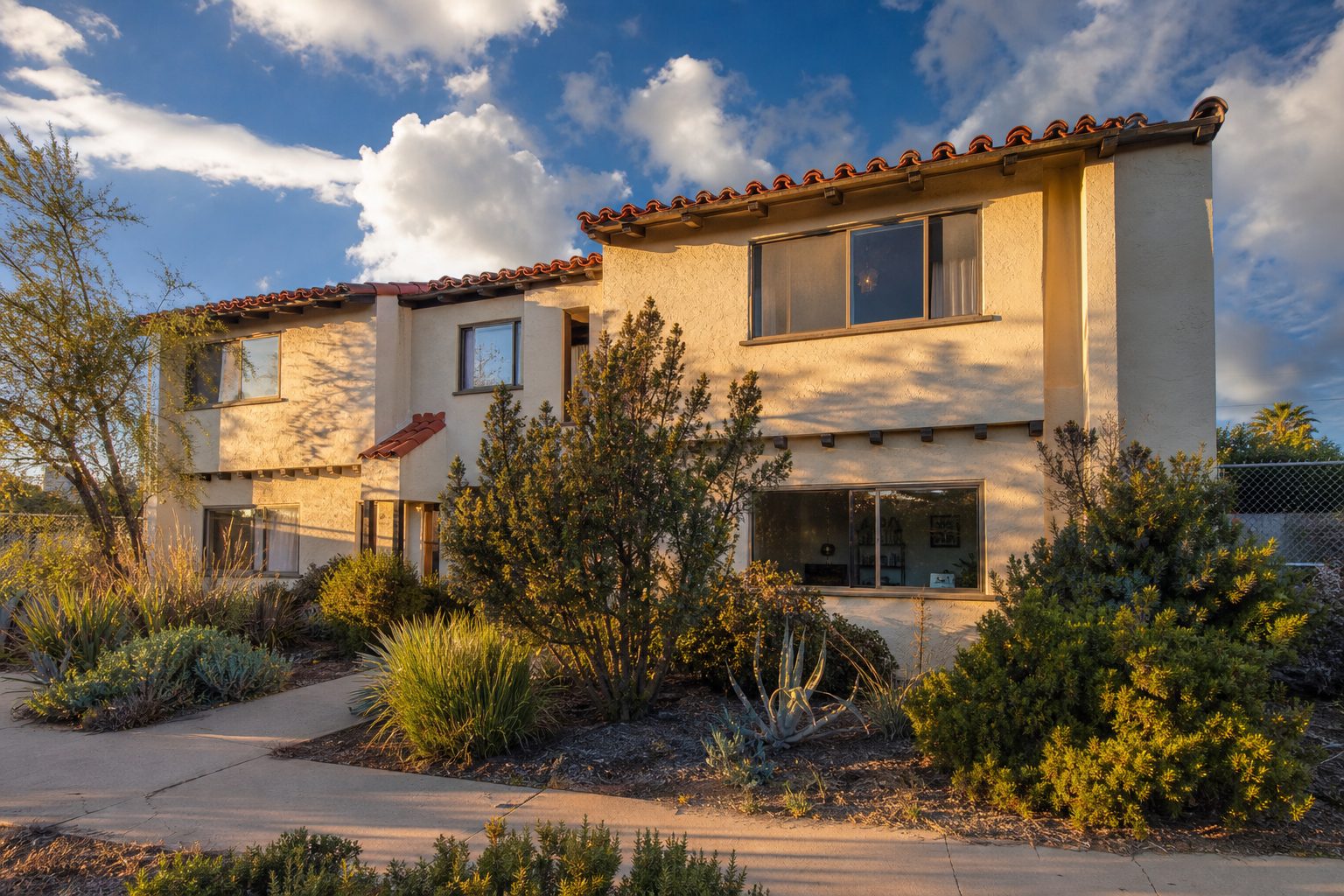
What are the real risks of buying a small rental property in College Area San Diego in 2026, considering tenant protections, rent control exposure, and vacancy rates near SDSU?
The risks are real and measurable: College Area rents are down 5.9% year over year, vacancy sits at 6.2%, California’s AB 1482 caps your rent increases, and a massive upzoning plan could flood the area with 17,500 new units over the next decade.
Why This Matters for San Diego Rental Investors Right Now
If you’re looking at a small rental property near SDSU, you’re not shopping in the same market that existed even two years ago. College Area has shifted. Rents are declining, vacancy is climbing, and state-level tenant protections are tightening the margins on what used to feel like a straightforward college-town investment.
San Diego County’s multifamily vacancy has risen to 5.4% as of Q1 2026, more than doubling from the 2.6% historic low in 2021. College Area is running even higher at 6.2%. When you pair that with the community plan update signed into law in January 2025 that added capacity for 17,500 new housing units in College Area alone, the supply picture changes dramatically.
I’m not saying this to scare anyone off. With 16 years helping San Diego investors and over 275 closed transactions, I can tell you that clarity beats fear every time. A cloudy mind can’t make decisions. So let’s get clear on exactly what you’re walking into.
Tenant Protections That Limit Your Flexibility in College Area
California’s AB 1482 (Tenant Protection Act) is the centerpiece of your regulatory risk. Here’s what it means for you if you buy a small rental near SDSU.
Rent Increase Caps
AB 1482 limits annual rent increases to 5% plus local CPI, with a hard ceiling of 10%. For the 2025-2026 cycle, the effective cap is approximately 8.8%. That sounds generous until you realize your insurance, property taxes, and maintenance costs are all climbing independently.
Just Cause Eviction Rules
Once a tenant has lived in your unit for 12 or more months, you cannot end the tenancy without “just cause.” That includes nonpayment, lease violations, or nuisance, but it also means you can’t simply choose not to renew a lease because you found a higher-paying tenant. If you need to remove a tenant for “no-fault” reasons (owner move-in, major renovation), you owe relocation assistance, typically one month’s rent.
Which College Area Properties Are Subject to AB 1482
Most of the rental housing stock near SDSU was built before 2011, which means it falls squarely under AB 1482’s umbrella. Single-family homes can be exempt if you personally own them (not through an LLC with a corporate member) and provide the required written notice. But if you’re buying a duplex, triplex, or condo as a pure investment, assume you’re covered.
One investor I recently worked with was evaluating a 1970s fourplex near Montezuma Road. He initially planned to renovate and raise rents significantly. Once we walked through the AB 1482 math together, he realized his renovation timeline and rent-increase cap meant the payback period was nearly double what his spreadsheet projected. That changed his offer strategy entirely.
Rent Control Exposure and What Could Change in San Diego
San Diego does not currently have a local rent control ordinance beyond AB 1482. That’s worth knowing, but it’s not the whole story.
The College Area Community Plan Update signals the city’s direction: more density, more housing production, and a growing political appetite for renter protections. While no local rent control legislation is pending as of mid-2026, the political landscape in California consistently favors expanding tenant rights, not rolling them back.
What I tell my clients is this: underwrite your deal assuming the current rules stay in place or get stricter. If you build your investment thesis around regulations loosening, you’re taking on a second bet that has no track record of paying off in California.
Starting January 1, 2026, AB 628 also added working stoves and refrigerators to the legal “habitability” standard. That means if you’re buying an older property where appliances are original or near end-of-life, factor in replacement costs from day one, because a broken stove is now a code violation, not just a tenant complaint.
Vacancy Risk Near SDSU and the College Area Supply Wave
This is where the numbers tell a very specific story. College Area vacancy is currently 6.2%, and average rents have fallen to $2,200, down 5.9% year over year. Across San Diego County, rents declined for six consecutive months through late 2025, the first annual decrease since 2010.
Why Vacancy Is Elevated
- New supply: San Diego absorbed more than 10,000 new rental units in two years against a market that historically absorbs about 3,000 annually
- Student housing shifts: SDSU’s Mission Valley development is reshaping where students live, pulling some demand away from traditional College Area rentals
- Seasonal patterns: College Area vacancy runs structurally higher in summer when students leave, creating cash-flow gaps that don’t show up in annual averages
The Upzoning Factor
The College Area Community Plan Update added capacity for 17,500 new units, bringing total planned capacity to 34,450. While most of this won’t be built overnight, properties along the College Avenue and Montezuma Road corridors will face the most direct competition as new mixed-use developments come online between 2026 and 2032.
Here’s what that looks like in practice. A couple I worked with was considering a small condo near College Avenue as their first investment property. When we mapped the planned developments within a half-mile radius, it became clear that their unit would be competing against brand-new apartments with amenity packages, including rooftop decks, modern fitness centers, and move-in incentives like one to two months of free rent. How is a 1980s condo supposed to compete with that without significant renovation?
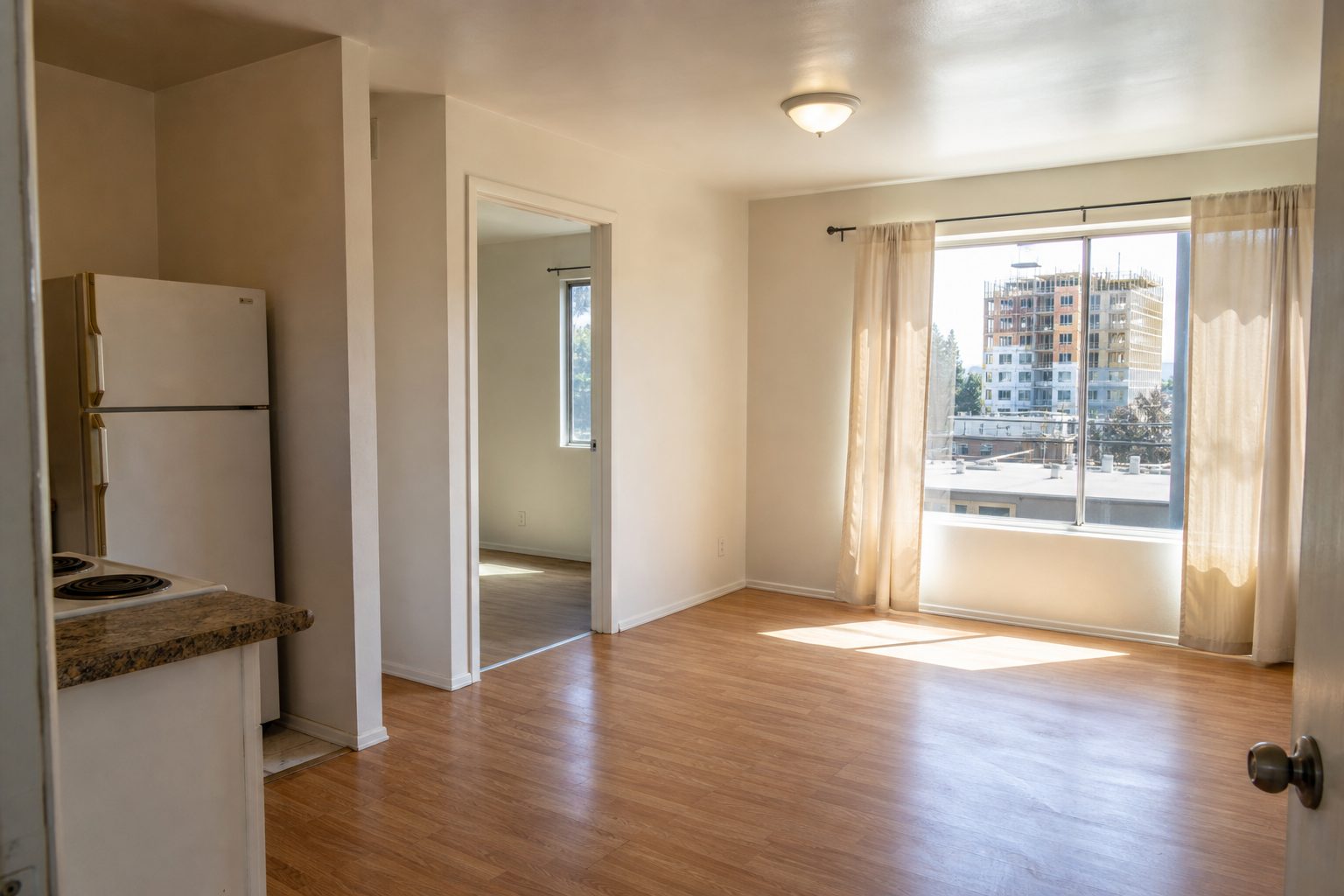
Cash Flow Reality Check for a Small College Area Rental
Let’s talk about the numbers that actually matter to your bottom line.
Thousands of San Diego landlords who bought properties expecting continued rent appreciation now face negative cash flow averaging over $2,600 per month. With mortgage rates in the mid-6% range, the math on a leveraged purchase gets tight fast.
Running the Numbers
- Countywide attached property median: $675,000 (down 1.5% year over year)
- Average College Area rent: $2,200 per month
- Estimated monthly PITI on $675K at 20% down, 6.5%: roughly $4,100 to $4,400 depending on HOA and tax specifics
- Monthly cash flow gap: potentially $1,900 to $2,200 negative before maintenance, vacancy reserves, and property management
That gap is why I emphasize running conservative projections. If your plan depends on 5% annual rent growth to break even within three years, the current data doesn’t support that assumption, at least not in College Area.
Where College Area Could Surprise You on the Upside
It’s not all risk. I want to give you the full picture because smart investors weigh both sides.
Class B and C properties (the older, smaller rentals that dominate College Area) are actually holding up with tighter vacancy rates of 2.5% to 4% compared to Class A luxury apartments sitting at 6.6% vacancy. If you buy a well-maintained, reasonably priced unit that serves working professionals or graduate students rather than competing with luxury new construction, your positioning may be stronger than the headline numbers suggest.
The medium-term outlook from the community plan update (2029 to 2032) suggests property values may increase as College Area transforms into a more walkable, mixed-use neighborhood with improved transit access. Properties near the College Avenue and Montezuma Road corridors could benefit from infrastructure improvements.
And with fewer than one in five California households able to afford the median-priced home, the structural renter pool isn’t shrinking. That’s a long-term tailwind, even if short-term cash flow is challenging.
Frequently Asked Questions
Is College Area San Diego under rent control in 2026?
College Area falls under California’s statewide AB 1482 Tenant Protection Act, which caps annual rent increases at 5% plus local CPI (approximately 8.8% for 2025-2026). The City of San Diego does not have an additional local rent control ordinance, but most College Area rental properties built before 2011 are subject to AB 1482’s caps and just cause eviction requirements.
What is the current vacancy rate in College Area near SDSU?
As of early 2026, College Area vacancy sits at approximately 6.2%, which is above the San Diego County average of 5.4%. This is partly driven by new supply entering the market and seasonal fluctuations tied to SDSU’s academic calendar. Summer months typically see the highest vacancy.
Can I raise rent freely on a single-family rental in College Area?
Single-family homes can be exempt from AB 1482 rent caps if you own the property personally (not through a corporation or an LLC with a corporate member) and provide the required written notice. However, most small multi-unit properties and condos near SDSU are covered by the law.
How much have rents declined in College Area San Diego?
College Area rents average $2,200 as of 2026, down 5.9% year over year. This mirrors a broader county trend where rents declined for six consecutive months through late 2025. The decline is largely driven by over 10,000 new rental units delivered countywide in two years.
What does the College Area Community Plan Update mean for investors?
The plan, signed into law in January 2025, added capacity for 17,500 new housing units in College Area. Short-term (2026 to 2028), expect continued rent pressure and elevated vacancy as new construction delivers. Medium-term (2029 to 2032), property values may rise as the neighborhood transforms.
What are the just cause eviction rules I need to know about?
Under AB 1482, tenants who have lived in your unit for 12 or more months can only be removed for “just cause,” including nonpayment, breach of lease, or nuisance. No-fault evictions (like owner move-in) require relocation assistance, typically one month’s rent.
Will SDSU Mission Valley affect demand for College Area rentals?
SDSU’s Mission Valley campus development may gradually shift some student and staff housing demand away from traditional College Area locations. This is a long-term factor worth monitoring, particularly if you’re buying a property that relies heavily on student tenants.
Are older rental properties near SDSU a good investment in 2026?
It depends on the deal. Class B and C properties are seeing tighter vacancy (2.5% to 4%) than luxury apartments (6.6%), which is a relative advantage. However, maintenance costs are higher, and AB 628 now requires working stoves and refrigerators as part of habitability, so older appliances become a compliance issue.
What mortgage rates can I expect on a College Area investment property?
Investment property loans typically run 0.5% to 0.75% higher than owner-occupied rates. With the 30-year fixed conforming rate averaging 6.48% in mid-2026, expect investment property financing in the high-6% to low-7% range. The 2026 conforming loan limit for San Diego County is $1,104,000.
Should I buy a rental property in College Area or look elsewhere in San Diego?
That depends on your risk tolerance, time horizon, and how you underwrite the deal. College Area offers proximity to a major university and a large renter pool, but the near-term headwinds of declining rents, elevated vacancy, and massive planned development are real. I always encourage investors to compare multiple neighborhoods before committing.
The Bottom Line
Buying a small rental property in College Area San Diego in 2026 is not a simple “yes” or “no” decision. The risks are concrete: rents are down 5.9%, vacancy is at 6.2%, AB 1482 limits your pricing flexibility, and 17,500 new units are planned for the area. At the same time, structural demand for rentals remains strong in San Diego, and Class B/C properties are holding up better than luxury alternatives.
What matters is how you underwrite the deal. If the math works with conservative assumptions and you have the reserves to weather negative cash flow while the market absorbs new supply, College Area could reward patient investors. If you’re counting on quick appreciation or aggressive rent growth, this isn’t the right play in 2026.
I’m Scott Cheng, Broker Associate with REAL Brokerage, and I’ve spent 16 years helping San Diego investors see properties clearly, not just for what they are today, but for what they could become. With 180 five-star client reviews and a track record in investment and multi-unit properties, I’m here to help you run the real numbers before you commit. Reach me at 858-405-0002 or visit my office at 16516 Bernardo Center Dr. Ste. 300. Let’s get you a calm, clear plan.
Have Questions About San Diego Real Estate?
Scott Cheng provides free, no-obligation consultations for buyers, sellers, and investors.
Schedule a Consultation