Is Buying a Small Multifamily Property in City Heights San Diego Still Worth It in 2026?
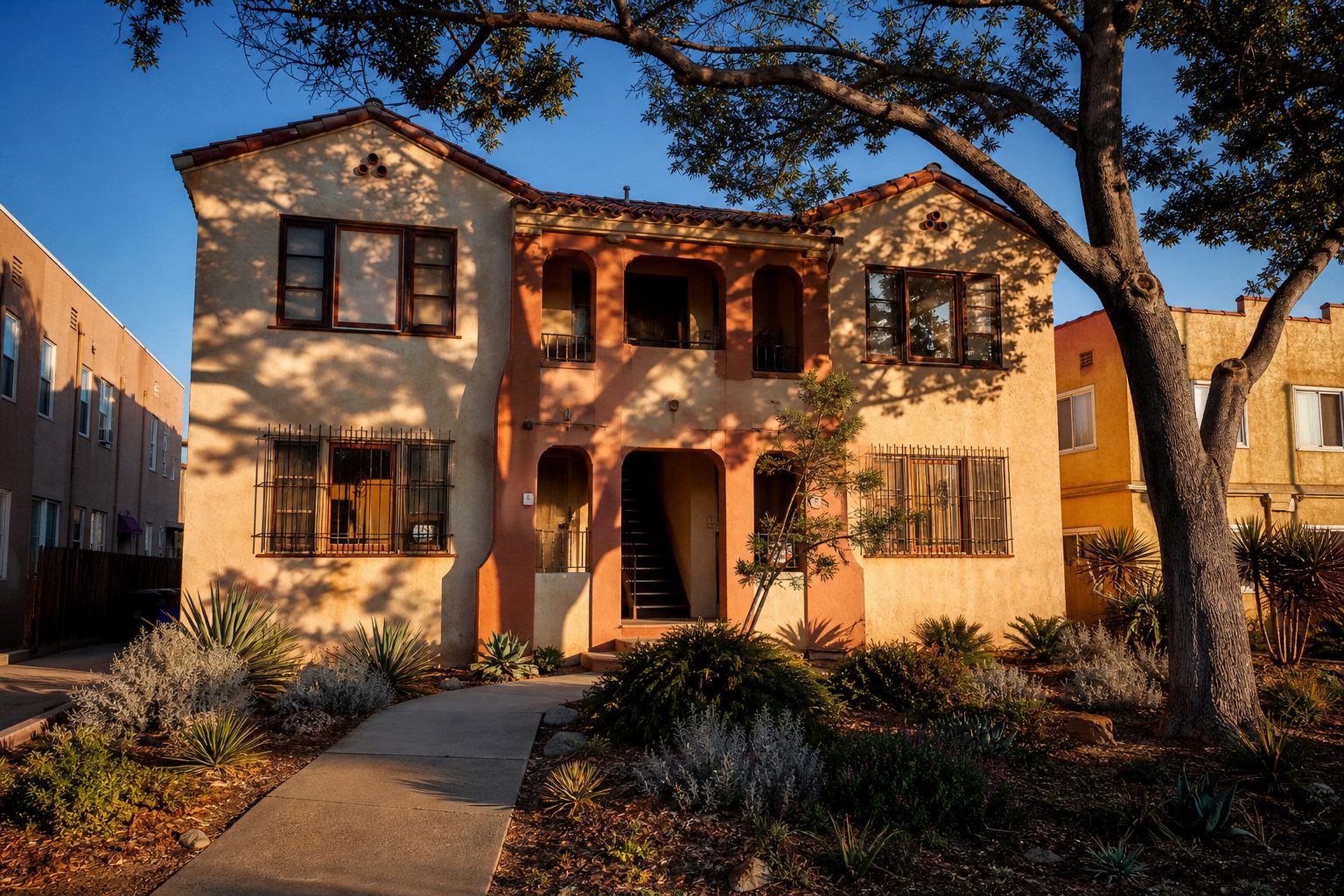
With rent control rules and tenant protections making it harder to cash flow, is buying a small multifamily property in City Heights, San Diego in 2026 still a smart investment?
Yes, but only if you underwrite conservatively, understand exactly which regulations apply to your deal, and build your strategy around today’s rules rather than yesterday’s assumptions.
Why This Matters Right Now for San Diego Investors
City Heights has long been the neighborhood where San Diego investors go to find cap rates that actually pencil. In 2026, it is delivering average capitalization rates around 6.3%, which outpaces every other area in the county. But the landscape has shifted.
California’s AB 1482 caps rent increases at 5% plus local CPI (currently 8.2% total for 2026 through 2027). San Diego’s own tenant protection ordinance, effective since June 2023, layers on additional eviction protections and relocation assistance requirements that start on day one of tenancy. Security deposits are capped at one month. Eviction response windows have doubled.
So is the juice still worth the squeeze? Having closed over 275 transactions in San Diego County over my 16 years as an Associate Broker, I can tell you that the investors who are succeeding in City Heights right now are not the ones ignoring these rules. They are the ones building their entire acquisition model around them. A cloudy mind can’t make decisions, so let me walk you through the clear picture.
How Rent Control and Tenant Protections Actually Work in City Heights
Here is what surprises a lot of investors: San Diego does not have a local rent control or rent stabilization ordinance. What you are dealing with is California’s statewide AB 1482, and the rules are more nuanced than the headlines suggest.
What AB 1482 Covers
The rent cap applies to residential units where the certificate of occupancy was issued at least 15 years ago. In 2026, that means properties built before 2011 are generally covered. For the current cycle (August 2026 through July 2027), you can raise rent by up to 8.2%, which is 5% plus the 3.2% CPI change.
That is a meaningful number. Compare it to cities like San Francisco or Los Angeles with far stricter local caps, and San Diego’s framework looks relatively manageable.
Key Exemptions Investors Miss
If you are an individual owner (not an LLC, corporation, or REIT) living in one unit of a duplex and renting out the other, your property is exempt from AB 1482’s rent cap entirely. Single-family homes with no corporate ownership and proper tenant notice are also exempt. This matters because it shapes which acquisition strategy makes sense for you.
San Diego’s Local Ordinance Adds a Layer
The city’s own tenant protection ordinance goes further than AB 1482 in a few important ways. Protections kick in on the first day of tenancy, not after 12 months. No-fault evictions require two months of rental assistance (three months if the tenant is a senior or has a disability). There are enforcement mechanisms to hold landlords accountable.
What I tell my clients is this: these rules are not deal-breakers. They are operating parameters. Once you build them into your underwriting, the math either works or it does not.
The Cash Flow Reality for City Heights Multifamily in 2026
This is where the conversation gets honest. The numbers tell two very different stories depending on how you buy.
Cash Buyers vs. Financed Buyers
At a median price around $525,000 for a two-bedroom property generating roughly $2,100 per month in rental income, cash buyers can expect approximately $16,380 in annual positive cash flow. That is a real return in a market where San Diego’s county-wide multifamily cap rates average only 4.6%.
Financed buyers at current mortgage rates near 6.48% face a very different picture, with annual returns running negative by approximately $15,468. This is the number that stops most conversations.
But here is what that does not account for: principal paydown, depreciation benefits, and the fact that City Heights vacancy sits near 2.5%, well below the county average of 3.6%. One investor I worked with recently purchased a triplex in City Heights, ran the numbers assuming a 5% vacancy rate and conservative rent growth, and found that by year three, the property was projected to break even on cash flow while building equity at a pace that far outstripped any savings account.
How City Heights Compares to Other San Diego Neighborhoods
You are not going to find 6.3% cap rates in North Park neighborhoods for first-time buyers, where median home prices sit around $1.05 million. Hillcrest’s median sale price hovers around $755,500. City Heights gives you entry points 20% to 30% below North Park with stronger rental yields.
A recent 9-unit multifamily sale on Van Dyke Avenue in City Heights closed at $3,100,000 in March 2026, roughly $344,444 per door. That tells you institutional and experienced investors are still actively deploying capital here. They are not scared away by tenant protections; they are pricing them in.
The Value-Add Strategies That Make City Heights Pencil
If you are looking at the base cash flow numbers and feeling uneasy, here is where the opportunity gets interesting.
ADU Development Changes the Equation
California’s SB 1211 allows up to 8 detached ADUs on multifamily properties and eliminates parking replacement requirements. The San Diego Housing Commission’s ADU Finance Program provides up to $250,000 in financing. ADUs can increase a property’s value by 20% to 30% while generating $1,200 to $2,200 per month in additional rental income.
AB 2533, effective in 2026, legalizes certain pre-2020 unpermitted units, which is particularly relevant in City Heights where older properties often have informal conversions that can now be brought into compliance.
Renovation ROI in City Heights
Because I have worked on flips and remodels alongside investors for years, I approach every City Heights property with a value-add lens. What could this become? A cosmetic update on a $525,000 duplex that adds a legal ADU and brings rents to market rate can shift the entire return profile. One couple I worked with bought a dated fourplex in City Heights, invested roughly $80,000 in targeted unit upgrades (kitchens, bathrooms, flooring), brought rents up to market, and saw their cap rate improve from 5.1% to nearly 7% within 18 months.
New 2025 and 2026 Landlord Requirements You Cannot Ignore in San Diego
The regulatory changes go beyond rent caps. If you are buying in City Heights this year, you need to know these:
- Security deposits are limited to one month’s rent under AB 12
- Eviction timelines have expanded, giving tenants 10 court days to respond to complaints (previously five)
- Appliance requirements now mandate a working stove and refrigerator in every rental unit for new or renewed leases
- Move-in and move-out photography is mandatory for leases starting July 2025 or later, with images shared alongside itemized deduction statements
Skipping the photo documentation step can void your right to make deductions, even when damage is real. These are not suggestions; they are operational requirements that affect your bottom line if you get them wrong.
What does all of this mean for your investment thesis? It means your property management systems need to be airtight. With 180 five-star reviews from past clients, rated 5 out of 5, I can tell you that the investors who stay organized and compliant are the ones who protect their returns long term.
Who Should (and Should Not) Buy a Small Multifamily in City Heights Right Now
Let me be direct about who this works for and who should wait.
This works for you if:
- You are a cash or low-leverage buyer who can absorb 12 to 18 months of thin margins while optimizing
- You have a 7-plus year hold horizon and are building wealth through equity, not just monthly cash flow
- You are willing to execute a value-add strategy (ADU, renovation, unit optimization)
- You understand and can comply with current tenant protection laws
This may not work for you if:
- You need immediate positive cash flow from a highly leveraged purchase
- You are unwilling to manage or hire management that follows the current legal framework
- Your investment thesis depends on rent increases that exceed what AB 1482 allows
The AB 1482 rent cap is currently set to sunset on January 1, 2030. Investors who position themselves now in a high-demand, low-vacancy neighborhood like City Heights stand to benefit if those caps loosen. But a sound investment should not depend on regulatory changes.
Frequently Asked Questions
Does San Diego have its own rent control law separate from California’s?
San Diego does not have a local rent control or rent stabilization ordinance. You are subject to California’s AB 1482, which caps rent increases at 5% plus local CPI (currently 8.2% total) and requires just cause for eviction. The city does have its own tenant protection ordinance that adds relocation assistance requirements and day-one protections.
What cap rates can you expect on small multifamily in City Heights in 2026?
City Heights is delivering average cap rates around 6.3%, which is the highest in San Diego County. The county-wide multifamily average sits at 4.6%. These higher returns reflect the neighborhood’s more affordable entry points and strong rental demand from a deep tenant pool.
Are duplexes in City Heights exempt from AB 1482?
If you are an individual owner (not an LLC or corporation) living in one unit and renting the other, your duplex is exempt from AB 1482’s rent cap provisions. You must provide tenants with a written notice of exemption with the rental agreement to qualify.
What is the typical vacancy rate for rental properties in City Heights?
City Heights maintains a vacancy rate near 2.5% in its strongest pockets. Most residents in City Heights rent their homes, which creates a deep and consistent tenant pool. This is well below San Diego’s overall vacancy rate of approximately 3.6%.
Can you still add ADUs to multifamily properties in City Heights?
Yes. California’s SB 1211 allows up to 8 detached ADUs on multifamily properties and eliminates parking replacement requirements. The San Diego Housing Commission offers up to $250,000 in ADU financing. ADUs can generate $1,200 to $2,200 per month in additional rental income.
How much relocation assistance do San Diego landlords owe for no-fault evictions?
Under San Diego’s local ordinance, tenants evicted for no fault of their own are entitled to two months of rental assistance. If the tenant is a senior aged 62 or older, or a person living with disabilities, the requirement increases to three months of rental assistance.
What are the new move-in and move-out documentation rules for San Diego landlords?
For leases starting July 2025 or later, you must photograph every unit at three points: before move-in, after move-out before repairs, and after repairs are completed. All photos must be shared with departing tenants alongside your itemized deduction statement. Failing to comply can void your right to deductions.
Is City Heights a good neighborhood for long-term appreciation?
City Heights median home prices reached $670,000 in November 2025, representing an 11.4% year-over-year increase. The neighborhood offers entry points 20% to 30% below nearby North Park, where median prices exceed $1 million, suggesting room for continued growth as the area develops.
How does a financed purchase compare to a cash purchase in City Heights?
At a median price around $525,000, cash buyers can see approximately $16,380 in annual positive cash flow. Financed buyers at current rates near 6.48% face negative annual returns of approximately $15,468 on a pure cash flow basis. However, principal paydown and tax benefits shift the total return picture significantly over a multi-year hold.
When does California’s AB 1482 rent cap expire?
The AB 1482 rent cap is set to sunset on January 1, 2030. Investors purchasing now should underwrite based on current rules rather than speculating on what happens after the sunset date. If the caps are extended or modified, a conservatively underwritten deal will still perform.
The Bottom Line
City Heights remains one of the most compelling small multifamily investment opportunities in San Diego. The cap rates are real, the tenant demand is deep, and the value-add pathways through ADU development and strategic renovation are stronger than they have been in years. The regulatory environment is more complex than it was five years ago, but it is far from prohibitive, especially compared to other major California markets.
The investors who succeed here in 2026 are the ones who approach the numbers with clear eyes, build compliance costs into their models, and think in five-to-ten-year horizons rather than month-one cash flow alone. If you are evaluating a small multifamily deal in City Heights and want a second set of eyes on the numbers, I am happy to walk through it with you. As a top 1% San Diego real estate agent and Associate Broker with 16 years of local experience, this is exactly the kind of analysis I do with investor clients every week. Reach out to me, Scott Cheng, at 858-405-0002, and let’s bring some clarity to your next move.
Have Questions About San Diego Real Estate?
Scott Cheng provides free, no-obligation consultations for buyers, sellers, and investors.
Schedule a Consultation