

Mira Mesa Property Upgrade 2026: Condo vs Townhome vs Single-Family for Move-Up Buyers
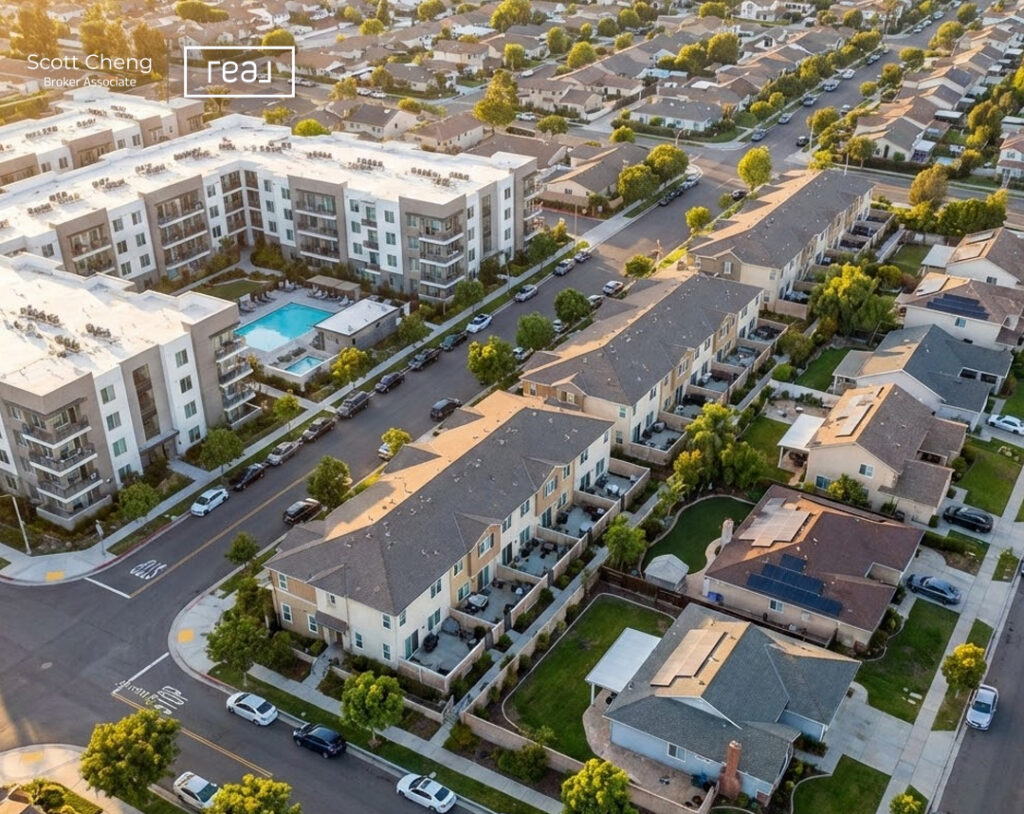
Condo vs Townhome vs Single-Family Upgrade in Mira Mesa 2026: Which Property Type Maximizes Equity for Move-Up Buyers Under $1.3M
Single-family homes usually maximize long-term equity in Mira Mesa under $1.3M, driven by land value and 5–7% appreciation trends, while townhomes offer solid 4–6% growth with lower carry costs, and condos prioritize affordability and convenience.
Why does the 2026 Mira Mesa market make the condo vs townhome vs single-family decision so urgent for move-up buyers?
The 2026 Mira Mesa market has months of supply near 1.6 and DOM in the mid-20s, creating time-sensitive conditions for move-up buyers. Your equity strategy must be locked in before you list or make an offer.
You are facing a tight 2026 market in North County and San Diego city where inventory remains low and well-priced homes still move fast. In Mira Mesa, months of supply sits near 1.6 and typical days on market hover around the mid-20s, while Vista runs closer to 2.4 months and about a month on market. That imbalance keeps upward pressure on prices and makes your move-up decision time sensitive. If you plan to sell a starter home and buy up under $1.3M, your equity strategy matters as much as your payment. This same logic applies if you are also considering nearby Scripps Ranch and Rancho Bernardo, where schools and commute routes influence value retention. Your choice of condo, townhome, or single-family will shape both your lifestyle and your exit price three to seven years from now. (Sources: San Diego MLS Jan 2026; SANDAG; FHFA House Price Index)
What do move-up buyers need to know before choosing a property type in Mira Mesa?
You have three clear paths under $1.3M in Mira Mesa — condo, townhome, or single-family — each with distinct appreciation rates, carrying costs, and lifestyle tradeoffs. Matching your choice to your time horizon and cash flow is the starting point.
You have three clear paths under $1.3M in Mira Mesa: a larger condo with modern amenities, a townhome with a small yard or patio, or a single-family home on a larger lot. Each option balances appreciation, carrying costs, and livability differently.
- Appreciation trends: Single-family homes historically grow 5–7% annually, townhomes 4–6%, condos 3–5% in similar submarkets. Land value and lot size drive the gap. (Sources: FHFA HPI summary tables, S&P CoreLogic Case-Shiller, regional MLS trendlines)
- Current prices: Mira Mesa single-family median is about $885,000, townhomes often cluster near $700,000 to $750,000, and many condos close in the $500,000 to $600,000 range, depending on finishes and HOA condition. Vista runs lower on average, which improves selection under $1.3M. (Source: San Diego MLS)
- Carrying costs: HOA dues average around $350 per month in Mira Mesa and $300 in Vista. Lower dues and stronger reserves reduce risk and protect resale value. (Source: Regional HOA surveys 2025)
- Financing stack: Bridge loans average about $125,000 with terms up to six months and rates in the mid to high 6% range, while HELOCs often price near 6% variable. These tools help you buy before you sell or close both within one move. (Sources: Lender product sheets, CFPB appraisal exemption thresholds)
- Schools and commute: Buyers often prefer API equivalents around 850 or higher, predictable I-15 and SR-56 access, and bus or Coaster options for commutes. These factors directly impact resale velocity. (Sources: California Department of Education; SANDAG)
You should match your property type to your time horizon, cash flow, and tolerance for maintenance. A single-family will demand more upkeep, but the land carries more of your future equity.
How do you compare condo, townhome, and single-family options side by side in Mira Mesa?
Single-family delivers the strongest long-run equity through land ownership and broad buyer appeal, townhomes balance appreciation with lower carrying costs, and condos offer entry-level affordability with meaningful compounding in supply-constrained areas.
You should evaluate each choice side by side using both math and lifestyle fit. In a sub-two-month supply micro-market like Mira Mesa, you need an option that protects your downside while giving you upside over the next cycle.
- Single-family: Best long-run equity due to land, yard utility, and broad buyer appeal. You will likely see 5–7% annual growth when markets trend up, with stronger resilience in slower cycles. Maintenance costs are higher, but you control repairs, design, and additions.
- Townhome: Middle path for appreciation and cost. You often get 4–6% annual growth with lower maintenance than a detached home. HOAs cover exterior elements, which stabilizes costs. Limited yard size and shared walls can cap future buyer pool, but many buyers value convenience.
- Condo: Entry to Mira Mesa school zones and commutes at a lower price. You typically trade to 3–5% appreciation, which still compounds meaningfully. Lifestyle amenities and lower absolute purchase price reduce monthly payment pressure. HOA condition, reserve funding, and rules matter a lot for resale.
Key factors to evaluate:
- Resale drivers: School scores, commute patterns, and proximity to employment clusters like Sorrento Valley, which support predictable demand and faster market times.
- Lot and layout: Usable yard space, bedroom count, and work-from-home areas that expand buyer appeal, especially for families.
- Carrying costs and risk: HOA dues and reserves, insurance, property tax basis, and maintenance. Lower volatility in monthly costs helps you hold longer, which maximizes compound appreciation.
(Sources: FHFA HPI, S&P CoreLogic Case-Shiller, San Diego MLS, California Department of Education, SANDAG)
What is the step-by-step process for executing a move-up purchase in Mira Mesa in 2026?
Start by quantifying your equity and budget, then choose your financing bridge, decide on your offer strategy, align sale and purchase timing, select the right property type, and negotiate protective terms.
1) Quantify your equity and budget. You should run a net sheet on your current home, estimate proceeds, and align a target payment that fits your comfort zone. Include HOA, property tax, and insurance when you model the number.
2) Choose a financing bridge. You can use a bridge loan for a guaranteed short-term down payment or a HELOC for flexibility and potentially lower rates. Bridge loans often carry 6.5% to 7.5% with six-month terms. HELOCs can price near 6% but are variable. Pick the option that pairs with your move timing and risk tolerance. (Sources: CFPB, lender product summaries)
3) Decide contingent or non-contingent. In Mira Mesa’s 1.6-month supply environment, your strongest play may be a non-contingent offer supported by bridge funds, plus appraisal gap coverage for up to $50,000 if needed. If you prefer lower risk, a well-structured sale contingency still wins in Vista more often due to a 2.4-month supply. (Sources: San Diego MLS, insurer product brochures)
4) Align sale readiness with purchase timing. You should order pre-list inspections on your current home, handle quick repairs, stage, and price slightly under recent comps to attract multiple offers. List in late February or early March to catch spring demand when DOM falls and list-to-sale ratios peak.
5) Target the right property type. If you want maximum equity growth and can handle maintenance, focus on single-family with a minimum 5,000 square foot lot. If you want balance, pick a newer townhome with strong reserves and low dues. If payment certainty is top priority, pursue a condo in a well-run community with solid reserves.
6) Negotiate terms that protect you. You can use rent-back, shorter contingency periods, and a larger earnest deposit to compete. Cap inspection repairs with a fixed allowance. Keep the close date flexible to sync your sale and purchase.
What does the Mira Mesa, San Diego, and Vista market look like for move-up buyers under $1.3M?
Mira Mesa offers some of the most balanced sub-$1.3M options in San Diego, with single-family near $885K, townhomes at $700K–$750K, and condos at $500K–$600K, while Vista provides more inventory and negotiating room under $1.1M.
You will find that under $1.3M, Mira Mesa offers one of the most balanced sets of options in San Diego. Single-family homes often trade near the $885,000 median, townhomes cluster around $700,000 to $750,000, and many condos close in the $500,000 to $600,000 band. Market times remain tight for updated properties, especially those near Mira Mesa Boulevard retail and the Sorrento Valley job base. Vista opens up larger floor plans and yards under $1.1M with slightly more negotiating room due to higher inventory.
In San Diego city neighborhoods like Scripps Ranch and Carmel Mountain Ranch, you can access top-ranked schools and excellent I-15 connectivity, though single-family selections under $1.3M can be limited. You can still find townhomes that deliver solid appreciation drivers, particularly in communities near parks and shopping. Appreciation differentials remain anchored to lot size, school performance, and commute ease. HOA health and reserves are a decisive filter for condos and townhomes.
Neighborhoods to consider in Mira Mesa, San Diego, Vista:
- Mira Mesa, West of Camino Santa Fe: Single-family homes with larger lots, many renovated, typically $850,000 to $1.1M, close to Sorrento Valley tech and retail.
- San Diego, Scripps Ranch: Townhomes and select smaller single-family options near Miramar Lake, strong schools, quick access to I-15, often $800,000 to $1.3M.
- Vista, Shadowridge: Mix of detached homes and townhomes, community amenities, lower HOAs on average, competitive pricing from the mid-$700,000s to just over $1M.
(Sources: San Diego MLS Jan 2026; California Department of Education; SANDAG)
Nearby Areas Worth Exploring
- Scripps Ranch: You get coveted schools, trail access, and consistent buyer demand that supports resale. Single-family under $1.3M is tight, but townhomes deliver a strong cost-to-value ratio and faster commutes via I-15.
- Rancho Bernardo: You benefit from master-planned communities, multiple price points, and convenient access to employment hubs. Townhomes and smaller single-family options fit many move-up budgets while preserving equity growth.
- Poway: You gain access to a high-performing school district, larger lots in some tracts, and a suburban feel. You may trade a slightly longer commute for stronger single-family value retention.
What do most move-up buyers get wrong about HOAs, condos, and sale contingencies in Mira Mesa?
The biggest misconceptions are that HOA dues alone kill appreciation, that condos never build equity, and that sale contingencies cannot win — all three are false when the right fundamentals are in place.
You might assume HOA dues kill appreciation, but poorly funded HOA reserves are the real threat, not dues alone. Strongly capitalized associations often protect values by maintaining exteriors, amenities, and insurance coverage that buyers prize. You may also hear that condos never build equity. That is inaccurate in supply-constrained zones near job centers where demand remains constant. Condos can appreciate, just usually at a slower rate than land-backed single-family.
Another misconception is that a sale contingency cannot win in a competitive market. In Vista or during slower weeks in Mira Mesa, a well-structured sale contingency with strong timelines, large deposits, and pre-inspections can still prevail. Finally, many buyers underestimate school and commute effects on exit price. You should treat API-style metrics, I-15 access, and proximity to Sorrento Valley as core valuation drivers, not lifestyle perks. When you buy with those fundamentals, you give yourself multiple paths to a higher resale, which is exactly what you want as a move-up buyer. (Sources: San Diego MLS, California Department of Education, SANDAG)
Frequently Asked Questions
Will a townhome build equity nearly as fast as a single-family in Mira Mesa?
Yes, but usually a bit slower. Townhomes often run 4–6% annual appreciation versus 5–7% for single-family because land carries more upside. The gap can narrow in newer communities with strong amenities, low dues, and top schools. Focus on layout, reserves, and walkability.
How do HOA dues affect your buying power under $1.3M?
HOA dues count in your debt-to-income ratio, so they can lower your maximum purchase price. That said, predictable HOA maintenance can reduce surprise repair costs. You should balance monthly affordability with total cost of ownership, including reserves and insurance coverage.
Does this advice apply to Scripps Ranch and Rancho Bernardo too?
Yes. The same fundamentals drive equity there, especially schools, commute access, and neighborhood maintenance. You will find tighter single-family selection under $1.3M, so townhomes become a stronger value play. Expect similar appreciation tiers by property type with minor local variations.
Is a non-contingent offer required to win in Mira Mesa in 2026?
Not always, but it helps in multiple-offer situations. You can bridge with short-term funds, boost earnest money, use appraisal gap coverage, and offer a seller rent-back. In Vista, a clean sale contingency can still win due to slightly higher inventory and longer DOM.
What upgrades add the most near-term value if you choose a single-family?
You should prioritize kitchens, primary baths, and curb appeal. Add functional improvements like HVAC, roof tune-ups, and energy efficiency. Buyers respond to move-in readiness, which shortens time on market and supports list-to-sale ratios above 100% in peak months.
The Bottom Line
You maximize long-term equity in Mira Mesa under $1.3M by favoring single-family for land-driven appreciation, choosing townhomes when you want a balance of growth and manageable carrying costs, and selecting condos when payment and lifestyle come first. The right choice depends on your time horizon, budget, and tolerance for maintenance. These same principles hold in nearby Scripps Ranch and Rancho Bernardo, where schools and commute access amplify resale outcomes. When you buy with fundamentals in mind, you protect your downside and stack the deck for a stronger exit in the next cycle. (Sources: San Diego MLS, FHFA HPI, S&P CoreLogic Case-Shiller, California Department of Education, SANDAG)
If you are ready to explore your options for a condo, townhome, or single-family upgrade in Mira Mesa, San Diego, or Vista, Scott Cheng at Scott Cheng San Diego Realtor can help you map the numbers and the neighborhoods that fit your goals.
📞 858-405-0002
DRE# 01509668
16516 Bernardo Center Dr. Ste. 300, San Diego, CA 92128